
Blue flowers and their meanings hold real magic. Nature rarely makes true blue. So every blue bloom feels like a small treasure. This rarity is why blue flowers stand for trust, peace, and loyalty.
Picture a wedding table lined with soft blue hydrangeas. Or a quiet garden filled with bluebells at dawn. This guide covers 20 blue flowers and their deeper meanings. You will also get care tips, season picks, and the perfect gift for every occasion.
What Do Blue Flowers Symbolize?
Blue flowers stand for calm and honesty. Most cultures link them to trust and wisdom. They also symbolize hope. People often choose them during hard times.
True blue pigment is rare in nature. So blue flowers also symbolize individuality. A blue bloom stands out fast. It often represents someone unique.
What Defines a “Blue Flower”?
A flower looks blue due to a pigment called anthocyanin. This pigment shifts with soil and light. That is why true blue is so rare.
Many “blue” flowers are really violet. Breeders spend years chasing a true blue rose. This rarity makes blue flowering plants feel special to gardeners.
20 Blue Flowers and Their Meanings
Here are 20 stunning blue blooms. Each one has its own meaning. Each one also has a quick care tip.
1. Hydrangea
The blue hydrangea means gratitude. It also means deep understanding. Its big round clusters suit weddings well. Use acidic soil to keep the blue shade strong.
Growing Zone: 3–9 | Bloom Season: Summer | Care Level: Easy | Pairs Well With: White roses, eucalyptus
2. Delphinium
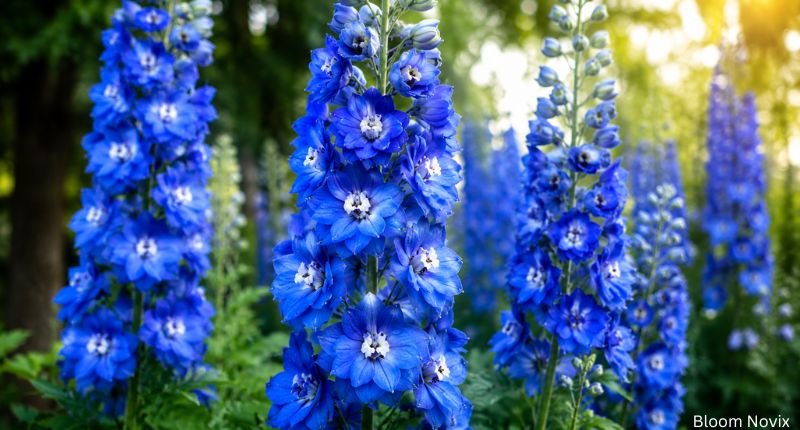
Delphiniums stand for dignity. They also mean a positive outlook. Their tall spikes add height fast. Stake the stems early. Strong wind can snap them.
Growing Zone: 3–7 | Bloom Season: Early Summer | Care Level: Medium | Pairs Well With: White lilies, baby’s breath
3. Blue Orchid
The blue orchid means rare beauty. It also means quiet strength. Most blue orchids are dyed, not natural. Give them bright, indirect light. Water only when roots turn silver.
Growing Zone: 10–12 (indoor elsewhere) | Bloom Season: Year-round (indoor) | Care Level: Hard | Pairs Well With: White orchids, greenery
4. Forget-Me-Not
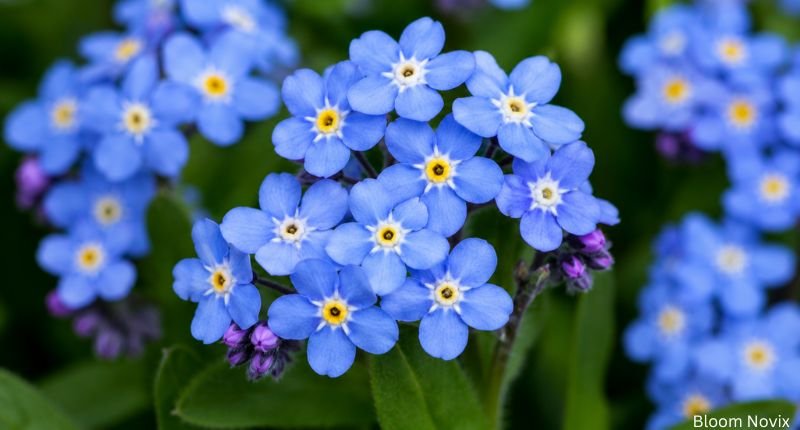
Forget-me-nots mean true love. They also mean lasting memory. Their tiny petals suit memorial gardens. They self-seed fast. One patch can spread in a year.
Growing Zone: 3–9 | Bloom Season: Spring | Care Level: Easy | Pairs Well With: White daisies, lavender
5. Cornflower
The cornflower means hope. It also means good luck. It grows wild in meadows. Soldiers once carried it for luck. This flower likes poor soil and needs little care.
Growing Zone: 2–11 | Bloom Season: Summer | Care Level: Easy | Pairs Well With: Wheat stalks, white cosmos
Read Also: American Beauty Rose Flower
6. Blue Rose
A blue rose means mystery. It also means the impossible. True blue roses do not grow in nature. Every one you see is dyed. This makes it a bold gift.
Growing Zone: 5–9 (as a dyed white rose) | Bloom Season: Summer | Care Level: Medium | Pairs Well With: White roses, silver foliage
7. Iris
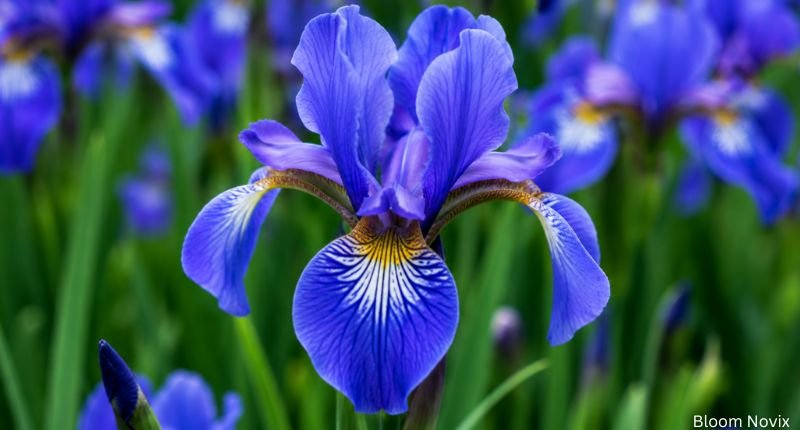
The blue iris means faith. It also means wisdom and courage. Its sword-shaped leaves suit formal gardens. Split the bulbs every three years. This keeps blooms strong.
Growing Zone: 3–9 | Bloom Season: Late Spring | Care Level: Easy | Pairs Well With: Yellow tulips, white ranunculus
8. Morning Glory
Morning glories mean renewal. Their blooms open at dawn. They close again by afternoon. The vines climb fences fast. Give them room to spread.
Growing Zone: 2–11 (annual) | Bloom Season: Summer to Fall | Care Level: Easy | Pairs Well With: White clematis, climbing roses
9. Bluebell
Bluebells mean humility and thanks. They cover forest floors each spring. Let their leaves die back on their own. Cutting them too soon weakens the bulb.
Growing Zone: 4–9 | Bloom Season: Mid Spring | Care Level: Easy | Pairs Well With: White snowdrops, ferns
10. Aster
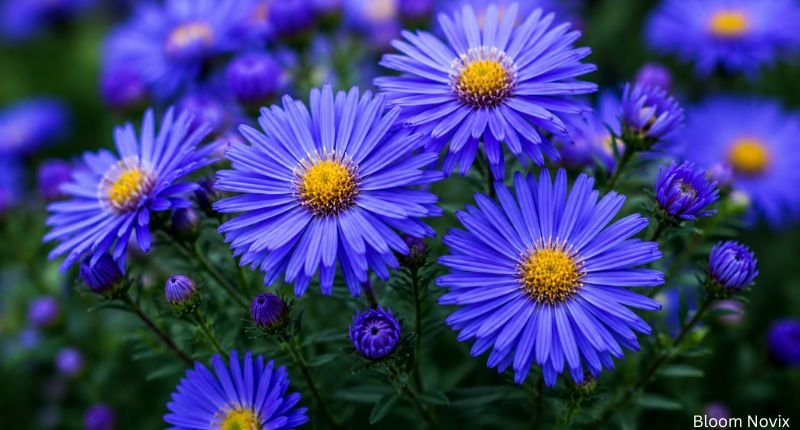
The blue aster means patience. It also means wisdom. Its daisy-like blooms show up late. They often last into first frost. Deadhead spent blooms for more flowers.
Growing Zone: 3–8 | Bloom Season: Late Summer to Fall | Care Level: Easy | Pairs Well With: Orange marigolds, white mums
11. Gentian
Gentians mean inner strength. They also mean healing. Their deep blue is one of nature’s richest shades. These plants like cool weather. Hot, humid summers can harm them.
Growing Zone: 3–7 | Bloom Season: Late Summer | Care Level: Hard | Pairs Well With: White alpine flowers, silver foliage
12. Anemone
The blue anemone means anticipation. It also means protection. Its dark center pops against bright petals. Plant the corms in fall. Blooms arrive the next spring.
Growing Zone: 4–8 | Bloom Season: Early Spring | Care Level: Medium | Pairs Well With: White daffodils, hellebores
Explore More: Lotus Flower Season
13. Lupine
Lupines mean imagination. They also mean admiration. Their tall spikes hold many small blooms. They add nitrogen to soil. This actually helps the ground they grow in.
Growing Zone: 4–8 | Bloom Season: Early Summer | Care Level: Medium | Pairs Well With: Yellow yarrow, white daisies
14. Nigella
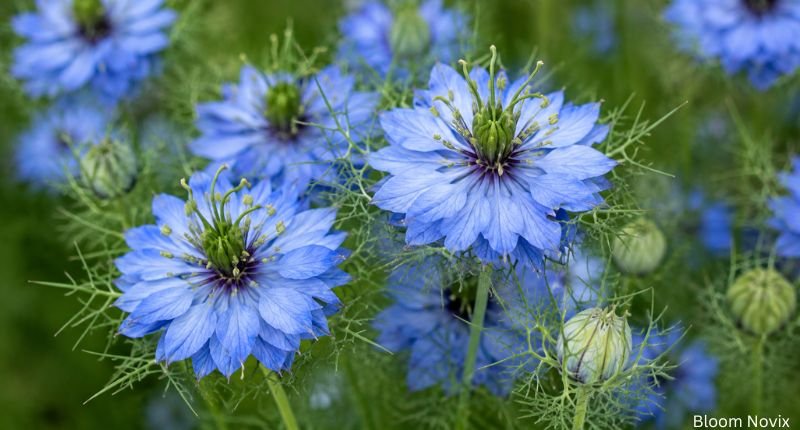
Also called Love-in-a-Mist, this flower means affection mixed with mystery. Its soft, fern-like leaves wrap each bloom. The seed pods look great in dried bouquets too.
Growing Zone: 2–11 (annual) | Bloom Season: Summer | Care Level: Easy | Pairs Well With: White cosmos, dried grasses
15. Hyacinth
The blue hyacinth means sincerity. It also means forgiveness. Its strong scent fills a room fast. Plant the bulbs in fall. You will get an early spring bloom.
Growing Zone: 4–8 | Bloom Season: Early Spring | Care Level: Easy | Pairs Well With: Yellow daffodils, white tulips
16. Bachelor’s Button
Bachelor’s buttons mean hope. They also mean lasting love. Young men once wore them to show affection. This flower grows fast from seed. It often blooms within eight weeks.
Growing Zone: 2–11 (annual) | Bloom Season: Summer | Care Level: Easy | Pairs Well With: White wildflowers, wheat
17. Veronica
Blue veronica means fidelity. It also means steady connection. Its slim spikes add texture near round blooms. Trim it back after the first flush. This brings a second round of flowers.
Growing Zone: 4–8 | Bloom Season: Summer | Care Level: Easy | Pairs Well With: Pink peonies, garden roses
18. Clematis
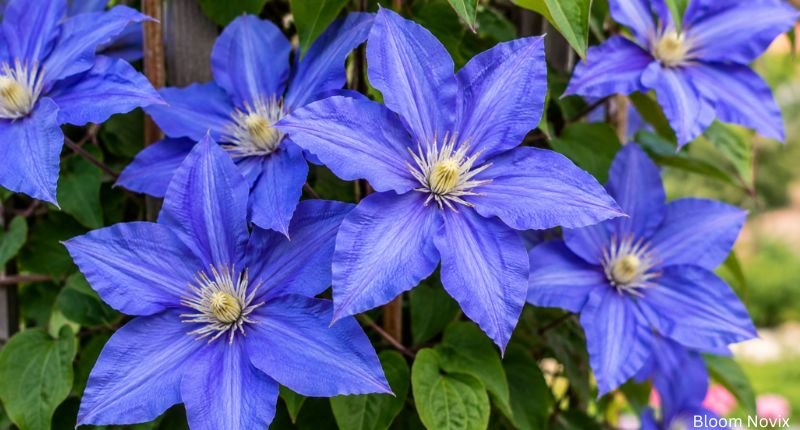
The blue clematis means intelligence. It also means ambition. This climbing vine covers a trellis fast. Keep its roots shaded. Keep its top growth in full sun.
Growing Zone: 4–9 | Bloom Season: Summer | Care Level: Medium | Pairs Well With: White jasmine, climbing roses
19. Scabiosa
Scabiosa means peace. It also means quiet love. Its soft blooms suit relaxed bouquets well. Deadhead it often. This keeps fresh flowers coming all summer.
Growing Zone: 4–9 | Bloom Season: Summer | Care Level: Easy | Pairs Well With: Pink cosmos, white lace flower
Read This Article: Ugly Flower Names
20. Himalayan Blue Poppy
The Himalayan blue poppy is one of the rarest flowers alive. It means imagination and spirit. It needs cool, moist air to grow. Gardeners see a bloom as a big win, since this plant is hard to grow.
Growing Zone: 7–8 (cool climates only) | Bloom Season: Early Summer | Care Level: Hard | Pairs Well With: White anemones, ferns
Blue Flower Meanings at a Glance
| Flower | Core Meaning | Best For |
| Hydrangea | Gratitude, understanding | Weddings |
| Forget-Me-Not | True love, memory | Sympathy |
| Cornflower | Hope, good fortune | Gifts |
| Blue Rose | Mystery, rarity | Romance |
| Iris | Faith, courage | Spring bouquets |
| Himalayan Blue Poppy | Imagination, spirit | Collectors |
Why Blue Flowers Are So Popular
Blue flowers bring a cool, calm tone. They pair well with almost any color. Florists love how they blend into white or green arrangements. This makes them a safe pick for any event.
Their rarity adds to the appeal too. True blue blooms are hard to find. So people see them as extra special. This makes blue floral arrangements feel more personal.
Best Occasions for Blue Flowers
Weddings
Blue wedding flowers add a timeless feel. They work well in bouquets and centerpieces. Couples often pick them to show trust. They also show a lasting bond.
Sympathy Flowers
Blue flowers for sympathy offer real comfort. Their calm tone brings peace, not sharp grief. Forget-me-nots and hydrangeas are common picks. They fit these quiet moments well.
Romantic Gifts
Blue blooms make a thoughtful gift. They stand for loyalty and trust. They also stand out from plain red roses. A blue rose signals rare, deep love.
Celebrations
Bright blue flowers add freshness to birthdays. They pair well with yellow or coral tones. Cornflowers and delphiniums shine at these events. They bring bold, happy color.
When Should You Gift Blue Flowers?
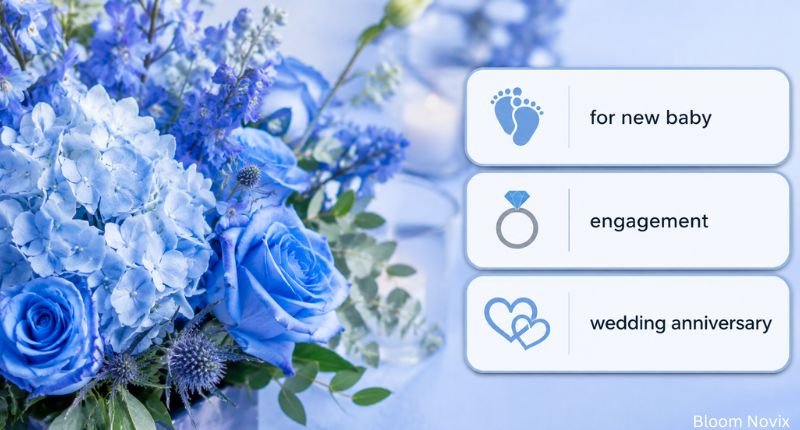
For a New Baby
Soft blue blooms suit a new baby well. Hydrangeas and hyacinths work great here. They bring a calm feel to any nursery. This makes them a top baby shower pick too.
To Congratulate an Engagement
A bouquet with blue roses fits an engagement well. Blue irises work well too. These flowers stand for trust and commitment. They feel more unique than plain red roses.
For a Wedding Anniversary
Blue flowers make a meaningful anniversary gift. They stand for loyalty over time. Veronica and delphiniums carry this steady meaning. A deep blue bouquet feels mature and elegant.
Blue Flowers by Season
Different blue flowering plants bloom at different times. Knowing the season helps you plan a colorful garden. Here is a quick list by season.
| Season | Blue Flowers |
| Spring | Bluebell, Blue Iris, Blue Hyacinth, Blue Delphinium |
| Summer | Periwinkle, Blue Star, Blue Hydrangea, Blue Clematis |
| Autumn | Blue Aster, Blue Globe Thistle, Blue Lobelia, Blue Chrysanthemum |
| Winter | Glory of the Snow, Blue Pansies, Blue Scilla, Blue Ipheion |
Periwinkle spreads low across garden beds. It blooms through most of summer. Blue Star grows star-shaped flowers. Its leaves turn bright colors in fall. Blue Globe Thistle adds a spiky shape. It dries well for winter décor. Blue Lobelia trails nicely from pots. It handles late summer heat well.
Blue Chrysanthemum ends the growing season with rich color. Glory of the Snow often pushes through late frost. It is one of the earliest bloomers. Blue Pansies handle cold well. They often bloom through mild winters. Blue Scilla and Blue Ipheion spread on their own. Each patch grows wider every year.
See More: December’s Birth Flower
Care & Handling Tips for Blue Flowers
Blue blooms need a bit more care. Their color depends on soil and light. Getting this right keeps the color bold. Here is a simple care guide.
| Flower Type | Sunlight | Watering | Special Tip |
| Hydrangea | Partial shade | Regular, deep watering | Acidic soil keeps blue color |
| Delphinium | Full sun | Moderate | Stake tall stems |
| Iris | Full sun | Low once established | Divide bulbs every 3 years |
| Bluebell | Shade | Low | Let leaves die back naturally |
| Gentian | Partial shade | Consistent moisture | Avoid hot, humid climates |
For cut blue flowers, trim stems at an angle first. Change the water every two days. This keeps blooms fresh longer. Keep vases away from sun and heat vents. Both cause petals to wilt fast.
Final Words
Blue flowers and their meanings offer more than good looks. Each bloom tells its own story. This runs from the small bluebell to the rare blue poppy. Some mean trust. Some mean hope. Some mean quiet strength. There is a blue flower for every moment.
Use this guide to pick the right bloom. Match it to the season. Match it to the message you want to send. With good care, these rare flowers will reward you. Blue is rare in nature. But with this list, it does not have to be rare in your garden.
FAQs
What do blue flowers mean in a relationship?
Blue flowers stand for trust. They stand for loyalty too. They show a calm, steady bond. They point to honesty. A blue rose can signal rare, deep love.
What do blue flowers symbolize when someone is grieving?
Blue flowers bring peace. They offer quiet comfort. Forget-me-nots are a common choice here. They stand for lasting memory.
What is the prettiest blue flower?
This comes down to taste. Many people pick the Himalayan blue poppy. Its rare color feels stunning. The blue hydrangea is a close second. Its full blooms are hard to beat.
What do blue flowers mean in the Bible?
Blue links to heaven in the Bible. It ties to cloth used in the tabernacle. Specific blue flowers are not named much. But the color itself points to holiness.
What was Jesus’ favorite flower?
The Bible does not name his favorite flower. Many people think of the lily. This comes from his words in Matthew. He speaks of “lilies of the field.” This shows trust in God, not a personal pick.
What does God say about the color blue?
The Bible ties blue to holiness. This shows up in the tabernacle’s blue thread. This thread is called tekhelet. It was meant to remind people of heaven. Blue stands for purity and a link to God.
BloomNovix is managed by an experienced team of content writers and SEO specialists with 4+ years of expertise in gardening and plant care. We provide well-researched guides, gardening tips, and insights on floral meanings to help plant lovers grow their indoor and outdoor gardens with confidence.
9 thoughts on “20 Amazing Blue Flowers and Their Meanings: Symbolism & Care Tips”