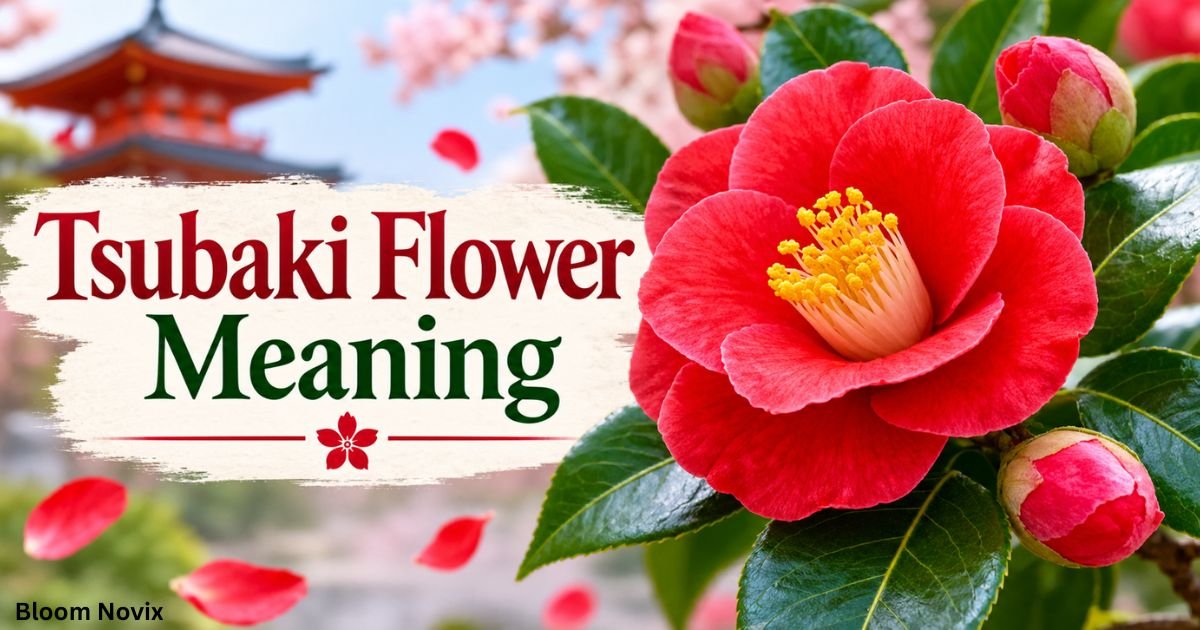
Very few flowers convey such a strong narrative as the camellia in Japan. The tsubaki flower’s meaning does not lie only in the beautiful flowering of winter. It also encompasses love, respect, patience , and quiet courage. A moment is enough to perceive it ; look at its red petals on a glossy leaf background.
Nobody expected tsubaki flowers to drop all at once. This characteristic alone has had such a big influence on the flower’s symbols that shape Japanese flower symbolism in general. The samurai spoke about it quietly. The poets extolled its virtues. The lovers gave tsubaki as a vow. Keep on reading if you want to discover the reason it still evokes strong feelings.
What Is the Tsubaki Flower? Botanical Profile & Identification
Tsubaki is the Japanese name for Camellia japonica. It grows as an evergreen shrub or small tree. The leaves are dark, glossy, and leathery. They stay green all year, even under snow.
Flowers open from winter to early spring. Most Japanese camellia blooms measure three to five inches across. Single forms show a ring of bright yellow stamens. Double forms look like layered rosettes.
Wild trees grow along the coasts of Japan, Korea, and eastern China. Gardeners have bred thousands of cultivars from them. Colors run from deep red to pure white, with pink and striped forms in between.
- Scientific name: Camellia japonica
- Japanese name: Tsubaki (椿)
- Bloom season: December to April
- Garden height: about 6 to 15 feet
- Best climate: mild, USDA zones 7 to 9
Tsubaki Flower Meaning: Core Symbolism
At its heart, tsubaki flower symbolism centers on love, honor, and steady devotion. The flower also stands for longevity and good fortune. Its evergreen leaves suggest endurance. Its winter bloom suggests hope.
Japanese culture adds a deeper layer. Tsubaki flowers in the cold, when little else dares. That makes it a sign of strength and resilience. People read courage in a bloom that will not wait for spring.
The flower also carries a sense of perfection and refinement. Its shape is simple and balanced. Nothing about it feels loud, yet everything feels certain. That calm confidence explains its place in Japanese aesthetics.
- Love and deep affection
- Admiration and respect
- Humble excellence
- A noble, dignified ending
Origin of the Name Tsubaki
The name looks simple, but its roots are layered. The Japanese character 椿 joins the symbol for tree with the symbol for spring. Japan created this character itself. It literally means “spring tree.”
Scholars offer two common theories for the spoken word. One links it to tsuya-no-ki, the “glossy-leaved tree.” Another links it to atsuba-no-ki, the “thick-leaved tree.” Both fit the plant well.
The Western name tells a different tale. Carl Linnaeus named the genus Camellia after Georg Kamel, a Jesuit botanist. Kamel studied plants in Asia, though he never introduced camellias himself. So the English name honors a scholar, while the Japanese name honors the tree.
- Tsubaki is also a popular Japanese given name.
- It often appears in names for shops, shrines, and brands.
- The word always points back to this single, beloved tree.
Tsubaki in Japanese Flower Language (Hanakotoba)
Hanakotoba is the Japanese art of flower language. It assigns feelings and messages to each bloom. Tsubaki holds a respected place in it. People often link it to modest excellence and quiet pride.
Color changes the message. Red leans toward love and humble virtue. White points to purity and patient waiting. Pink softens the tone into gentle longing. Meanings vary by source, so treat them as traditions, not strict rules.
Western flower language gives a similar but not identical reading. The Victorians turned camellias into romantic code. The table below compares both views side by side.
| Color | Japanese flower-language idea | Western (Victorian) idea |
| Red | Humble virtue, unpretentious grace | “You are a flame in my heart” |
| White | Perfect beauty, patient waiting | “You are adorable” |
| Pink | Modest beauty, gentle longing | “Longing for you” |
History & Cultural Timeline of Tsubaki
Tsubaki has lived beside the Japanese people for over a thousand years. Ancient poets mentioned it in the Man’yōshū, Japan’s oldest poetry collection. They praised its shine and its winter courage. Early records also show people pressing its seeds for oil.
The flower gained status over time. Tea masters placed single blooms in tea rooms. Warlords and shoguns grew prized varieties in their gardens. Edo-period growers then bred hundreds of cultivars, and a true camellia craze took hold.
The story did not stop at Japan’s shores. Traders carried the plant to Europe in the 1700s. Europeans fell for it at once. Within a century, camellias filled greenhouses, novels, and even fashion.
| Period | What happened |
| 8th century | Tsubaki appears in Man’yōshū poems |
| Heian era | Tsubaki oil and camellia-leaf sweets appear in court life |
| Edo era | Cultivation boom and hundreds of named varieties |
| 1700s | Camellias reach European collectors |
| 1848 | Dumas publishes La Dame aux Camélias |
| 1915 | Shiseido adopts its famed camellia logo |
Tsubaki Flower Meaning Love
In love, tsubaki speaks of loyalty and deep affection. It does not promise a fling. It promises a bond that holds until the end. That is why Japanese couples treasure it.
The falling habit adds romance. Most flowers fade slowly, petal by petal. Tsubaki stays perfect until the very last moment. Many people read this as love that never grows tired or torn.
Friendship also finds a place here. A pink tsubaki says, “I respect you, and I am glad you are near.” It carries warmth without pressure. For a close friend, it feels thoughtful and sincere.
- Red tsubaki: passion and devotion
- White tsubaki: faithful, patient love
- Pink tsubaki: tender affection and friendship
Tsubaki Flower Spiritual Meaning
Ancient Japan considered the tsubaki tree very sacred. Its shiny leaves and flowers , which bloomed in winter, were believed to have powers of protection. In a few villages, its wood was used to make sacred implements. The tree thus became a symbol of protection , guarding against bad things.
This relationship between the people and the tree is still preserved today by the Shinto religion. The name of Tsubaki Grand Shrine comes from the name of the flower, and it is located in Mie Prefecture. It is, in fact, the oldest shrine still in existence in Japan. The shrine attracts people looking for new beginnings, regaining their spirits, and good fortune concerning their life issues.
Buddhism’s view of the tsubaki flower offers another perspective . It teaches that nothing is permanent. The fall of a whole tsubaki flower makes people realize how they should gracefully detach themselves from the things of the world. The flower also teaches that the end can be so beautiful.
Red Tsubaki Flower Meaning
Red is probably the most traditional tsubaki color , and it’s quite possibly the boldest as well. A contrast of red flowers of the mountain tea tree against a backdrop of white snow really looks very vibrant. It is one of the reasons why artists have painted that scene for centuries.
The red tsubaki flower is quite symbolic since it brings together elements of a passionate heart and also a proud one. It portrays love that is strong but very gentle. Furthermore, it also expresses honor and noble character. Most people pick the flower to let someone know that the person is of great importance to them.
Also, the red tsubaki flower at the beginning of a new year brings good fortune. Florists often incorporate red tsubaki flowers in New Year displays throughout Japan. The color fits well with other symbols that bring good things. To put it simply, the red tsubaki flower welcomes prosperity and luck.
White Tsubaki Flower Meaning
White tsubaki makes one feel peaceful and pure. It embodies idealistic beauty, loyalty, and patience. A white flower is fitting for serene moods and honest pledges. A white blossom does not boast yet always catches people’s eyes.
In Japan, besides the spiritual meanings, the white tsubaki flower has connotations of admiration as well. White camellias in the Western Hemisphere once carried the message of admiration silently. That idea was popularized through a well-known story by Dumas. The U.S. brought it up to date since Alabama took the camellia as its state flower.
Winter bride gowns and other new events are well accentuated by white tsubaki. The clean petals go perfectly with green leaves. Florists for a marriage usually incorporate this flower into their winter bouquets. The delicate white tone is just right to complement the wedding attire’s colors without overshadowing the whole look.
Black Tsubaki Flower Meaning
Camellia sinensis, the true species of camellia, does not produce black flowers. A few of the very dark red cultivars might look black when light is poor. Nevertheless, there is still some meaning assigned to this concept by people. Most commonly, the black camellia flower symbolizes mystery, intense passion, and secret strength. In fact, some also consider it a gesture of goodbye and mourning.
There are, of course, different meanings for other people, and it’s the newer symbolism that these meanings refer to, not what Japanese people held centuries ago. If you see a jet-black camellia online, please be cautious. A camellia like that may have been edited, dyed, or even painted for appearance. The authentic ones will appear to have red shades when seen in bright daylight. I would suggest using a deep red flower as a substitute, with the symbolic meaning remaining intact.
Blue Tsubaki Flower Meaning
Blue tsubaki is a dream, not a plant. Breeders have not created a true blue camellia. Photos of blue blooms come from dye or digital editing. Knowing this protects you from false claims.
The blue tsubaki flower meaning lives in imagination. People use it to express rare love, calm trust, and something almost unreachable. Writers and tattoo artists like it for that reason. It stands for the impossible made beautiful.
If you want a blue feel, use design instead of nature. Pair white tsubaki with blue ribbon or blue vases. This keeps the message honest. It also keeps the flower real.
- Real camellias come in red, white, pink, and mixed tones.
- Blue versions are edited images or dyed petals.
- Treat blue as a symbol, not a species.
Green Tsubaki Flower Meaning
Green says the words through the leaves rather than the petals. Tsubaki leaves are always green. Green is the hero here. It stands for renewal, growth, and stability. Green tsubaki also connotes healing and new beginnings.
This color suits those who have just started a quieter period in their lives . There is also a pleasant and healthy link to a plant. Green tea comes from the Camellia sinensis plant, our close relative. Both plants of the genus Camellia are linked in health and daily rituals, and here green means balance and good health.
Tsubaki and the Samurai: Why Warriors Feared the Falling Bloom
At once, the whole Tsubaki flower of the branch falls from the tree. In fact, it lands whole on the forest floor. Someone mistook the scene for a severed head.
The flower was the main motive in many samurais ‘ dreams for a long time. Some did not get along with it, so they were not happy that it was planted near them. While some were still fond of it precisely because of that very fact. Without a slow fading away, there was only a sudden ending. To the nobles, that death seemed noble indeed.
Global Traditions, Literature & Art
In Japan, tsubaki fills tea rooms and gardens. Tea masters use it in chabana, the simple flower arrangements of tea ceremony. A single bud in a bamboo vase can say more than a bouquet. Painters and woodblock artists also love its bold lines.
The West wrote its own camellia story. In La Dame aux Camélias, a heroine wears white or red camellias to signal her mood. Opera later retold it as La Traviata. Suddenly, the flower meant romance, risk, and sacrifice.
Modern culture keeps the symbol alive. Shiseido still uses a stylized camellia in its logo. Anime and games often borrow “Tsubaki” for strong, elegant characters. Tsubaki flower tattoo meaning usually combines love, honor, and a graceful ending.
- Red tattoo: passion and courage
- White tattoo: purity and faith
- Pink tattoo: gentle love and gratitude
Tsubaki Uses: Culinary, Medicinal & Skincare
Tsubaki is not only helpful but also a pleasure to the eye. The camellia oil is obtained by pressing its seeds. Its English name is tsubaki abura. Japanese householders have employed it since the earliest times in their cooking , hairdressing , and skincare.
This natural oil is a favorite in the beauty sector: people love it for nourishing their hair and skin. Moreover, traditional medicine recognizes it as a remedy for minor skin complaints. Blacksmiths also made use of it to prevent their tools from getting rusty. Make sure to do your patch test before using anything and seek the doctor’s advice when in doubt about the medicinal applications.
- Hair: adds shine and softness
- Skin: acts as a light moisturizer
- Kitchen: supports delicate frying
- Tools: protects metal from rust
Tsubaki Gifting Etiquette & Best Occasions
Tsubaki makes a meaningful gift, but timing matters. In Japan, the dropping head can feel unlucky for sick people. Many givers skip it for hospital visits. For celebrations, though, it shines.
Choose the color by message. Red suits romance and anniversaries. White fits weddings, thanks, and fresh starts. Pink works for friends and family. A potted plant also makes a lasting winter gift.
Presentation counts too. Keep the arrangement simple. One or three blooms look elegant. Add a short note that explains the meaningful gift behind it.
- Best for: anniversaries, weddings, New Year, housewarmings
- Be careful with: hospital visits and get-well wishes
- Pair with: green leaves, pine, or plain ceramic vases
Tsubaki vs. Camellia, Peony & Other Lookalikes
People often mix tsubaki with similar flowers. The first mix-up is with its own cousin, Camellia sasanqua, called sazanka in Japan. The second is the peony. Both look close at a glance.
The easiest clue is how the flower falls. Tsubaki drops whole. Sazanka scatters petals one by one. Peonies also shed petals and die back each winter, while tsubaki keeps its leaves.
| Feature | Tsubaki (Camellia japonica) | Sazanka (Camellia sasanqua) | Peony |
| Bloom season | Winter to early spring | Autumn to early winter | Late spring |
| How it falls | Whole flower drops | Petals scatter | Petals scatter |
| Leaves | Large, glossy, evergreen | Smaller, evergreen | Deciduous |
| Flower look | Neat, cup or rosette | Looser, open | Large, ruffled |
Tsubaki Toxicity, Safety & Care Tips
Good for pet owners: Camellia japonica is commonly marked as non-toxic for dogs and cats .
But remember, eating any plant by a dog or cat can cause stomach upset. Contact your vet promptly if your pet consumes a bunch of plants.
Seeds and oils must be kept away from pets . It is unusual, but people can have an allergic reaction to skin contact with camellia oil. Apply a small patch of it on your skin to test it first. Store seeds safely, far from small children, since they do not make a good snack.
With some habits, it’s easier to grow tsubaki. Partially shade it and use acidic, well-drained soil. Water regularly but never waterlog your roots. Usually, abrupt flower drop points to waterlogged soil or very cold conditions .
- Light: morning sun, afternoon shade
- Soil: pH around 5.5 to 6.5
- Mulch: keeps roots cool and moist
- Prune: right after flowering
Frequently Asked Questions
What does the tsubaki flower mean spiritually?
It stands for protection, good fortune, and graceful acceptance of change. The tsubaki flower meaning draws on Shinto’s sacred tree and Buddhism’s view of impermanence.
What does the tsubaki flower mean in love?
It means loyal, lasting devotion. Red shows passion, white shows faithful love, and pink shows tender affection.
Is tsubaki a good gift for special occasions?
Yes, it suits weddings, anniversaries, and New Year. Avoid it for hospital visits because the falling head can feel unlucky.
What does a white tsubaki mean?
A white tsubaki means purity, perfect beauty, and patient love. It also signals sincere admiration.
Why did samurai have mixed feelings about tsubaki?
The whole flower falls like a severed head. Some feared it, while others saw a noble, clean end.
Is tsubaki toxic to pets?
Camellia japonica is generally considered non-toxic to dogs and cats. Large amounts can still cause stomach upset, so call your vet if needed.
Can you use tsubaki for skincare?
Yes, tsubaki oil is a popular light moisturizer. Patch test first, since rare skin reactions can happen.
When does tsubaki bloom?
Tsubaki blooms from winter to early spring, roughly December to April. Exact timing depends on climate and variety.
How did tsubaki get its name?
The Japanese character combines “tree” and “spring.” The spoken name may come from words meaning glossy or thick-leaved tree.
Is tsubaki the same as camellia?
Tsubaki is the Japanese name for Camellia japonica. It is one species within the larger camellia family.
Conclusion
The Tsubaki flower’s meaning reflects the harmony of love, courage, honor, and beauty. Its blooms appear bravely in the midst of winter and then fall gracefully, symbolizing strength, dignity, and the fleeting beauty of life. Each hue carries a unique message, from the intense passion of red to the purity of white, symbolizing faith. Combined, the petals narrate one of the most fascinating stories in the floral culture of Japan.
Take these symbolic meanings to heart. Present a red tsubaki as an expression of love ; give a white one as a token of a sincere promise. Stay away from the color when you want to comfort your sick loved ones, and plant it where the sun is not too harsh and the soil is quite sour. Be it blooming in a garden, gifted as a present, or drawn as a tattoo, the tsubaki always carries a message that remains forever.
BloomNovix is managed by an experienced team of content writers and SEO specialists with 4+ years of expertise in gardening and plant care. We provide well-researched guides, gardening tips, and insights on floral meanings to help plant lovers grow their indoor and outdoor gardens with confidence.