Not every flower was built to sit pretty in a bouquet. Some were built to survive, to trick insects, or to smell like something died nearby. That is exactly where ugly flower names come from, and they are not insults. They are honest descriptions written by people who saw something strange growing in the wild and simply told the truth about it.
I have spent years poking around botanical gardens and greenhouse nurseries chasing plants that most people walk right past. What I found is that the flowers carrying the ugliest names are usually the most interesting ones in the entire garden.
This guide pulls together the widest and most accurate collection of weird flower names, strange flower names, and unusual flower names in one place, complete with real growing details and the stories behind every odd label. Whether you are a gardener chasing something different or simply someone who loves botanical curiosities, you are in the right spot.
What Are Ugly Flower Names?
Ugly flower names are labels given to plants based on how they smell, how they look, or how they behave rather than how delicate or romantic they appear. A flower does not need to be unattractive to earn one of these names either. Many of the plants on this list are strikingly beautiful once you actually look at them closely. The name usually comes from a single dominant trait such as a rotten odor, a fanged appearance, or a shape that resembles an animal, a monster, or something far less flattering.
These names tend to fall into a few categories. Some describe smell, like anything containing the word stink or corpse. Some describe shape, like tongue, claw, or tail. Some come from folklore, medicine, or old wives tales passed down for centuries. A handful come from the simple fact that a plant is aggressive, invasive, or mildly toxic and someone wanted to warn the next person who found it.
None of that makes the plant less worthy of a spot in your garden. If anything, it makes it more memorable. A guest will remember a corpse flower long after they forget the name of your prized hydrangea.
Corpse Flowers And Stinky Blooms
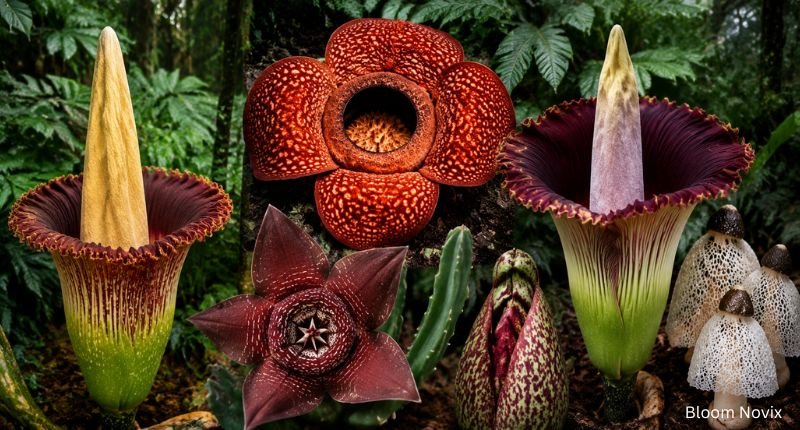
Few plants have earned their reputation as thoroughly as the corpse flower family. These are flowers that smell like death, and they are proud of it. The odor is not an accident. It is a pollination strategy. Flies and carrion beetles are drawn to the scent of decay, and these plants exploit that instinct completely.
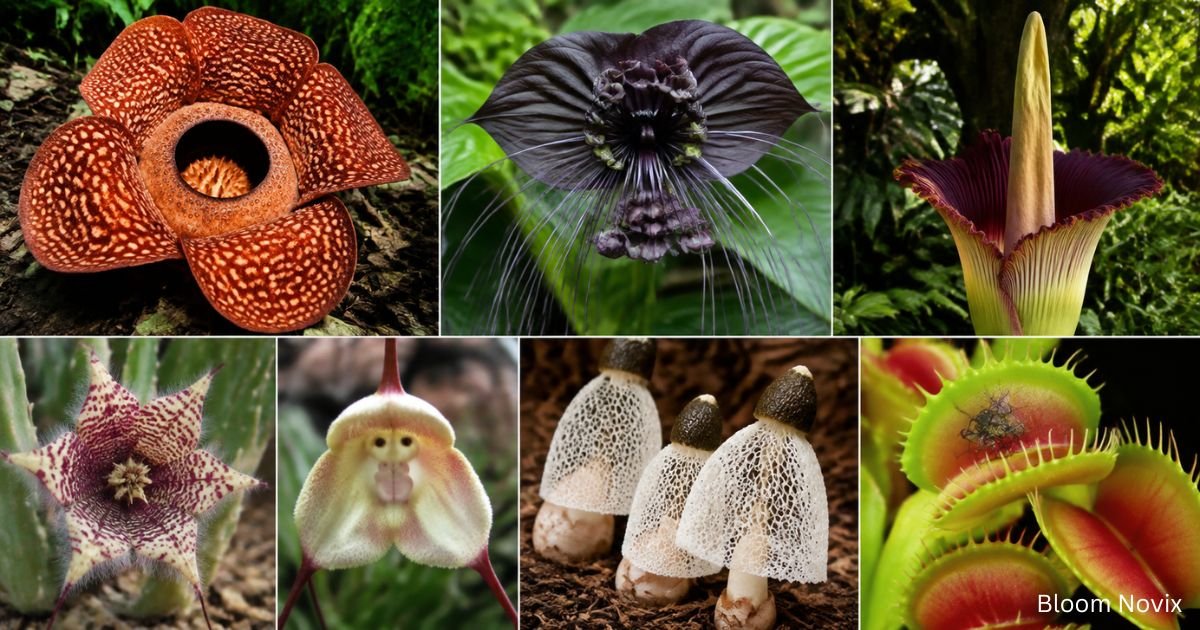
Titan arum, often just called the corpse flower, is the most famous of the bunch. It can grow over ten feet tall and only blooms once every several years, which is why botanical gardens turn its bloom into a public event. Rafflesia takes a different approach, growing no stem or leaves at all and producing a single flower that can stretch past three feet wide. Both plants attract crowds purely because people want to smell something that awful in person at least once.
Other names worth knowing in this group each carry their own version of the same trick, luring in insects with the promise of rot instead of nectar.
- Voodoo Lily
- Dead Horse Arum
- Dracunculus Vulgaris
- Stapelia Gigantea
- Carrion Flower
- Elephant Foot Yam
- Devil’s Tongue
- Starfish Flower
- Zulu Giant
- Orbea Variegata
- Huernia
- Caralluma
- Pachycarpus
Most plants in this group are surprisingly forgiving once established, since many originate from arid or semi arid regions and store water in thick stems rather than leaves. Stapelia and huernia in particular do well in containers on a sunny windowsill and only bloom for a few days at a time, which is often long enough for the smell to fade before it becomes a real nuisance indoors. If you are curious about growing something in this category without needing a greenhouse, these smaller succulent relatives are a far easier starting point than chasing an actual titan arum.
Bat Flowers And Strange Shapes
If corpse flowers win on smell, bat flowers win on appearance. The black bat flower, scientifically known as tacca chantrieri, produces deep purple blooms shaped almost exactly like a bat in flight, complete with long whisker like filaments that can grow over two feet in length. The white bat flower, tacca integrifolia, offers the same eerie shape in a paler tone that almost glows in low light.
This category also covers plants named for their resemblance to animal tails and features rather than full creatures. None of these plants are dangerous or foul smelling. They simply earned their names because someone looked at them and immediately thought of an animal.
- String Of Bananas
- String Of Pearls
- String Of Hearts
- Burro’s Tail
- Donkey Tail
- Bunny Ears Cactus
- Mickey Mouse Cactus
- Monkey Tail Cactus
- Rat Tail Cactus
- Dog Tail Cactus
- Cat Tail Cactus
- Fox Tail Fern
- Squirrel Tail Grass
- Lamb’s Ear
- Bunny Tail Grass
- Hare’s Tail Grass
- Pussy Willow
Unlike the corpse flower family, most of these string and tail shaped plants are trailing succulents or ornamental grasses that thrive in hanging baskets and border edges. They ask for very little beyond bright light and occasional watering, making this one of the friendliest categories on the list for anyone who wants a conversation starting plant without the maintenance headache of a true tropical specimen.
Stinkhorns And Fungal Oddities
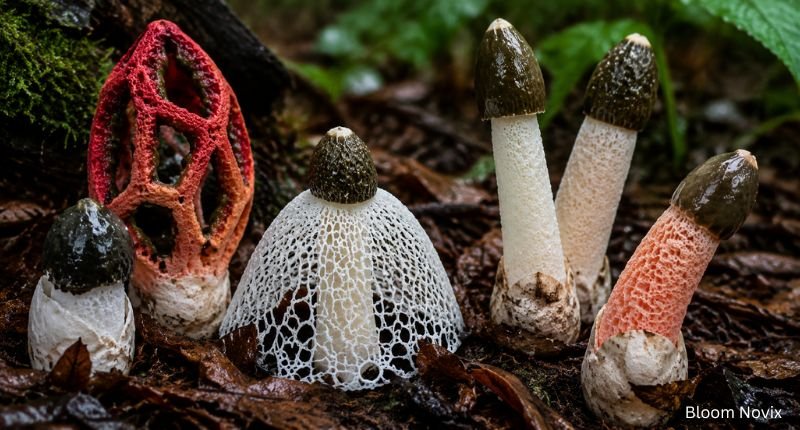
Stinkhorns are not technically flowers since they belong to the fungus kingdom, but no list of ugly plant names would be complete without them. These fungi appear suddenly after rainfall, often overnight, and just as quickly attract a swarm of flies with an odor that most people compare to rotting meat or sewage.
The common stinkhorn, phallus impudicus, is the most recognized member of this group. The rest of the family shares the same alien look that makes people stop and stare, even when the smell is not quite as strong.
- Dog Stinkhorn
- Elegant Stinkhorn
- Bridal Veil Stinkhorn
- Red Cage Stinkhorn
- Lattice Stinkhorn
- Star Stinkhorn
- Squid Stinkhorn
- Octopus Stinkhorn
- Devil’s Fingers
- Dead Man’s Fingers
- Earthstar
- Puffball
- Birds Nest Fungus
Stinkhorns are not something you plant deliberately since they spread through spores already present in mulch and decaying wood. If you find one popping up in a garden bed, the kindest thing you can do is leave it alone for a day or two and watch the flies do their work, since the entire life cycle usually wraps up within 48 hours before the fungus collapses back into the soil.
Read More: April Birth Flowers
Weird Orchids With Ugly Names
Orchids have a reputation for elegance, so it is almost funny how many of them carry names that sound anything but refined. The monkey face orchid, dracula simia, closely resembles a small primate staring back at you from the center of the bloom. The flying duck orchid, caleana major, looks so much like a bird in flight that visitors often assume it is fake. The naked man orchid, orchis italica, has a shape that requires zero explanation once you see a photo.
Every single one of these plants is a masterclass in mimicry, evolved specifically to fool insects into landing on them for pollination.
- Bee Orchid
- Fly Orchid
- Spider Orchid
- Ghost Orchid
- Devil’s Orchid
- Zombie Orchid
- Clown Orchid
- Octopus Orchid
- Vampire Orchid
- Dracula Orchid
- Bat Orchid
- Cockroach Orchid
- Lizard Orchid
Most of these unusual orchids need the same basic care as any other orchid, meaning bright indirect light, a well draining bark based mix, and consistent humidity above 50 percent. The monkey face orchid in particular is notoriously slow to flower and prefers cooler nighttime temperatures than typical tropical orchids, which is why it is usually grown by dedicated collectors rather than casual houseplant owners.
Carnivorous Plants With Fierce Names
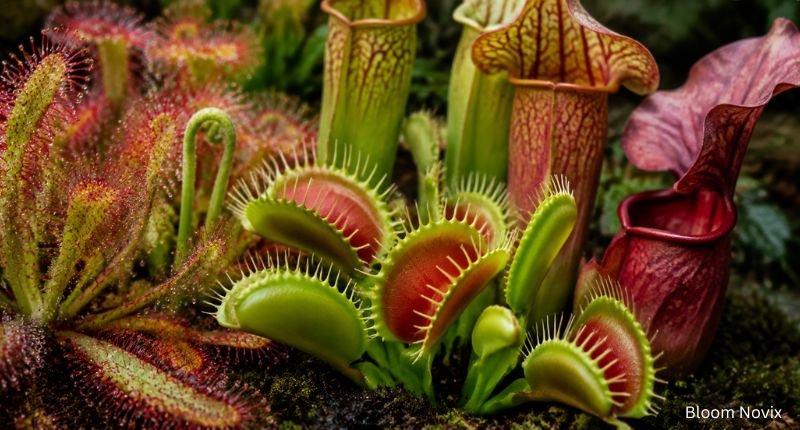
Carnivorous plants sound intimidating, and honestly they earn it. The venus flytrap, dionaea muscipula, snaps its hinged leaves shut around unsuspecting insects in less than a second. Pitcher plants, including nepenthes and sarracenia, take a slower approach by drowning prey in a pool of digestive fluid at the base of their tube shaped leaves. Sundews, or drosera, glisten with sticky droplets that trap insects the moment they land.
What makes this category interesting is that most of these plants produce delicate, almost pretty flowers above their deadly traps, a contrast that makes them some of the most fascinating strange flowers you can grow.
- Cobra Lily
- Monkey Cup
- Trumpet Pitcher
- Purple Pitcher
- Yellow Pitcher
- White Pitcher
- Green Pitcher
- Parrot Pitcher
- Hooded Pitcher
- Sun Pitcher
Growers new to carnivorous plants often make the mistake of feeding them regular fertilizer, which can actually kill the roots since these species evolved in nutrient poor bog conditions and get their nourishment from prey instead. Distilled or rain water, full sun, and consistently damp soil are usually the only requirements needed to keep a venus flytrap or pitcher plant thriving for years.
Snake And Lizard Named Flowers
Reptile inspired names show up more often in the plant world than most people expect. The snake gourd, trichosanthes cucumerina, hangs from its vine in long curling shapes that closely resemble a serpent dangling overhead. The dragon arum, dracunculus vulgaris, produces a deep maroon spike that looks like something out of a fantasy illustration.
Many of these plants are low maintenance and widely available, making them an easy entry point if you want to add a reptilian theme to your garden without hunting down anything rare.
- Lizard Tail
- Snake Lily
- Snake Flower
- Lizard Orchid
- Dragon Lily
- Snake Plant
- Snake Vine
- Lizard Skin
- Dragon Tongue
- Snake Weed
- Lizard Nettle
- Dragon Star
- Snake Tongue
The snake gourd in particular is grown as a food crop across parts of South Asia, where the young fruit is harvested and cooked before it matures into its full curling shape. It climbs quickly on a trellis, so gardeners who want the visual drama of a hanging serpent shaped vine can have one established within a single growing season.
Strange Succulents With Ugly Names
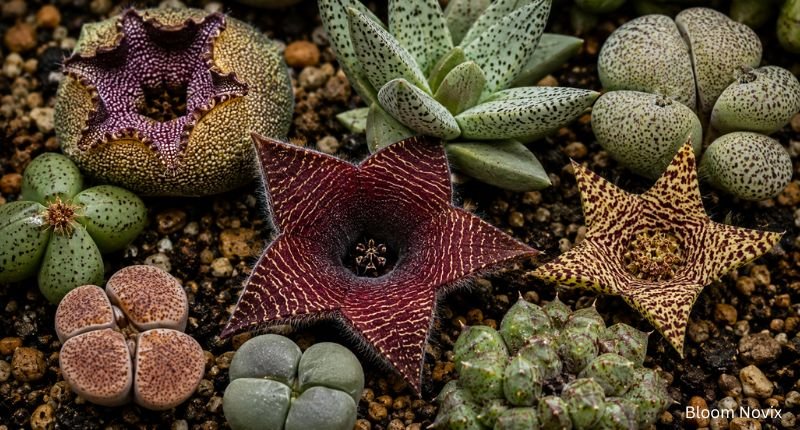
Succulents get a reputation for being cute, but a surprising number of them look like something else entirely. Lithops, better known as living stones, are so good at mimicking pebbles that people often water the soil around them without realizing there is a plant hiding in plain sight. Pleiospilos, called the split rock succulent, takes the same camouflage trick and applies it to a cracked stone appearance.
These succulents thrive on neglect, making them one of the more forgiving choices if you are new to growing anything on this list.
- Pebble Plant
- Owl Eyes
- Zebra Plant
- Echeveria
- String Of Dolphins
- Moonstones
- Jelly Beans
- Baby Toes
- Stone Faces
- Finger Plants
- Elephant Bush
- Turtle Vine
Lithops in particular need a very specific watering rhythm to survive long term, since overwatering during their dormant period is the single most common cause of death for beginners. They shed their old leaf pair once a year, drawing moisture from the old leaves to form the new ones, so it is important to hold off on watering during that transition even though the plant looks like it is shriveling and dying.
Ugly Vegetable Flowers
Vegetables rarely get credit for their blooms since gardeners are usually focused on the harvest instead. That does not mean the flowers themselves are boring, just overlooked. Artichoke flowers open into massive spiky purple blossoms if left unharvested. Cucumber flowers are small and bright yellow but grow directly from prickly vines. Onion flowers form round starburst clusters that pollinators truly love.
Next time you let one of these plants bolt in the garden instead of pulling it, take a minute to actually look at what it produces.
- Garlic Flower
- Leek Flower
- Asparagus Flower
- Rhubarb Flower
- Potato Flower
- Tomato Flower
- Pepper Flower
- Eggplant Flower
- Okra Flower
- Sweet Potato Flower
- Cassava Flower
- Yam Flower
- Taro Flower
- Ginger Flower
- Turmeric Flower
- Cardamom Flower
- Wasabi Flower
- Horseradish Flower
Letting a vegetable flower rather than harvesting it early is usually considered a mistake in food gardening, since bolting often signals the end of a plant’s productive edible stage. That said, allowing a couple of onion or leek plants to flower each season is a great way to attract pollinators to the rest of your vegetable patch and can also let you collect your own seeds for next year.
Weeds With Ugly Names
Every gardener has a complicated relationship with weeds, but even the plants we spend hours pulling out of the ground carry surprisingly detailed names and, occasionally, decent looking flowers. Bindweed wraps around anything it touches and produces small white trumpet shaped blooms. Nettle stings on contact but flowers in delicate green clusters that most people never bother to examine closely.
Some of these plants are edible, several are medicinal, and nearly all of them are far more resilient than anything you deliberately planted.
- Thistle
- Dock
- Burdock
- Cocklebur
- Pigweed
- Lambsquarters
- Chickweed
- Sow Thistle
- Dandelion
- Plantain
- Curly Dock
- Yellow Dock
- Shepherd’s Purse
- Peppergrass
- Bitter Cress
- Henbit
- Dead Nettle
- Creeping Charlie
- Ground Ivy
- Sourgrass
- Crabgrass
- Foxtail
- Purslane
Chickweed and purslane are both edible and often show up in foraging guides, offering a mild peppery flavor that works well in salads. Dandelion flowers can be turned into syrup or wine, proving that even the most stubborn lawn weed can have a practical use once you stop viewing it purely as a nuisance to remove.
Ugly Names From The Garden
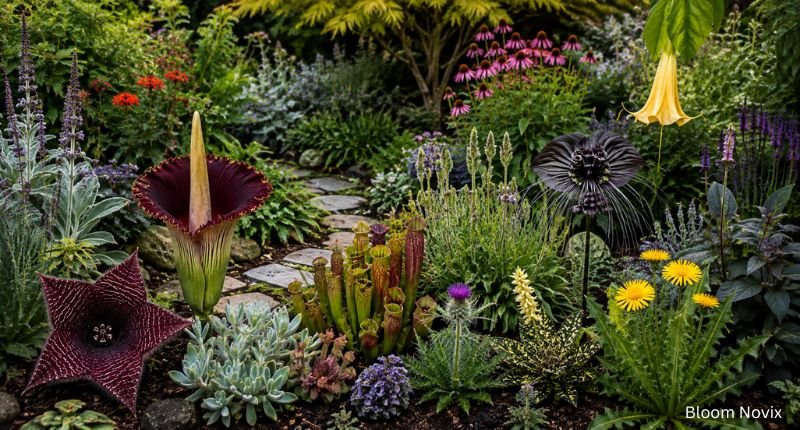
Some of the most common plants sitting in backyard flower beds carry names that sound far stranger than their actual appearance. Love in a mist sounds romantic on paper but describes a flower surrounded by a wispy, almost tangled bed of foliage. The toad lily earns its name from spotted petals that resemble amphibian skin rather than anything traditionally lily like.
Nearly all of these are easy to source from a local nursery, offering a practical starting point if the rarer names on this list feel too intimidating to track down.
- Dead Nettle
- Sneezeweed
- Turtlehead
- Bugleweed
- Cushion Spurge
- Wormwood
- Dusty Miller
- Moss Rose
- Bouncing Bet
- Soapwort
- Toadflax
- Rue
- Skullcap
- Mullein
- Broom
- Woad
- Weld
- Sedge
- Rush
- Reed
Love in a mist reseeds itself readily once planted, meaning a single packet of seeds can turn into a returning patch of flowers for years without any extra effort. Toad lily, on the other hand, prefers shaded woodland conditions and blooms in late summer or early fall, filling a gap in the garden calendar when most other flowering plants have already finished for the season.
Ugly Names From The Tropics
Tropical climates produce some of the strangest plant life on the planet, and their names reflect that. The jellyfish tree, native to the Seychelles, is critically endangered and produces seed pods shaped remarkably like the marine animal it is named after. The cannonball tree drops large, round, woody fruit that truly sound like artillery when they hit the ground.
These plants thrive in warm, humid environments and are usually only realistic to grow outdoors in tropical or subtropical zones.
- Golden Trumpet Tree
- Sausage Tree
- Snot Tree
- Vomit Fruit
- Stinky Toe
- Monkey Brush
- Lobster Claw
- Crab Claw
- Shrimp Plant
- Crayfish Plant
- Barnacle Plant
- Coral Tree
- Fishbone Plant
- Dragon Fruit
- Monkey Face
- Candle Tree
- Star Fruit
The cannonball tree is often planted near temples across South and Southeast Asia due to its cultural and religious significance, and its flowers release a strong fragrance at night to attract bat pollinators. Anyone living outside a true tropical zone will generally only encounter these species in a conservatory or botanical garden greenhouse, since most cannot tolerate temperatures below the mid 50s Fahrenheit.
Ugly Names From Folklore
Long before formal botanical naming existed, everyday people named plants after whatever story, superstition, or fear happened to be circulating at the time. Devil’s claw earned its name from curved seed pods that resemble a menacing hook. Witch’s thimble and witch’s bells both come from bell shaped blooms once believed to have magical properties.
These names offer a small window into how earlier generations understood the natural world, filling in gaps in scientific knowledge with imagination instead.
- Devil’s Bit
- Devil’s Darning Needle
- Devil’s Trumpet
- Devil’s Nettle
- Devil’s Shoestring
- Witch’s Hat
- Witch’s Herb
- Trollius
- Trollflower
- Goblin’s Gold
- Elf’s Cap
- Fairy Bells
- Fairy Lanterns
- Hobbit Flower
- Orc Flower
- Ogre Flower
- Giant Ogre Ear
Many folklore names were tied directly to protective superstition rather than pure imagination. Communities once believed that hanging witch’s bells near a doorway could ward off bad luck, while devil’s claw was sometimes avoided entirely out of fear that touching it could bring misfortune. These beliefs rarely had any scientific basis, but they shaped how generations of gardeners and foragers treated certain plants in the wild.
Ugly Names From Medicine
Herbal medicine has left its own fingerprint on plant naming, often favoring blunt honesty over anything poetic. Stinking hellebore does exactly what its name suggests, releasing an unpleasant odor when its leaves are crushed. Puke weed, more formally known as lobelia, was historically used to induce vomiting, hence the name.
Many of these plants are still studied today, and a few remain part of modern herbal supplement shelves under gentler marketing names.
- Bear’s Breech
- Wormwood
- Nettle Root
- Boneset
- Feverfew
- Skunk Cabbage
- Skunkweed
- Vomit Root
- Loco Weed
- Snake Root
- Rattle Root
- Black Root
- Queen’s Root
- Pleurisy Root
- Rattlesnake Master
- Gypsyweed
- Bitter Root
- Indian Root
- May Apple
- Ginseng
Feverfew is one of the more recognizable names still used in modern herbal circles, often marketed today as a natural remedy for migraines rather than under its older, plainer label. It is worth remembering that historical medicinal use does not always align with modern safety data, so any of these plants should be researched thoroughly and discussed with a healthcare provider before being used for anything beyond ornamental gardening.
Ugly Names From Invasive Plants
Invasive species tend to earn harsh names because they deserve the warning. Japanese knotweed spreads aggressively enough to crack through concrete and foundations, making it one of the most feared invasive plants in temperate climates. Kudzu, sometimes called the plant that ate the south, can grow up to a foot per day under the right conditions and smother entire trees.
If you spot any of these growing on your property, it is worth checking local guidelines since several are legally restricted from being planted intentionally.
- Chinese Privet
- English Ivy
- Scotch Broom
- Russian Thistle
- Canadian Thistle
- Bull Thistle
- Musk Thistle
- Spotted Knapweed
- Diffuse Knapweed
- Rush Skeletonweed
- Yellow Starthistle
- Squarrose Knapweed
- Purple Loosestrife
- Giant Hogweed
- Wild Parsnip
- Poison Hemlock
- Garlic Mustard
- Japanese Barberry
- Burning Bush
- Bittersweet
- Mile A Minute
Giant hogweed deserves an extra note of caution since its sap can cause severe burns and blistering when exposed to sunlight, a reaction known as phytophotodermatitis. If you suspect you have encountered giant hogweed anywhere near your home, avoid contact entirely and reach out to a local extension office or environmental agency for safe removal guidance rather than attempting to clear it yourself.
Ugly Names That Sound Disgusting
Some names exist purely to make you wrinkle your nose before you even see the plant. Stinkweed and skunkweed both announce their odor right in the name. Wart flower and pustule flower sound diseased, though the plants themselves are simply unusual succulents with bumpy textures.
These names lean heavily on humor and exaggeration, more folk nickname than formal classification.
- Bleeding Heart
- Woundwort
- Weeping Willow
- Crying Widow
- Snotty Gobble
- Dog Piss Plant
- Cat Piss Plant
- Mouse Ears
- Rat’s Tail
- Horse Nettle
- Cow Parsnip
- Sheep Laurel
- Goat’s Beard
- Pig Nut
- Hogweed
- Old Man’s Beard
- Grandfather’s Beard
- Old Woman’s Hair
- Mother’s Heart
- Aunt Lucy
- Cousin Harry
Bleeding heart is probably the most widely grown plant in this entire group, prized in shade gardens for its rows of heart shaped pink and white blooms that dangle along an arching stem. It is a good reminder that a dramatic or slightly unsettling name does not always match the plant’s actual reputation, since bleeding heart remains one of the more beloved perennials among experienced gardeners.
Ugly Names That Sound Scary
A handful of plants were named specifically to warn people away, and a few of them truly deserve the caution. Devil’s trumpet, datura stramonium, contains compounds that are toxic if ingested and has a long history of misuse. Poison ivy, poison oak, and poison sumac all cause skin irritation on contact and are some of the most recognizable plants with creepy appearance in the wild.
If you plan on growing any toxic plants from this list, keep them away from pets and small children and always confirm identification before touching anything with bare hands.
- Angel’s Trumpet
- Devil’s Ivy
- Devil’s Backbone
- Nightshade
- Belladonna
- Deadly Nightshade
- Wolfsbane
- Monkshood
- Tiger Lily
- Spider Lily
- Wolfberry
- Dragon Lady
- Vampire’s Kiss
- Bloody Heart
- Bloodroot
- Blood Lily
- Pain In The Neck
- Red Hot Poker
Angel’s trumpet and devil’s trumpet are frequently confused with one another since they belong to closely related genera and share a similar trumpet shaped bloom. Both contain tropane alkaloids that make every part of the plant toxic if ingested, so while they are popular ornamental choices for their dramatic evening fragrance, they should always be planted with clear labeling and kept well away from curious pets or children.
Titan Arum
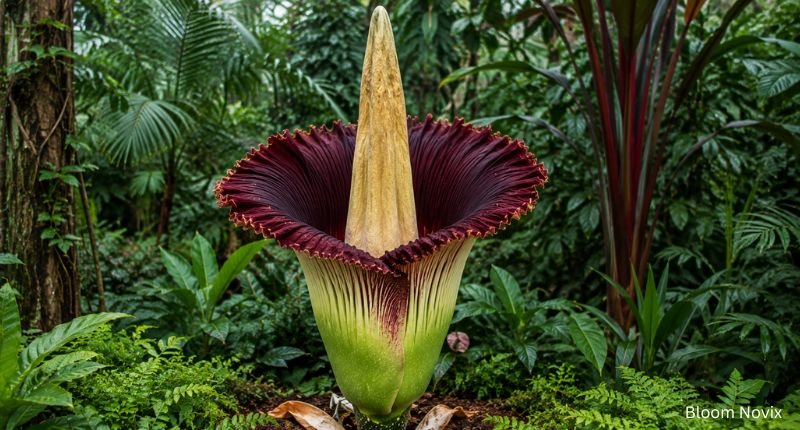
Titan arum deserves its own closer look since it is arguably the single most talked about entry on this entire list. Native to the rainforests of Sumatra, this plant produces the largest unbranched flowering structure in the world, occasionally reaching heights over ten feet. It can take seven to ten years to bloom for the first time, and once it does, the flower only lasts around 24 to 48 hours before collapsing.
The smell released during that short bloom window has been compared to rotting fish and spoiled meat, a scent specifically designed to attract carrion beetles and flesh flies that carry pollen between plants. Botanical gardens around the world livestream these blooms because they happen so rarely and draw thousands of visitors in person. Growing titan arum at home requires a greenhouse with high humidity, warm temperatures year round, and a serious amount of patience, making it more of a collector’s project than a casual houseplant choice.
Between blooms, the plant produces a single enormous leaf structure that can resemble a small tree, storing energy in an underground corm that can eventually weigh well over 100 pounds in mature specimens. Because the entire bloom event is so brief and so rare, many botanical institutions hand pollinate their titan arum by collecting pollen from one blooming plant and manually transferring it to another elsewhere in the world, since the natural pollinators in Sumatra are rarely available in a controlled greenhouse setting.
Explore More: December’s Birth Flower
Bat Flower
The bat flower, tacca chantrieri, is native to the tropical forests of Southeast Asia and stands out even among the strangest entries on this list. Its deep purple to black bracts spread out like wings, and from the center hang thin filaments that can grow well over two feet long, resembling whiskers or dangling strings.
Despite its intimidating look, the bat flower is not toxic and is grown fairly widely by collectors who enjoy unusual houseplants. It prefers warm temperatures, indirect light, and consistently moist but well draining soil, similar to the conditions you would provide an orchid. Because it thrives in shaded understory conditions in the wild, it actually does reasonably well as an indoor plant if given enough humidity, making it one of the more attainable exotic flowers on this entire list for home growers.
Propagation is usually done through division of the rhizome rather than seed, since seed grown plants can take several years longer to reach flowering size. Many collectors keep bat flowers in terrariums or enclosed humid cabinets to replicate the still, moisture heavy air of a rainforest floor, and reward comes in the form of repeat blooms that can appear multiple times a year once the plant is well established.
Hydnora Africana
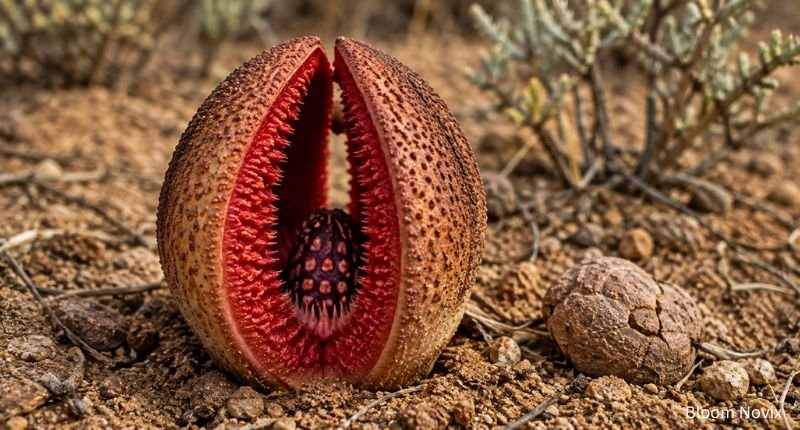
Hydnora africana is one of the strangest parasitic plants on earth, and it barely looks like a plant at all. It has no leaves, no chlorophyll, and no visible stem above ground. Instead it lives almost entirely underground, attaching its roots to the roots of nearby euphorbia species and drawing nutrients directly from its host.
The only visible part of the plant is a fleshy, brownish flower that pushes up through the soil and opens into a star shaped bloom with a rotten smell used to attract dung beetles and carrion beetles for pollination. Native to parts of southern Africa, this plant is nearly impossible to cultivate outside of its natural habitat since it depends entirely on a living host root system to survive. It remains one of the rarest and least understood entries in this entire guide, more of a botanical curiosity to admire from photographs than a plant to attempt growing yourself.
Local communities in parts of its native range have historically used the fruit of hydnora africana as a food source once roasted, despite the plant’s alien appearance above ground. Researchers still have limited data on its full life cycle since so much of its development happens hidden beneath the soil, which keeps it firmly in the category of plants that fascinate scientists as much as they fascinate casual readers of unusual flower lists.
Picking The Right Ugly Flower Names
Choosing the right plant from this list comes down to matching the personality of your garden with the personality of the flower. A gothic themed garden pairs naturally with corpse flowers, dragon arums, and anything from the scary names section. A wildlife friendly garden benefits from carnivorous plants and stinkhorns, both of which support local insect populations even if the smell takes some getting used to.
Collectors chasing something rare should look toward bat flowers, titan arum, or hydnora africana, while beginners are usually better off starting with succulents like lithops or garden staples like love in a mist. Always research the specific climate needs of a plant before committing, since several entries on this list require tropical humidity that simply will not survive an average outdoor garden in a temperate zone.
Simple Tips To Grow Ugly Named Flowers
Start by researching the native climate of whichever plant catches your interest, since a jungle species and a desert succulent need completely opposite care routines. Check soil drainage requirements carefully, because many of the corpse flower relatives and carnivorous plants specifically need consistently moist conditions while succulents need the opposite.
Pay attention to light requirements as well. Orchids and bat flowers generally want bright indirect light rather than direct sun, while carnivorous plants often want full sun to stay healthy. If you are growing anything from the toxic or invasive sections, keep pets and children away from the area and check your local regulations before planting anything labeled invasive in your region. Patience matters more than skill with most of these plants, since several take years to reach their first bloom.
What Makes An Ugly Flower Name Special
What separates these names from ordinary flower names is honesty. Nobody named the corpse flower expecting it to sound pleasant, and nobody named the naked man orchid trying to be subtle. These names tell you exactly what to expect before you ever encounter the plant in person, which is more useful than it sounds.
A gardener who hears the name skunk cabbage knows immediately what they are dealing with. A collector who hears bat flower already has a mental image before seeing a single photo. That directness is rare in a world of marketing driven plant names designed to sound as pretty as possible, and it gives every plant on this list a bit of built in character that a generic rose or tulip simply does not carry.
Why Ugly Flower Names Matter More Than You Think
These names do more than describe a plant. They preserve history, folklore, and practical warnings passed down through generations of growers who came before us. A name like devil’s trumpet tells you the plant is dangerous before you ever open a field guide. A name like wormwood hints at centuries of medicinal use, some of it accurate and some of it long since disproven.
They also make plants memorable in a way that helps with identification in the field. If you are hiking and spot something that matches the description of giant hogweed, remembering that name could genuinely protect you from a painful skin reaction. In that sense, these names function almost like built in safety labels, written by people with direct experience rather than a marketing team trying to make a sale.
Common Mistakes People Make With Ugly Flower Names
The biggest mistake is assuming an ugly name means an ugly plant. Venus flytraps are genuinely striking once you see their trap mechanism up close, and corpse flowers are visually spectacular despite their smell. Judging a plant purely by its name means missing out on some of the most fascinating specimens available to home gardeners.
The second common mistake is ignoring the specific care requirements hidden behind a fun name. A plant called dead horse arum still needs the right shade, humidity, and soil conditions to actually thrive, regardless of how memorable its name is. Skipping that research often leads to a plant that dies within its first season, which discourages people from trying anything unusual again.
The Real Impact Of Ugly Flower Names
A memorable name creates conversation, and conversation creates connection between gardeners. Someone who spots a bat flower growing in your greenhouse is far more likely to ask about it than they would about a standard petunia, simply because the name itself is a hook. That curiosity often leads to sharing growing tips, trading cuttings, or introducing a new gardener to a hobby they never expected to enjoy.
There is also an educational impact worth mentioning. Learning the story behind a name like titan arum naturally leads to learning about pollination strategies, native habitats, and plant adaptation in general. In that way, these unusual names end up teaching more actual botany than a hundred generic flower names ever could.
Can Ugly Flower Names Make You A Better Gardener
Yes, and the reasoning is fairly simple. Every name on this list carries information, whether it is a warning about toxicity, a hint about smell, or a clue about the plant’s natural shape and growing habit. Paying attention to that information genuinely does make you a sharper, more prepared gardener over time.
A plant named skunk cabbage will smell unpleasant when disturbed. A plant named poison ivy will cause a rash on contact. A plant named string of pearls will grow in cascading strands rather than upright stems. None of that is guesswork once you know the name, and building that kind of intuitive knowledge base is exactly what separates an experienced gardener from someone who is still learning the basics.
Final Words
Ugly flower names open the door to a side of the plant world that most gardening guides skip right over. Once you get past the smell warnings and the strange shapes, what you actually find is a collection of plants that adapted in remarkable ways to survive, reproduce, and stand out in a crowded natural world. A rose smells nice because that is what evolution rewarded in its environment, while a corpse flower smells terrible for the exact same reason, just under a completely different set of pressures. Do not let a name like stinkhorn or devil’s claw scare you off before you actually look closer.
There is something refreshingly honest about this whole category of plant naming. In an era where marketing tries to make everything sound appealing, these ugly plant names stand out precisely because nobody bothered to soften them, and that bluntness is part of the charm. Do the research, pick a name that speaks to you, and you might find your new favorite plant hiding behind the ugliest label on this entire list.
Frequently Asked Questions
What are ugly flower names?
Ugly flower names describe plants based on their smell, shape, or behavior rather than their beauty. Many reference decay, animal features, or folklore, and while the names sound unpleasant, the plants themselves are frequently fascinating and even visually striking once examined closely.
Why do some flowers have ugly names?
Names typically describe a dominant trait. A corpse flower smells like decaying flesh, a bat flower resembles a bat in flight, and a stinkhorn smells foul enough to earn its title honestly. Some names also come from old folklore, historical medicine, or warnings about toxicity passed down through generations.
Are ugly flower names accurate?
Most are surprisingly accurate. The corpse flower really does smell like decay, the bat flower really does resemble a bat, and the snake gourd really does hang in a shape that looks like a serpent. A few names lean into exaggeration for humor, but the majority describe the plant honestly.
Can ugly flower names be beautiful?
Absolutely. Titan arum is a genuinely spectacular plant to see in bloom, bat flowers have an exotic elegance once you look past the name, and several stinkhorn species have intricate lattice like structures. The name refers to a single trait, not the entire plant’s appearance.
What are the smelliest ugly flower names?
Titan arum, rafflesia, dead horse arum, and dragon arum are among the smelliest, all designed to mimic the scent of decaying flesh to attract flies and carrion beetles. Stinkhorn fungi also release a strong odor shortly after emerging from the soil.
What are the strangest ugly flower names?
Bat flower, monkey face orchid, naked man orchid, flying duck orchid, and hydnora africana rank among the strangest, each closely mimicking an animal, a person, or a completely alien shape rather than a typical flower structure.
Can I grow ugly named flowers at home?
Many are easy to grow with the right setup. Succulents like lithops and garden plants like love in a mist require minimal care, while bat flowers and carnivorous plants need more specific humidity and light conditions. Titan arum and hydnora africana are much harder to cultivate and are usually best left to botanical gardens.

BloomNovix is managed by an experienced team of content writers and SEO specialists with 4+ years of expertise in gardening and plant care. We provide well-researched guides, gardening tips, and insights on floral meanings to help plant lovers grow their indoor and outdoor gardens with confidence.