
Have you ever stood beneath a magnolia tree in full bloom? Its huge white flowers look striking against the dark green leaves, making the tree hard to overlook. That beauty is at the heart of Mississippi flower meaning.
But the magnolia carries more than beauty. It is tied to Mississippi’s history, Southern culture, and ideas of strength, dignity, and grace. In this guide, you’ll explore its spiritual meaning, color symbolism, history, and tattoo ideas. You’ll also see what white, pink, purple, and yellow magnolias can represent.
What Is the Mississippi State Flower?
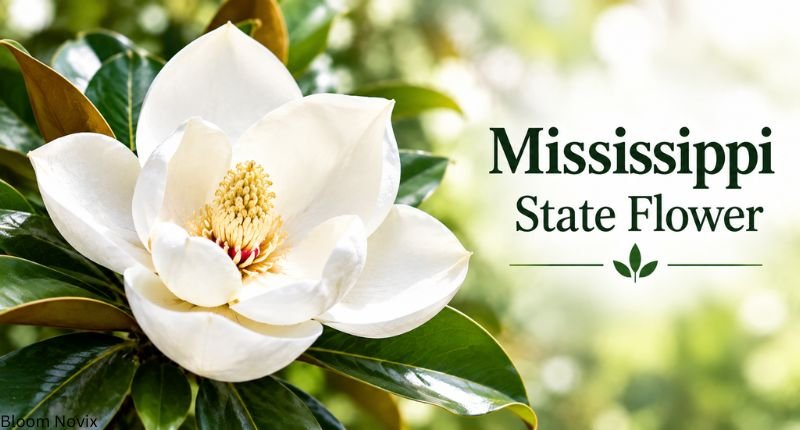
The magnolia is the Mississippi state flower. Botanists call it Magnolia grandiflora, while most people know it as the Southern magnolia. Mississippi recognizes it as its official state floral emblem.
Here is a quick profile:
- Common name: Southern magnolia
- Scientific name: Magnolia grandiflora
- Plant type: Large evergreen tree
- Flower color: Creamy white
- Known for: Beauty, dignity, and Southern pride
Mississippi also has a state wildflower: coreopsis. While the magnolia is the state’s main floral emblem, coreopsis represents another part of Mississippi’s natural landscape.
Meaning and Symbolism of the Magnolia Flower
The magnolia flower’s meaning is closely tied to the tree’s beauty, strength, and lasting presence. Its large blooms look delicate, but the Southern magnolia is a sturdy evergreen tree. That contrast gives the flower much of its symbolic appeal.
- Dignity and nobility: The magnolia has large, striking flowers and a strong upright form. Its graceful appearance is often linked with dignity and nobility.
- Perseverance and strength: Magnolia grandiflora keeps its glossy green leaves throughout the year. This lasting greenery can represent endurance, stability, and strength.
- Purity and renewal: White magnolia blooms are often associated with purity, sincerity, and new beginnings. Their clean, bright appearance strengthens these associations.
- Grace and hospitality: The fragrant flowers add another layer to the magnolia’s symbolism. Their sweet scent and impressive blooms can suggest warmth, welcome, and grace.
- Beauty and resilience: Perhaps the most interesting meaning comes from the contrast between the flower and the tree. The blooms look soft and elegant, while the tree itself is tough and long-lived.
- Southern identity: In Mississippi and across the American South, the magnolia is closely connected with regional beauty, tradition, and cultural identity. This gives magnolia symbolism in Mississippi a meaning that goes beyond the flower itself.
Together, these qualities explain why the magnolia is often seen as a symbol of beauty, dignity, perseverance, and strength. The flower may look delicate, but the tree behind it tells a story of endurance.
This contrast is central to the Magnolia grandiflora meaning. Its beauty suggests grace, while its evergreen nature suggests stability and resilience. In Mississippi, those qualities also help explain why the magnolia has become such a recognizable floral symbol.
Spiritual Meaning of the Magnolia Flower
Magnolia spiritual meaning is often connected with calm strength, inner peace, and steady growth. These ideas are not tied to one specific religion. They come from the flower’s appearance, fragrance, long history, and the way people connect with the tree.
Here are some common spiritual associations:
- Purification: White magnolia petals can represent clarity, renewal, and a fresh start.
- Endurance: Magnolias belong to an ancient plant lineage, which can inspire ideas of longevity and lasting strength.
- Grace under pressure: The tree can remain graceful through changing weather and growing conditions, making it a symbol of resilience.
- Roots and legacy: A magnolia can live for many years, giving it a natural connection to family history, memory, and lasting bonds.
- Peace and reflection: The large blooms and strong fragrance can create a quiet, reflective feeling for people who spend time around the tree.
The spiritual meaning of a magnolia is ultimately personal. One person may see it as a symbol of peace, while another may connect it with family, healing, or resilience. There is no single meaning that everyone has to follow.
Magnolia Flower Meaning by Color: White, Pink, Purple & Yellow
Magnolia colors can add different layers of symbolism. However, these meanings are mostly personal and cultural associations rather than fixed rules of flower language.
| Color | Common Symbolism | Examples |
| White | Purity, dignity, peace, renewal | Southern magnolia (Magnolia grandiflora) |
| Pink | Gentle affection, tenderness, beauty | Pink-flowering magnolia species and cultivars |
| Purple | Mystery, individuality, creativity | Purple-pink or purple-toned magnolia cultivars |
| Yellow | Joy, warmth, optimism | Yellow-flowering magnolia cultivars |
The white magnolia meaning is especially important in Mississippi because the Southern magnolia (Magnolia grandiflora) is the state flower. Its large white blooms are closely associated with beauty, dignity, and Southern identity.
Pink magnolias can suit softer messages of affection and tenderness, while purple tones may suggest individuality or mystery. Yellow blooms can create a brighter association with warmth, happiness, and optimism.
The color adds another layer, but the flower’s species matters too. A pink or yellow magnolia may have different characteristics from the Southern magnolia that represents Mississippi.
Characteristics of the Mississippi State Flower
The Southern magnolia is easy to recognize, even from a distance. Its large white flowers, glossy leaves, and broad evergreen shape give it a distinctive look.
- Leaves: The leaves are thick, glossy, and dark green. Their undersides often have a rusty brown, velvety coating.
- Flowers: Southern magnolia flowers are large, commonly reaching 8–12 inches across.
- Petals: The magnolia petals are thick and waxy, with a smooth texture and creamy white color.
- Scent: The flowers have a strong, sweet fragrance.
- Size: A mature tree can grow about 60–80 feet tall, with a broad crown that may spread 30–40 feet.
- Fruit: After flowering, the tree develops a cone-like fruit that contains bright red seeds as it matures.
- Bloom time: The main flowering period is late spring through summer, although timing can vary with climate and growing conditions.
The rusty brown coating on the underside of the leaves is a natural feature of the Southern magnolia. It helps give the leaves their distinctive two-tone appearance.
Magnolia blooms are also relatively short-lived. A fresh flower can look bright and creamy when it opens, then turn brown as it ages. The delicate life of each bloom contrasts with the long-lived, evergreen tree, adding another interesting layer to magnolia symbolism.
Types of Magnolia Flowers Found in Mississippi
Mississippi is home to several magnolia species, although only the Southern magnolia holds the official state flower title. Some species are native to the state, while others are commonly grown as ornamental trees.
| Type | Look | Key Trait |
| Southern magnolia | Large creamy white blooms and glossy evergreen leaves | Official Mississippi state flower |
| Sweetbay magnolia | Smaller white flowers and pale, silvery leaf undersides | Native tree that prefers moist soil |
| Bigleaf magnolia | Very large leaves and large white flowers | Native species with an impressive leaf size |
| Saucer magnolia | Pink, purple, or white cup-shaped flowers | Ornamental magnolia known for early spring blooms |
The easiest way to tell these magnolia trees apart is to look at their leaves. Southern magnolia has thick, leathery evergreen leaves. Sweetbay magnolia often has pale or silvery undersides. Bigleaf magnolia stands out because of its exceptionally large leaves.
Flowering time can also help. Saucer magnolia usually blooms in early spring, often before its new leaves fully develop. Southern magnolia generally flowers later, from late spring into summer.
The fruit provides another useful clue. Magnolias produce cone-like fruits that contain seeds as they mature. Leaf shape, flower color, flowering season, and fruit together can help distinguish one magnolia species from another.
Where Magnolia Trees Grow in Mississippi
The Southern magnolia is well suited to Mississippi’s warm, humid climate. It is native to the southeastern United States and grows naturally in parts of Mississippi as well as several neighboring states.
You can find magnolia trees in both natural and cultivated settings, including:
- Woodlands: Southern magnolias can grow in forest habitats alongside other native trees.
- Stream banks and bottomlands: Moist, well-drained soil can provide good growing conditions.
- Yards and gardens: Homeowners often plant magnolias for their large flowers, evergreen leaves, and shade.
- Parks and public grounds: Mature magnolias are common ornamental trees in many Southern landscapes.
- Old properties and cemeteries: Long-lived trees can remain part of established landscapes for many years.
Mississippi’s climate gives the Southern magnolia conditions that suit its growth. Warm summers, adequate rainfall, and relatively mild winters help this evergreen tree maintain its foliage throughout the year.
When magnolias bloom in late spring and summer, their large white flowers and strong fragrance make them easy to notice. This widespread presence also helps explain why the magnolia has become such a recognizable part of Mississippi’s landscape and identity.
History: How the Magnolia Became the Mississippi State Flower
The magnolia has been connected with Mississippi for more than a century. Its journey from a popular Southern flower to an official state symbol began with a statewide vote.
Here is the basic timeline:
- 1900: Mississippi schoolchildren voted to select a state flower. The magnolia received the most support.
- 1938: Mississippi officially designated the magnolia as the state tree.
- 1952: The magnolia was officially adopted as Mississippi’s state flower.
- 1991: Coreopsis was designated as the state wildflower.
The 1900 schoolchildren’s vote gives the story an unusual beginning. Instead of starting with a legislative decision, the first selection came through a vote involving Mississippi students. The magnolia was already familiar across the state, making it a natural choice for a floral symbol.
More than five decades later, the state formally recognized the magnolia as its official flower. Today, the Southern magnolia remains one of Mississippi’s best-known state symbols.
The magnolia also has a much older history beyond Mississippi. European botanists and gardeners became interested in American magnolia species during the 18th century, and the plants later became popular in gardens outside the United States.
For Mississippi, however, the Southern magnolia became more than a garden tree. Its large white flowers, evergreen foliage, and long association with the South helped make it an enduring part of the state’s identity.
Explore More: Begonia Flower Meaning
Why Mississippi Is Called the Magnolia State
Mississippi is widely known as the Magnolia State, a nickname closely tied to the Southern magnolia and its long history in the region.
Several factors helped the name become associated with Mississippi:
- Widespread presence: Southern magnolias are well suited to Mississippi’s warm climate and are found in both natural habitats and cultivated landscapes.
- State identity: The magnolia has been Mississippi’s official state flower since 1952, giving the tree an important place among the state’s symbols.
- Cultural connection: Magnolias have long been associated with the American South, including its gardens, historic landscapes, and traditions.
- The name itself: Magnolia appears in Mississippi place names as well. Magnolia, Mississippi, is the county seat of Pike County.
The nickname connects the flower with more than Mississippi’s landscape. It also reflects the magnolia’s role in Mississippi culture, history, and regional identity.
The magnolia’s importance is easy to understand when you see how many parts of Mississippi’s story connect back to it. It appears as a state symbol, grows across the region, and remains closely associated with the character of the Southern landscape.
Magnolia Symbolism in Southern Culture and Around the World
In the South, the magnolia means more than a beautiful tree. It is often linked with family, grace, hospitality, and quiet strength. This gives the magnolia meaning in the South a strong cultural connection.
In Southern Culture
- Home and hospitality: Magnolia trees are popular in Southern yards and gardens. Their large blooms and evergreen leaves make them a familiar part of the landscape.
- Weddings: Magnolia flowers and leaves are sometimes used in Southern wedding bouquets, arrangements, and decorations.
- Family traditions: Magnolia leaves can appear on doors, mantels, and other decorations, especially in traditional Southern homes.
- Strength and grace: The phrase “steel magnolias,” made widely known by the play and film Steel Magnolias, became associated with women who appear gentle but show strength in difficult situations.
Around the World
- China: Magnolia flowers have long been associated with beauty, purity, and nobility. The Yulan magnolia is also closely connected with Shanghai.
- Traditional medicine: Magnolia bark has a long history of use in traditional Chinese medicine.
- Japan: Some magnolia species bloom early in the year, making them part of the seasonal landscape of spring.
- Victorian flower language: In Victorian-era flower symbolism, magnolias were associated with dignity, nobility, and love of nature.
Across these cultures, magnolias often share themes of beauty, dignity, purity, and strength. In the American South, those ideas are also tied to cultural heritage, hospitality, and family traditions.
That history adds depth to the magnolia cultural significance in Mississippi. The flower is not only a state symbol. It is also part of a wider Southern tradition that appears in gardens, celebrations, homes, and popular culture.
Mississippi State Wildflower: Coreopsis Meaning
Mississippi has a state wildflower as well as a state flower. That wildflower is coreopsis, commonly known as tickseed. Mississippi designated it as the state wildflower in 1991.
Coreopsis has a bright and cheerful appearance that sets it apart from the formal beauty of the magnolia.
- Look: Bright yellow, daisy-like flowers are common among coreopsis species.
- Height: Plant size varies by species and variety.
- Bloom time: Many types bloom from late spring through summer.
- Habitat: Coreopsis grows well in sunny fields, open areas, roadsides, and gardens.
- Wildlife value: The flowers attract pollinators such as bees and butterflies, while the seeds can provide food for birds.
Coreopsis Meaning and Symbolism
Coreopsis is often associated with cheerfulness, optimism, and happiness. In some Victorian flower-language sources, it is also linked with love at first sight. These meanings are symbolic rather than fixed, so interpretations can vary.
The name Coreopsis has an interesting history too. It comes from ancient Greek roots describing something that looks like a bug or insect. The name refers to the appearance of the plant’s small seeds, which can resemble tiny ticks. That is why the common name tickseed became associated with the plant.
The contrast with magnolia flower symbolism is easy to see. Magnolia is commonly connected with dignity, strength, and endurance, while coreopsis is associated with joy, brightness, and optimism. Both flowers have a place in Mississippi’s floral identity, but they express very different qualities.
Fun Facts About the Mississippi State Flower
The Southern magnolia has a few unusual facts behind its familiar beauty.
- Ancient roots: Magnolia relatives have an ancient fossil record that goes back tens of millions of years.
- Beetle pollination: Many magnolias are pollinated by beetles rather than relying mainly on bees. Their sturdy flowers are well suited to these early pollinators.
- A botanist’s name: The genus Magnolia honors Pierre Magnol, a French botanist who lived during the 17th and early 18th centuries.
- Red seeds on threads: As the cone-like fruit opens, bright red seeds can hang from thin threads, creating a striking display.
- Long-lived trees: Southern magnolias can live for many decades, with some mature trees surviving for a century or more under suitable conditions.
- Large flowers: The Southern magnolia is known for its exceptionally large, fragrant white blooms, which can reach about 8–12 inches across.
These facts add another side to the Mississippi state flower. The magnolia is not only beautiful and symbolic; it also has an unusual botanical history.
Mississippi State Flower vs. Other State Flowers
Mississippi is one of several Southern states with a flower that reflects its regional landscape. Here is how its official flower compares with flowers chosen by nearby states.
| State | State Flower | Plant Type | Notable Feature |
| Mississippi | Magnolia | Evergreen tree | Large, fragrant white flowers |
| Louisiana | Magnolia | Evergreen tree | Large Southern magnolia blooms |
| Alabama | Camellia | Flowering shrub | Large flowers in several colors |
| Georgia | Cherokee rose | Climbing rose | White flowers with prominent golden centers |
| Florida | Orange blossom | Citrus tree | Fragrant white flowers |
| Texas | Bluebonnet | Wildflower | Blue or purple flower spikes |
Mississippi and Louisiana both chose the magnolia as their state flower. That shared choice reflects the tree’s long association with the Southern landscape.
The magnolia also differs from several state flowers on this list because it grows as a large evergreen tree. Its flowers may be seasonal, but its glossy foliage remains through much of the year. That lasting presence adds another dimension to the state flower of Mississippi meaning.
Magnolia Flower Tattoo Meaning
A magnolia tattoo can represent beauty, strength, grace, and personal growth. The large, delicate-looking flower works well for people who want a design that feels elegant but still carries a strong meaning.
Common interpretations include:
- Strength: The magnolia can represent inner strength and resilience.
- Femininity: Its large, graceful petals are often associated with softness and feminine beauty.
- Southern pride: In Mississippi and the wider South, a magnolia can represent home, family, heritage, and regional identity.
- Remembrance: A white magnolia can be used as a personal memorial for someone who has passed away.
- New beginnings: A blooming flower can represent growth, change, or the start of a new chapter.
- Dignity: The flower’s formal appearance makes it a natural symbol of grace and self-respect.
Magnolia Tattoo Design Ideas
- A fine-line magnolia on the wrist, forearm, or ribs
- A watercolor magnolia with soft pink or purple tones
- A blackwork magnolia branch along the forearm
- A magnolia combined with the outline of Mississippi
- A magnolia with a meaningful date, name, or short word such as grace
- A Southern magnolia branch with its glossy leaves and large white bloom
If you want the tattoo to look botanically accurate, show your artist clear photos of Magnolia grandiflora. The flower’s broad petals and distinctive leaves can make a big difference in the final design.
Large magnolia blooms can work especially well on areas with enough space for the petals and leaves. If you prefer fine-line work, check an artist’s portfolio for healed tattoos as well as fresh ones. Fine lines can soften or spread as a tattoo ages.
The best design is the one that connects with your own reason for choosing the flower. Its symbolism can be a starting point, while the color, placement, and details can make the tattoo personal.
Magnolia Flower Gifting and Occasions
Magnolias can make thoughtful gifts because their symbolism fits several important occasions. The color and form of the flower can also change the feeling of the arrangement.
- Weddings: White magnolias can represent purity, dignity, and a graceful new beginning.
- Sympathy: White flowers and magnolia leaves can express respect, remembrance, and lasting affection.
- Mother’s Day: The magnolia’s association with strength and grace makes it a fitting choice for honoring a mother or another important woman.
- Housewarming: A magnolia plant can represent beauty, warmth, and a welcoming home.
- Moving away: A magnolia-themed keepsake can carry a sense of home and Southern roots, especially for someone connected to Mississippi.
- Holidays: Glossy magnolia leaves are often used in wreaths, garlands, and other seasonal arrangements.
How Long Do Cut Magnolia Flowers Last?
Fresh magnolia blooms can be delicate after they are cut. Their petals may bruise or turn brown when handled roughly.
For a longer-lasting arrangement:
- Cut stems when the flower is beginning to open.
- Handle the bloom by the stem or base rather than squeezing the petals.
- Keep the arrangement cool and away from direct sunlight.
- Include magnolia leaves, which generally hold their appearance longer than the flowers.
Cut magnolia flowers are relatively short-lived compared with the tree itself. If you want a gift that lasts much longer, consider a magnolia print, jewelry, keepsake, or living plant.
How to Grow a Magnolia Tree
If you have enough space and the right climate, a Southern magnolia can become a long-term feature of the landscape. It needs room to spread, so planning the planting spot is important.
- Climate: Southern magnolia generally grows well in USDA zones 6 to 10. Cold-hardy cultivars can perform better in cooler areas.
- Light: Choose a spot with full sun to partial shade. More sunlight usually supports better flowering.
- Soil: Use well-drained soil. Slightly acidic soil is often suitable for magnolias.
- Space: Give the tree plenty of room for its mature crown. Keep it away from structures, sidewalks, and underground utilities.
- Planting: Dig a hole about two to three times wider than the root ball. Plant the tree at the same depth it was growing in its container or nursery soil.
- Watering: Water regularly while a young tree establishes its roots. Mature magnolias can tolerate short periods of dry weather once established.
- Mulching: Apply about 2–3 inches of mulch around the root zone, but leave space around the trunk.
- Pruning: Prune lightly when needed to remove dead, damaged, or crossing branches. Avoid heavy pruning.
Best Magnolia for a Small Yard
The classic Southern magnolia can become a large tree. For a smaller space, a compact cultivar such as ‘Little Gem’ may be more practical. It has the familiar evergreen foliage and large white flowers but grows more narrowly than a standard Southern magnolia.
How Long Does a Magnolia Take to Bloom?
Magnolias grown from seed can take several years to reach flowering age. Nursery-grown grafted trees often flower sooner, depending on the cultivar and growing conditions.
Southern magnolias are evergreen, but they still shed older leaves throughout the year. Some leaf drop is normal and does not automatically mean the tree has a problem.
Why the Magnolia Flower Still Matters Today
The meaning of the magnolia goes beyond its large white flowers. It is commonly associated with dignity, purity, strength, perseverance, and grace. In Mississippi, the flower also carries a strong connection to Southern hospitality, history, and regional identity.
The state’s wildflower, coreopsis, adds a different quality through its associations with cheerfulness and optimism. Together, these flowers represent two sides of Mississippi’s floral identity.
Whether you admire a magnolia in bloom, choose one for a tattoo, give it as a gift, or grow one in your yard, its symbolism can take on a personal meaning. That combination of beauty, strength, and history is what keeps the magnolia relevant today.
Frequently Asked Questions
What is the Mississippi state flower?
The magnolia is the Mississippi state flower. It is the Southern magnolia, known as Magnolia grandiflora.
Why is the magnolia Mississippi’s state flower?
Students chose it in 1900, and lawmakers made it official later. It grows widely across the state and fits Southern identity.
What does the magnolia flower symbolize?
It symbolizes dignity, purity, and perseverance. That is the heart of Mississippi flower meaning, and it also includes Southern hospitality.
How big can a Southern Magnolia grow?
It can reach 60 to 80 feet tall. The crown often spreads 30 to 40 feet, so the tree needs plenty of room.
When did the magnolia become the Mississippi state flower?
It became official in 1952. Schoolchildren voted for it in 1900, and the legislature confirmed it 52 years later.
Why is Mississippi called the Magnolia State?
Magnolia trees grow widely across the state. The nickname celebrates that strong link between the tree and Mississippi.
Is the magnolia also Mississippi’s state tree?
Yes, the magnolia is also the state tree. Mississippi named it in 1938, years before it made the flower official.
What is the Mississippi state wildflower?
The state wildflower is coreopsis. Mississippi named it in 1991, and the flower stands for cheerfulness.
What is the spiritual meaning of the magnolia flower?
It stands for purity, inner strength, and steady growth. Many people see it as a sign of grace under pressure.
What does a magnolia tattoo mean?
It usually means strength, femininity, and Southern pride. Some people also choose it to honor loved ones or their home state.
Conclusion
Mississippi flower meaning is closely tied to the magnolia’s beauty, dignity, purity, and strength. Its large white blooms also reflect ideas of perseverance and Southern hospitality. In Mississippi, the magnolia is more than a flower. It is part of the state’s history, culture, and identity.
Coreopsis adds a brighter side to Mississippi’s floral story, with common associations of cheerfulness and optimism. Together, these two flowers show the different qualities found in Mississippi’s floral symbols.
Whether you admire a magnolia in bloom, grow one in your yard, or choose its symbolism for a personal design, its meaning can be deeply personal. The lasting appeal of the magnolia comes from the balance of beauty, strength, and grace.

BloomNovix is managed by an experienced team of content writers and SEO specialists with 4+ years of expertise in gardening and plant care. We provide well-researched guides, gardening tips, and insights on floral meanings to help plant lovers grow their indoor and outdoor gardens with confidence.




1 thought on “Mississippi Flower Meaning: Magnolia Symbolism & Spiritual Significance”