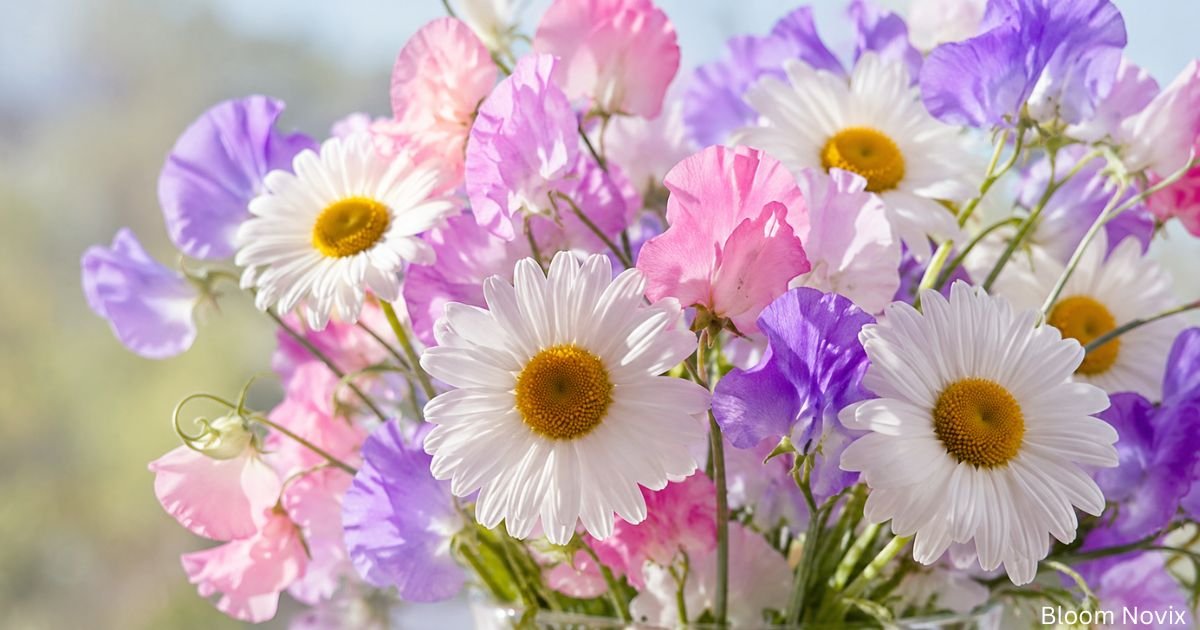
Every April birth flower tells a story. If you were born in April, or you’re shopping for someone who was, you have not one but two beautiful flowers to celebrate with: the cheerful daisy and the fragrant sweet pea. Together, they capture the bright, hopeful mood of spring.
In this guide, you will learn the full meaning and symbolism behind both April birth flowers. We’ll cover their history, how to grow and care for them, their colors and what each one means, fun facts, gift ideas, and answers to the most common questions people ask. By the end, you’ll know exactly which flower fits your personality — or the person you’re buying for.
What Are the April Birth Flowers?
April has two official birth flowers: the daisy and the sweet pea. The daisy is the main April birth flower, and the sweet pea is its secondary flower. Together, they represent the two moods of spring — bright energy and gentle beauty.
The daisy is simple and bold. Its white petals and yellow center make it easy to recognize anywhere in the world. The sweet pea is softer and more delicate, known for its ruffled petals and sweet scent. Both flowers bloom in April, which is one reason they were chosen to represent the month.
Many birth months only get one flower. April gets two because its meaning is broad — it covers both confidence and warmth, both simplicity and elegance. This gives people born in April more freedom to pick the bloom that feels most like them.
Why Two Flowers Instead of One
Some months, like June or November, only have one widely accepted birth flower. April is different because two flowers grew popular in different traditions at different times.
The daisy has ancient roots going back to Egypt, Rome, and medieval Europe. The sweet pea became popular much later, during the Victorian era, when people used flowers to send secret messages. Over time, both flowers became linked to April and neither one replaced the other. Instead, florists and gift-givers kept both.
Florist Tip: If you’re not sure which flower someone prefers, a small bouquet with both daisies and sweet peas is a safe, thoughtful choice.
Primary vs Secondary Birth Flower
The daisy is considered the primary April birth flower because it has the longer, more documented history. The sweet pea is the secondary flower, added later as an extra option.
This doesn’t mean one flower is “better.” It simply means the daisy is the more traditional pick, while the sweet pea offers a fragrant, romantic alternative for people who want something different.
Why Are There Two Birth Flowers in April?
April has two birth flowers because its symbolism grew from two separate traditions: ancient flower lore (the daisy) and Victorian flower language (the sweet pea). Rather than choosing one, both were kept because they represent different sides of the same spring energy.
The daisy’s meaning comes from nature itself — its habit of opening at sunrise and closing at night gave it a link to new beginnings. The sweet pea’s meaning comes from a more recent, human-made tradition where flowers acted like a secret language between people.
Because April sits right in the middle of spring, it makes sense that it would need two flowers to describe it fully. One flower shows the bold, sunny side of the season. The other shows the soft, romantic side.
April Primary Birth Flower: Daisy
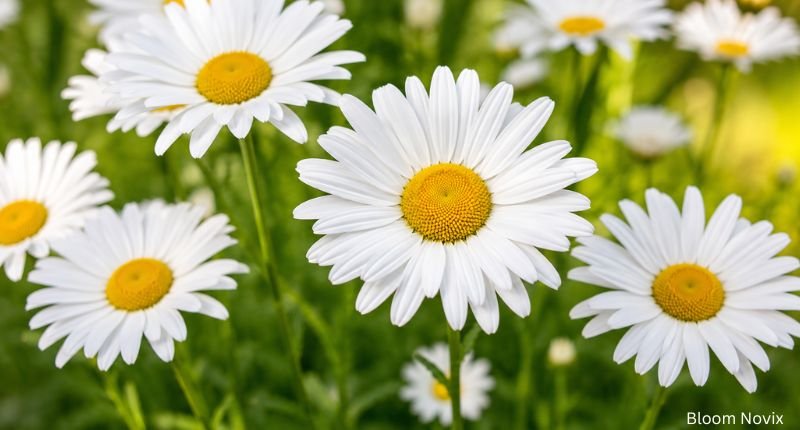
The daisy is April’s main birth flower, known for its white petals, yellow center, and meaning of innocence, loyalty, and new beginnings. It’s one of the most recognized flowers in the world, and one of the easiest to grow.
There isn’t just one type of daisy. Several varieties fall under the “daisy” name, and each one has its own look and personality.
English Daisy (Bellis perennis)
This is the classic daisy most people picture — small, white petals with a golden-yellow center. It grows low to the ground and is often found in lawns and gardens across Europe and North America. The English daisy blooms early and stays small, usually under six inches tall. It’s a favorite for cottage gardens because it spreads easily and adds a soft, natural touch.
Oxeye Daisy (Leucanthemum vulgare)
The oxeye daisy is taller and wilder-looking than the English daisy. It grows in fields and along roadsides, often in large clusters. This variety is hardy and can handle poor soil, which is why it’s so common in the wild. Its bigger blooms make it a popular choice for casual, meadow-style bouquets.
Shasta Daisy (Leucanthemum x superbum)
The Shasta daisy is a garden favorite thanks to its large, clean white petals and sturdy stems. It was bred in California in the late 1800s by plant scientist Luther Burbank. Shasta daisies are taller than English daisies, often reaching two to three feet. They’re a top pick for cut-flower gardens because they last well in a vase.
Gerbera Daisy
Gerbera daisies are the boldest of the daisy family. They come in bright colors like red, orange, pink, and yellow, and their large, round blooms make a strong visual statement.
Unlike the more traditional white daisy, gerberas are often used in modern bouquets and birthday arrangements because of their size and color variety.
Did You Know? Gerbera daisies are one of the top five most popular cut flowers sold worldwide, right alongside roses and tulips.
The Meaning and Symbolism of the Daisy
The daisy symbolizes innocence, purity, loyal love, and new beginnings. Its open, simple shape has made it a symbol of honesty across many cultures for centuries.
The word “daisy” itself carries meaning tied to light and renewal, which we’ll explore more in the history section below. But the flower’s meaning goes deeper than its name.
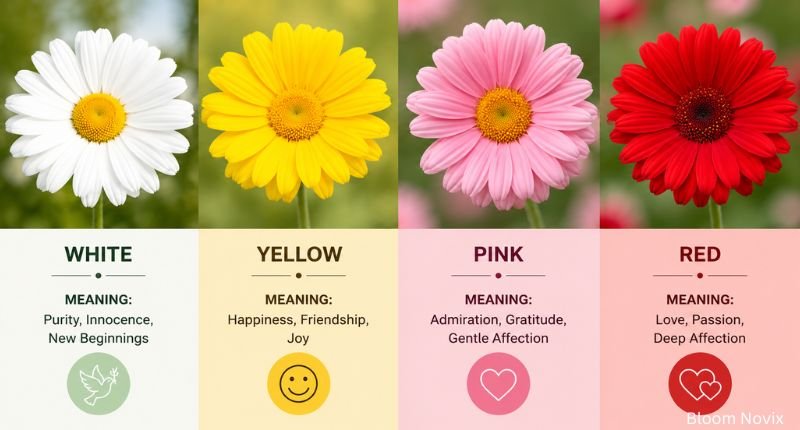
What Daisy Colors Mean (White, Yellow, Pink, Red)
| Daisy Color | Meaning | Best For |
| White | Purity, innocence, new starts | New babies, fresh starts, sympathy |
| Yellow | Friendship, happiness | Friends, coworkers, cheer-up gifts |
| Pink | Admiration, gentle affection | Close friends, family |
| Red | Deep affection, romantic love | Partners, anniversaries |
White daisies are the most traditional and are often chosen for their calm, honest feel. Yellow daisies work well for platonic relationships, since yellow is linked to friendship rather than romance. Pink and red gerbera daisies are a better fit when you want to express warmer, more personal feelings.
Daisy in the Language of Flowers (Victorian Floriography)
During the Victorian era, people used flowers to send messages they couldn’t say out loud. This practice was called floriography, or the “language of flowers.”
In this tradition, the daisy meant “I will think it over” or represented loyal, faithful love. A bouquet with daisies often told the receiver that the sender was being sincere and truthful, without a single word being spoken.
This history still shapes how we see daisies today. Even now, giving someone a daisy quietly suggests honesty, simplicity, and genuine affection.
Expert Advice: If you want a gift that feels sincere rather than showy, a daisy bouquet sends that message perfectly.
The History of Daisies in Culture and Traditions
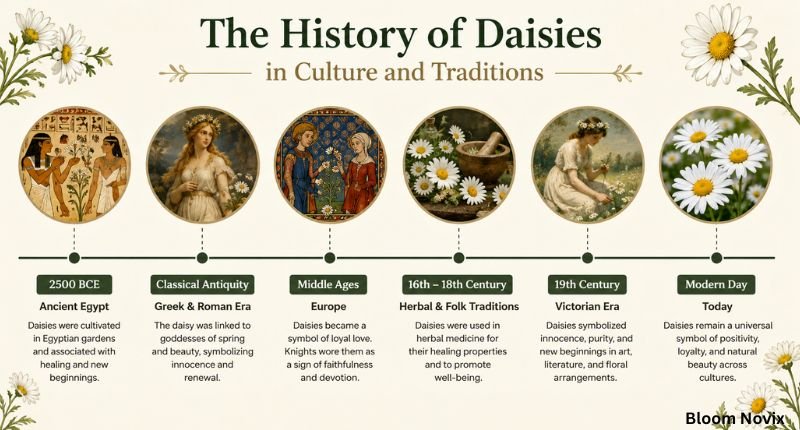
Daisies have been part of human culture for thousands of years, appearing in ancient Egyptian gardens, Roman legend, and Norse mythology. Their long history is part of why they carry so much symbolic weight today.
Origin of the Name “Daisy” (Day’s Eye)
The name “daisy” comes from the Old English words “dæges eage,” meaning “day’s eye.” This name describes how the flower opens its petals at sunrise and closes them again at night, just like an eye opening and closing.
This daily habit gave the daisy a deep connection to new beginnings and the return of light. For early observers, a flower that opened with the sun felt almost magical, and that idea has stayed attached to the daisy ever since.
Daisies in Ancient Egypt, Rome, and Norse Mythology
Daisies appeared in ancient Egyptian gardens, where they were valued for their beauty and simplicity. In Roman mythology, the daisy was linked to a nymph who turned herself into the flower to escape unwanted attention, tying the bloom to themes of protection and transformation.
In Norse mythology, the daisy was sacred to Freya, the goddess of love, beauty, and fertility. This connection reinforced the flower’s link to love, motherhood, and renewal — themes that still show up in daisy symbolism today.
Daisies in Medieval and Victorian Culture
During the medieval period, daisies were used in herbal remedies and were also seen as a symbol of loyal love. Knights sometimes wore daisies to show faithfulness to someone they loved, and the flower appeared often in medieval paintings and poems.
By the Victorian era, the daisy had become a key part of floriography, carrying its well-known meaning of innocence and loyal affection. This era cemented the daisy’s place as a flower people trusted to say something honest and heartfelt.
Read More: December Birth Flower
Daisies in the Garden
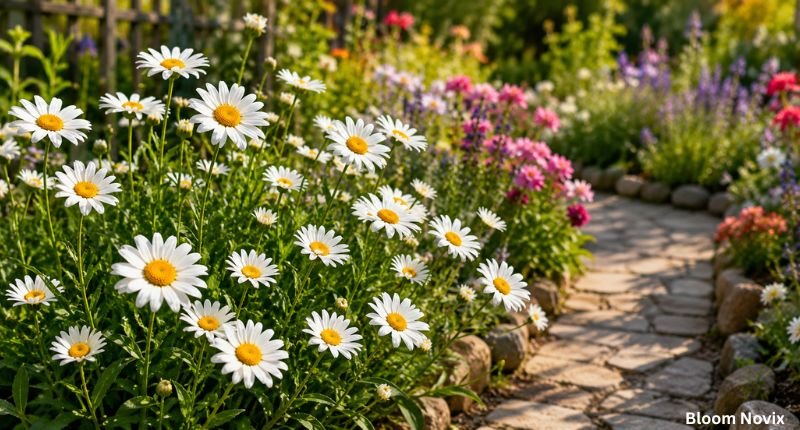
Daisies are easy to grow, sun-loving flowers that do best in well-drained soil and full sunlight. They’re a great pick for beginner gardeners because they don’t need much fuss.
Ideal Soil, Sunlight, and Planting Season
Daisies grow best in soil that drains well and doesn’t stay soggy. Heavy, wet soil can cause root rot, so raised beds or well-aerated soil work best.
Most daisy varieties need full sun, meaning at least six hours of direct sunlight a day. Plant daisies in early spring after the last frost, or in fall in milder climates. English and Shasta daisies typically grow well in USDA zones 4 through 9.
Common Daisy Care Tips and Problems
Water daisies regularly, but let the soil dry out slightly between waterings. Overwatering is one of the most common mistakes new gardeners make with daisies.
Deadhead spent blooms — meaning remove faded flowers — to encourage more blooms throughout the season. Watch for aphids and powdery mildew, especially in humid weather. Good air flow between plants helps prevent most fungal problems.
Common Mistake: Planting daisies too close together. Give each plant enough space so air can move freely and reduce the risk of mildew.
April Secondary Birth Flower: Sweet Pea (Lathyrus odoratus)
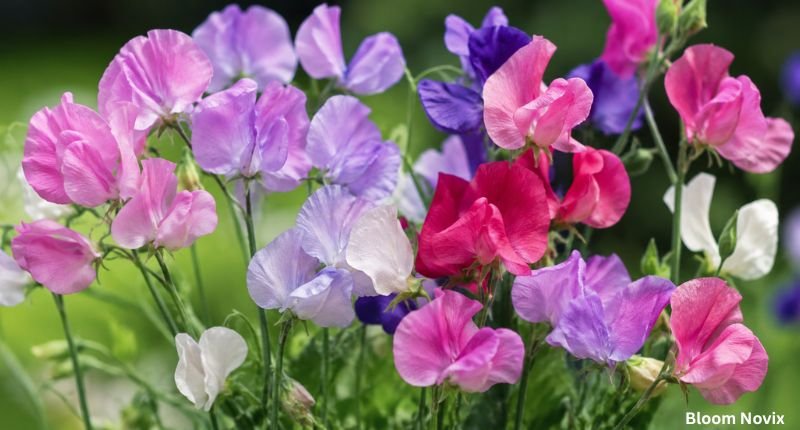
The sweet pea is April’s secondary birth flower, prized for its ruffled petals, climbing vines, and strong, sweet fragrance. It brings a romantic, old-fashioned charm that feels very different from the simple daisy.
Origin: Sicily and the Story of Francisco Cupani
Sweet peas are native to southern Italy and Sicily, where they once grew wild on sunny hillsides. In the late 1600s, a Sicilian monk named Francisco Cupani discovered the flower and sent its seeds to England.
Within a hundred years, sweet peas had become one of the most popular garden flowers in Britain. Breeders developed new colors and larger blooms, and by the Victorian era, sweet peas were a must-have in fashionable gardens.
Sweet Pea Toxicity Warning (Safety Note)
Sweet peas are beautiful, but it’s important to know that the seeds of Lathyrus odoratus are mildly toxic if eaten in large amounts. This is different from the edible garden pea, and the two should never be confused.
If you have small children or pets who like to explore the garden, plant sweet peas somewhere out of easy reach, or simply keep an eye on them during bloom season. Enjoying sweet peas as cut flowers indoors is completely safe.
Buying Tip: Always label sweet pea seed packets clearly if you’re storing them near edible garden peas, so there’s no mix-up at planting time.
The Meaning and Symbolism of Sweet Pea
The sweet pea symbolizes gratitude, blissful pleasure, and gentle appreciation. Its soft, ruffled shape and light fragrance give it a more delicate, romantic meaning than the daisy.
What Sweet Pea Colors Mean (Lavender, White, Pink, Red)
| Sweet Pea Color | Meaning | Best For |
| Lavender/Purple | Admiration, elegance | Someone you look up to |
| White | Sincerity, peaceful gratitude | Thank-you gifts, sympathy |
| Pink/Peach | Gentle joy, youthful warmth | Birthdays, celebrations |
| Red/Burgundy | Passion, deep feeling | Romantic partners |
Lighter shades like lavender and white lean toward gratitude and quiet elegance. Warmer tones like pink and peach feel more playful and joyful, while deep red and burgundy sweet peas carry a stronger romantic message.
Sweet Pea Fragrance and Its Symbolic Meaning
The sweet pea’s fragrance is one of its most defining features, often described as light and honey-like. This scent is part of why sweet peas became linked to hidden sweetness and the idea that good things come to those who pay attention to small details.
Because the fragrance fills a room so easily, sweet peas are a popular choice for indoor arrangements, especially in bedrooms or small spaces where a strong scent can be enjoyed up close.
Sweet Peas in the Garden
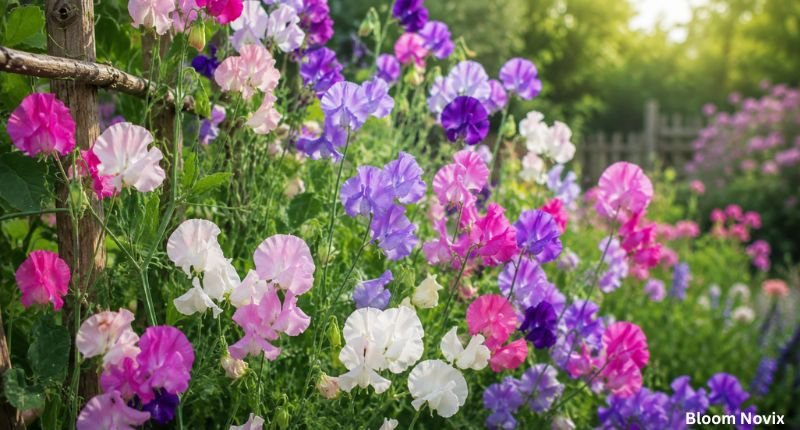
Sweet peas are climbing plants that need support, cool weather, and regular watering to bloom their best. They’re slightly more work than daisies but reward you with fragrant, colorful blooms.
Best Planting and Sowing Calendar
Sweet peas prefer cool weather, so they’re best planted in early spring or even late winter in milder climates. In warmer regions, some gardeners plant sweet pea seeds in fall for a spring bloom.
Soak seeds overnight before planting to help them sprout faster. Sweet peas generally do well in USDA zones 2 through 11, depending on the timing of planting.
Trellis and Support Tips for Climbing Growth
Because sweet peas are climbing plants, they need something to grow on, like a trellis, fence, or netting. Without support, the vines will sprawl on the ground and are more likely to develop mildew.
Set up your trellis at planting time so the young vines can start climbing early. Regularly guide new growth toward the support structure until the plant takes hold on its own.
Florist Tip: Cut sweet peas often. The more you cut, the more the plant will keep producing new blooms throughout the season.
How Daisy and Sweet Pea Represent April
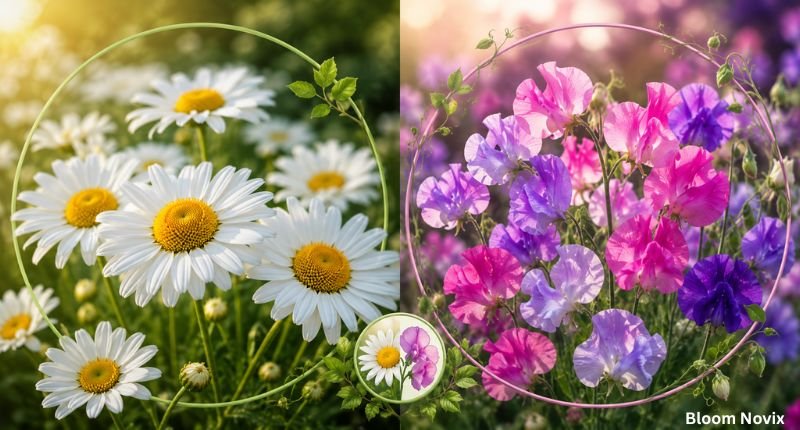
Together, the daisy and sweet pea reflect April’s mix of boldness and gentleness, matching the personality traits often linked to people born in this month.
April Zodiac Signs (Aries and Taurus) and Flower Connection
April covers two zodiac signs: Aries (through April 19) and Taurus (from April 20 onward). Aries is known for confidence, energy, and directness — qualities that match the daisy’s bold, simple shape.
Taurus, on the other hand, is linked to comfort, beauty, and an appreciation for the finer things — much like the sweet pea’s soft fragrance and delicate petals. This split helps explain why April benefits from having two flowers instead of one.
April Birthstone (Diamond) and Flower Pairing
April’s birthstone is the diamond, a symbol of strength, clarity, and lasting love. Pairing a diamond gift with daisies or sweet peas creates a thoughtful combination for birthdays, anniversaries, or milestone celebrations.
A simple diamond pendant alongside a daisy bouquet, for example, blends the flower’s honest symbolism with the stone’s meaning of enduring love.
Personality Traits of April-Born People
People born in April are often described as optimistic, loyal, and warm. The daisy’s link to honesty and loyal love mirrors these traits well, while the sweet pea’s connection to gratitude reflects an April-born person’s appreciation for the people around them.
How to Choose April Birthday Flowers
Choose daisies for a cheerful, low-maintenance gift, and choose sweet peas for a fragrant, romantic one. Your choice should depend on the recipient’s personality and the occasion.
Best Arrangements for Casual vs Formal Occasions
For casual birthdays or everyday gifts, a mixed bunch of gerbera daisies feels fun and colorful without trying too hard. For more formal occasions, like a milestone birthday or an anniversary, sweet peas paired with soft greenery create an elegant, romantic look.
Hand-tied bouquets wrapped in paper suit home deliveries and personal gifts, while a compact flower box works well for office or workplace celebrations.
Daisy vs Sweet Pea: Which One to Choose (Quick Comparison)
| Feature | Daisy | Sweet Pea |
| Meaning | Innocence, loyalty | Gratitude, gentle pleasure |
| Fragrance | Mild to none | Strong, sweet |
| Vase Life | 7–10 days | 3–5 days |
| Best For | Friends, casual gifts | Romantic, formal gifts |
| Growing Difficulty | Easy | Moderate |
If you want a low-fuss, cheerful gift, go with daisies. If you want something fragrant and a little more romantic, sweet peas are the better pick.
April Birth Flower Tattoo Ideas and Meanings
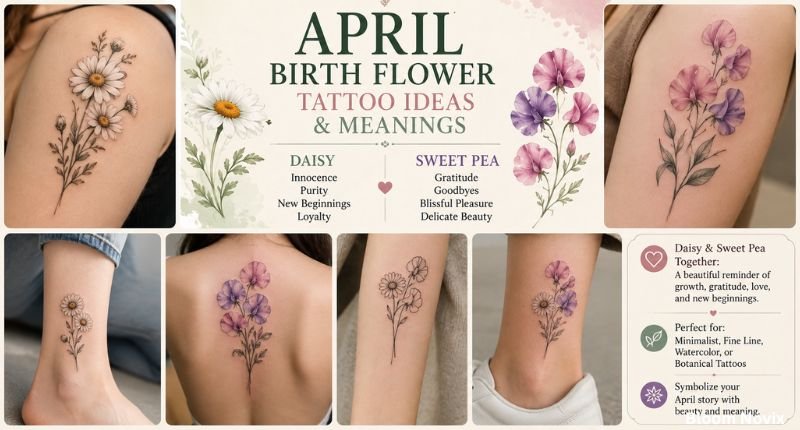
Daisy and sweet pea tattoos are popular ways to represent an April birthday, either as a single flower or combined into one design.
Daisy Tattoo Design Ideas
Daisy tattoos often use a minimalist style that highlights the flower’s simple, open shape. A single white daisy with a small yellow center is a classic choice, often placed on the wrist, ankle, or behind the ear.
Some designs add extra daisies in a small cluster, or combine the flower with a name, date, or short word to make the tattoo more personal.
Sweet Pea Tattoo Design Ideas
Sweet pea tattoos usually show the flower’s climbing vine and ruffled petals, creating a flowing, natural design. These tattoos work well on the forearm, shoulder, or ribcage, where the vine can follow the natural curve of the body.
Combined Daisy and Sweet Pea Tattoo Designs
Some people choose to combine both April birth flowers into one tattoo, using the daisy as a solid, grounded centerpiece with sweet pea vines trailing around it. This combination represents the contrast between April’s bold and gentle sides in a single piece of art.
Botanical Profile
Daisy (Bellis perennis / Leucanthemum species)
| Detail | Information |
| Scientific Name | Bellis perennis (English daisy) |
| Plant Family | Asteraceae |
| Native Region | Europe, Western Asia |
| USDA Zones | 4–9 |
| Bloom Time | Spring through early summer |
| Flower Size | 1–2 inches |
| Plant Height | 4–24 inches, depending on variety |
| Sunlight | Full sun to partial shade |
| Water Needs | Moderate |
| Soil Type | Well-drained |
| Fragrance | Mild to none |
| Pet Friendly | Generally safe in small amounts |
| Pollinator Friendly | Yes, attracts bees and butterflies |
| Lifespan | Perennial (comes back yearly) |
Sweet Pea (Lathyrus odoratus)
| Detail | Information |
| Scientific Name | Lathyrus odoratus |
| Plant Family | Fabaceae |
| Native Region | Southern Italy, Sicily |
| USDA Zones | 2–11 (annual) |
| Bloom Time | Spring to early summer |
| Flower Size | 1–2 inches |
| Plant Height | Vines up to 6–8 feet |
| Sunlight | Full sun, cool conditions |
| Water Needs | Regular, consistent moisture |
| Soil Type | Rich, well-drained |
| Fragrance | Strong, sweet, honey-like |
| Pet Friendly | Seeds are mildly toxic — keep away from pets |
| Pollinator Friendly | Yes, attracts bees |
| Lifespan | Annual |
Flower At a Glance
| Category | Daisy | Sweet Pea |
| Common Name | Daisy | Sweet Pea |
| Scientific Name | Bellis perennis | Lathyrus odoratus |
| Family | Asteraceae | Fabaceae |
| Origin | Europe | Sicily, Italy |
| Flower Colors | White, yellow, pink, red | Lavender, white, pink, red |
| Bloom Season | Spring–Summer | Spring–Early Summer |
| Meaning | Innocence, loyalty | Gratitude, pleasure |
| Symbolism | Purity, new beginnings | Blissful gratitude |
| Growing Difficulty | Easy | Moderate |
| Best Uses | Casual gifts, gardens | Romantic gifts, fragrant bouquets |
Cultural Significance
Daisies and sweet peas carry different meanings across cultures.
United States — Daisies are linked to innocence and cheerfulness, often used in casual, friendly bouquets. Sweet peas are popular in spring wedding arrangements for their soft romance.
Japan — Simple, open flowers like the daisy are valued for their honest, uncomplicated beauty, fitting Japan’s appreciation for minimalism in floral design.
China — While not as traditionally significant as the peony or chrysanthemum, daisies are increasingly used in modern Chinese floral gifts to represent purity.
Europe — Daisies have deep folklore roots across the continent, especially in medieval traditions of loyal love. Sweet peas remain closely tied to British garden culture, where they were first widely cultivated.
Ancient Greece and Rome — Daisies appear in Roman legend connected to transformation and protection, while their simple form was admired for representing honesty.
Victorian Era — Both flowers played a role in floriography. Daisies meant loyal love and quiet thought, while sweet peas expressed gratitude and delicate pleasure.
Flower Care Guide
| Care Factor | Daisy | Sweet Pea |
| Water | Moderate, avoid soggy soil | Regular, keep soil moist |
| Sunlight | Full sun to partial shade | Full sun, cool weather preferred |
| Temperature | Tolerates mild cold | Prefers cool spring temperatures |
| Humidity | Average | Avoid high humidity (mildew risk) |
| Soil | Well-drained | Rich, well-drained |
| Fertilizer | Light feeding in spring | Balanced fertilizer at planting |
| Pruning | Deadhead spent blooms | Cut flowers often to encourage blooms |
| Propagation | Division or seed | Seed |
| Winter Care | Mulch in colder zones | Annual — replant each year |
Best Occasions for Daisies and Sweet Peas
- Birthdays — Both flowers are ideal, especially for April birthdays.
- Weddings — Sweet peas are popular in spring wedding bouquets.
- Anniversaries — Sweet peas pair well with the April diamond birthstone.
- Mother’s Day — Daisies bring a cheerful, affectionate message.
- Sympathy — White daisies offer a gentle, peaceful tribute.
- Thank You Gifts — White sweet peas express sincere gratitude.
- Graduations — Bright gerbera daisies add a fun, celebratory touch.
- Congratulations — Mixed daisy bouquets feel warm and genuine.
Best Flower Combinations
Daisies pair beautifully with sunflowers and greenery, since both share a simple, cheerful look that works well in casual bouquets.
Sweet peas pair naturally with ranunculus and tulips, creating a soft, garden-style arrangement that feels romantic without being overdone.
Combining daisies and sweet peas in one bouquet balances bold and delicate textures, making it a popular choice for April birthdays that want to represent both flowers at once.
Common Mistakes to Avoid
- Overwatering daisies — leads to root rot; let soil dry slightly between waterings.
- Skipping a trellis for sweet peas — vines need support or they’ll sprawl and develop mildew.
- Planting sweet peas in hot weather — they prefer cool spring temperatures and will struggle in heat.
- Confusing sweet pea seeds with edible peas — always label seed packets clearly.
- Not cutting sweet peas often enough — regular cutting encourages more blooms.
- Overcrowding daisies — reduces air flow and increases risk of mildew.
Buying Guide: How to Choose Fresh April Birth Flowers
Look for daisies with firm, bright petals and a fresh yellow center — avoid any with browning edges. For sweet peas, check that the petals are not wilted and that the stems feel firm, not slimy.
Buy sweet peas as close to the delivery date as possible, since they have a shorter vase life than daisies. Store both flowers in a cool spot away from direct sunlight until you’re ready to arrange them, and always recut stems at an angle before placing them in water.
Buying Tip: Shop local florists during April for the freshest daisies and sweet peas, since both flowers are in peak season and easier to source.
Interesting Facts (Did You Know?)
- The name “daisy” comes from the Old English phrase for “day’s eye.”
- Sweet peas were first documented in the late 1600s by a Sicilian monk.
- Gerbera daisies are one of the top five best-selling cut flowers in the world.
- Shasta daisies were bred by American botanist Luther Burbank.
- Sweet pea seeds are mildly toxic, unlike regular garden peas.
- Daisies were sacred to the Norse goddess Freya.
- Sweet peas can climb up to 6–8 feet with proper support.
- The daisy family (Asteraceae) is one of the largest plant families on Earth.
- Sweet peas have almost no scent in some modern hybrid varieties bred for color.
- April is one of only a few birth months with two official birth flowers.
Myths vs Facts
| Myth | Reality |
| Sweet peas and garden peas are the same plant | They are different plants; sweet pea seeds are toxic if eaten |
| Daisies only come in white | Daisies also bloom in yellow, pink, orange, and red |
| Sweet peas can grow in any season | They prefer cool spring weather and struggle in heat |
| April only has one birth flower | April officially has two: daisy and sweet pea |
| All daisies are the same type | There are several varieties, including English, Oxeye, Shasta, and Gerbera |
Final Words
The April birth flower pairing of daisy and sweet pea captures everything mid-spring stands for — renewal, honesty, gratitude, and gentle beauty. Whether you lean toward the daisy’s bold simplicity or the sweet pea’s soft fragrance, both flowers offer a meaningful way to celebrate an April birthday.
If you’re still deciding, let the occasion guide you: pick daisies for a cheerful, easygoing gift, or sweet peas for something fragrant and romantic. However you choose to celebrate, both of April’s birth flowers bring a little extra warmth to one of spring’s most welcoming months.
FAQs
What is the official April birth flower?
The official April birth flower is the daisy, with the sweet pea serving as a secondary birth flower. The daisy represents innocence and loyal love, while the sweet pea represents gratitude and gentle pleasure.
Why does April have two flowers?
April has two flowers because its symbolism developed from two separate traditions — the daisy’s ancient history and the sweet pea’s popularity during the Victorian language of flowers. Both stuck, so neither replaced the other.
Does April have an official flower?
Yes, April’s official flower is the daisy. The sweet pea is widely recognized as its secondary birth flower, giving people born in April two meaningful options to choose from.
What is April Aries’ flower?
Aries, which covers the first part of April, is most closely linked to the daisy. Its bold, simple shape matches the confident, energetic personality traits often associated with Aries.
Which flower is lucky for Aries?
The daisy is often considered a lucky flower for Aries, symbolizing new beginnings and honest confidence — traits that align well with the sign’s fiery, direct personality.
What are two birth flowers for April?
The two birth flowers for April are the daisy and the sweet pea. The daisy is the primary flower, known for simplicity and loyal love, while the sweet pea is the secondary flower, known for its fragrance and gratitude.

BloomNovix is managed by an experienced team of content writers and SEO specialists with 4+ years of expertise in gardening and plant care. We provide well-researched guides, gardening tips, and insights on floral meanings to help plant lovers grow their indoor and outdoor gardens with confidence.





5 thoughts on “April Birth Flowers: Daisy vs. Sweet Pea Meaning & Symbolism”