
Begonia flower meaning is linked to appreciation and affection. But its meaning can change based on its color and the occasion.
If you want to give someone a begonia, you may want to know what its color means. And if you are unsure about what message to send with it, don’t worry. In this article, we will explore its meaning, colors, and symbolism in a simple way.
What Does the Begonia Flower Mean?
The begonia flower meaning often represents appreciation, affection, and thoughtful feelings. People also connect this flower with caution and deep reflection. Its message can change based on the setting and the person giving it.
A begonia is just a sweet, simple way to show someone you care. Much like how the shooting star flower spiritual meaning is all about personal connection, begonias express warm feelings without making a big fuss. That’s why they work so well for gifts, backyard gardens, or small everyday moments.
The begonia flower symbolism can also carry a gentle warning.Begonias can also have a message of caution. They remind us to be careful and think twice before making a choice.
Today, people often see begonias in a positive way. People love begonias for their bright flowers and beautiful leaves. They can also be a simple way to show care and appreciation. The meaning can also change with different begonia flower colors and personal traditions.
Etymological Meaning of the Begonia Flower
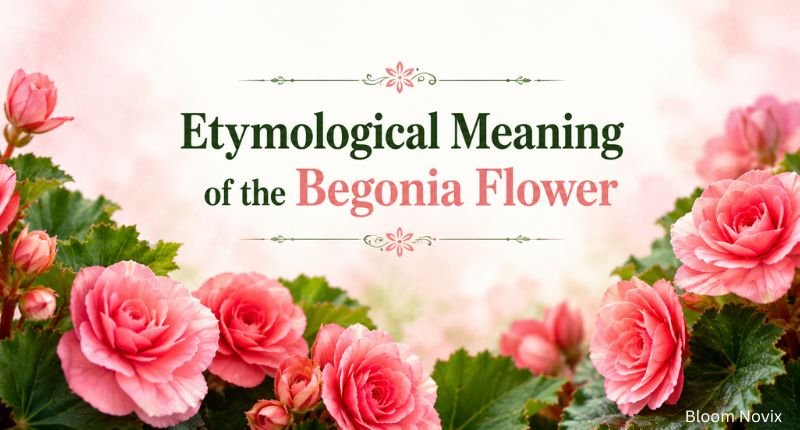
Have you ever wondered where the name Begonia came from? French botanist Charles Plumier named the plant after Michel Bégon, a French plant collector and former governor of the French Caribbean.
Plumier discovered the plant in the Americas during the late 17th century. He later honored Bégon by giving the flower his name. The name begonia then became part of botanical language.
This history adds another layer to the begonia flower meaning. The flower does not have a meaning only because of its appearance. Its name also connects it to botanical discovery, exploration, and appreciation.
Begonias belong to the Begoniaceae family. There are many species, and they can look quite different from each other. They have different flowers, leaves, and growth habits. This variety is one reason people love growing them as ornamental plants in homes and gardens.
Historical Background
Begonias have an interesting history. Their journey started with plant discovery and travel. European botanists became interested in them when explorers brought these plants back from tropical parts of the Americas and other regions.
The plant got its name in the late 17th century. Charles Plumier named it after Michel Bégon, a French plant lover who was also interested in botanical work.
Once people saw how easy begonias were to love, they started planting them everywhere in their gardens. Their bright flowers and colorful leaves made them an instant favorite. Over time, plant lovers began growing new types in all sorts of shapes and colors—pretty much like how people fell in love with different anemone flowers for their unique looks and charm.
Today, begonias grow in many gardens and homes. Their history helps explain why the plant has become more than a simple flowering plant. It now has a strong place in gardening, decoration, and flower symbolism.
Timeline and Era Notes
The story of begonias spans several centuries. Each period added something new to the plant’s history and popularity.
| Era | Key Development |
| 17th century | Charles Plumier studied begonias and named the genus after Michel Bégon. |
| 18th century | European botanists continued to describe and classify new begonia species. |
| 19th century | Gardeners and breeders introduced more begonias into European gardens and homes. |
| 20th century | New hybrids became popular for their flowers, leaves, and long blooming periods. |
| Modern era | People grow begonias as ornamental plants indoors, outdoors, and in containers. |
This timeline also shows how begonias changed from botanical discoveries into popular garden plants. Their wide range of forms now makes them useful for many growing spaces.
Modern begonias come in many shapes and colors. This variety supports their strong place in gardening and floral symbolism today.
Symbolism of the Begonia Flower
The begonia flower symbolism is often linked to appreciation, care, and thoughtful feelings. It can also have a message of caution. What it means may change with the culture, occasion, and person giving the flower.
In traditional flower symbolism, begonias can say things that are sometimes hard to put into words. Their bright flowers can feel warm and cheerful, while their delicate look can show care and affection.
Some common ideas linked with begonias include:
- Appreciation for someone you value
- Affection for a loved one or close friend
- Gratitude for kindness or support
- Caution when a situation needs careful thought
- Thoughtfulness toward someone special
These meanings make begonias suitable for many personal occasions. A person may choose them to show thanks, care, or warm feelings without sending a strong romantic message.
The meaning also changes with the flower’s color. Begonia color meanings can add another layer to the message, which makes color an important part of choosing a begonia as a gift.
Cultural and Symbolic Meaning
Begonias have different meanings in floral traditions and modern culture. People often connect them with appreciation, care, and warm feelings. The meaning can also change with local customs and personal beliefs.
In the language of flowers, begonias sometimes carry a message of caution. This idea comes from older floral traditions. People once used flowers to share feelings without saying them directly.
Modern flower giving often takes a softer view. Many people choose begonias to show:
- Gratitude for someone’s kindness
- Affection for a friend or loved one
- Admiration for someone they respect
- Friendship and warm connection
- Good wishes for a new chapter
The cultural meaning does not stay fixed. A flower can mean one thing in an old floral guide and something different in a modern bouquet. The occasion, relationship, and flower color can all shape its message.
This makes the begonia flower significance personal as well as traditional. The best meaning often comes from the feeling behind the gift.
Begonia Flower Color Meanings
Changing a flower’s color can completely change what it means. Much like how peony flower symbolism works, begonia flower color meanings come from a mix of traditional ideas and popular gifts. Just treat these meanings as light inspiration rather than strict rules.
| Begonia Color | Common Meaning | Best Message |
| White begonia | Purity, peace, and respect | “I care about you.” |
| Pink begonia | Affection and tenderness | “You are special to me.” |
| Red begonia | Love, warmth, and strong feelings | “My feelings are sincere.” |
| Yellow begonia | Joy and friendship | “Wishing you happiness.” |
| Orange begonia | Energy, warmth, and cheer | “Keep shining.” |
| Blue begonia | Rare and unusual symbolism | “You are one of a kind.” |
White begonia flower meaning
A white begonia flower meaning often connects with peace, purity, and respect. White blooms can suit calm and thoughtful occasions.
Pink begonia flower meaning
The pink begonia flower meaning often suggests gentle affection and warmth. Pink begonias can work well for friends, family, or someone you admire.
Yellow begonia flower meaning
A yellow begonia flower meaning can suggest happiness, friendship, and cheerful feelings. Its bright color makes it a natural choice for joyful moments.
Red begonia flower meaning
Red begonias can express stronger emotions. Their bold color may suggest love, warmth, or deep affection.
Blue begonia flower meaning
True blue begonias are not a common natural flower color. Many flowers sold in unusual blue shades may have been specially treated or colored. For this reason, blue begonia meaning does not have the same established tradition as common begonia colors.
When choosing a begonia, think about both the color and the occasion. The flower itself can show care, while its color can add a more personal touch.
Meaningful Botanical Characteristics of the Begonia Flower
Begonias are loved for their bright flowers and pretty leaves. Some types have small, simple blooms, while others have fuller flowers that really stand out.
Their leaves are just as interesting. You can find begonias with unusual shapes, soft textures, and lovely patterns. Some types are even grown mainly for their beautiful leaves.
Key features include:
- Soft and colorful blooms
- Unique leaf shapes
- Fleshy stems in many types
- Many sizes and growth forms
- Male and female flowers on the same plant
- A wide range of flower and leaf colors
Begonias belong to the Begoniaceae family. The genus has many species and hybrids. Some grow well outside, while others do well indoors.
These traits make begonias popular ornamental plants. People grow them for both their flowers and eye-catching leaves.
Botanical Information
Did you know begonias come from the Begoniaceae family? There are literally hundreds of types and hybrids out there, and they just love warm, humid weather. That’s why they’ve become such a garden favorite, pretty much like how everyone loves gifting the April birth flower when spring rolls around.
Begonias can have very different shapes and sizes. Some stay small, while others grow much larger. Their flowers may appear in shades of pink, red, white, yellow, and orange.
| Botanical Feature | Simple Detail |
| Plant family | Begoniaceae |
| Genus | Begonia |
| Growth type | Varies by species |
| Flowers | Small to large, with many colors |
| Leaves | Often patterned or uneven in shape |
| Growing areas | Warm and humid regions |
Some begonias grow from tubers. Others grow from rhizomes or fibrous roots. This difference helps explain why each type can need slightly different care.
Their wide range of forms makes begonias useful as garden flowers and indoor plants. It also adds to their appeal among people who enjoy growing unusual and colorful plants.
Special Occasions for the Begonia Flowers
Begonias can suit many special moments. Their bright blooms can show care, thanks, or warm feelings without feeling too formal.
You can choose begonias for:
- Birthdays to wish someone joy.
- Thank-you gifts to show gratitude.
- Friendship to celebrate a close bond.
- Housewarmings to bring beauty to a new home.
- Congratulations to celebrate a new success.
- Anniversaries to add a thoughtful floral touch.
- Romantic occasions when you want to show affection.
The flower color can also match the occasion. For example, pink can feel soft and warm, while yellow can bring a cheerful touch.
The best begonia flower gift meaning comes from the reason behind it. Choose a color that fits the person and the moment.
Use in Jewelry
Begonia flowers can inspire beautiful jewelry designs. Their soft petals and unique shapes work well in floral patterns.
A begonia design can appear on:
- Necklaces
- Rings
- Earrings
- Bracelets
- Brooches
People may choose begonia flower jewelry because it feels personal and unique. It can also carry a simple message of appreciation, affection, or beauty.
A begonia pendant can be a lovely gift for someone who enjoys flowers. Even a small floral design can have meaning without feeling too flashy.
Growing Guide
Begonias are actually pretty low-maintenance once you figure out what they like. All they really need is a warm spot and plenty of bright, indirect light. And honestly, don’t let strange or ugly flower names fool you—begonias are super charming and so rewarding to grow at home.
Sunlight
Begonias usually like bright light. Strong direct sun can damage their leaves. Indoor plants often do well near a bright window with filtered light.
Water
Water the plant when the top layer of soil feels dry. Do not keep the soil soaked. Too much water can harm the roots.
Soil
Use light and well-drained soil. Good drainage helps prevent root problems. A pot with drainage holes also helps.
Expert Growing Tips
Keep these simple tips in mind:
- Give the plant bright, filtered light.
- Let the top soil dry before watering again.
- Use a pot with drainage holes.
- Keep the plant away from cold drafts.
- Remove dead flowers and leaves.
- Give enough space for good air flow.
With basic care, begonias can stay healthy and produce beautiful begonia blooms for a long time.
Uses & Benefits
Begonias are loved for their beauty and wide range of uses. Most people grow them for their flowers and leaves.
Ornamental Uses
Begonias work well in many spaces. You can grow them in gardens, pots, hanging baskets, and indoor planters.
They add color without needing a large space. Some types also have striking leaves, so they look good even when flowers are not in bloom.
Traditional Uses
Some begonia species have appeared in traditional practices in different regions. However, these uses can vary by species and culture.
Begonias are mainly valued today as ornamental plants. Do not use a begonia as a home remedy unless a trusted health source confirms that the specific species is safe.
The Begonia Flower’s Message Is…
A begonia can send a warm and thoughtful message. Its meaning often depends on the person, color, and occasion.
| Message | What It Can Express |
| Appreciation | “I value you.” |
| Affection | “You mean a lot to me.” |
| Gratitude | “Thank you for your kindness.” |
| Friendship | “I am glad to have you in my life.” |
| Caution | “Take care and think things through.” |
The begonia flower message does not need many words. A simple bloom can show that you care.
The color can add more meaning too. Pink may feel gentle, while yellow can bring a cheerful mood. Red can suit stronger feelings.
That is what makes a begonia special. You can choose the flower based on both its beauty and the feeling you want to share.
Frequently Asked Questions
What do begonias symbolize?
Begonias often symbolize appreciation, affection, and gratitude. Some floral traditions also link them with caution and careful thought.
Are begonias annual or perennial?
Most begonias are perennials in warm climates. In colder areas, many types grow as annuals because frost can damage them.
Do begonias like sun or shade?
Most begonias prefer bright, indirect light or partial shade. Strong afternoon sun can burn their leaves.
How often should you water begonias?
Water begonias when the top part of the soil feels dry. Avoid keeping the soil wet for long periods.
Can begonias be grown indoors?
Yes. Many begonias grow well indoors with bright, filtered light. Good air flow and well-drained soil can help keep the plant healthy.
Conclusion
The Begonia flower meaning often connects with appreciation, affection, and thoughtful feelings. Its color can add a special touch to the message. Each shade can fit a different moment.
Begonias make lovely gifts for friends, family, and loved ones. Their bright flowers can also bring warmth to a room. Pick a color that feels right for the person and the occasion.

BloomNovix is managed by an experienced team of content writers and SEO specialists with 4+ years of expertise in gardening and plant care. We provide well-researched guides, gardening tips, and insights on floral meanings to help plant lovers grow their indoor and outdoor gardens with confidence.





1 thought on “Begonia Flower Meaning: Symbolism, Colors, History & Cultural Significance”