Have you ever stopped to look at a small flower growing by the roadside? It seems plain at first glance. But once you learn wildflowers and their meanings, you start to see them in a whole new way.
This guide walks you through the full story behind these blooms. You’ll learn their history, their symbolic meaning of flowers, and why artists and poets still love them today. Stick around, because the next flower on this list might be the one you’ve been wearing, gifting, or even getting tattooed without knowing its true meaning.
The Language of Flowers
Long before text messages and greeting cards, people used flowers to say what words couldn’t. This old practice is called the language of flowers, and it still shapes how we gift blooms today. It began as a quiet code between people who wanted to express feelings without saying them out loud.
A single stem could carry a full message. Love, apology, or grief could all be sent through a simple bouquet. Victorian society took this tradition especially seriously, building entire dictionaries around which flower meant what.
This tradition is the root of all flower symbolism we still use now. Even today, a wedding bouquet or a sympathy arrangement follows rules that trace back centuries. You may not notice it, but this old language still guides most of the flowers you buy or receive.
Wildflowers Carry A Different Kind Of Beauty
Garden flowers are planted with care. Someone waters them, prunes them, and picks their exact spot in the soil. Wildflowers just show up on their own, with no one guiding their growth.
That’s what makes their beauty feel honest and free. They grow in cracks, fields, and forgotten corners where nothing else survives. This wild nature gives them a symbolic edge that trimmed garden flowers rarely get.
They represent life that thrives without help. A wildflower doesn’t need perfect soil or a gardener’s attention to bloom beautifully. That unplanned beauty is exactly why so many people find wildflowers more moving than any curated bouquet.
The Flower Outside The Garden
A wildflower doesn’t ask for permission to bloom. It grows where it lands, not where it’s told to. This simple fact carries more meaning than you might expect.
This idea makes wildflowers a symbol of independence. They stand for people and moments that exist outside neat, expected boundaries. Think of someone who built a life on their own terms, far from the path others expected.
That’s the same energy a wildflower brings to a field or a photograph. It doesn’t fit inside a fence, and it doesn’t need to. This is part of why wildflowers show up so often in stories about freedom and self-discovery.
Meaning of Wildflowers
The meaning of wildflowers changes with culture, season, and even color. A flower that means hope in one country might mean caution in another. Still, some themes stay constant across most traditions.
Freedom, resilience, and quiet beauty are the threads that tie almost every wildflower story together. These themes show up in folklore, poetry, and even modern tattoos. Let’s look at where these meanings actually come from.
Historical Significance
Ancient communities used wildflowers for healing long before modern medicine existed. Coneflower treated infections, and dandelion became a common tea for digestion. These simple, practical uses gave early meaning to plants that grew without any human effort at all.
Cultural Significance
Every culture has its own take on wildflower symbolism. In Victorian England, a gifted bouquet carried hidden messages that only the receiver could decode. In Native American traditions, sunflowers held deep spiritual weight tied to the sun and to life itself.
Innocence, Transience, And Loss
Wildflowers bloom fast and fade fast. Some open in the morning and close again by nightfall. That short life makes them a gentle symbol of both innocence and loss.
They remind us that beauty doesn’t need to last forever to matter. A flower that lives for one day can still leave a lasting impression on anyone who sees it. This is why so many memorial gifts include wildflower arrangements instead of long-lasting garden blooms.
The brief life of a wildflower also mirrors human experience. Childhood, first love, and quiet joys often feel just as short-lived. That shared fragility is part of why people connect so deeply with these flowers.
Resilience In Small Forms
A wildflower can push through cracked pavement or dry, rocky soil. It doesn’t need perfect conditions to survive, and it rarely gets any help along the way.
This toughness makes wildflowers a symbol of quiet resilience. They show strength without needing to look strong or dramatic about it. A single stem growing through concrete says more than any bold, showy bloom ever could.
People often use this image to describe their own journeys through hard times. Surviving without ideal conditions, staying soft while staying tough, and blooming anyway. These are lessons a small flower can teach without saying a word.
Read Also: Purple Roses Meaning
The Wildflower As A Feminine Symbol
Across many stories and paintings, wildflowers are linked to femininity. Their softness paired with their toughness creates a powerful image that artists return to again and again.
This pairing represents women who are gentle yet unbreakable. It’s a theme you’ll see repeated in poetry, film, and modern art, from old folk tales to today’s song lyrics. The wildflower becomes shorthand for strength that doesn’t need to shout.
This symbol also carries a message about growth outside expectations. Like the wildflower itself, this kind of strength grows in unexpected places, often where no one thought anything could bloom at all.
Types of Wildflowers and Their Meanings
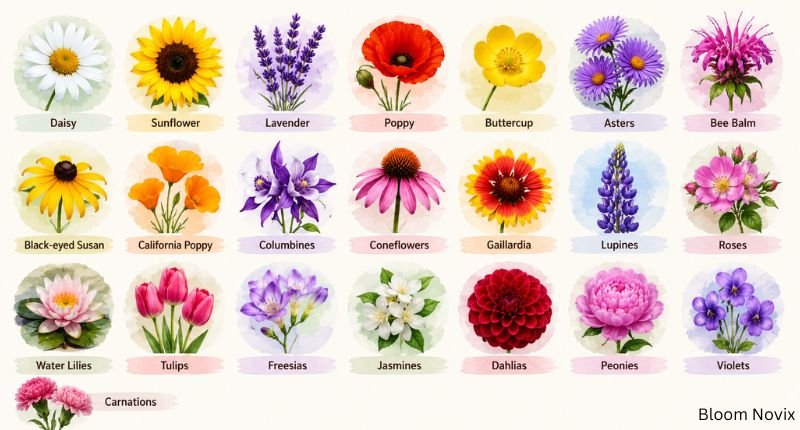
Now let’s get into the heart of this guide. Below are 25 flowers and wildflowers and their meanings, covering true wild blooms like daisies and corn poppies alongside well-loved garden favorites.
Each flower carries its own story. Some represent love, others represent grief, and a few carry surprising, lesser-known meanings you may not have heard before.
Daisy
The daisy stands for innocence and new beginnings. Its simple white petals and open shape have made it a favorite across cultures for centuries. It’s often given to someone starting a fresh chapter, like a new job, a graduation, or a move to a new city.
Sunflower
Sunflowers represent happiness, loyalty, and long-lasting joy. Their habit of turning toward the sun adds a hopeful layer to their meaning, since they always seem to chase the light. Many people gift sunflowers to celebrate friendships that have lasted through hard times.
Lavender
Lavender symbolizes grace and calm. It’s a common choice at weddings because of its soft, elegant scent and gentle purple color. Its calming reputation also makes it a popular gift for someone dealing with stress.
Poppy
The poppy is tied closely to remembrance. It’s used worldwide to honor soldiers and mark moments of sacrifice, especially around wartime memorials. Its bright red color also links it to deep, urgent emotion.
Buttercup
Buttercups stand for cheerfulness and simple joy. They’re a small pick-me-up flower, perfect for brightening someone’s day without needing a big gesture. Children often pick them from fields as one of their first flower memories.
Asters
Asters represent patience and quiet love. Their star-shaped petals have made them a symbol of lasting affection in many wedding traditions, especially in the fall when they bloom the brightest.
Bee Balm
Bee Balm is linked to healing and renewal. Herbalists have used it for generations to support wellness and balance, often brewing it into a soothing tea. Its bright red blooms also attract pollinators, adding to its life-giving symbolism.
Black-eyed Susan
This flower stands for encouragement and motivation. It’s often gifted to someone going through a hard season in life, since its bold yellow color feels like a small dose of sunshine. It’s a common sight in wildflower meadows across the United States.
California Poppy
The California poppy symbolizes imagination and creative energy. Its golden, silky petals make it a favorite among artists and photographers. As the official state flower of California, it also represents pride and natural beauty.
Columbines
Columbines represent peace and harmony. Their delicate, bell-shaped petals have made them popular in meditation gardens and spiritual practices around the world.
Coneflowers
Coneflowers stand for strength and endurance. Their tough, upright stems reflect quiet resilience in the garden, even through drought or poor soil. They’re also known for their long-standing use in herbal medicine.
Gaillardia
Gaillardia symbolizes courage and determination. It’s often linked to military tributes and personal bravery, thanks to its bold red and yellow petals that resemble a small flame.
Lupines
Lupines represent imagination and whimsy. Their tall, colorful spikes make them a favorite in children’s stories and artwork, often used to signal a magical or dreamlike setting.
Read More: Shooting Star Flower Spiritual Meaning
Roses
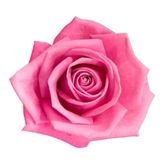
Wild roses stand for love, though a gentler kind than their cultivated cousins found in flower shops. They represent natural, unforced affection, the kind that grows on its own rather than being carefully arranged.
Water Lilies
Water lilies symbolize purity and spiritual awakening. Their calm presence on still water has made them a symbol of enlightenment across many Eastern traditions, especially in meditation and art.
Tulips
Tulips represent elegance and grace. They’re a popular choice for formal gifts and celebrations, and different colors carry their own extra meanings, from red for love to yellow for cheerful thoughts.
Freesias
Freesias stand for trust and friendship. Their sweet scent makes them a common gift between close friends, especially during birthdays or moments of gratitude.
Jasmines
Jasmine symbolizes purity and sweetness. It’s widely used in perfumes because of its delicate, comforting fragrance, and in some cultures it also represents romantic attraction.
Dahlias
Dahlias represent strength and dignity. Their bold, layered petals give them a regal presence in any bouquet, making them a popular choice for formal events and milestone celebrations.
Peonies
Peonies stand for prosperity and good fortune. They’re a favorite at weddings for their message of happiness ahead, and in some cultures, they’re seen as a symbol of honor and respect.
Violets
Violets symbolize humility and simplicity. Their small size carries a big message of quiet modesty, and they’ve long been associated with faithfulness in old poetry and folklore.
Carnations
Carnations represent love and admiration. They remain a classic choice for expressing deep affection, and their color often changes the exact message, from pink for gratitude to red for romantic love.
Wild Daffodil (Narcissus pseudonarcissus)
The wild daffodil stands for new beginnings and hope. It’s often the first flower to bloom after winter ends, pushing through cold soil to announce that spring has arrived.
Wood Forget-Me-Not (Myosotis sylvatica)
This tiny blue flower carries a powerful message of remembrance. It’s a common gift between people who want to stay connected across distance, and its name alone makes its meaning impossible to miss.
Corn Poppy (Papaver rhoeas)
The corn poppy is closely tied to memory and peace. It has become an international symbol worn to honor those lost in war, especially around remembrance events each year.
Here’s a quick table to help you compare these blooms at a glance.
| Wildflower | Core Meaning |
| Daisy | Innocence, new beginnings |
| Sunflower | Happiness, loyalty |
| Poppy | Remembrance, peace |
| Forget-Me-Not | Memory, true love |
| Lavender | Calm, grace |
| Violet | Humility, simplicity |
| Peony | Prosperity, good fortune |
Color also changes how a wildflower is read. Here’s a simple breakdown of common wildflower colors and what they tend to represent.
| Color | Common Meaning |
| Red | Passion, deep love |
| Yellow | Joy, friendship |
| Purple | Grace, dignity |
| White | Purity, innocence |
| Blue | Peace, remembrance |
| Orange | Energy, enthusiasm |
Forget-Me-Not: Full Symbolism and History
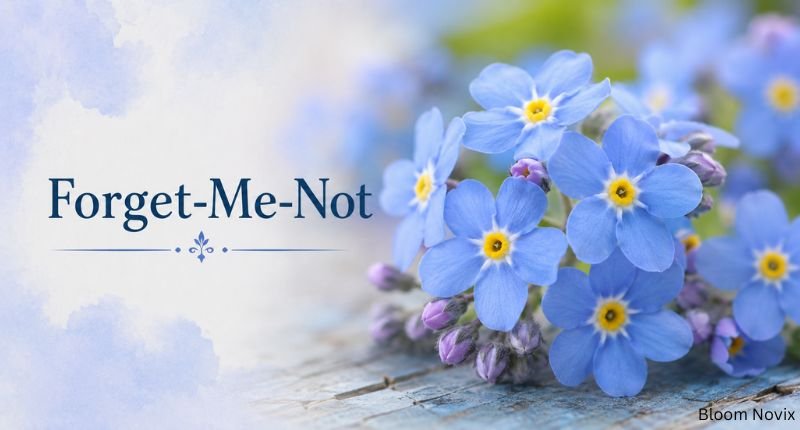
The forget-me-not carries one of the most touching stories in wildflower folklore. Legend says a knight fell into a river while picking these flowers for his love, and his last words were simply, “forget me not.”
Because of this tale, the flower became a lasting symbol of true love and memory. Today, it’s often gifted at farewells, worn as jewelry, or used in memorial gardens to honor someone who has passed.
Its small, sky-blue petals seem simple, but they carry one of the strongest emotional messages of any wildflower on this list. That’s part of why it remains a favorite for tattoos and keepsakes.
Orchid Symbolism
While not always classified as a wildflower, wild orchids carry deep symbolism of luxury, beauty, and rare strength. They grow in tough environments, from rainforest canopies to rocky cliffs, yet still produce delicate, striking blooms.
Orchids often represent refined love and admiration. Their rarity adds a layer of exclusivity to their meaning, making them a popular gift for milestone celebrations and important relationships.
The mythology of Britain’s wildflowers
British folklore is full of stories tied to native wildflowers. Bluebells were once believed to ring and call fairies to gather in the woods, and picking one was said to bring bad luck to the picker.
These old stories still shape how the flowers are viewed today. Many British wildflowers carry a mix of magic, caution, and old-world charm that continues to appear in children’s books and countryside folklore.
Wildflowers in Art and Literature
Wildflowers have inspired countless creative works across centuries. Their untamed beauty gives artists and writers a symbol that feels real and grounded, unlike the polished look of cultivated blooms.
From paintings to poems, wildflowers keep showing up wherever people try to capture raw, natural emotion. They offer a visual shorthand for freedom, memory, and quiet beauty.
Paintings
Vincent van Gogh’s floral works often used wild blooms to reflect emotion and inner turmoil. The loose, wild shapes mirrored feelings that structured, formal flowers couldn’t express nearly as well.
Poetry
William Wordsworth’s famous poem about daffodils captures the joy of stumbling upon a wild field in bloom. It remains one of the most loved nature poems in English literature, still taught in classrooms today.
Folklore
Old folklore often ties wildflowers to fate, love, and even death. The poppy, for example, has long been linked to sleep and quiet endings in many old tales passed down through generations.
Wildflowers in Art and Design
Modern designers still lean on wildflower patterns for a soft, natural feel. You’ll see them on fabric, wallpaper, and even branding for eco-friendly products that want to feel warm and approachable.
Their imperfect shapes give designs a handmade, human touch that manufactured flower prints can’t quite copy. This is part of why wildflower prints remain popular year after year.
Visual Storytelling And The Field Of Memory
A field of wildflowers often appears in film and photography as a symbol of memory or nostalgia. It’s a visual shortcut for peace, childhood, or something once lost, used again and again in storytelling.
This is why wildflower fields are so common in scenes about grief, love, or looking back on the past. A single wide shot of a blooming meadow can say more than pages of dialogue.
Wildflower Meanings With Pictures
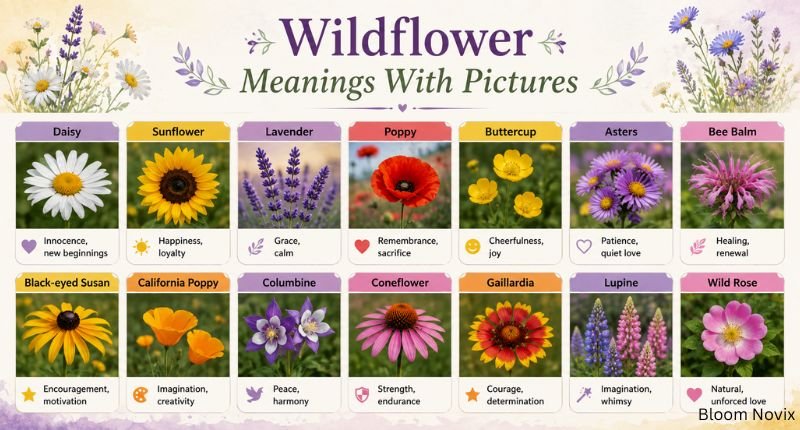
Seeing a flower often explains its meaning faster than words can. Pairing each bloom with its picture helps readers connect the color, shape, and story all at once, making the meaning stick in memory.
If you’re building a mood board or gift guide, matching wildflower meanings with pictures makes the message far easier to share and remember, especially for visual platforms like Pinterest or Instagram.
Wildflower Tattoo Meanings
Wildflower tattoos have become a popular way to carry personal meaning on skin. A single forget-me-not can represent a lost loved one, while a poppy might honor a family member who served in the military.
People often choose a wildflower tattoo tied to their birth month or a memory they want close to them always. These tattoos tend to feel more personal than generic flower designs because of the deep symbolism behind each bloom.
Wildflower Quotes
Short quotes about wildflowers are widely shared because they capture big feelings in few words. They often speak about growing wild, blooming late, or thriving without permission from anyone.
These lines work well for journals, cards, or captions when you want a simple, honest message. Many people also use wildflower quotes in wedding vows or memorial speeches.
What Does “Wildflower” Mean in Billie Eilish’s Song?
Billie Eilish’s song “Wildflower” touches on complicated emotions around love, growth, and moving forward after pain. The wildflower here becomes a metaphor for something that grows back stronger after being uprooted.
This modern use keeps the flower’s old meaning alive in a new context. Even in pop culture, the wildflower still represents resilience and quiet strength, proving how timeless this symbol really is.
It’s important to remember there is no right or wrong way to remember those you love.
Grief looks different for everyone. Some people plant a wildflower garden, while others simply carry one dried flower pressed inside a book for years.
Both choices are valid, and there’s no single correct way to grieve. Wildflowers give people a gentle, personal way to hold onto memory without needing exact words to explain how they feel.
Grief and bereavement resources
If you’re using wildflowers as part of a grieving process, you’re not alone in that choice. Many memorial gardens and charities use native wildflower planting as a meaningful form of remembrance.
Local hospice organizations and bereavement charities often offer flower-planting programs for families. These can be a comforting, hands-on way to process loss while creating something beautiful in return.
Wellbeing and wildflowers
Spending time around wildflowers has been linked to lower stress and better mood. Simply walking through a wild meadow can slow down a racing mind and bring a sense of calm.
This connection between nature and calm is why wildflower walks are now recommended by many wellness programs. Even a short visit to a blooming field can shift how you feel for the rest of the day.
Nature’s benefits
Beyond mental health, wildflowers support entire ecosystems. They feed bees, butterflies, and other pollinators that keep food systems running smoothly across the world.
Planting even a small wildflower patch can help local wildlife thrive. It’s a small act with a much bigger impact than most people realize.
What Wildflowers Teach Us
Wildflowers show us that beauty doesn’t need a perfect setting to exist. They grow in rough soil, cracked pavement, and neglected corners, and still manage to bloom.
This lesson applies far beyond gardens and fields. It’s a reminder that growth is possible even in hard conditions, and that thriving doesn’t always require ideal circumstances.
Explore More: Flower Drawing Designs
Finding Meaning in Nature
Nature has a way of mirroring our own lives back to us. A wildflower pushing through concrete can feel like a message when you need one most, especially during a hard season.
Take a moment outside and look closely at what’s growing around you. You might be surprised how much meaning is growing right beside the path you walk every day.
Why Wildflowers Still Speak So Clearly
In a world full of noise, wildflowers say something simple and true. They don’t need explanation to be understood, and their message reaches people across every culture and age.
That’s their real power. Their message of freedom, resilience, and quiet beauty still lands the same way it always has, generation after generation.
If you’re picking a flower for a specific feeling or occasion, this table makes the choice easier.
| Occasion or Emotion | Best Wildflower |
| Love | Wild Rose, Carnation |
| Friendship | Freesia, Sunflower |
| Remembrance | Poppy, Forget-Me-Not |
| Healing | Bee Balm, Lavender |
| New Beginnings | Daisy, Wild Daffodil |
| Peace | Columbine, Water Lily |
Final Words
Learning wildflowers and their meanings changes the way you see every field, roadside, and garden. What once looked like a random bloom now carries a full story of love, loss, or hope.
From the daisy to the corn poppy, each flower adds its own layer to a much older language. Next time you spot a wildflower, take a second to notice what it might be quietly saying.
FAQs
What does wildflower symbolize?
A wildflower symbolizes freedom, resilience, and natural beauty that grows without help.
What is the symbolism associated with wildflowers?
Wildflowers are associated with independence, hope, and quiet strength.
What is the spiritual meaning of wildflowers?
Spiritually, wildflowers represent inner peace and the beauty of natural, unforced growth.
What are the symbolic meanings of flowers?
Flowers symbolize emotions like love, grief, hope, and gratitude depending on their type and color.
What flower means “I love you secretly”?
The acacia flower is traditionally used to express secret or hidden love.
What is the most spiritual flower?
The lotus is widely seen as the most spiritual flower across many cultures.
What flower means “I’m sorry”?
The purple hyacinth is the traditional flower for saying sorry.
Which flower has the deepest meaning?
The forget-me-not is often called the flower with the deepest emotional meaning, tied to memory and lasting love.
BloomNovix is managed by an experienced team of content writers and SEO specialists with 4+ years of expertise in gardening and plant care. We provide well-researched guides, gardening tips, and insights on floral meanings to help plant lovers grow their indoor and outdoor gardens with confidence.
3 thoughts on “25 Flowers & Wildflowers and Their Meanings: A Complete Guide to Symbolism”