Answer a few simple questions and discover a flower that matches your preferences and special occasion.
Candytuft symbolism carries more depth than this small flower first lets on. You see a soft cluster of white or purple blooms, and you assume it means something gentle and simple. But the real story runs deeper than that first glance. Victorian flower dictionaries once tied this humble bloom to indifference, a meaning rooted in how the plant behaves through every season.
Today, though, gardeners and flower lovers read candytuft very differently. You will find it linked to resilience, calm, and quiet steadiness far more often than to emotional distance. This guide walks you through both sides of that story — the old meaning and the new one — along with color symbolism, spiritual associations, and gifting advice you will not find in most other guides.
Quick Answer: What Does Candytuft Symbolize?
Candytuft’s traditional meaning is indifference. This idea comes from Victorian floriography, the nineteenth-century practice of assigning emotional meaning to flowers. The reasoning was simple: candytuft stays green and keeps blooming even as everything around it changes with the seasons, so early flower writers read that steadiness as emotional detachment.
In modern use, candytuft means something warmer. Most people connect it to persistence, simplicity, and quiet beauty, since they meet the plant as a garden border or groundcover long before they meet its old symbolic meaning. Like the bluebell, whose meaning also carries its own history and symbolism, candytuft shows how different flowers can take on layers of meaning over time.
| Context | Common Meaning | Notes |
| Victorian floriography | Indifference, emotional composure | Traditional, dictionary-based |
| Modern gardening | Simplicity, calm | Rarely intended as a message |
| Color-based reading | Purity, warmth, or spiritual calm | Depends on the shade |
| Personal symbolism | Varies by person | Memory, resilience, boundaries |
What Is Candytuft?
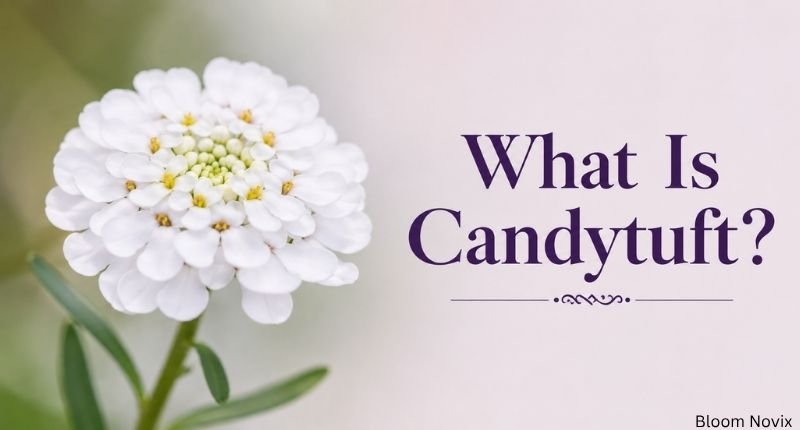
Candytuft is the common name for plants in the genus Iberis, part of the mustard family, Brassicaceae. It grows as an annual, a perennial, or a small evergreen subshrub, depending on the species.
A few quick facts worth knowing:
- The name has nothing to do with candy. “Candy” comes from Candia, an old name for Crete, and “tuft” describes its clustered blooms.
- Merriam-Webster traces the word back to the seventeenth century.
- The genus name Iberis points back to the Iberian Peninsula, another region where early species grew wild.
- Iberis species originally grew across southern Europe and the Mediterranean, then spread to North America thanks to their tolerance for poor soil and full sun.
This geography explains why candytuft shows up in rock gardens and dry borders far more than in shaded, lush beds. A few more identifying details help when picking candytuft at a nursery:
- Leaves stay narrow and leathery, which helps the plant survive dry spells.
- Flower heads form in tight, rounded clusters rather than single blooms.
- Height stays compact, usually between six and twelve inches depending on the species.
Candytuft Plant
Candytuft is easy to spot once you know what to look for. It has narrow, deep-green leaves and small flowers packed closely together, giving the plant a neat, almost cushion-like appearance. Most varieties stay low and spread outward, so they work especially well in:
- Garden borders along paths and fences
- Rock gardens with dry, well-drained soil
- Groundcover for filling empty spaces
- Containers when garden space is limited
The flowers usually come in white, pink, purple, or lilac, with many tiny blooms forming a single dense cluster. Beyond adding color, candytuft can bring bees and butterflies into the garden, making it a nice choice for anyone who enjoys a little extra wildlife around their plants.
Another reason gardeners like candytuft is that it doesn’t need much attention once established. It can handle heat, dry conditions, and less-than-perfect soil, especially when grown in a sunny, well-drained spot. That dependable nature fits nicely with the reliability often associated with candytuft symbolism.
Most varieties remain under a foot tall, so they rarely take over a flower bed. Instead, they spread gently across the ground and look especially pretty along stone paths or around taller plants. Their low, tidy shape is one of the reasons candytuft works so well in smaller gardens too.
Annual Candytuft
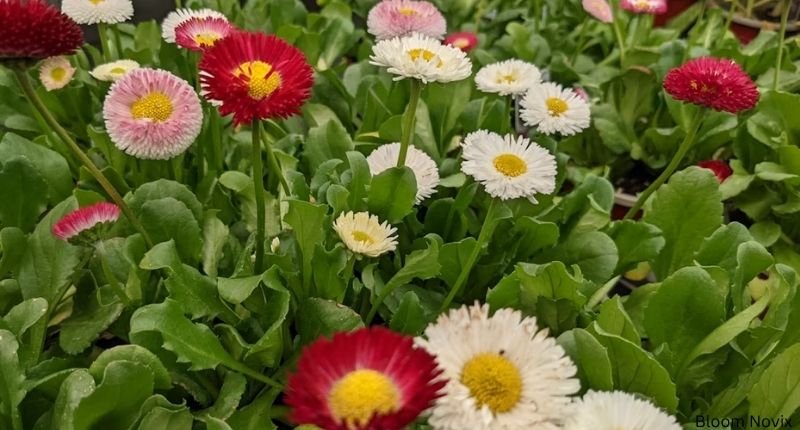
Annual candytuft, most often the species Iberis umbellata, completes its whole life cycle within a single growing season. You plant it in spring, it blooms through summer, and it dies back once cold weather sets in. Gardeners like annual candytuft because it grows fast and gives bold color within weeks of sowing.
This variety tends to produce brighter, more varied colors than its evergreen cousin, including deep pinks and purples. If you want a quick burst of seasonal color rather than a long-term garden fixture, annual candytuft fits that need better than the perennial types.
Read Also: What Is December’s Birth Flower
Is Candytuft a Perennial?
Yes, some candytuft species are perennial, and Iberis sempervirens is the clearest example. This evergreen perennial keeps its foliage all year and returns to bloom again each spring without replanting. Gardeners often choose it specifically because it offers structure and greenery even in the off-season, unlike annual varieties that vanish completely after their bloom cycle ends.
This perennial habit is also the exact trait that gave candytuft its Victorian meaning of indifference in the first place. A plant that stays green through every season, unaffected by the changes around it, read to nineteenth-century writers as a plant that simply did not care.
Choosing between annual and perennial candytuft comes down to what you want from your garden long-term. The table below lays out the practical differences side by side.
| Feature | Annual Candytuft | Perennial Candytuft |
| Common species | Iberis umbellata | Iberis sempervirens |
| Lifespan | One growing season | Multiple years |
| Foliage | Dies back in winter | Stays evergreen year-round |
| Color range | Wider, brighter shades | Mostly white, some pink |
| Best for | Quick seasonal color | Long-term structure and borders |
Gardeners who want fast, varied color often choose annual types, while those who want a low-maintenance, permanent border feature usually reach for the perennial variety instead. Neither option is better than the other; they simply serve different garden goals.
Why Candytuft Traditionally Means Indifference
In traditional floriography, candytuft is most often associated with indifference. Kate Greenaway’s influential Language of Flowers gives the flower this meaning, and other Victorian flower dictionaries use the same association.
The symbolism seems to come from the plant itself. Evergreen candytuft keeps its leaves through seasonal changes, while many plants around it fade, die back, or lose their foliage. To Victorian writers, that steady appearance could suggest someone who remained calm and seemingly unaffected by what was happening around them.
- The seasons change.
- Other plants fade and return.
- Candytuft stays relatively steady.
- That unchanging appearance became linked with emotional composure and eventually indifference.
Here, indifference doesn’t necessarily mean being cold, cruel, or rejecting someone. It is closer to appearing emotionally unmoved or simply not showing much reaction. That’s an important distinction because modern readers can easily give the word a harsher meaning than Victorian writers intended.
It’s also worth remembering that flower meanings were never completely standardized. Different writers and editions sometimes gave flowers slightly different meanings, so candytuft’s association with indifference should be understood as a traditional Victorian interpretation rather than an absolute rule.
What Candytuft Symbolizes Today
Most people never meet candytuft as a coded emotional message. They meet it as a plant they picked for their garden. Its symbolism today comes from how it looks and grows, not from a Victorian flower dictionary that most modern readers have never opened.
Its white blooms point toward:
- Simplicity and cleanliness
- Calm and restraint
- Freshness and understated beauty
Its evergreen foliage points toward:
- Persistence and continuity
- Reliability and steadiness
- Quiet resilience
Here is the part the competitor’s article touched on but never fully unpacked: the exact same trait can support two opposite readings. A plant that stays unchanged because it does not react is indifferent. A plant that stays unchanged because it holds steady under pressure is resilient. Candytuft sits right on that line, and that tension is what makes its symbolism worth talking about instead of just listing a single dictionary definition.
Think about how you would describe a person who stays calm through a stressful week. You might call them unbothered in a good way, or distant in a bad way, depending entirely on how you read their silence. Candytuft asks the same question of anyone looking at it closely, and that is exactly why its symbolism feels more layered than a single flower-dictionary word can capture.
Purple Candytuft Flower Meaning
Purple candytuft can add a slightly deeper meaning to the flower’s symbolism. While traditional candytuft is associated with indifference, the color purple is often connected with dignity, spirituality, reflection, and quiet strength. Because of that, purple candytuft can feel a little more thoughtful and introspective than its white counterpart.
White candytuft has a clean, peaceful look, while purple blooms bring a richer and more reflective mood. This makes purple candytuft a natural choice when you want to express ideas like personal growth, inner strength, or spiritual reflection. Its small flower clusters are not dramatic, but they still add a sense of depth to the garden.
The contrast becomes especially noticeable when purple and white candytuft are planted together. White flowers keep the border looking fresh and open, while purple blooms add a deeper touch of color and character. Together, they create a balanced look that feels both calm and quietly meaningful.
Candytuft Color Meanings: White, Pink, Purple & Lilac
Color changes how a flower feels, even when the flower itself stays the same. Candytuft’s four common shades each carry a slightly different emotional note, and no other guide on this topic breaks it down this clearly.
| Color | Common Association | Best Used For |
| White | Purity, calm, simplicity | Weddings, sympathy, minimalist gardens |
| Pink | Warmth, affection, gentleness | Friendship gifts, spring gardens |
| Purple | Dignity, introspection, spiritual depth | Personal reflection, meaningful gifts |
| Lilac | Soft nostalgia, quiet elegance | Memory gardens, gentle romantic gestures |
White candytuft is the most common shade you will find in nurseries, and it carries the strongest link to the plant’s original evergreen foliage symbolism. Pink and lilac shades soften that meaning into something warmer and more personal, while purple, as covered above, pulls the symbolism toward something deeper and more reflective.
If you plan to gift or plant candytuft with a specific feeling in mind, matching the color to that feeling makes the choice easier. Choose white for a clean, minimal look. Choose pink when you want warmth without heaviness. Choose lilac for a soft, nostalgic touch. Choose purple when you want the arrangement to feel a little more meaningful than decorative.
Nurseries often sell candytuft in mixed-color packs, which lets gardeners plant several shades side by side without picking just one meaning. This mixed approach works especially well in informal cottage-style gardens, where variety matters more than a single coordinated color scheme. If you prefer a more curated look instead, sticking to one shade throughout a bed keeps the symbolism and the visual style consistent from one end of the border to the other.
Candytuft Zodiac and Spiritual Symbolism
Candytuft does not have a widely documented zodiac assignment like flowers such as the rose or daisy. Still, its evergreen nature and steady growth can fit naturally with earth signs such as Taurus and Virgo. These signs are often associated with patience, reliability, and a calm, grounded nature.
The same qualities can be seen in modern spiritual interpretations of candytuft. Because it stays green through changing seasons, some people use it as a reminder of grounding, emotional steadiness, and staying calm when life feels uncertain. This is a modern interpretation rather than an ancient spiritual tradition, but it fits well with the plant’s natural character. Some people may even keep candytuft nearby during quiet reflection as a simple reminder to stay rooted instead of reacting to every change.
Candytuft also appears in some modern flower-based astrology guides because it blooms heavily in spring. These sources may loosely connect it with spring signs such as Aries and Taurus, particularly because of the plant’s steady growth and resilient nature. There is no long-established astrological tradition behind these connections, so they are best viewed as flexible interpretations rather than fixed rules.
Candytuft in Weddings and Romantic Settings
Candytuft’s Victorian meaning creates an odd problem for romantic use. A bouquet built strictly on floriography rules would send a message of indifference, not love. Flowers like roses, tulips, and violets carry a much stronger cultural link to romance and affection.
In real weddings, though, couples rarely think about floriography at all. They choose flowers based on color, texture, season, and overall style. White candytuft fits naturally into garden-style or all-white arrangements without sending any unintended message to guests who know its Victorian backstory. If you care about historical flower symbolism, it helps to know this backstory before you build it into your bouquet, but for most couples, candytuft simply adds texture and softness to their arrangement.
Florists often reach for candytuft as a filler flower rather than a centerpiece bloom, since its dense clusters add volume without competing with larger, statement flowers like peonies or roses. This practical role matters more to most brides than any Victorian symbolism ever will. A bouquet built around texture and shape usually reads better in photographs than one built strictly around coded meaning, and candytuft earns its place in that bouquet through looks alone.
Spring and early summer weddings suit candytuft best, since this lines up with its natural bloom window. Outdoor garden weddings, in particular, benefit from candytuft’s low, spreading growth habit, which fills borders and archways with a soft, natural texture rather than a stiff, formal look.
When to Gift Candytuft (and When to Avoid It)
Candytuft rarely shows up in traditional flower-gift guides, which leaves a real gap for anyone wondering when it actually makes a good gift. Its modern meanings of calm, steadiness, and quiet beauty make it a thoughtful pick for several occasions. If you’re exploring flowers with less familiar meanings, you might also come across unbloomed flower names when looking at different ways flowers can express a feeling.
Good occasions to gift candytuft:
- Get well soon arrangements, where calm and steadiness feel comforting
- New home gifts, since it symbolizes stability and persistence
- Friendship bouquets, especially in pink or lilac shades
- Sympathy arrangements, where white candytuft’s simplicity feels appropriate
Occasions to avoid:
- Romantic proposals, since its Victorian meaning of indifference clashes with the moment
- Anniversary gifts, unless paired with stronger romantic flowers like roses
If you know the recipient appreciates flower symbolism, pairing candytuft with a rose or tulip balances its old meaning with a clearer romantic message.
Candytuft also works well in housewarming baskets and small potted-plant gifts, since its low-maintenance nature means the recipient does not need to worry about keeping it alive. A potted evergreen candytuft can sit on a windowsill for years, quietly reinforcing the idea of steadiness every time someone waters it. That practical durability makes it a gift that keeps its meaning long after the occasion has passed.
Candytuft in Tattoos and Personal Symbolism
Candytuft is not a common tattoo flower, but that rarity is exactly what draws some people to it. Its understated look appeals to anyone who wants a botanical design that does not look like everyone else’s. A candytuft tattoo might represent personal resilience, emotional boundaries, or a specific memory tied to a garden that mattered to someone.
Someone who deliberately draws on floriography might choose candytuft for the opposite reason, to represent emotional distance or a boundary they want to hold onto. Both readings work, and neither one cancels the other out. They simply come from different sources of meaning, one historical and one entirely personal.
Small botanical tattoos have grown popular precisely because they let people carry personal meaning without needing anyone else to understand the reference. Candytuft fits that trend well. Its clustered blooms translate into clean line-work, and its lesser-known status means two people rarely walk around with the exact same design and story behind it.
Does Candytuft Have Cultural or Religious Symbolism?
No, candytuft does not carry major religious or cross-cultural symbolism the way flowers like the lotus or lily do. Its strongest documented symbolic tradition sits inside European and English-language floriography. Iberis species now grow ornamentally well beyond their original Mediterranean range, including across North America, but that spread is horticultural, not symbolic. Gardeners planted it because it grows well, not because it carried a message.
This absence of deep cultural symbolism actually gives candytuft an advantage for personal use. Flowers loaded with centuries of religious or cultural weight, like the lotus or lily, carry expectations that can limit how freely someone uses them. Candytuft carries no such baggage, which leaves it open for anyone to assign their own meaning without contradicting an older tradition.
Common Misconceptions About Candytuft Symbolism
A few myths about candytuft keep circulating, and clearing them up makes the whole topic easier to understand.
- “Candytuft symbolizes sweetness.” No, the name comes from Candia, an old name for Crete, not from candy at all.
- “Indifference is the only meaning it has.” That is the historical meaning. Most gardeners today never encounter candytuft as a symbolic message.
- “Flower meanings are universal.” They are not. Even Victorian flower dictionaries disagreed with each other, and modern interpretations vary even more.
- “Indifference means coldness or rejection.” It is closer to emotional composure than outright hostility.
- “All candytuft varieties look and grow the same way.” Annual and perennial types differ in lifespan, color range, and growth habit, so the variety you choose changes both the look and the meaning you lean toward.
- “Candytuft has no place in modern flower gifting.” It works well for get-well wishes, new homes, and friendship gifts, even though most gift guides overlook it entirely.
Clearing up these myths matters because flower symbolism spreads mostly through repetition. One outdated claim gets copied across dozens of gardening blogs until it starts to sound like established fact, even when the original source never said anything of the kind.
FAQs
What does candytuft symbolize?
Candytuft traditionally symbolizes indifference, though modern readings lean toward calm and steadiness. This meaning began with Victorian floriography, which linked the plant’s evergreen persistence to emotional distance rather than warmth.
Is candytuft a symbol of love?
No, candytuft is not traditionally a symbol of love. Victorian flower dictionaries assigned it indifference instead, though modern couples still use it purely for its texture and color in romantic arrangements.
What does white candytuft symbolize?
White candytuft carries no separate historical meaning of its own. Its white color simply reinforces the plant’s modern associations with simplicity, cleanliness, and calm.
Is candytuft good for weddings?
Yes, candytuft works well in weddings for its look, not its symbolism. It pairs naturally with white and garden-style arrangements, though couples who value floriography should know its older meaning first.
What does candytuft mean in the Victorian language of flowers?
Candytuft means indifference in the Victorian language of flowers. This meaning appears consistently across period flower dictionaries, including Kate Greenaway’s well-known collection.
Does candytuft have religious meaning?
No, candytuft carries no major religious symbolism. Its strongest tradition comes from European floriography, not from scripture or religious ritual.
Why is candytuft called candytuft?
Candytuft gets its name from Candia, an old historical name for Crete, combined with “tuft,” which describes its clustered flower heads. The name has no connection to candy at all.
What does purple candytuft symbolize?
Purple candytuft symbolizes dignity, introspection, and quiet spiritual depth. This reading comes from the general symbolism of purple flowers rather than a documented Victorian source specific to candytuft.
Is candytuft a good gift, and for which occasions?
Yes, candytuft makes a thoughtful gift for get-well wishes, new homes, and friendship bouquets. Its calm, steady symbolism fits comfort and stability better than romantic occasions.
Does candytuft have any zodiac or spiritual meaning?
Candytuft has no widely documented zodiac assignment, but its steady, evergreen nature echoes traits associated with grounded earth signs like Taurus and Virgo.
Conclusion
Candytuft symbolism is interesting because the flower carries two very different ideas. In Victorian floriography, it was linked with indifference, partly because the evergreen plant seemed calm and unchanged while the seasons around it shifted. Today, though, people are more likely to see candytuft as a symbol of persistence, calm, and quiet resilience.
Neither interpretation has to cancel out the other. The older meaning gives candytuft a piece of its history, while its hardy nature makes the newer associations feel just as fitting. Whether you grow it in a rock garden, give it as part of a bouquet, or choose it for a personal tattoo, the meaning can depend on the story you want the flower to tell.
In the end, candytuft is a good reminder that flower meanings can change with time. Its small clusters may look simple, but there is more behind them than first meets the eye. That mix of history, resilience, and quiet beauty is what makes candytuft worth a closer look.

BloomNovix is managed by an experienced team of content writers and SEO specialists with 4+ years of expertise in gardening and plant care. We provide well-researched guides, gardening tips, and insights on floral meanings to help plant lovers grow their indoor and outdoor gardens with confidence.