Do you want a plant that feels as soft as a puppy’s ear? The puppy ears plant care routine is surprisingly simple. This fuzzy little succulent looks adorable on a windowsill and does not need constant attention. Give it the right light, water, and soil, and it can stay healthy and beautiful for years.
In this guide, you’ll learn how to care for Cotyledon tomentosa step by step. We’ll cover its light and watering needs, the best soil, propagation methods, and common problems to watch for. Whether you’re new to succulents or already have one at home, these simple tips will help you keep your Puppy Ears Plant thriving.
What Is a Puppy Ears Plant?
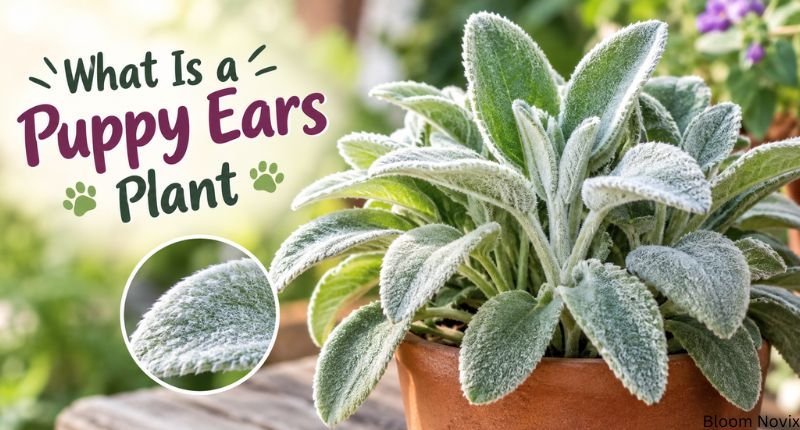
The puppy ears plant is a small succulent from the Crassulaceae family. Its botanical name is Cotyledon tomentosa, and gardeners often call it the bear paw plant too. You will notice its thick, fuzzy leaves as soon as you see it. This plant usually grows to about 12 inches tall indoors.
It comes from the rocky, dry regions of South Africa. In its natural habitat, it survives long dry spells by storing water in its leaves. You can keep it happily in:
- A sunny apartment windowsill
- A succulent arrangement with other drought-tolerant plants
- A small terracotta pot on your desk
- A hanging planter for a cascading look
Unlike many succulents, this one keeps its compact shape even as it matures, making it perfect for small spaces.
Why Is This Succulent Called Puppy Ears?
Its nickname comes straight from its look. Each leaf feels soft to the touch, just like a puppy’s ear. Tiny hairs called trichomes cover the surface and give it that velvety texture. These hairs also help the plant survive dry, sunny conditions by reducing water loss. Its soft, textured leaves can even remind you of the natural details found on leaves, such as those discussed in maple leaf symbolism.
You will also spot small notches at the leaf tips. Some growers say these notches look like little teeth marks, similar to a puppy’s playful bite. The reddish-brown edges show up more clearly when the plant gets bright light. This color change is a natural stress response, not a sign of damage.
Puppy Ears Plant Care: How to Grow It Successfully
Growing this succulent successfully comes down to four basics: light, water, soil, and the right pot. Get these right, and your plant stays compact and colorful. Skip even one, and you may see stretched growth or yellow leaves. Let’s go through each factor in detail.
1. Light Requirements for Healthy Growth
Ideal lighting conditions:
Bright light keeps your puppy ears plant compact and full of color. Place it near an east or south-facing window for the best results. Aim for 4 to 6 hours of bright, indirect light every day. A little morning sun is fine, but harsh afternoon rays can scorch the leaves.
Watch for these signs of light problems:
- Pale or stretched stems mean too little light
- Brown, crispy patches mean sunburn from too much direct sun
- Leaning toward the window means it needs rotating
If your home lacks natural light, a grow light works well too. Keep it about 12 inches above the plant and run it for 8 hours a day.
2. Watering Tips for Puppy Ears Plant Care
This succulent stores water in its leaves, so it does not need frequent watering. Always check the soil before you water again. Push your finger about two inches into the soil. If it feels dry, it is time to water.
Follow this simple routine:
- Water deeply until it drains from the bottom
- Empty the saucer so roots never sit in water
- Water every 2-3 weeks in summer
- Water once a month or less in winter
Bottom watering is another safe option. Set the pot in a tray of water for 10 minutes, then let it drain fully. This method keeps the fuzzy leaves dry, which helps prevent rot.
3. Best Soil for This Fuzzy Succulent
Good drainage matters more than anything else for this plant. Heavy soil holds water around the roots and leads to rot. Use a fast-draining, gritty mix instead of regular potting soil. Your plant also does best in slightly acidic to neutral soil, around pH 6 to 7.
| Ingredient | Percentage | Purpose |
| Succulent or cactus soil | 50% | Base nutrients |
| Perlite or pumice | 30% | Drainage and airflow |
| Coarse sand | 20% | Extra grit and stability |
Mix these together before potting your plant. Avoid garden soil at all costs, since it stays wet for too long and invites root rot.
4. Choosing the Right Pot
The right pot protects your plant from excess moisture. Choose one with drainage holes at the base, always. Terracotta is the best material because it lets extra moisture evaporate quickly. Plastic and ceramic pots hold moisture longer, so use them only if you water sparingly.
Pick a pot that is just 1-2 inches wider than the root ball. A pot that is too big holds extra soil, and that soil stays wet for too long. This small detail prevents most root problems before they start.
Read Also: Flower Of Life Symbolism
Puppy Ears Plant Care Guide Indoors
Growing this succulent indoors is simple once you find the right spot. A bright windowsill in your living room or bedroom works best. Keep it away from air conditioning vents and heating registers, since sudden temperature swings stress the plant.
Good air circulation also matters indoors. Stagnant air can trap moisture around the leaves and invite fungal problems. Open a window occasionally or run a small fan on low speed nearby. Wipe dust off the leaves every few weeks with a soft, dry brush to keep them healthy and photosynthesizing well.
Puppy Ears Plant Care Guide Outdoor
You can grow this succulent outdoors if you live in USDA zones 9b to 11. It enjoys warm, dry weather and thrives in rock gardens or succulent beds. Choose a spot with partial shade in very hot climates, since intense afternoon sun can scorch the leaves outdoors too.
This plant cannot handle frost. Bring it indoors or cover it whenever temperatures drop below 40°F (4°C). If you live in a cooler region, keep it in a container so you can move it inside during winter months.
Puppy Ears Plant Watering Guide: How Much & How Often
Knowing how much water to give matters as much as knowing when. For a 4-6 inch pot, about 1 cup of water is enough for a deep soak. Larger pots need proportionally more, but the rule never changes: water until it drains from the bottom, then stop completely.
Adjust the amount based on your home’s conditions:
- Hot, dry rooms need slightly more water each time
- Cool, humid rooms need less water and longer gaps between waterings
- Terracotta pots dry out faster than plastic or ceramic ones
When in doubt, always water less. This succulent recovers faster from a dry spell than from soggy roots.
How to Propagate Puppy Ears Plant
Propagating this succulent is a rewarding way to grow your collection for free. You have two easy methods to choose from: stem cuttings and leaf cuttings. Both work well, so pick whichever suits the healthy growth on your plant. As new plants develop from cuttings, you may also enjoy observing their shapes and leaf patterns, which can be a fun source of inspiration for flower drawing designs.
Stem Cutting Method
Follow these simple steps:
- Cut a 3-4 inch stem using clean, sharp scissors
- Let the cutting sit for 3-5 days until the wound calluses over
- Dip the cut end in rooting hormone for faster results (optional)
- Place it in dry, well-draining succulent mix
- Water lightly once you see new roots forming, usually within 2-3 weeks
Leaf Propagation Method
Leaf propagation takes patience, but it works well for this species:
- Gently twist a healthy leaf until it detaches whole from the stem
- Let it dry for 2-3 days until the base calluses
- Lay it flat on top of dry succulent soil
- Mist lightly once tiny roots and a baby plant appear
- Avoid burying the leaf, since it needs air around the base
New growth can take 3-4 weeks to appear, so do not give up too early.
Fertilizing Guide for Puppy Ears Plant
This succulent does not need heavy feeding to thrive. A light hand with fertilizer keeps it healthy without pushing weak, leggy growth. Feed it only during the active growing season, which runs from spring through early fall.
Use a balanced, diluted liquid fertilizer at quarter strength. Apply it once a month during spring and summer. Stop feeding completely in fall and winter, since the plant rests during these months. Too much fertilizer can burn the roots or cause soft, stretched growth.
Repotting: When and How to Repot
Repot your puppy ears plant every 2 to 3 years, or sooner if it outgrows its pot. Signs it needs a new home include roots poking through the drainage hole and slow, stunted growth. Spring is the best season for repotting, since the plant recovers fastest during active growth.
Follow these steps:
- Remove the plant gently and shake off old soil
- Check the roots and trim any that look brown or mushy
- Place it in a slightly larger pot with fresh, dry succulent mix
- Wait a week before watering to let any damaged roots heal
Temperature & Humidity Requirements
This succulent prefers warm, dry conditions year-round. Keep it in temperatures between 65°F and 80°F (18°C to 27°C) for the best growth. It can tolerate brief dips to 40°F, but frost will damage or kill it quickly.
Humidity should stay low, ideally under 50%. High humidity combined with wet soil is the fastest way to invite fungal problems. Avoid placing it in bathrooms or kitchens where steam builds up regularly.
Seasonal Care & Winter Dormancy
Your plant slows down naturally during the cooler months. This rest period is called dormancy, and it is completely normal. During winter, cut watering back to once a month or less. Move the plant away from cold windows and drafts, since sudden temperature drops can shock it.
Spring signals the start of active growth again. You will notice new leaves forming and faster recovery after watering. This is the best time to resume regular feeding and consider repotting or propagating.
Flowering & Bloom Time
Mature plants can surprise you with clusters of small, bell-shaped flowers. These blooms usually appear in late winter through spring, in shades of orange or yellow. Flowering is more common in plants grown outdoors or in very bright indoor spots.
Do not worry if your plant never blooms indoors. Flowering depends heavily on light intensity and the plant’s age. A plant needs to be several years old and well-established before it puts energy into flowers instead of leaf growth.
Types & Varieties of Cotyledon Tomentosa
Several varieties exist within this fuzzy succulent family. Each one has a slightly different leaf shape or color pattern.
| Variety | Leaf Feature | Growth Style |
| Cotyledon tomentosa ‘Tomentosa’ | Classic fuzzy green leaves with red tips | Compact, bushy |
| Cotyledon tomentosa ‘Ladysmithiensis’ | Smaller, softer, elongated leaves | Slow-growing |
| Cotyledon tomentosa var. ‘Variegata’ | Cream and green variegated leaves | Rare, slower growth |
Knowing your variety helps you set the right expectations for size and growth speed.
Common Problems and How to Fix Them
Even a hardy succulent runs into trouble sometimes. Catching these problems early makes them much easier to fix. Let’s look at the most common issues and their solutions.
Yellow Leaves
Possible causes:
Yellow leaves usually point to a watering or lighting issue:
- Overwatering or poor drainage
- Root rot from soggy soil
- Not enough sunlight
Solution:
Let the soil dry out completely before watering again. Check that your pot drains well and remove any standing water. Move the plant to a brighter spot if low light is the cause.
Puppy Ears Plant Care Guide Brown Leaves
Brown leaves usually mean sunburn or underwatering, unlike yellow leaves, which point to overwatering. Direct, harsh afternoon sun is the most common cause of brown, crispy patches. Move your plant a few feet back from intense light and see if new growth improves.
If the leaves feel thin and dry instead of crispy, your plant may need more water. Give it a deep soak and check again in a week. Trim off badly damaged leaves so the plant can focus its energy on new, healthy growth.
Soft or Mushy Leaves
What to do:
Soft leaves almost always signal overwatering or root rot. Here is how to fix it:
- Remove any mushy or blackened leaves right away
- Let the soil dry out completely
- Unpot the plant and check the roots for rot
- Repot in fresh, dry succulent soil if roots look damaged
Leggy Growth
Solution:
Leggy, stretched growth means your plant is reaching for more light. Move it closer to a bright window immediately. Rotate the pot weekly so all sides get even light. You can also trim the stretched stem and use it for propagation, giving your plant a fresh start.
Pest Problems
This succulent rarely attracts pests, but infestations can happen. Watch for mealybugs, aphids, and spider mites hiding in leaf crevices. Small infestations respond well to simple treatments:
- Dab pests with rubbing alcohol on a cotton swab
- Spray with diluted neem oil weekly until pests disappear
- Use mild insecticidal soap for larger infestations
- Isolate the affected plant from your other succulents
Check your plant weekly so you catch any pests before they spread.
Puppy Ears vs Donkey Ears vs Elephant Ear Plant — What’s the Difference?
People often confuse these three plants because of their similar nicknames. They actually belong to completely different plant families.
| Plant | Family | Leaf Type | Care Needs |
| Puppy Ears (Cotyledon tomentosa) | Crassulaceae (succulent) | Small, fuzzy, thick | Low water, bright light |
| Donkey Ears (Kalanchoe daigremontiana) | Crassulaceae (succulent) | Long, notched, waxy | Low water, bright light |
| Elephant Ear (Alocasia/Colocasia) | Araceae (tropical) | Huge, thin, smooth | High water, humidity |
If you want a low-maintenance plant, stick with Puppy Ears or Donkey Ears. Elephant Ear plants need far more water and humidity to thrive.
Indoor Care Tips for This Succulent
Once the basics are covered, a few styling choices help your plant thrive and look great. Group it with other small succulents that share the same light and water needs. This makes care routines simpler and creates an attractive display.
Rotate its spot slightly with the seasons. Move it a bit closer to the window in winter when daylight is weaker. In summer, keep it a few feet back if the sun becomes too intense through the glass.
Is Puppy Ears Plant Safe for Pets?
No, this plant is not safe for pets. Cotyledon tomentosa contains compounds that are toxic to cats and dogs if eaten. Keep it well out of reach, on a high shelf or in a room pets cannot access.
Watch for these symptoms if you suspect ingestion:
- Vomiting or drooling
- Loss of appetite
- Lethargy or weakness
Contact your veterinarian immediately if your pet shows any of these signs after chewing on the plant.
Benefits of Growing This Unique Succulent
This charming succulent offers real benefits beyond its looks:
- Requires very little water or maintenance
- Fits perfectly in small apartments or offices
- Adds unique texture to any plant collection
- Helps beginners build confidence in plant care
- Creates a calm, green atmosphere in any room
Its slow growth also means you will not need to repot or manage it often, saving you time in the long run.
Pruning & Maintenance Tips
Light pruning keeps your plant compact and encourages bushier growth. Pinch off any stretched or leggy stems using clean scissors. Remove dead or damaged leaves regularly so the plant can direct energy toward new growth.
Always sanitize your tools with rubbing alcohol before and after pruning. This simple step prevents the spread of disease between cuts. Save healthy trimmings for propagation instead of throwing them away.
Frequently Asked Questions
How often should I water a puppy ears plant?
Water it every 2-3 weeks in summer and once a month in winter. Always check that the soil is fully dry first.
Is the puppy ears plant a succulent?
Yes, it is a true succulent. It stores water in its thick, fuzzy leaves to survive dry periods.
Why are the leaves falling off?
Leaf drop usually comes from overwatering, poor light, or sudden temperature changes. Check the soil and light conditions first.
Can this plant grow indoors?
Yes, it grows very well indoors near a bright window. Just avoid low-light corners and cold drafts.
How much sunlight does it need?
It needs 4 to 6 hours of bright, indirect light daily. A little morning sun is fine too.
How can I encourage faster growth?
Give it consistent bright light, diluted fertilizer, and well-draining soil. Avoid overwatering, since it slows growth instead of helping it.
Is puppy ears plant rare or expensive?
No, it is a common and affordable succulent. You can find it at most nurseries or online plant shops.
Can puppy ears plants grow outdoors?
Yes, it grows outdoors in USDA zones 9b to 11. Bring it inside before any frost arrives.
Why is my puppy ears plant losing its fuzzy texture?
Excess humidity or water on the leaves can flatten the fuzz over time. Keep the leaves dry and improve air circulation.
Is puppy ears plant toxic to cats and dogs?
Yes, it is toxic if pets eat it. Keep it out of reach and call your vet if ingestion happens.
Conclusion
Mastering puppy ears plant care is easier than it first looks. Bright light, minimal water, and gritty soil cover most of what this succulent needs. A little attention to feeding, repotting, and pruning will help it stay healthy for years. Once you find the right routine, you’ll be rewarded with those soft, fuzzy leaves that make this plant so charming.
Keep things simple and pay attention to how your plant responds to its surroundings. If it gets enough light and you avoid overwatering, your Puppy Ears Plant should have no trouble growing well indoors. You can also propagate a few healthy cuttings to grow more plants or share them with friends.

BloomNovix is managed by an experienced team of content writers and SEO specialists with 4+ years of expertise in gardening and plant care. We provide well-researched guides, gardening tips, and insights on floral meanings to help plant lovers grow their indoor and outdoor gardens with confidence.