Have you ever stood under a swaying palm tree and wondered what those long, graceful leaves are actually called? Palm fronds are the large leaves that give every palm tree its signature tropical look. They shape the way a palm grows, the way it feels in your garden, and even the way it appears in art, décor, and religious traditions.
This guide walks you through everything you need to know. You will learn the true meaning of palm fronds, the different types, their many uses, and how to care for them whether they are living, dried, or artificial. By the end, you will know exactly how to identify, use, and maintain palm fronds with confidence.
Palm Fronds Meaning and Definition
In simple terms, a palm frond is the large leaf of a palm tree. Each frond grows directly from the crown, or the top center of the trunk. Unlike ordinary maple leaves, a single frond can stretch several feet long and hold dozens of smaller leaflets.
People often ask whether the word is singular or plural. Palm frond refers to one leaf. Palm fronds refers to more than one. This small detail matters when you search online or talk to a nursery about your plant.
Every frond has a few key parts:
- Leaf base – the point where the frond connects to the trunk
- Petiole – the stalk that holds the leaf upright
- Rachis – the central spine running through the leaflets
- Leaflets or segments – the smaller sections that form the leaf’s shape
These parts vary from species to species, but they explain why a frond looks the way it does.
What Are Palm Fronds?
Palm fronds are specialized leaves built for the environment each palm species grows in. Some stay soft and arching. Others grow stiff, spiky, or fan-shaped. This variety is why palm identification often starts with the leaf structure rather than the trunk.
Fronds do far more than decorate the tree. They power the entire plant. Here is what they actually do:
- Absorb sunlight for photosynthesis
- Convert that sunlight into energy for growth
- Create the palm’s unmistakable silhouette
- Offer shade and shelter to smaller plants and animals
- Supply raw material for décor, weaving, and cultural events
A palm with plenty of healthy green fronds is a strong, well-fed plant. Cutting too many living leaves can starve the palm of energy, so frond health is a direct sign of overall plant health.
Types of Palm Fronds
Palm species fall into a few clear categories once you look closely at their leaf shape. Learning these types makes it much easier to identify a palm tree at a glance.
Pinnate Palm Fronds
Pinnate fronds have a feathery look. Narrow leaflets grow along both sides of a central rachis, similar to a bird’s feather. This shape creates the soft, flowing movement people associate with classic tropical scenery.
You will spot pinnate palm fronds on coconut palms, date palms, and areca palms. Their gentle curve makes them a favorite in floral design and artificial greenery too.
Palmate Palm Fronds
Palmate fronds spread outward from a single point, much like fingers on an open hand. This fan-like shape gives them a bold, structured appearance that stands out in dry or sunny landscapes.
Fan palms with palmate leaves work well as landscape focal points. Their leaves can be flat, deeply divided, rounded, or slightly folded depending on the species.
Costapalmate Fronds
Costapalmate leaves sit between fan-shaped and curved. Part of the leaf blade runs along a short midrib before spreading into a fan, which creates a folded, three-dimensional look.
This structure adds texture and movement that flat, palmate leaves cannot match. Costapalmate palms often look more sculptural in garden design.
Bipinnate (Fishtail) Palm Fronds
Bipinnate fronds take the feathery structure one step further. Each leaflet splits again into smaller triangular segments, creating a jagged, fishtail-like edge.
Fishtail palms are the best-known example of this frond type. Their unusual shape makes them a popular choice for anyone who wants a palm that looks different from the standard varieties.
| Frond Type | Shape | Common Palms | Best Use |
| Pinnate | Feather-like, arching | Coconut, Date, Areca | Tropical gardens, floral design |
| Palmate | Fan-shaped, spreading | Fan palm, Windmill palm | Dry landscapes, focal points |
| Costapalmate | Folded fan with midrib | Sabal palm, Bismarck palm | Sculptural landscaping |
| Bipinnate | Jagged, double-split | Fishtail palm | Unique ornamental accents |
Palm Fronds vs. Palm Leaves
Most people use palm leaves and palm fronds to mean the same thing, and in casual conversation, that is perfectly fine. Botanically, though, “frond” is the more precise term.
A frond describes the entire leaf structure, including the stalk, spine, and all its leaflets. “Leaf” is a broader word used across many plant types, from ferns to flowering trees. So while calling them palm leaves is not wrong, palm fronds gives a clearer, more accurate description.
Common Palm Species and Their Frond Types
Identifying a palm becomes far easier once you match its frond shape to a known species. Below is a quick reference for some of the most common palms you will encounter in gardens and homes.
| Palm Species | Frond Type | Typical Setting |
| Coconut Palm | Pinnate | Coastal and tropical landscapes |
| Date Palm | Pinnate | Warm, dry climates |
| Areca Palm | Pinnate | Indoor décor, patios |
| Fan Palm | Palmate | Dry gardens, driveways |
| Sabal Palm | Costapalmate | Southern gardens, parks |
| Fishtail Palm | Bipinnate | Ornamental landscaping |
| Sago Palm (cycad) | Pinnate-like | Containers, borders |
This table is a starting point. Local climate, sunlight, and soil still play a major role in how well each species grows.
Common Uses of Palm Fronds
Palm foliage has served people for centuries, and its uses stretch far beyond the garden. From home décor to religious ceremonies, palm fronds carry both practical and symbolic value. Their deeper symbolism can also be explored alongside other meaningful symbols, such as the Flower of Life, which represents connection and the unity of life.
Landscaping and Garden Design
Living palms bring instant height, texture, and movement to outdoor spaces. Their fronds often become the star feature of the entire yard.
Garden designers commonly use palms to build:
- Tropical-themed landscapes
- Resort-style poolside areas
- Mediterranean garden schemes
- Bold architectural focal points
Before planting, always check the mature spread of the fronds. A palm that looks small today can quickly take over a compact garden.
Dried Palm Fronds for Home Décor
Dried palm fronds have become a staple in boho, coastal, and minimalist interior design. Their natural texture and sculptural curve suit tall vases, wall art, and event styling.
Popular décor spots include:
- Living room floor vases
- Entryway arrangements
- Wedding and event backdrops
- Café and restaurant interiors
Keep dried foliage away from moisture and rough handling. Dry material becomes brittle, so gentle care extends its life.
Palm Fronds for Palm Sunday
Palm fronds for Palm Sunday hold deep meaning in Christian tradition. The custom traces back to the biblical story of crowds waving palm branches to welcome Jesus into Jerusalem.
Churches today often hand out palm leaves, carry them in processions, or shape them into small crosses. The exact palm species used can shift depending on the region and local availability.
Floral and Event Arrangements
Fresh and dried fronds add drama to any arrangement. Their large size makes a bold statement, especially when paired with:
- Tropical flowers
- Pampas grass
- Monstera leaves
- Orchids
- Neutral dried florals
Sometimes a single oversized frond creates more impact than a handful of smaller stems, which makes them ideal for minimal, modern arrangements.
Palm Fronds in Weaving and Traditional Crafts
Long before plastic and synthetic materials existed, communities across tropical regions wove palm fronds into everyday tools. This tradition still thrives today.
Common woven items include:
- Baskets and storage containers
- Hats and sun shades
- Floor mats and roofing thatch
- Decorative fans
This craft highlights how palm foliage serves both function and beauty, connecting modern décor back to centuries-old practices.
Palm Frond Symbolism and Cultural Meaning
Beyond their physical uses, palm fronds carry strong symbolic weight across cultures and history. Ancient civilizations linked them to victory, peace, and triumph, and that meaning still echoes today.
In ancient Rome and Greece, winners of athletic contests received palm branches as a mark of honor. In Christian tradition, the palm frond represents peace and the celebration of Palm Sunday. Many modern weddings and memorials also use palm leaves to symbolize renewal, resilience, and eternal life, since palms tolerate harsh conditions and keep growing.
This layered symbolism is one reason palm frond meaning extends well past botany and into art, religion, and design.
Dead Palm Fronds: Should You Remove Them?
Seeing brown, drooping leaves near the base of a palm is usually normal. Older fronds naturally fade as newer growth takes over higher up the crown.
Still, do not rush to cut every discolored leaf. Even partly green fronds continue feeding the plant, so excessive pruning can weaken it.
Remove a frond only when it is:
- Completely brown and dead
- Broken or badly damaged
- Linked to a pest or disease problem
- Creating a real safety hazard
Tall palms come with real risk. Falling fronds and ladder work can cause serious injury, so hiring a professional is often the safer choice.
How to Prune Palm Fronds Safely (Step-by-Step)
Pruning the wrong way can hurt your palm more than help it. Follow these steps to trim fronds safely and correctly.
- Identify dead or hazardous fronds only. Skip any leaf that still shows green color.
- Choose clean, sharp tools. A dull blade tears the frond and invites disease.
- Cut close to the trunk without damaging the bark. Leave a small stub rather than slicing into living tissue.
- Avoid over-pruning the crown. Never remove more than a few dead fronds in one session.
- Wear protective gloves and eyewear. Many fronds carry sharp edges or spines.
- Call a professional for tall palms. Height and falling debris create real danger for DIY trimming.
Careful, minimal pruning keeps the palm healthy while still tidying up its appearance.
Why Are Palm Fronds Turning Brown?
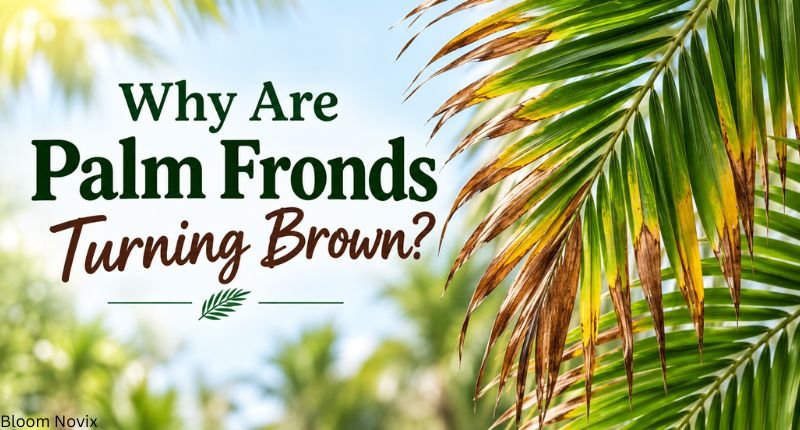
Palm fronds turning brown is one of the most common concerns among palm owners. The cause depends heavily on which leaves are affected.
If only the oldest, lowest fronds turn brown, this is likely natural aging. Widespread or sudden browning, though, usually points to an outside stress factor.
Common causes include:
- Underwatering or inconsistent watering
- Poor drainage or root problems
- Salt buildup in the soil
- Cold or frost damage
- Nutrient deficiencies
- Excess wind or sun exposure
Look at the pattern first. Brown tips suggest a different issue than an entire crown turning brown, so match the symptom to the likely cause before treating it.
Palm Fronds Turning Yellow: What Does It Mean?
Like browning, palm fronds turning yellow can be part of normal aging. Older leaves often yellow before they dry out completely. The color can also remind us of the symbolism associated with yellow flowers, which are often linked with warmth, happiness, and positive feelings.
Widespread yellowing, however, usually signals stress. Watch for these common triggers:
- Nutrient deficiencies
- Overwatering
- Underwatering
- Poor soil drainage
- Root damage
- Low light for indoor palms
- Pest or disease activity
Different nutrient shortages affect old and new leaves differently, so identifying your palm species helps you choose the right fix. Do not assume every yellow leaf needs fertilizer, since the wrong treatment can add more stress to the plant.
How Many Fronds Should a Healthy Palm Have?
Most healthy, mature palms carry between eight and fifteen green fronds at any given time, though this varies by species. A palm with far fewer green leaves than usual may be under stress or over-pruned.
As a general rule, never remove so many fronds that the crown looks thin or unbalanced. A full, rounded crown is one of the clearest signs of a thriving palm.
How Often Do New Palm Fronds Grow?
Most palm species grow new fronds at a rate of one new leaf every one to three months, though warm-climate and well-fed palms can grow faster. Growth slows in cooler seasons or during drought stress.
Consistent watering, proper sunlight, and balanced nutrition all help a palm produce fronds at a steady, healthy pace.
Are Palm Fronds Dangerous?
The answer depends on the species and the situation. In most cases, fronds are harmless, but large, heavy, or falling leaves can pose real risks.
Some palms also grow sharp spines near the base of the frond, which makes handling and pruning trickier.
Potential hazards include:
- Cuts from sharp edges or spines
- Injuries from falling dead fronds
- Eye injuries during trimming
- Falls while working at height
- Skin irritation from certain plant material
Dead fronds hanging over walkways, patios, or parked cars deserve prompt attention. For tall or hard-to-reach palms, a trained professional is the safer option over DIY trimming.
Sago Palm Fronds: Are They Actually Palm Fronds?
Despite the name, a sago palm is not a true palm at all. It belongs to an ancient plant group called cycads, which predates most modern palm species.
Even so, sago palm leaves share the feathery look of pinnate fronds, which is why people commonly call them fronds.
Typical features include:
- Stiff, glossy, pinnate-style leaves
- Narrow, pointed leaflets
- A symmetrical, rounded crown
- A thick trunk that develops with age
Sago palm material is toxic if ingested, so keep it well away from pets and children.
Explore More: Rose Thorns Symbolism: Meaning, Bible, Dreams, Tattoos & Spiritual Insights
Faux Palm Fronds and Artificial Options
Not everyone has time for the upkeep that comes with live plants. That is where faux palm fronds, fake palm fronds, and artificial palm fronds step in as low-maintenance alternatives.
These terms all describe manufactured foliage designed to mimic real palm leaves. “Faux” simply carries a more polished, design-focused tone.
Popular styles include:
- Large fan-shaped leaves
- Feathery, pinnate-style stems
- Small tabletop accents
- Oversized statement leaves
- UV-rated outdoor foliage
Benefits of Artificial Palm Fronds
Artificial greenery delivers the tropical look without the daily upkeep. Key advantages include:
- Long-lasting decorative value
- Zero watering or feeding
- Simple event and party styling
- A workable option for low-light rooms
- Reusable across seasons and events
Because they never fade or wilt, faux fronds also give commercial spaces a consistently polished appearance all year.
Choosing Realistic Fake Palm Fronds
The most convincing fake palm fronds include natural variation in leaflet shape, subtle texture, and bendable stems. Small imperfections actually make artificial foliage look more believable.
Overly glossy plastic or perfectly uniform leaves tend to look cheap. Always match the frond size to your room and container. A giant leaf in a tiny vase looks awkward, while a tall floor vase usually needs fuller, multi-stem arrangements.
Palm Fronds Wallpaper and Interior Trends
Palm fronds wallpaper offers an easy way to bring botanical style into a room without adding real plants. Depending on the print, it can feel subtle or make a bold tropical statement.
Palm-leaf patterns range from delicate line art to oversized, vivid prints. Popular rooms for this style include:
- Powder rooms
- Bedrooms
- Feature walls
- Boutique cafés
- Hotel-style interiors
- Sunrooms and lounges
If you choose a bold, oversized pattern, pair it with simple furniture to avoid a cluttered look. Smaller-scale prints, on the other hand, create a calmer, softer botanical feel.
Palm Fronds Images and Botanical Inspiration
Browsing palm fronds images helps with plant identification and design inspiration alike. Look closely at these visual details when comparing species:
- Fan-shaped or feather-shaped leaves
- Overall leaf color
- Leaflet size and spacing
- How stiff or flexible the frond feels
- Whether spines are present
- The plant’s overall growth habit
These small clues make it much easier to tell one palm species apart from another, whether you are shopping for a new plant or styling a room.
Palm Fronds for Sale: What to Consider Before Buying
Before searching for palm fronds for sale, decide whether you need fresh, dried, or artificial foliage. Each option fits a different purpose and lifespan.
Fresh Palm Fronds
Fresh fronds work best for short-term events, floral arrangements, and any display where a natural look matters most.
Dried or Preserved Fronds
Dried and preserved options suit long-term home décor. They add warm, earthy texture without any ongoing plant care.
Artificial Palm Fronds
Artificial fronds are the top pick for repeated use, permanent displays, or spaces where real plant care is impractical.
| Type | Lifespan | Maintenance | Best For |
| Fresh | A few days to a week | Regular water change | Events, weddings |
| Dried/Preserved | Several months to years | Dust-free, dry storage | Home décor, styling |
| Artificial | Indefinite | Occasional dusting | Permanent interiors, low-light rooms |
Before buying, also check the size, condition, and placement. Sharp or fragile foliage should stay away from busy foot-traffic areas.
How to Care for Palm Fronds
Care needs shift depending on whether the frond is attached to a living palm or used as cut or dried décor. As with other plants, understanding basic plant care can help you choose the right approach. Start by identifying your exact use case.
Caring for Living Palm Fronds
For potted or in-ground palms, follow these core habits:
- Match watering and light to the specific species
- Water consistently while avoiding soggy soil
- Prune only when truly necessary
- Remove fully dead or damaged leaves
- Watch closely for pests and discoloration
- Fertilize only when the plant actually needs it
Since palm species vary widely, identifying yours first makes every care decision easier.
Caring for Indoor Palm Fronds
Indoor palms face different stress points than outdoor ones, mainly low light and dry air. Keep them healthy with these steps:
- Place them near bright, indirect sunlight
- Rotate the pot occasionally for even growth
- Mist the leaves to fight dry indoor air
- Wipe dust off the fronds regularly
- Avoid cold drafts near windows and doors
A little extra attention indoors goes a long way toward preventing yellowing and slow growth.
Caring for Dried Palm Fronds
Dried fronds need far less upkeep than living ones, but they turn fragile over time. Keep them:
- Away from water and humidity
- Out of high-traffic, easily bumped areas
- Free from heavy dust buildup
- Far from open flames and direct heat
A soft duster and a stable display spot go a long way toward keeping dried foliage intact.
Caring for Faux Palm Fronds
Artificial leaves collect dust just like any other décor item. Wipe them down gently with a soft cloth, following any care instructions from the manufacturer.
Take extra care with painted finishes or fabric-based leaves, since rough cleaning can wear down the material. Regular light dusting always beats letting dirt build up over time.
Frequently Asked Questions
What are palm fronds?
Palm fronds are the large leaves of a palm tree. Depending on the species, they may be feather-shaped, fan-shaped, or a mix of both.
What is the meaning of palm fronds?
Palm fronds meaning refers to the foliage of a palm tree, with one leaf called a frond and several called fronds.
Why are my palm fronds turning brown?
Aging is the most common cause, but stress from watering or nutrients can also brown fronds. Check the pattern of browning to find the real cause.
Should I cut off dead palm fronds?
Yes, but only fully brown or damaged ones. Healthy green fronds still feed the plant and should stay in place.
Why are my palm fronds turning yellow?
Yellowing often signals a nutrient, watering, or light issue. Older leaves can also yellow naturally with age.
Are palm fronds dangerous?
They can be, especially large, sharp, or falling fronds. Careful pruning and handling greatly reduce the risk.
Are sago palm fronds from a real palm?
No, sago palms are cycads, not true palms. Their leaves still resemble classic pinnate fronds.
Can I use dried palm fronds for home décor?
Yes, dried palm fronds suit boho, coastal, and minimalist interiors. Display them alone or grouped in a large vase.
What is the difference between faux and artificial palm fronds?
There is little to no difference between the two terms. Both describe manufactured foliage built to imitate real leaves.
Where can I find palm fronds for Palm Sunday?
Local churches usually distribute palms for Palm Sunday. Florists and religious supply stores are good backup options.
How long do cut palm fronds last?
Fresh cut fronds typically last one to two weeks with proper water. Cooler storage helps extend their freshness.
Can you eat sago palm fronds or seeds?
No, sago palm parts are toxic and unsafe to eat. Keep them away from children and pets at all times.
How do you clean artificial palm fronds without damaging them?
Wipe them gently with a soft, dry cloth. Avoid soaking fabric or painted leaves in water.
Do all palm trees have the same type of frond?
No, palm species vary between pinnate, palmate, costapalmate, and bipinnate fronds. Leaf shape is one of the easiest ways to identify a palm.
How many fronds does a healthy palm tree have?
Most healthy palms carry eight to fifteen green fronds. A noticeably thinner crown can signal stress or over-pruning.
How often do new palm fronds grow?
Most palms grow one new frond every one to three months. Warmth, light, and nutrition all speed up this rate.
Can you trim palm fronds yourself, or do you need a professional?
Small, low palms are usually safe to trim yourself. Tall palms are safer left to a trained professional.
What does a palm frond symbolize in different cultures?
Palm fronds often symbolize victory, peace, and renewal. This meaning appears in ancient traditions and modern religious events alike.
Why do some palm fronds have spines or thorns?
Spines help protect the plant from animals and physical damage. They commonly grow near the base of the leaf stalk.
Can indoor palm fronds get sunburned or scorched?
Yes, direct harsh sunlight can scorch indoor palm leaves. Bright, indirect light keeps fronds healthy without burning them.
Conclusion
Palm fronds are far more than simple tropical leaves swaying in the breeze. They power a palm’s growth, carry deep cultural symbolism, and shape everything from garden design to religious tradition. Understanding their types, from pinnate to bipinnate, makes it easier to identify and care for any palm species you encounter.
Whether you are troubleshooting brown or yellow fronds, choosing between fresh, dried, or artificial foliage, or simply exploring palm frond symbolism, this guide gives you the full picture. Apply these care tips, watch your palm’s fronds closely, and you will keep both indoor and outdoor palms healthy, safe, and beautifully green for years to come.

BloomNovix is managed by an experienced team of content writers and SEO specialists with 4+ years of expertise in gardening and plant care. We provide well-researched guides, gardening tips, and insights on floral meanings to help plant lovers grow their indoor and outdoor gardens with confidence.