Answer a few simple questions and discover a flower that matches your preferences and special occasion.
Have you ever stood in a garden at dusk and watched a flower slowly open as the sky turned dark? That is the magic of the moonflower. Moonflower symbolism speaks to something deep inside us — hope that grows quietly, even when the world feels dark. This flower does not chase the sun. It waits for the night, then blooms with quiet confidence.
In this guide, you will learn what moonflowers truly mean. We will cover their history, spiritual power, and cultural roots. You will also discover their meaning in love, dreams, tattoos, and even the Bible. By the end, you will understand why this flower has captured hearts for centuries.
Quick Answer
Moonflower symbolism represents hope, transformation, and beauty that appears during dark or difficult moments. It also stands for spiritual reflection, patience, and quiet inner strength. The flower’s night-blooming nature is the root of every meaning attached to it.
TL;DR
- Moonflowers symbolize hope in darkness and personal transformation.
- They represent peace, purity, and healing through their white petals.
- Their short life reminds us to enjoy fleeting, beautiful moments.
- Different cultures link them to the moon, spirit, and intuition.
- They appear often in tattoos, weddings, and love symbolism.
- Purple and white varieties carry slightly different meanings.
What Is a Moonflower?
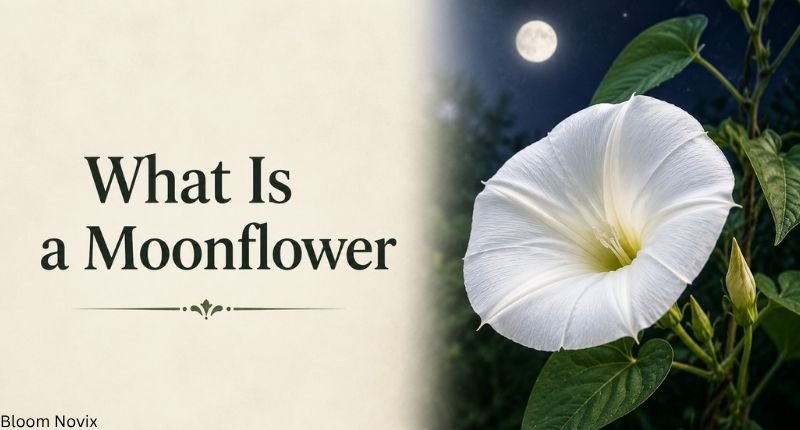
A moonflower is a night-blooming plant, most commonly known as Ipomoea alba. It is a climbing vine with large, white, trumpet-shaped flowers. Each bloom opens only once the sun goes down.
Here is what makes it unique:
- The flower opens fully within just 30 minutes after sunset.
- It releases a sweet fragrance that grows stronger at night.
- It attracts hawk moths, its main nighttime pollinator.
- Most blooms fade by mid-morning the next day.
This short, dramatic life cycle is why the moonflower meaning feels so tied to timing, patience, and quiet beauty.
The Core Meaning of Moonflower Symbolism Today
Modern readers connect this flower with emotional growth rather than folklore. People see it as a personal symbol of getting through hard times.
The most common modern meanings include:
- Hope during uncertain seasons of life
- Quiet transformation that happens without an audience
- Inner peace found through stillness
- New beginnings after a hard chapter closes
- Emotional resilience built slowly over time
Many people turn to this flower when they want a symbol that feels personal, not loud. It reminds them that real change often happens in silence.
Why Night Blooming Shapes Its Symbolism
Every meaning tied to the moonflower comes from one simple fact: it blooms at night. This single trait shaped centuries of symbolism.
Most flowers open for daytime bees. Moonflowers evolved differently. They open for moths, so they had to adapt to darkness, not daylight.
| Trait | What It Means | Common Use |
| Opens after sunset | Hope appearing in dark times | Personal growth symbols |
| White, glowing petals | Purity and calm | Weddings, sympathy gifts |
| Fades by morning | Life is short and precious | Mindfulness reminders |
| Strong night fragrance | Comfort during quiet hours | Meditation spaces |
| Vine-like growth | Steady, gradual progress | Motivation and goals |
This table shows how one biological habit created an entire language of meaning.
Ancient Roots and Early Symbolism
Moonflowers do not have one single ancient myth like the rose or lotus. Instead, their story grew slowly across different regions.
In Central and South America, night-blooming vines were often linked to the moon’s cycle and the changing seasons. Early farmers noticed these plants bloomed with the rhythm of nature, not with the sun.
Later, during the 1700s and 1800s, explorers brought these vines to Europe and North America. Gardeners fell in love with their strange, glowing blooms. During the Victorian era, white night flowers were often connected to quiet devotion and secret admiration, though moonflowers never gained the deep symbolic history that roses or lilies received.
What Moonflowers Symbolize in the United States
American gardeners see this flower differently than older cultures did. Here, the focus is personal and emotional, not traditional. A similar approach can be seen in the symbolism of the American Beauty Rose, which is also closely tied to love and personal emotions.
In the U.S., the moonflower symbolism often centers on:
- Finding hope after a hard season
- Emotional healing from loss or stress
- Beginning a new chapter in life
- Learning to enjoy peaceful, quiet moments
- Staying optimistic despite uncertainty
Wellness communities have embraced this flower heavily. It shows up often in journals, self-help content, and social media posts about mental health. The flower feels less like folklore and more like a personal companion for tough times.
Moonflower Symbolism in Different Cultures
Across the world, people connect night-blooming flowers to similar core ideas, even without direct contact between cultures.
In East Asia, night flowers are often tied to the beauty of impermanence. Instead of focusing on darkness, the idea centers on nature’s changing rhythm and the beauty of things that don’t last.
In Western cultures, white flowers commonly represent peace, sincerity, and remembrance. The moonflower borrows these meanings while adding its own nighttime identity.
Many spiritual traditions link moonlight itself to intuition and inner reflection. Because moonflowers bloom under moonlight, they often appear in meditation gardens and calming spiritual artwork.
Emotional and Psychological Meaning
Psychologically, this flower represents calm rather than excitement. People often use it as a symbol during personal growth.
Common emotional meanings include:
- Patience through slow, private growth
- Quiet confidence that doesn’t need applause
- Emotional maturity gained through experience
- Acceptance of life’s natural ups and downs
- Healing after grief or major change
Many therapists and coaches now use flower symbolism, including moonflowers, as a gentle way to talk about emotional recovery. The flower’s private blooming style mirrors how real healing often happens away from public eyes.
Moonflower Symbolism in Love and Relationships
Moonflower meaning in love centers on emotional depth rather than passion. Because the flower blooms in the evening, it connects naturally with quiet, intimate moments between partners. Like the clover meaning in love, it can also suggest a gentle bond built on trust, care, and emotional connection.
In relationships, the moonflower often symbolizes:
- Lasting affection that grows slowly
- Trust built over shared time
- Gentle love, not rushed romance
- Patience through relationship challenges
- Emotional honesty between partners
Unlike red roses, which shout passion, this flower whispers commitment. That is why it sometimes appears at evening weddings and quiet anniversary celebrations, where couples want a symbol of steady, lasting love rather than fireworks.
Why Moonflowers Appear in Tattoos
Moonflower tattoo meaning has grown popular over the last decade. People often choose this design after going through a major life change.
Common tattoo meanings include:
- Overcoming a hard struggle
- Starting fresh after a setback
- Healing from grief or loss
- Personal growth through hardship
- Living authentically, without pretending
Many artists pair moonflowers with moths, moons, or stars to strengthen the nighttime theme. Some people simply love the flower’s elegant shape and choose it for beauty alone, without needing a deep story behind it.
Moonflowers in Home Décor, Fashion, and Art
Because of its elegant, glowing look, this flower has become a favorite in decorative design. It fits well into calm, minimal spaces.
You will often find moonflower imagery in:
- Wall art and botanical prints
- Wedding invitations
- Jewelry and fabric patterns
- Candle packaging and home fragrance branding
- Journal covers and stationery
Designers love this flower because it feels elegant without being loud. It naturally complements soft lighting, neutral colors, and peaceful interior themes.
Moonflowers in Literature and Popular Culture
Writers often use moonflowers as visual symbols instead of spelling out a direct meaning. Readers instantly understand the mood once this flower appears in a scene.
In books, films, and art, moonflowers usually represent:
- A turning point in a character’s story
- Hidden emotions slowly coming to light
- Unexpected hope during a dark moment
- Quiet courage before a big decision
Because the flower’s blooming habit is so unusual, audiences recognize its meaning almost instantly, even without long explanations.
Read Also: Phlox Flower Meaning
Common Misunderstandings About Moonflower Symbolism
A few myths about this flower continue to spread online. Let’s clear them up.
- Myth: Moonflowers always symbolize death. Truth: Most modern meanings focus on hope and healing, not loss.
- Myth: Moonflowers only belong to mystical or occult traditions. Truth: Their symbolism grew mainly from nature observation, not mysticism.
- Myth: All white night-blooming flowers share the same meaning. Truth: Each species, including moonflower, has developed its own unique cultural identity.
How Moonflower Symbolism Has Changed Over Time
Meaning around this flower has shifted a lot over the last 200 years.
Early gardeners admired moonflowers purely for their unusual look. Later, writers and artists began using them to represent nighttime beauty and short-lived joy.
Today, especially in American culture, this flower stands for something much more personal: emotional resilience, self-discovery, and mindfulness. This shift reflects how modern society values mental wellness over rigid tradition.
Positive and Negative Associations
Like most symbols, this flower carries both encouraging and cautionary meanings.
Positive meanings:
- Hope
- Renewal
- Healing
- Peace
- Growth
Cautionary meanings:
- Impermanence
- Temporary opportunities
- Solitude
These cautionary meanings are not meant to scare anyone. Instead, they gently remind us that beautiful moments, just like the moonflower’s bloom, don’t last forever — and that’s okay.
Varieties of Moonflowers
Not every moonflower looks the same. Several varieties exist, and each carries a slightly different visual and symbolic tone.
| Variety | Color | Symbolic Tone |
| Ipomoea alba | White | Purity, peace, hope |
| Datura (sometimes called moonflower) | White or pale purple | Mystery, caution |
| Purple moonflower hybrids | Purple | Spiritual depth, intuition |
| Yellow evening primrose (related bloomer) | Pale yellow | Gentle optimism |
Knowing the variety helps you choose the right symbolic meaning for gifts, tattoos, or garden design.
Moonflowers in Culture and Mythology
Beyond general folklore, several specific cultural threads connect to this flower.
In parts of Latin America, night-blooming vines were historically tied to lunar goddesses and harvest cycles. Farmers watched these blooms as a natural calendar for planting and rest.
In some Asian traditions, night-blooming flowers appear in poetry as symbols of quiet devotion and patience through hardship. The flower’s refusal to bloom in daylight was seen as a form of humility.
These mythological threads show that the moonflower’s story is not random. It grew from real human observation of nature’s rhythms.
Growing Moonflowers in Your Garden
If you want to experience this flower’s symbolism firsthand, growing your own vine is a rewarding project.
1. Selecting the Proper Location
Choose a spot with full sun during the day and a structure to climb, like a trellis or fence. Moonflowers are vines, so they need vertical space to thrive.
2. Planting and Care
- Plant seeds after the last frost in warm soil.
- Soak seeds overnight to speed up germination.
- Water regularly, but avoid soggy soil.
- Feed lightly with balanced fertilizer during growth.
| Growing Factor | Ideal Condition |
| Sunlight | 6+ hours of direct sun |
| Soil | Well-drained, slightly moist |
| Support | Trellis, fence, or pole |
| Bloom Time | Evening, from summer to fall |
3. Capping Words
A quick safety note: parts of the moonflower plant, especially the seeds, can be mildly toxic if eaten. Keep this in mind if you have small children or pets in your garden.
Moonflower Symbolism: Negative Meanings Explained
While most meanings are positive, a few cautionary interpretations exist too.
Because the bloom fades so fast, some see it as a warning about holding on too tightly to good moments. Others connect it with solitude, since the flower blooms alone at night while the world sleeps.
These meanings are not meant to feel scary. They simply encourage letting go gently and accepting that not everything is meant to last forever.
Moonflower Meaning: A Spiritual Perspective
Many spiritual practices connect moonlight to inner reflection and intuition. Since this flower only blooms under moonlight, it naturally fits into spiritual and meditative symbolism.
Moonflower spiritual meaning often includes:
- A reminder to trust your inner voice
- A symbol of spiritual awakening during quiet times
- A sign of emotional clarity after confusion
- A connection to the divine feminine, linked to the moon
People who follow moon rituals or lunar calendars often plant moonflowers as a living symbol of reflection and renewal.
Moonflower Symbolism in the Bible
The Bible does not mention the moonflower by name, since it is native to the Americas and was unknown in biblical times. However, many people still connect its themes to biblical ideas.
Light appearing in darkness is a common biblical theme, much like this flower’s habit of blooming at night. Some readers see a gentle parallel between the moonflower’s hope-filled bloom and verses about faith during difficult seasons.
This connection is symbolic, not scriptural, but it still resonates with many spiritually minded readers.
Purple Moonflower Meaning
Purple moonflower meaning leans more spiritual than the classic white variety. Purple flower has long been associated with intuition, mystery, and higher awareness.
When you see a purple moonflower, it often represents:
- Spiritual growth and deeper awareness
- Mystery and hidden potential
- Emotional depth beyond the surface
- A connection to dreams and intuition
Gardeners often plant purple varieties near meditation spaces or moon gardens for this reason.
White Moonflower Meaning
The classic white moonflower meaning centers on purity, peace, and remembrance. White is one of the most universally peaceful colors across cultures.
White moonflowers commonly symbolize:
- Purity of intention or heart
- Peace during chaotic times
- Remembrance of someone who has passed
- A fresh start after a difficult chapter
This is why white moonflowers appear so often in weddings, memorial gardens, and sympathy arrangements.
Moonflower Dream Meaning: What It Represents
Seeing a moonflower in a dream often carries a gentle, hopeful message. Dream symbolism experts commonly link this flower to personal timing and inner readiness.
A moonflower dream may represent:
- A sign that good change is coming, even if it feels slow
- A reminder to trust your own pace in life
- Hidden potential that hasn’t bloomed yet
- Emotional healing happening quietly beneath the surface
If you dream of a moonflower blooming, it may be a nudge to stay patient. Your own personal “bloom” may simply be waiting for the right moment.
FAQs
What does a moonflower symbolize?
It symbolizes hope, transformation, and quiet inner peace. Its night-blooming habit represents beauty that appears even during hard times.
Is a moonflower a good tattoo symbol?
Yes, it’s a popular choice. People often choose it to represent healing, personal growth, or overcoming a difficult chapter in life.
Does the moonflower have religious symbolism?
Not officially, no single religion claims it. Many people still connect it loosely to spiritual reflection and light appearing in darkness.
Why does the moonflower represent hope?
Because it opens after sunset. This shows people that beauty and progress can appear even in the darkest hours.
What does giving someone a moonflower mean?
It usually means offering encouragement or emotional support. It can express hope, healing, or excitement for someone’s new chapter.
Is moonflower symbolism positive or negative?
It’s mostly positive. While it hints at life’s short nature, this idea is meant to encourage gratitude, not sadness.
What does flower moon mean spiritually?
The flower moon, a spring full moon, spiritually represents renewal, fresh growth, and new beginnings after a quiet season.
What flower symbolizes a lost loved one?
White flowers, including the white moonflower, often symbolize a lost loved one through themes of peace, purity, and remembrance.
Conclusion
Moonflower symbolism stands out because it grew from real observation, not invented myth. This flower blooms only when the world grows quiet, reminding us that hope and beauty can appear at the darkest hour. Its meaning touches love, healing, spirituality, and personal growth all at once.
Whether you plant one in your garden, wear it as a tattoo, or simply admire its story, the moonflower carries a gentle message. Growth doesn’t always need an audience. Sometimes, the most meaningful blooms happen quietly, in the dark, right before something beautiful begins.
BloomNovix is managed by an experienced team of content writers and SEO specialists with 4+ years of expertise in gardening and plant care. We provide well-researched guides, gardening tips, and insights on floral meanings to help plant lovers grow their indoor and outdoor gardens with confidence.