Frost covers your garden. Most plants look tired and brown. Then you spot a small, cheerful face smiling through the cold. That brave little bloom is a pansy or a viola, and at first glance, it can be hard to tell them apart.
The difference between winter pansies and violas may seem small, but it matters when you are choosing plants for a cold-weather garden. Their flower size, growth habit, and winter performance can be different. Let’s look at what sets them apart so you can choose the one that fits your winter garden best.
What Are Winter Pansies and Violas? A Quick Overview
Pansies and violas belong to the same genus, Viola, so they share many of the same growing habits. Both prefer cool weather and can provide colorful blooms when many other garden flowers have finished for the season.
Garden pansies are mostly hybrids developed from several Viola species. They are known for their larger flowers, broad range of colors, and distinctive dark markings. When planted in fall for cool-season color, they are commonly sold as winter pansies.
Violas generally have smaller flowers and a more compact growth habit. Popular types include Viola cornuta, known as the horned violet, and Viola tricolor, commonly called Johnny-jump-up. Many violas are cold tolerant and can continue flowering through cool weather with the right growing conditions.
Difference Between Winter Pansies and Violas at a Glance
Gardeners often want the quick answer first. This table gives you the main differences at a glance. After that, you can explore each point in more detail.
| Feature | Winter Pansies | Violas |
| Flower size | 2 to 4 inches wide | 1 to 1.5 inches wide |
| Petal pattern | Big dark blotch, like a face | Small whiskers or clean solid color |
| Number of blooms | Fewer, but bigger | Many more, but smaller |
| Plant habit | Upright and chunky | Compact, spreading or trailing |
| Frost tolerance | Very good | Excellent |
| Lifespan | Short-lived, mostly annual | Often a true perennial in cool zones |
| Self-seeding | Rare | Common |
| Best use | Showy beds and focal pots | Borders, edging and mixed pots |
The easiest way to remember the difference is simple: pansies make a bigger statement, while violas tend to produce more smaller blooms. Both can bring plenty of color to a winter garden.
Flower size is only part of the story, though. Their growth habit, blooming pattern, and ability to handle cold weather can also affect which one works better in your garden. Let’s look at those differences more closely.
Difference Between Winter Pansies and Violas Pictures: How to Spot Each One
Pictures help more than words. Still, you need to know what to look for. Start with the center of the flower. Then check the petals. Finally, look at the leaves.
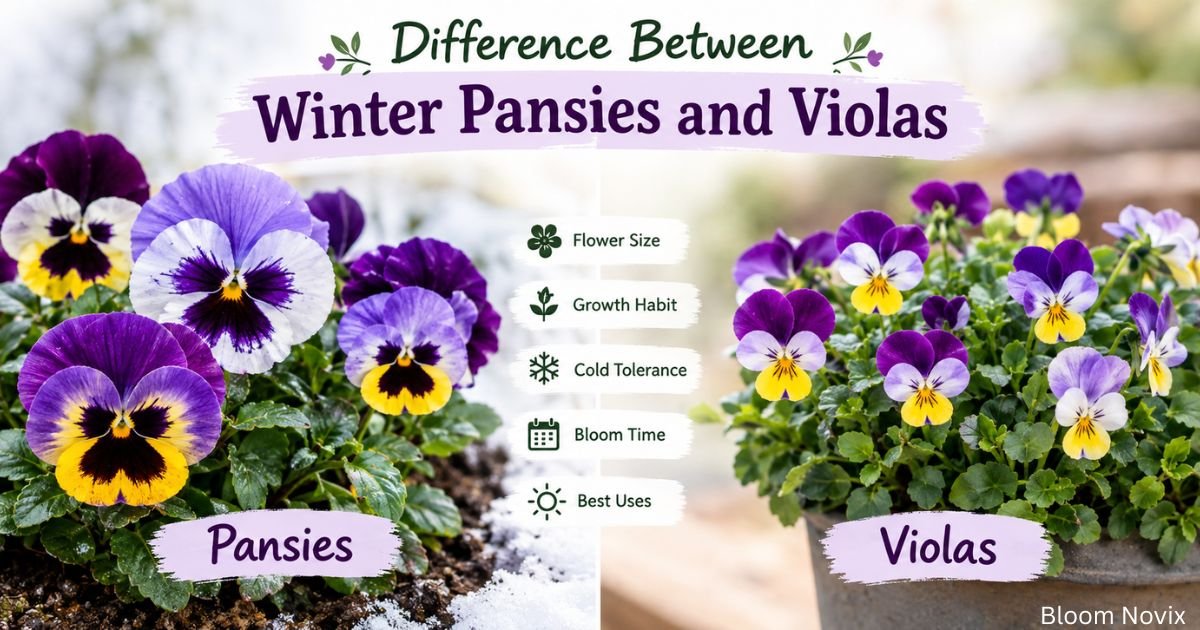
Look at the pansy petals first. A pansy has five overlapping petals. Four petals point up and out. One lower petal hangs down. A dark blotch sits in the middle and makes a “face.”
Now check the viola petals. They look smaller and lighter. They often show thin dark lines called whiskers. Some violas have no markings at all. Ask yourself two things:
- Is the bloom bigger than a half dollar? It is likely a pansy.
- Does the plant carry dozens of tiny faces? It is likely a viola.
Flower Size, Shape and Petal Pattern Differences
Size is the easiest clue. Bloom size on a pansy can reach four inches, while a viola bloom stays around one inch. That gap looks huge in a pot. You can spot the difference from across the yard.
Shape changes too. Pansy flowers look wide and round. The petals overlap and create a full, flat face. Viola flowers look smaller and lighter, with petals that give them a more delicate appearance. This variety in flower shapes and sizes is one reason gardeners find so many different unbloomed flower names interesting.
Pansies also have ruffled and “Majestic Giant” types. Violas have small flowers with a delicate, wildflower charm. Some violas carry a faint sweet scent, while most pansies have little to no fragrance. Smell a few at the garden center, and you may notice the difference.
Colors and Markings: Pansy “Faces” vs Viola Whiskers
Pansies are known for their bold colors and striking markings. You will find deep purple, burgundy, orange, yellow, true blue, and near-black blooms. Many varieties have a dark blotch in the center that gives each flower its familiar “face.” Red is another classic flower color, especially in roses such as the American Beauty rose.
Violas usually have smaller, softer-looking blooms in shades such as lavender, cream, apricot, pink, and pale blue. Some have clean, solid-colored petals, while others feature fine lines called “whiskers” around the center. These markings can also help guide pollinators toward the flower’s nectar.
If you want strong color and a noticeable center marking, pansies are a natural choice. Violas offer a softer look and can easily blend with other flowers in a mixed planting.
Plant Size, Growth Habit and Foliage Differences
Pansies have a more upright, sturdy growth habit. Most grow about 6 to 9 inches tall, with broad, rounded leaves and flowers held above the foliage on relatively thick stems.
Violas tend to stay lower and more compact, usually reaching 4 to 8 inches. Many spread outward as they grow, while trailing types can spill over the edges of containers and hanging baskets. Their leaves are generally smaller and more heart-shaped than those of pansies.
These differences can help you decide where to plant each one. Pansies work well when you want a noticeable block of color, while violas are useful for filling gaps and softening edges. In garden beds, pansies can create a defined front or middle layer, while violas fit naturally around bulbs and other low-growing plants.
Are Pansies or Violas Better for Winter?
Both survive winter well. Still, violas have the edge in tough spots. They handle long cold spells with fewer problems. They also keep blooming through mild freezes with less fuss.
Pansies shine when you want big color on cool, sunny days. They also bloom beautifully in mild winter zones. In harsh climates, their large petals can look battered after ice and wind.
Use this simple rule:
- Choose violas for cold zones, windy sites and low-effort color.
- Choose pansies for mild zones, sheltered spots and show-stopping pots.
- Mix both for the best of each worlds.
Cold Tolerance and Frost Hardiness Compared
Both plants rank as frost hardy flowers. Pansies usually tolerate temperatures down to the mid-20s Fahrenheit. Many violas handle slightly colder nights. Hard freezes can make the stems droop.
Do not panic when you see drooping flowers. The plant often looks sad in the morning cold. It recovers once the sun warms the leaves. This reaction protects the plant. It is not death.
Heavy snow, though, needs care. A light snow acts like a blanket and protects the plant. Ice crusts can crush stems. Brush off heavy snow gently. Add a thin layer of mulch to hold steady soil temperature.
Read Also: Ugly Flower Names
When to Plant Violas and Pansies for Winter Color
Timing decides your success. Plant when the soil turns cool, not frozen. Cool soil lets roots grow strong before deep winter. Strong roots mean more blooms later.
Your climate matters. Use this table as a guide.
| Climate Type | Best Planting Time | What to Expect |
| Cold winters (zones 3 to 6) | Early fall, 6 to 8 weeks before hard frost | Blooms in fall, rest in deep winter, return in spring |
| Moderate winters (zones 7 to 8) | Mid fall to early winter | Steady blooms with short pauses in cold snaps |
| Mild winters (zones 9 to 10) | Late fall through winter | Continuous winter flowers until heat arrives |
Planting too early causes trouble. Warm soil stresses young plants. They grow leggy and bloom poorly. Wait for nights to drop below 65°F before you plant.
How to Plant Winter Pansies and Violas Step by Step
Good planting takes ten minutes. Follow these simple steps. Your plants will thank you with weeks of color.
- Pick a spot with full sun or partial shade.
- Loosen the soil to eight inches deep.
- Mix in compost for better drainage and nutrients.
- Space pansies six to eight inches apart. Space violas four to six inches apart.
- Dig a hole as deep as the root ball.
- Set the plant in. Keep the crown level with the soil.
- Firm the soil gently and water well.
Squeeze the root ball before planting if the roots circle tightly. Tease them apart with your fingers. This small step helps roots spread fast. Finish with a light layer of mulch.
Violas and Pansies in Pots: Best Container Ideas and Combinations
Pots are perfect for these plants. You can move them near the door. You can also tuck them into window boxes, hanging baskets and winter containers. Cold air feels friendlier when blooms greet you.
Choose a pot with drainage holes. Fill it with a quality potting mix. Pansies need about eight inches of pot depth. Violas need a little less. Space plants closer than you would in the ground for a full look.
Try these easy combinations:
- Purple pansies with white violas for a crisp, elegant look.
- Orange pansies with yellow violas for a warm, sunny glow.
- Trailing violas around a tall pansy for height and flow.
Best Companion Plants for Winter Pansies and Violas
Pansies and violas pair naturally with other cool-season plants, especially those that add height, texture, or contrasting foliage. Choosing plants with similar growing conditions also makes the garden easier to maintain.
Spring bulbs such as daffodils, tulips, and crocuses are good choices. Plant the bulbs among or behind your violas so the low-growing flowers cover the bare soil while the bulbs emerge above them in spring. This creates different layers without taking attention away from the pansies and violas.
For foliage contrast, try dusty miller, ornamental kale, or trailing ivy. Their different leaf shapes and colors help break up large areas of flowers. Dwarf evergreens can add structure when other plants are dormant. Whatever you choose, look for companions with similar light and water requirements so everything can grow well together.
Are Pansies and Violas Perennials, Biennials or Annuals?
This question can be confusing because pansies and violas do not always behave the same way in every garden. Most gardeners grow them as cold-season annuals. They plant them in fall, enjoy the blooms through the cool months, and replace them when summer heat arrives.
Some violas are true perennials. Viola cornuta, for example, can return for several years in cooler growing zones. Pansies are often treated as biennials or short-lived perennials. They may bloom for a season, slow down during hot weather, and sometimes return when conditions become favorable.
Temperature makes a big difference. Both plants prefer cool weather and can struggle when temperatures stay above 80°F. In regions with mild summers, they may survive and bloom again. In hotter areas, they are more likely to fade out after the cool season.
So, whether you grow them as annuals or see them return year after year depends largely on your climate. If they come back, enjoy the extra blooms; if not, they can easily be replanted for another cool season.
Sun, Water and Soil Needs for Winter Pansies and Violas
Both plants love full sun in winter. The low winter sun gives gentle light. In warmer zones, give them partial shade in the afternoon. Too much heat shortens their bloom time.
Water them evenly. Soil should stay moist, well-drained, but never soggy. Soggy roots invite rot. Check the top inch of soil. Water when it feels dry. Water in the morning so leaves dry before night.
Soil should be rich in organic matter. Slightly acidic to neutral soil works best. Feed with a balanced fertilizer every three to four weeks. Choose a low-nitrogen formula. Too much nitrogen gives leaves but few flowers.
Winter Care Tips: Deadheading, Feeding and Protection from Frost
Deadheading helps pansies and violas keep producing flowers. Simply pinch off faded blooms with your fingers before they have a chance to form seeds. This encourages the plant to put more energy into fresh growth and new buds.
Pansies usually benefit more from regular deadheading, while violas can continue flowering with less attention. A quick weekly check is enough to remove old blooms and keep both plants looking tidy. If the stems become long and thin, trim them back by about one third to encourage fuller growth.
When a deep freeze is expected, give your plants some extra protection. Cover them overnight with frost cloth, then remove the cover in the morning. Avoid plastic sheets because they can trap moisture and may damage leaves when they warm up. Keep the soil lightly moist as well, since dry soil is more vulnerable to freezing.
Are Violas and Pansies Edible? Uses in Food and Drinks
Yes, both pansy and viola flowers are edible. Their bright petals make simple dishes look special, so chefs often use them as garnishes for salads, cakes, cookies, and desserts. You can also freeze the flowers into ice cubes to add a colorful touch to cold drinks.
The flavor is mild, so neither flower tends to overpower a dish. Violas are slightly sweet with a fresh, minty note, while pansies have a greener, more grassy taste. For most people, their visual appeal is the main attraction.
Only eat flowers that are specifically grown for consumption. Flowers from garden centers may have been treated with pesticides or other chemicals. Choose edible flowers from a trusted source or grow them yourself without harmful treatments. Wash the petals gently before serving and remove the green base if you prefer a cleaner taste.
Violas and Pansies: Where to Buy and What to Look for
You can buy pansies and violas from local garden centers, big-box stores, and online nurseries. Fall is a good time to shop for them because many garden centers bring in fresh selections for the cool season. Online nurseries and seed companies are also useful if you want unusual colors or varieties.
Before buying, check the plant closely. Choose compact plants with deep green leaves and plenty of unopened buds. Avoid plants that look tall and thin or have yellowing leaves, as they may have a harder time settling in after transplanting.
Growing from seed is another option. Sow seeds indoors about 10 to 12 weeks before you plan to move them outside. Starting from seed can cost less and gives you more varieties to choose from. Violas may also self-sow in suitable conditions, allowing new plants to appear in the garden the following season.
Common Problems, Pests and Mistakes to Avoid
Pansies and violas are generally easy to grow, but pests and diseases can still show up, especially when plants stay too wet or crowded. Check the leaves and stems regularly so you can deal with problems before they spread.
| Problem | Sign | Simple Fix |
| Slugs and snails | Holes in leaves, slime trails | Hand-pick at night or use pet-safe bait |
| Aphids | Sticky leaves, curled new growth | Spray with water or insecticidal soap |
| Powdery mildew | White powder on leaves | Improve airflow and water at the base |
| Crown rot | Mushy stems, wilting plants | Improve drainage and avoid overwatering |
| Leggy growth | Long stems, few flowers | Cut back and give the plant more light |
A few simple habits can prevent many of these problems. Avoid planting too early, and do not keep the soil constantly wet. Too much nitrogen can lead to weak, leafy growth with fewer flowers. Give each plant enough space for air to move around the foliage, especially in damp weather.
Frequently Asked Questions
1. What is the main difference between winter pansies and violas?
Size and flower count set them apart. The difference between winter pansies and violas is simple: pansies carry larger blooms with bold faces, while violas carry smaller, more numerous flowers.
2. Are pansies or violas better for winter?
Violas handle cold slightly better. They keep blooming through tougher weather, while pansies give bigger color in milder winters.
3. Which is more cold hardy, pansies or violas?
Violas are usually a bit more cold hardy. Both survive light freezes, but violas recover faster after hard cold nights.
4. When is the best time to plant violas and pansies?
Plant in early fall for cold zones. Wait until the soil cools below 65°F, and in mild zones, plant from fall through winter.
5. Can violas and pansies be planted together in pots?
Yes, they pair beautifully. They share the same water, sun and cold needs, so they grow well side by side.
6. Are pansies and violas perennials?
Many violas are short-lived perennials, and pansies act like biennials. Most gardeners treat both as annuals because summer heat often kills them.
7. Are violas and pansies edible?
Yes, both flowers are edible. Use only pesticide-free blooms, and wash them gently before eating.
8. Do violas or pansies bloom longer in winter?
Violas usually bloom longer. They produce more flowers and handle stress better, so color lasts through the season.
9. Do winter pansies and violas come back every year?
Violas often return in cool zones, while pansies rarely do. Violas also self-seed, so new plants may appear next fall.
10. Where is the best place to buy violas and pansies?
Local garden centers offer the best choice in fall. Online nurseries and seed suppliers help when you want rare colors.
Conclusion
Now you know the difference between winter pansies and violas. Pansies are known for their larger flowers, bold colors, and distinctive dark faces. Violas have smaller blooms, a compact growth habit, and plenty of flowers in cool weather. Both can bring color to the winter garden when many other plants are dormant.
The right choice depends on your space, climate, and the look you want. Pansies work well in containers and areas where you want larger, eye-catching flowers. Violas are useful for borders, gaps, and smaller spaces. You can also plant them together to enjoy the different flower sizes, colors, and growth habits throughout the cool season.
BloomNovix is managed by an experienced team of content writers and SEO specialists with 4+ years of expertise in gardening and plant care. We provide well-researched guides, gardening tips, and insights on floral meanings to help plant lovers grow their indoor and outdoor gardens with confidence.