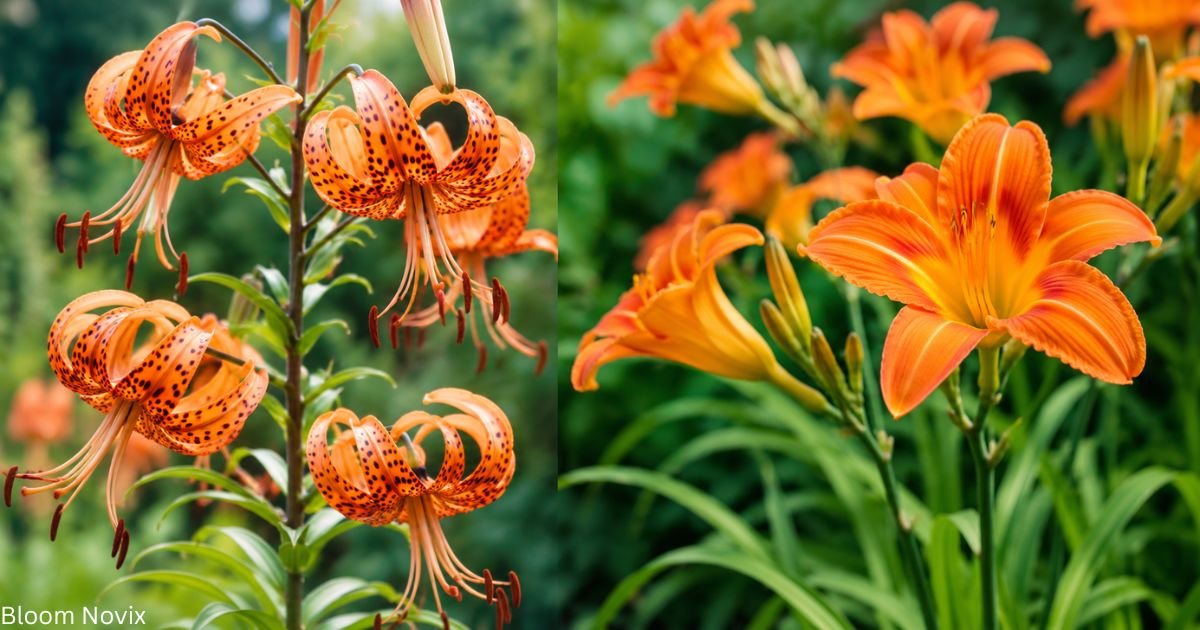
Every summer, gardeners stop and stare at a tall orange bloom. Is this a tiger lily or a daylily? The question around tiger lily vs daylily confuses even experienced plant lovers. Both flowers share bright orange color. Both grow tall in the summer heat.
This mix-up matters more than you think. One plant stays small for years. The other can take over your whole yard. One is deadly to cats. The other is not. This guide breaks down every real difference in simple terms.
Tiger lily vs orange day lily/ Tiger Lily vs Daylily

A tiger lily and an orange day lily can look like twins. Both grow tall. Both bloom orange. Both peak in the hottest weeks of summer. This is the root of the whole tiger lily vs daylily mix-up.
Look past the color, and the plants separate fast. A tiger lily grows from one tiger lily bulb. It produces spotted flowers that face downward. A daylily grows from spreading roots. Its blooms face upward and last only one day.
Learning this tiger lily vs daylily difference early saves you trouble at the nursery. It also stops disappointment later. Nobody wants a “small” plant that suddenly spreads across the whole yard.
Are tiger lilies true lilies?
Yes. Tiger lilies are true lilies. They belong to the Lilium genus. This is one of the biggest points people miss in the tiger lily vs daylily debate. This fact explains why tiger lilies grow and behave the way they do.
A true tiger lily grows from a real bulb, not a root cluster. This bulb sits deep in the soil. It sends up one strong stem each year. The scientific name is Lilium lancifolium. This name points to the plant’s narrow, blade-shaped leaves.
Because tiger lilies are true lilies, they carry the same toxic risks as other lilies. This one fact sets tiger lilies apart from daylilies more than anything else on this list.
Daylilies vs true lilies
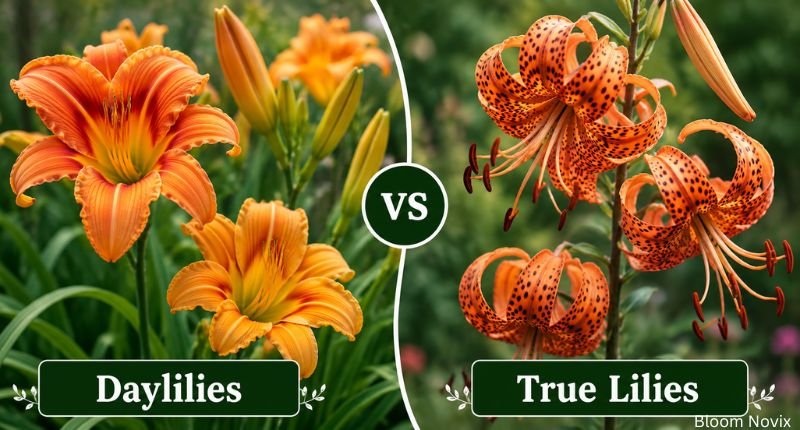
Daylilies are not true lilies. They just share part of the name. Daylilies belong to the Hemerocallis genus. This is a completely different plant family from Lilium. This shared name is the main reason for the confusion.
The word “lily” in daylily only describes the flower’s shape. It says nothing about plant science. A common orange daylily is known as Hemerocallis fulva. It grows from thick roots, not a bulb. This root difference explains most of the gaps between the two plants.
This distinction changes how you shop for plants. Search “true lilies” at a nursery, and you will find tiger lilies and their relatives. Daylilies sit in a separate category altogether.
Read Also: Peony Flower Meaning and Symbolism
Examining the roots and growth habits
The best way to identify either plant is to check underground. A tiger lily grows from a scaly bulb. It looks like a small, pale artichoke. This bulb sits deep in the soil. It forms new bulbs slowly, over several years.
A daylily relies on a tuberous root system. This means thick, finger-like roots near the surface. These roots spread fast and form dense mats. Weaker plants nearby often get choked out. This spreading root system is why daylilies take over roadside ditches so easily.
This growth habit gap matters for garden planning. Tiger lilies stay put and behave well in small beds. Daylilies need more room, or regular dividing to stay under control.
| Feature | Tiger Lily | Daylily |
| Root type | Scaly bulb | Tuberous roots |
| Growth speed | Slow, contained | Fast, spreading |
| Best use | Perennial borders | Slopes, large areas |
| Maintenance | Low | Moderate |
Spotting the differences in foliage and stems
Foliage tells the story just as clearly as roots do. A tiger lily grows one stiff stem. It reaches three to five feet tall. Blade-shaped leaves grow right along this stem. By late summer, small black bumps appear where the leaves meet the stem. These are called tiger lily bulbils.
Bulbils are tiny bulbs that grow in the air, not underground. Once they drop to the soil, they grow into brand-new plants. This gives tiger lilies a second way to spread, known as tiger lily propagation.
A daylily grows differently from the ground up. All its grass-like foliage rises straight from the base in a leafy clump. Bare flower stems, called scapes, rise separately from the center. A daylily stem never carries leaves or bulbils. This makes for an easy field test.
Comparing the orange lily difference in blooms
The flowers show the clearest orange lily difference of all. Tiger lily blooms carry heavy dark spots on curved, reflexed petals. These petals curl backward and downward. This pushes the long stamens forward, giving the flower its bold look.
Each tiger lily bloom lasts several days before it fades. Buds open one after another along the stalk. One stalk can bloom for weeks, giving a slow, steady show all summer.
Daylily flowers work the opposite way. Each trumpet-shaped bloom opens in the morning. It wilts by evening, lasting just one day. The plant makes up for this with dozens of buds per stem. Color keeps coming for weeks, even though each flower is short-lived.
| Feature | Tiger Lily | Daylily |
| Petal pattern | Dark spots | Smooth, unspotted |
| Petal shape | Reflexed, curls backward | Trumpet, faces outward |
| Bloom lifespan | Several days | One day |
| Flower direction | Downward-facing | Upward-facing |
Tiger lily vs ditch lily
The term “ditch lily” causes just as much mix-up as “tiger lily” does. Many gardeners call any wild orange flower a ditch lily. They assume it must be a tiger lily. In truth, a tiger lily vs ditch lily comparison shows two very different plants.
Ditch lilies almost always mean the tough, self-spreading daylily found growing wild. Tiger lilies rarely escape into the wild the same way. Their slow bulbs keep them close to where you planted them.
This mix-up matters when you shop online. A listing for “wild tiger lily” often shows a common orange ditch daylily instead. It is not a true Lilium plant at all.
Explore More: August Birth Flower Gladiolus
Daylily vs ditch lily
Here is where the confusion clears up. A daylily vs ditch lily comparison shows there is no real difference. Ditch lily is just a nickname for the common orange daylily growing wild.
This orange ditch lily spreads through the same tuberous roots found in garden daylilies. It earned its nickname by thriving in ditches, empty lots, and steep banks with zero care.
You can treat ditch lily and daylily as the same plant. The only real difference is location. One grows wild. The other grows in a managed garden bed.
Toxicity to cats and garden maintenance
Pet safety may be the biggest factor in this whole comparison. True lilies, including tiger lilies, are extremely dangerous to cats. They can cause sudden kidney failure. Every part of the plant carries this risk. This includes the pollen, the petals, and even vase water.
A cat does not need to eat the plant to get sick. Simple contact with tiger lily pollen, followed by grooming, can be enough. This can cause a fatal reaction within days. Homes with outdoor or curious indoor cats should skip true lilies entirely.
Daylilies offer a much safer choice for pet-safe gardening. A cat that eats a large amount of daylily leaves may get mild stomach upset. It will not face the kidney damage linked to true lilies. This safety gap alone convinces many pet owners to pick daylilies.
Are tiger lilies edible?
Yes, in small amounts, tiger lilies are edible for humans. Despite their danger to cats, people in parts of Asia cook tiger lily bulbs. They use them in soups and stir-fries for a mild, sweet taste. Raw bulbs should never be eaten without proper prep.
Daylilies have an even longer history as an edible flower. Fresh daylily buds and open blooms show up in salads and stir-fries across many cultures. Their mild, slightly sweet flavor makes them a popular garnish.
Do not eat either flower straight from the garden without research. Preparation matters, and reactions can vary by person. Check a trusted foraging or cooking source first.
Tiger lilies and daylilies care
Tiger lily care takes very little effort once the bulb settles in. Plant the bulb about six inches deep in soil that drains well. Do this in fall or early spring. After that, just clear away dead stalks each year. The plant prefers to be left alone for years at a time.
Daylily care follows a different rhythm. These flowering perennials do best with regular deadheading. This means removing spent blooms to keep new ones coming. Divide the clump every three to four years to keep it healthy and prevent crowding.
Both plants handle full sun and average soil well. This makes them great picks for beginners. The real gap is attention. Tiger lilies reward patience. Daylilies reward steady upkeep.
| Care Task | Tiger Lily | Daylily |
| Planting depth | 6 inches | Surface-level |
| Best planting time | Fall or spring | Spring or fall |
| Dividing frequency | Rarely needed | Every 3-4 years |
| Deadheading | Not required | Recommended |
Making the right choice for your garden space
Choosing between tiger lilies vs daylilies comes down to your garden’s needs. A large, tough area with poor soil calls for daylilies. Their tough roots fill space fast and shrug off neglect. Homes with outdoor cats should pick daylilies for safety alone.
A small, tidy garden bed calls for the tiger lily instead. Its tall, upright growth adds height without spreading into other plants. Its spotted blooms bring a level of detail that daylilies cannot match.
Match the plant to your space, soil, and pets. This makes the choice simple. Once you know the real differences, picking the right orange flower becomes easy.
Read More: Wildflowers and Their Meanings
Frequently Asked Questions
Are tiger lily vs daylily the same plant?
No, they come from different plant families with different roots and growth habits.
How can you tell a tiger lily from a daylily?
Check the petals. Tiger lilies have dark spots, and daylilies do not.
What is the difference between a tiger lily and a daylily?
Tiger lilies grow from bulbs and stay put, while daylilies spread through fast-growing roots.
Are orange daylilies true lilies?
No, daylilies belong to the Hemerocallis genus and are not true lilies.
Do tiger lilies come back every year?
Yes, tiger lilies are perennial and return each spring from their bulb.
How long does a daylily flower last?
Each daylily bloom lasts just one single day.
Are tiger lilies poisonous to cats?
Yes, every part of the tiger lily is highly toxic and can cause fatal kidney failure in cats.
Are daylilies safe for cats?
Daylilies are much safer and only cause mild stomach upset if eaten in large amounts.
Why are daylilies called ditch lilies?
They earned the nickname by growing wild and spreading fast along roadside ditches.
Which is better, tiger lily or daylily?
It depends on your garden. Tiger lilies suit small beds, and daylilies suit large, low-care spaces.
Conclusion
Understanding tiger lily vs daylily comes down to a few clear signs. Check the roots. Study the petals. Always think about your pets before you plant either flower. These small checks make identification simple.
Whether you pick the elegant, spotted tiger lily or the cheerful, fast-spreading daylily, both bring reliable orange color to your summer garden. Choose the one that fits your space and your lifestyle, and enjoy the bloom each year.

BloomNovix is managed by an experienced team of content writers and SEO specialists with 4+ years of expertise in gardening and plant care. We provide well-researched guides, gardening tips, and insights on floral meanings to help plant lovers grow their indoor and outdoor gardens with confidence.








3 thoughts on “Tiger Lily vs Daylily: What’s the Real Difference (And Which One Is Toxic to Cats?) ”