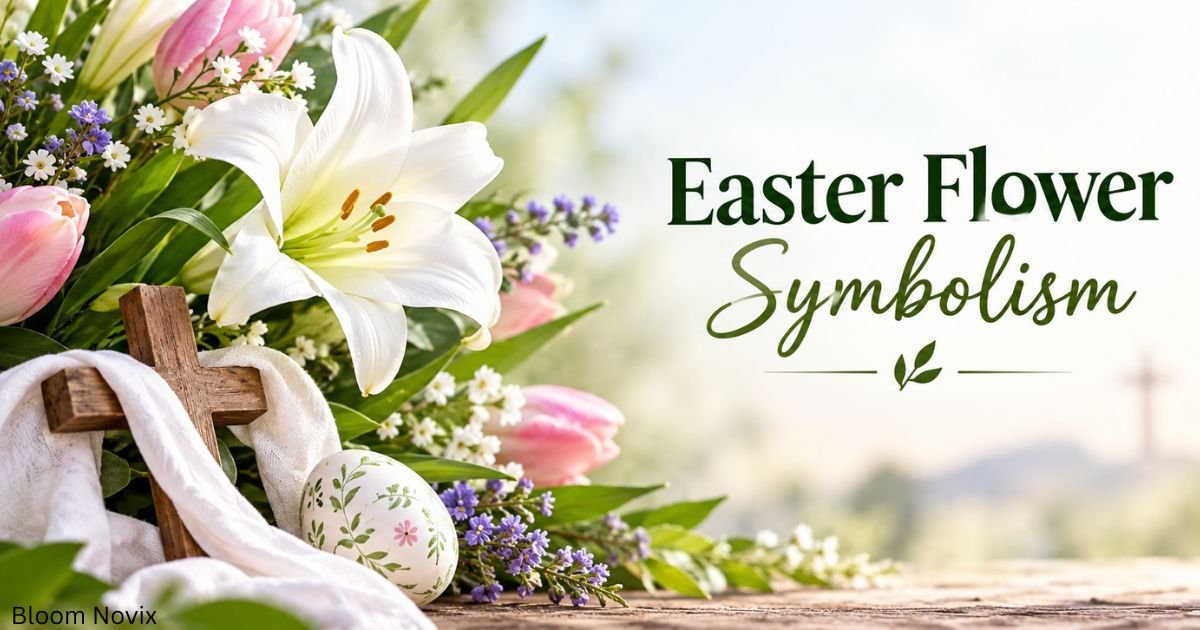
Spring brings fresh flowers, bright colors, and a sense of new life. This is one reason flowers have become closely linked with Easter. Easter flower symbolism connects these spring blooms with faith, hope, renewal, and the resurrection of Jesus.
But why are certain flowers used at Easter? What does the color white mean? And how did flowers become part of Easter traditions? This guide explores the meanings behind Easter flowers, their colors, Christian symbolism, and the traditions that shaped them.
What is the Meaning of Easter Flowers?
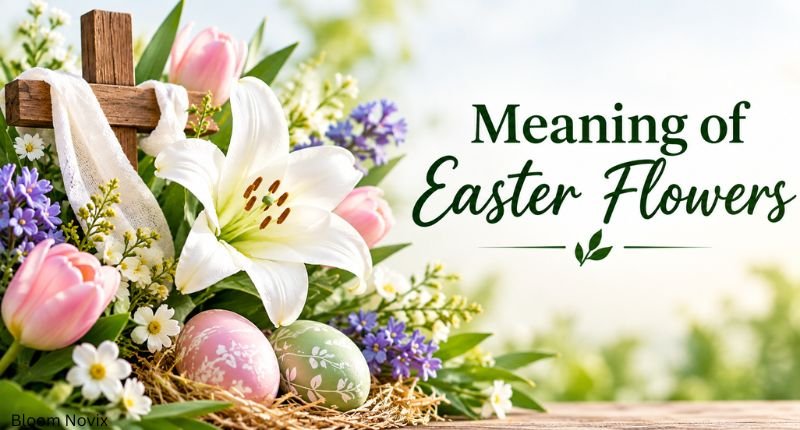
Easter flowers represent one simple idea: life after death. That is the heart of easter flower meaning, and it connects directly to the resurrection of Jesus Christ.
Flowers bloom in spring after a long, dead winter. This natural cycle became a living picture of the Christian belief that Jesus rose from the grave. Believers saw the bulb buried in cold soil, then bursting into bloom, as nature’s own sermon.
Here is what Easter flowers commonly represent:
- Rebirth – a flower rising from dormant soil
- Hope – color returning after gray winter months
- Purity – especially through white blooms
- New beginnings – the start of spiritual and natural renewal
Easter flowers are often linked with rebirth and new life. But there is more to their story. Ancient farming communities also gave special meaning to spring flowers. Later, some of these symbols became part of Christian Easter traditions. This mix of old and new beliefs gives Easter flowers a deeper meaning today.
Easter Flower Symbolism in Christianity
Easter flower symbolism in Christianity goes far deeper than pretty church decor. Flowers became a visual language for ideas that are hard to explain in words, especially resurrection and eternal life.
Early Christians needed simple, repeatable symbols to teach big spiritual truths to people who could not read scripture themselves. A blooming flower did that job perfectly. It showed death, followed by life, in a way anyone could understand by simply looking at a garden.
Three Christian ideas repeat across almost every Easter flower:
- Death and resurrection – shown through a bulb that “dies” underground before it blooms
- Purity of Christ – shown through white petals
- Divine glory – shown through golden centers, like the lily’s yellow stamen
As Christianity spread through Europe, some existing spring customs were gradually given new meanings connected to Christ’s resurrection. This blending of older seasonal traditions with Christian beliefs helped shape the Easter customs and flower symbolism that developed over time.
Easter Lily – The Official Flower of Easter and Its Meaning
The Easter lily holds a central place in easter lily symbolism. Its trumpet-shaped white bloom is instantly recognizable in churches every spring. If you are curious about how different lilies compare, you can also explore the differences between a tiger lily and a daylily for a closer look at their unique features.
The white easter lily meaning centers on three ideas: purity, hope, and the resurrection of Christ. Its white color reflects innocence, while its shape, opening upward like a trumpet, is often linked to the announcement of Christ’s victory over death.
Key facts about the Easter lily:
- Scientific name: Lilium longiflorum
- Native to islands of Japan, later grown widely in the US after World War I
- Called the “White-Robed Apostles of Hope” in some Christian writings
- Often placed around church altars during Holy Week
The lily’s link to Easter grew strong in America largely because of a Louisiana soldier named Louis Houghton, who brought lily bulbs home from Bermuda in 1919. Local growers then built an entire industry around Easter lilies, which is why the flower feels distinctly tied to the American Easter tradition today, even though its Christian symbolism started much earlier in Europe.
Catholic Symbolism of Easter Flowers
Catholic symbolism of Easter flowers adds extra layers of meaning tied to specific saints, rituals, and church seasons.
In Catholic tradition, the Easter lily is sometimes connected to the Virgin Mary. Her purity and role in Christ’s life mirror the lily’s white, untouched petals. Some Catholic communities call it the “Madonna Lily” for this exact reason.
Catholic churches also use flowers differently depending on the liturgical calendar:
- Lent – often flower-free or minimal decoration, symbolizing fasting and reflection
- Holy Saturday – churches remain bare, echoing Christ’s time in the tomb
- Easter Sunday – full floral displays return, celebrating the resurrection
The contrast between a quiet Lenten altar and a flower-filled Easter church can make the celebration feel especially meaningful. During Lent, some Christian traditions keep church decorations more restrained, creating a simpler visual setting. When Easter arrives, lilies, tulips, hyacinths, and other flowers can bring color and life back into the space, reflecting the themes of joy, renewal, and resurrection.
Popular Easter Flowers and Their Meanings
Beyond the lily, several other blooms carry their own easter flowers and their meanings. Each one adds a different shade to the Easter story.
| Flower | Symbolic Meaning | Common Colors |
| Easter Lily | Purity, resurrection, hope | White |
| Tulip | Renewal, perfect love | Pink, yellow, purple |
| Daffodil | New beginnings, rebirth | Yellow, white |
| Hyacinth | Sincerity, constancy | Purple, pink, white |
| Crocus | Joy, youthfulness | Purple, yellow, white |
| Hellebore (Lenten Rose) | Lent, quiet reflection | White, purple |
| Hydrangea | Gratitude, abundance | Blue, pink, white |
| Azalea | Warmth, abundance | Pink, red, white |
| Iris | Faith, hope | Purple, blue, white |
The hellebore is known as the “Lenten Rose” because it often blooms during Lent rather than Easter itself. This makes it a meaningful symbol of preparation, reflection, and hope before the joyful celebration of Easter. Its deeper meaning is also explored in our guide to hellebore flower symbolism.
Color Symbolism in Easter Flowers
Color carries as much weight as the flower itself. Easter flower colors each send a different spiritual message.
| Color | Meaning |
| White | Purity, resurrection, innocence |
| Gold/Yellow | New life, divine glory, joy |
| Purple | Royalty, penance, Lent |
| Pink | Joy, new beginnings, love |
White is a common color in Easter décor. It is often linked with purity, joy, and resurrection in Christian traditions. Purple is more closely associated with Lent. It can represent penance, reflection, and royalty.
The change from purple to white and other light colors reflects the shift in the Christian calendar. Lent is a time of reflection and preparation. Easter brings a more joyful focus on resurrection and new life. Churches may reflect this change through flowers, fabrics, and other decorations.
Why Flowers Bloom in Spring: The Resurrection Connection
The timing of spring blooms is not a coincidence to believers. This natural pattern became one of the strongest pieces of resurrection flower symbolism in Christian history.
A flower bulb sits buried and lifeless through winter. Then, without any visible effort, it pushes through frozen soil and blooms. Early Christians saw this as a living metaphor for the tomb, three days of darkness followed by life breaking through.
This connection works on two levels:
- Physical – bulbs literally emerge from underground darkness into light
- Spiritual – Christ emerged from the tomb into resurrected life
Spring flowers became closely connected with Easter largely because of timing. Easter is celebrated in early spring, when many flowers naturally begin to bloom after winter. Their return each year came to represent renewal, new life, hope, and resurrection, giving ordinary seasonal blooms a deeper sacred meaning.
Easter Flowers vs Easter Eggs – Shared Symbolism of New Life
Flowers are not the only Easter symbol built around new life. Eggs carry the same core message, just through a different natural object.
Both symbols share this pattern:
- Something appears lifeless or sealed (a bulb, an egg)
- Life breaks out from inside it
- The result celebrates renewal and hope
The difference lies in where their symbolism comes from. Easter flowers are closely tied to Christian ideas of resurrection and new life, while eggs have older fertility and renewal associations that became part of Easter traditions over time. Despite their different origins, both point to the same powerful idea: life emerging after a period of stillness, darkness, or apparent closure.
What Do Easter Eggs Symbolize?
What do Easter eggs symbolize is one of the most searched Easter questions, and the answer connects directly back to flower symbolism.
Eggs represent:
- New life – a chick breaking free from its shell
- Resurrection – the sealed tomb opening, similar to a cracked eggshell
- Fertility and spring renewal – tied to pre-Christian spring festivals
Red-dyed eggs, still common in Orthodox Christian traditions, specifically represent the blood of Christ. This detail gets missed in most flower-focused articles, yet it is one of the clearest direct links between egg symbolism and the same resurrection theme carried by Easter lilies and other spring blooms.
Pre-Christian and Pagan Origins of Easter Flower Symbolism
Christianity did not invent flower symbolism from nothing. Many spring flower customs existed long before Easter as a Christian holiday.
Ancient European and Middle Eastern cultures already celebrated spring equinox festivals using flowers, eggs, and fertility symbols. Names like “Easter” itself are believed by some historians to trace back to Eostre, a pagan goddess of spring and dawn.
Key pre-Christian influences include:
- Spring equinox festivals celebrating renewal of nature
- Fertility goddesses linked to flowers and eggs
- Seasonal customs adopted by early missionaries instead of erased
Spring flower symbolism also reflects the way Christian traditions developed alongside older seasonal customs. As Christianity spread, some existing spring traditions and symbols were given new Christian meanings rather than disappearing completely. This helps explain why Easter flowers can feel both ancient and deeply connected to Christian ideas of resurrection, renewal, and new life.
Regional and Cultural Variations of Easter Flowers
Easter flower traditions are not identical worldwide. Climate and culture shape which blooms represent the holiday in different regions.
- North America and Europe – Easter lily, tulip, daffodil, hyacinth dominate due to spring bloom timing
- Southern Hemisphere – countries like Australia celebrate Easter during autumn, so hibiscus, jasmine, and certain orchids often substitute
- Mediterranean regions – olive branches sometimes join floral displays, symbolizing peace alongside resurrection
The Southern Hemisphere gives Easter flower symbolism a different seasonal context. Because Easter’s date is based on a lunar calendar rather than a fixed date, it can fall during autumn in countries below the equator. As a result, local Easter celebrations may feature flowers that naturally bloom during the autumn season, giving familiar Easter symbolism a distinctly regional character.
Explore More: Cardinal Flower Symbolism
Easter Flowers in Church Decorations and Traditions
Churches treat flower placement with real intention, not casual decoration. Easter church flowers follow patterns tied directly to liturgical meaning.
Common church display practices include:
- Lilies arranged around the altar and cross
- White and gold flowers dominating Easter Sunday displays
- Flower crosses, wooden crosses covered in blooms, used in many congregations
- Palm branches from the prior week sometimes paired with fresh Easter flowers
The flower cross tradition deserves more attention than it usually gets. Congregation members bring flowers from home and personally place them into a wooden cross frame at the church entrance. This turns a static decoration into a shared community act, each person literally contributing to the visual symbol of new life together.
How to Use Easter Flowers for Gifting and Home Décor
Beyond church settings, Easter flowers work beautifully for home decoration and gifting. Choosing the right bloom adds deeper meaning to any gift or table setting.
| Occasion | Recommended Flower | Why It Works |
| Hostess gift | Hyacinth | Represents sincerity and gratitude |
| Dinner table centerpiece | Tulip mix | Bright, cheerful, symbolizes renewal |
| Sympathy or reflection | White lily | Purity and peaceful resurrection theme |
| Children’s Easter basket | Daffodil | Cheerful yellow, symbolizes new beginnings |
Simple ways to style Easter flowers at home:
- Mix white lilies with pastel tulips for a balanced, symbolic display
- Use glass vases to let natural light highlight petal color
- Add fresh greenery like fern for a spring, garden-style feel
- Place small potted crocus or hyacinth bulbs near entryways for a welcoming touch
For a more meaningful Easter arrangement, choose flowers based on their symbolism as well as their colors. A vase combining a white lily with a purple iris, for example, can bring together ideas of purity and faith. The result feels personal and intentional, adding meaning to the display beyond its visual appeal.
Caring for Easter Flowers After the Holiday
Many Easter flowers are potted bulbs, which means they can live on well past the holiday itself with the right care.
Basic aftercare steps:
- Easter lily – remove faded blooms, keep soil moist, plant outdoors after frost risk passes
- Daffodils and tulips – let leaves die back naturally before removing, then plant bulbs outside in fall
- Hyacinth – trim spent flowers, keep bulb in cool storage if not replanting immediately
- Crocus – plant directly into garden beds for return blooms next spring
After Easter, resist the urge to cut back the green leaves too soon. The leaves continue feeding the bulb and help it store energy for the next growing season. Allowing them to remain until they naturally yellow can give the plant a better chance of blooming again, making the idea of renewal something you can see in your own garden year after year.
Frequently Asked Questions
What flower symbolizes Easter?
The easter lily is the flower most widely recognized as the symbol of Easter. Its white petals represent purity and Christ’s resurrection.
What does the Easter lily symbolize?
It symbolizes purity, hope, and resurrection. The white color reflects innocence and new life after death.
Why are lilies associated with Easter in Christianity?
Lilies bloom in early spring, matching the Easter timeline, and their white color mirrors Christian ideas of purity and rebirth.
What is the Catholic meaning behind Easter flowers?
Catholics often link the lily to the Virgin Mary’s purity. Bare churches during Lent shift to full floral displays on Easter Sunday.
What do different colors of Easter flowers represent?
White means purity, gold means divine glory, purple means Lent and royalty, and pink means joy and new beginnings.
What flowers are traditionally used in Easter church decorations?
Churches commonly use Easter lilies, tulips, and hyacinths, often arranged around the altar or built into flower crosses.
What do Easter eggs symbolize?
Eggs symbolize new life and resurrection, similar to a sealed tomb breaking open. Red eggs specifically represent Christ’s blood.
Are Easter flower traditions rooted in pagan customs?
Yes, many spring flower customs existed before Christianity and were later blended into Easter celebrations by early missionaries.
What flowers are given as Easter gifts?
Popular Easter gift flowers include lilies, tulips, hyacinths, and daffodils, each carrying its own symbolic meaning.
How do you care for an Easter lily after the holiday?
Remove faded blooms, keep the soil moist, and plant the bulb outdoors once frost risk has passed for future blooming.
Conclusion
Easter flower symbolism brings together nature, faith, and the arrival of spring. From the white Easter lily associated with purity and resurrection to bright spring blooms that represent joy and renewal, these flowers carry meanings that go far beyond decoration. Their colors, Christian traditions, and older seasonal customs have all shaped the way we understand them today.
The next time you see a lily on an Easter altar or a tulip in a spring bouquet, look beyond its beauty. It may also represent hope, new life, faith, or renewal. In that way, Easter flowers turn a simple spring display into a reminder of the season’s deeper meaning.

BloomNovix is managed by an experienced team of content writers and SEO specialists with 4+ years of expertise in gardening and plant care. We provide well-researched guides, gardening tips, and insights on floral meanings to help plant lovers grow their indoor and outdoor gardens with confidence.