The anemone flower meaning touches on hope, protection, and love. This flower isn’t just a pretty bloom in a vase. It carries old stories from myth and tradition. Its thin petals move at the lightest breeze, and that small detail shaped its name.
This guide covers the full anemone meaning in simple, clear terms. You’ll learn its Greek roots and how people use it today. You’ll see how each color sends a slightly different message. You’ll also learn how to grow it and gift it the right way. By the end, you’ll know exactly what this flower is trying to say.
What is an Anemone Flower?
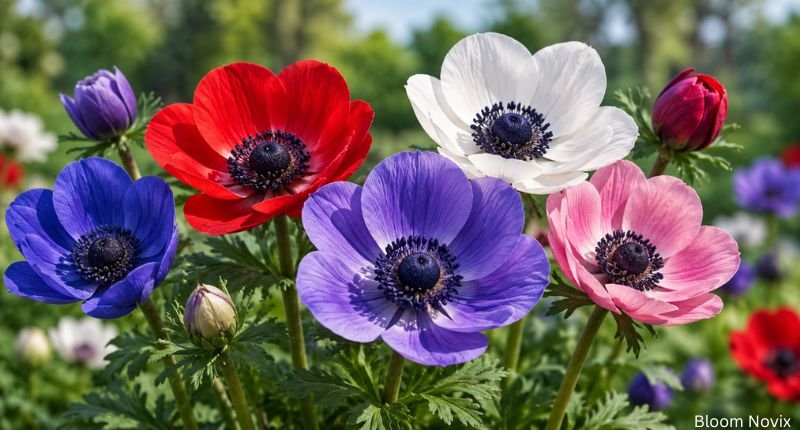
Anemone belongs to the buttercup family, known as Ranunculaceae. It grows across warm and cool regions of the world, though not in Australia or Antarctica. Gardeners call it the windflower because its petals move so easily in the breeze. Wild types grow in open fields and woodland edges, while garden types fill neat, colorful beds.
The bloom itself has thin, soft petals wrapped around a dark center. Below the flower sit fern-like, deeply cut leaves that add texture to the plant. These leaves stay attractive even when the flower isn’t in bloom. As a perennial, this plant often returns each year once it settles into good soil.
Anemone Flower Meaning
At its heart, this flower means three simple things. It stands for hope, protection, and gentle, early love. It doesn’t promise anything certain or lasting forever. It simply hints at what may be coming next, which is part of its charm.
| Meaning Type | Key Symbolism | Best Occasion |
| Hope | Looking forward to good news | New beginnings, engagements |
| Protection | Keeping harm and bad luck away | Housewarmings, farewells |
| Gentle Love | Soft, early feelings | New relationships |
| Loss | Saying goodbye | Funerals, sympathy gifts |
One small flower carries many messages at once. That range is a big reason people still choose it today, whether the moment is happy or sad.
Etymological Meaning of the Anemone Flower
The word anemone comes from the Greek term “anemos,” meaning wind. Ancient stories say wind alone has the power to open its petals. Later, that same wind blows the petals away just as fast. This back-and-forth gave the flower its lasting nickname, windflower.
A second theory ties the name to Adonis, a figure from old Phoenician legend. This is often cited as the flower’s true origin story, blending language and myth into one. Either explanation fits the flower’s short, delicate life quite well. A bloom built around wind naturally feels temporary and light. That single idea shapes almost every meaning tied to this flower today.
Symbolism of the Anemone Flower
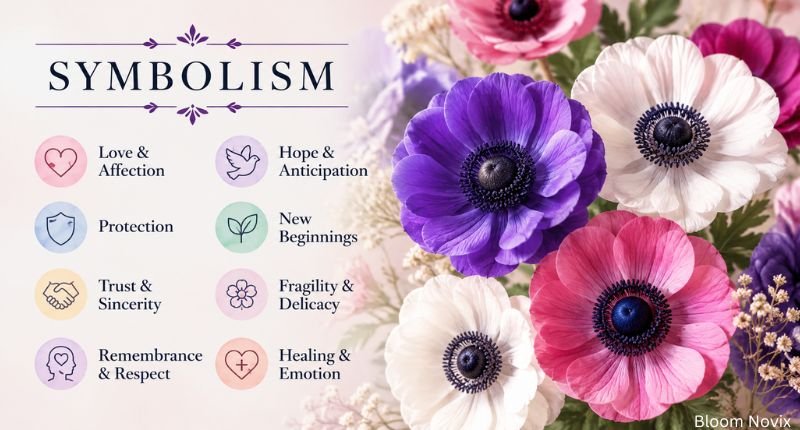
During Victorian times, people used flowers to send secret, unspoken messages. Saying certain feelings out loud wasn’t always seen as proper back then. So a single bloom often spoke for someone instead of words. Anemone symbolism in that era leaned toward hope, longing, and quiet expectation.
- Anticipation: waiting for news, change, or a fresh start in life
- Protection: an old belief that the flower blocks harm and misfortune
- Fragility: a gentle reminder that joy and comfort can fade fast
People still lean on these old meanings without even realizing it today. The emotional weight behind this flower really hasn’t changed much over time. It still carries more depth than most casual, everyday bouquets manage to hold.
Read Also: 20 Amazing Blue Flowers and Their Meanings
Anemone Flower Meaning in Greek Mythology
The most famous anemone story comes from Greek mythology, and it centers on grief. Aphrodite loved a man named Adonis with her whole heart and soul. When a wild boar killed him, she wept openly over his body. Her tears mixed with his blood, and the first anemone is said to have grown from that very spot.
This sad story explains the flower’s fragile, short-lived nature quite clearly. Wind opens the bloom, and wind takes it away again just as quickly. That short life span mirrors how fast Adonis himself was lost to Aphrodite. It’s exactly why the words windflower and anemone are still used together in stories today.
Anemone Flower Meaning Negative
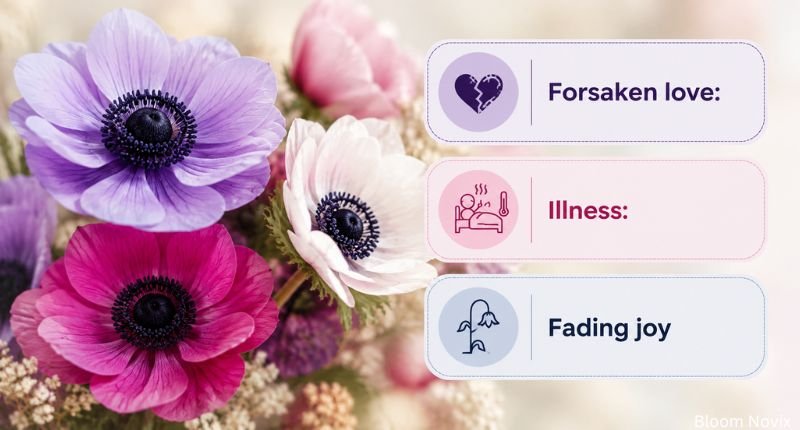
Not every meaning tied to this flower feels bright or hopeful. In some cultures, the anemone flower meaning negative side carries a real warning. It helps to understand this before choosing it as a casual gift for someone.
- Forsaken love: a bond or relationship that ended too suddenly
- Illness: older Chinese and Egyptian beliefs linked the flower to sickness
- Fading joy: happiness or good fortune that doesn’t last very long
A quick tip worth remembering: for happy events, pair anemones with brighter, more cheerful flowers. This keeps the overall message warm and clear instead of heavy or unintentionally sad.
Anemone Flower Color Meanings
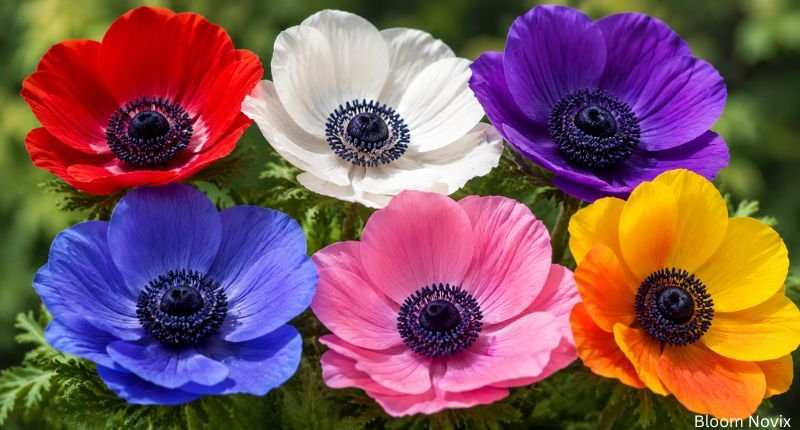
Change the color, and you change the entire message being sent. A red anemone and a white one mean very different things emotionally. Learning these color meanings helps you choose the right bloom for any moment.
Most garden types come in red, white, pink, purple, and blue-violet shades. A true sky-blue anemone doesn’t actually exist anywhere in nature. Each color explained below carries its own feeling, shaped by both history and everyday use. Florists often mix two or three shades in one bouquet to soften a single strong meaning, creating a more layered message overall.
| Color | Core Meaning | Emotional Tone |
| Red | Passion, love, sacrifice | Intense |
| White | Purity, sincerity | Calm |
| Purple | Protection, respect | Serious |
| Blue | Trust, patience | Peaceful |
| Pink | Gratitude, gentle love | Warm |
| Yellow/Orange | Joy, friendship | Cheerful |
Red Anemone Flower Meaning
Red anemone meaning centers on deep passion, romance, and true love. This bold shade directly echoes the sad story of Adonis and his blood. It’s a color that never tries to hide strong feeling of any kind.
Because of this, red anemones suit both joyful and sorrowful events equally well. Use them for anniversaries, or to honor someone you loved and lost. Either way, this shade always carries real, undeniable emotional weight behind it.
White Anemone Flower Meaning
White anemone meaning points to purity, honesty, and calm, quiet sincerity. This shade feels clean and simple, with nothing hidden or unclear behind it. Many people pick white anemones specifically when they want a gentle, uncomplicated message.
Sympathy arrangements often include this color for exactly that reason. It brings comfort to a moment without adding extra drama or weight. White anemones also appear often in soft, elegant wedding bouquets across many cultures.
Read This Article: Unbloomed Flower Names
Purple Anemone Flower Meaning
Purple anemone meaning blends mystery with quiet strength and deep respect. Old European folklore linked this particular shade to protection from bad luck. That old belief has stayed remarkably strong throughout many generations and regions.
Purple suits moments that feel serious or thoughtful rather than light and casual. Choose it when you want the gift to feel sincere and considered. It adds real meaning to a bouquet without ever feeling too heavy.
Blue Anemone Flower Meaning
Blue anemone meaning leans toward calm, trust, and quiet, steady patience. True blue rarely exists in nature, so most blooms actually lean violet. Still, this shade feels noticeably cooler and calmer than bold red or purple.
This color fits moments built around waiting rather than urgency or excitement. Think recovery from illness, big decisions, or slow, steady personal change. Blue never rushes the feeling behind the gift, and that’s exactly its quiet strength.
Pink Anemone Flower Meaning
Pink anemone meaning softens things into warmth, gratitude, and gentle care. This shade feels friendly and approachable without becoming too intense or dramatic. It suits new relationships, close friendships, and simple thank-you gifts equally well.
Because pink feels so easy and low-pressure to give, it fits almost any occasion. It doesn’t ask for a big emotional response in return from anyone. That gentle, easygoing tone is exactly why florists reach for pink so often.
Yellow and Orange Anemone Flower Meaning
Yellow and orange anemones show up less often, but they still carry real meaning. These warm, sunny shades usually point to joy, friendship, and celebration in general. One wild type, Anemone ranunculoides, blooms naturally in a soft, cheerful yellow.
Give yellow or orange anemones for graduations, new jobs, or simple thank-you moments between friends. These colors skip the heavier meanings tied closely to red or purple. That makes them a lighter, far more casual pick across the whole color range.
Anemone Flower Meaning in Japanese Culture
Japan follows its own detailed flower language, called Hanakotoba, for nearly every bloom. In this system, the Japanese anemone can mean pure, deeply honest feeling. It often shows real sincerity and devotion toward another person.
At the same time, it can also mean one-sided love that was never returned. This dual meaning gives the flower an unusual amount of emotional range. Context, far more than color alone, usually decides which meaning truly fits. Gift-givers in Japan often consider the full relationship history before choosing this particular bloom.
Anemone Meaning in Love and Romantic Relationships
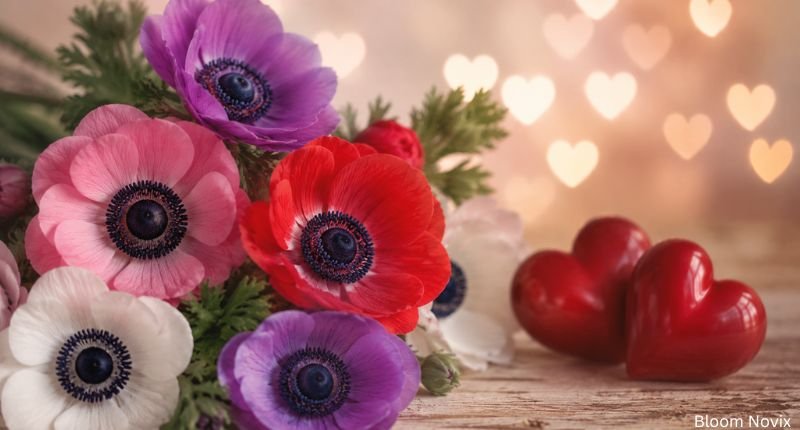
In romance, red anemones often express deep, devoted, and lasting love. This shade shows strong, committed feeling shared between two people. Yet the same exact flower can also hint at love that was never returned.
At weddings, couples often choose soft white or pink instead of bold red. These lighter colors focus on sincerity rather than intense, dramatic passion. Many couples pick anemone simply to avoid the usual clichés tied closely to roses.
Anemone Symbolism for Family Bonds
Family-related meaning doesn’t get much attention, but it’s genuinely real. The flower’s protective symbolism fits close family ties quite naturally and well. Some also connect the anemone flower meaning to healing, especially after a family loss or a hard season. Giving it to parents can express love and a strong wish to keep them safe.
Anemone also links closely to new beginnings, fitting nicely for a new baby. On the other end of the spectrum, it suits remembrance for family members who have passed. Few single flowers cover this much emotional range within one family context.
Religious Symbolism in Christianity
Some Christian traditions link the red anemone directly to the blood of Christ. This idea appears in older European religious paintings and written stories. It’s a smaller, lesser-known thread of meaning compared to the popular Greek myth.
Because of this old link, some churches historically avoided anemones during joyful celebrations. The flower leaned more toward quiet, solemn reflection instead of happy occasions. It’s still worth knowing if you’re choosing flowers for any religious moment. Some modern florists still mention this history when helping customers plan memorial services.
Explore More: National Flower Day
Special Occasions for the Anemone Flowers
Anemone fits many different occasions once the color matches the moment correctly. Weddings often lean on white or pink shades for genuine sincerity. Sympathy events usually choose calm white for comfort during a difficult time.
- Weddings: white or pink, for sincerity and elegance
- Funerals: white, for quiet comfort and remembrance
- Anniversaries: red, for lasting passion and devotion
- New beginnings: yellow or pink, for hope and warmth
- Protection gifts: purple, for care and deep respect
| Occasion | Recommended Color | Why It Fits |
| Wedding | White or pink | Sincerity and elegance |
| Funeral | White | Quiet comfort |
| Anniversary | Red | Passion and devotion |
| New beginning | Yellow or pink | Hope and warmth |
| Housewarming | Purple | Protection and respect |
Matching color to the occasion avoids sending the wrong message by pure accident. It also shows real thought and effort behind the gift itself.
Practical Guide to Gifting Anemone Flowers
Start by thinking carefully about the occasion before picking any color at all. Then match the shade you choose to fit that specific moment closely. It also helps to think about the recipient’s own culture, since meanings shift between East and West.
- Match the color to the occasion first, before anything else
- Skip red or purple entirely for light, casual gifts
- Add brighter blooms alongside anemone to soften a heavier meaning
- Check the season closely, since fresh anemones peak in spring and fall
A little planning goes a genuinely long way with this particular flower. Ask a local florist directly if you’re ever unsure which shade truly fits. Most florists are happy to explain the meaning behind each color if you simply ask them.
Meaningful Botanical Characteristics: Anemone Flower Leaves
Anemone flower leaves grow in a deeply lobed, fern-like shape overall. They sit close to the base of the plant, just below the bloom. This foliage adds real texture and softness even before any flower fully opens.
Healthy leaves usually point to a healthy, thriving plant in general. Yellow or wilting leaves often mean there’s too much water nearby. Keep the leaves strong and green, and better blooms tend to follow naturally each season.
Anemone Flower Tattoo Meaning
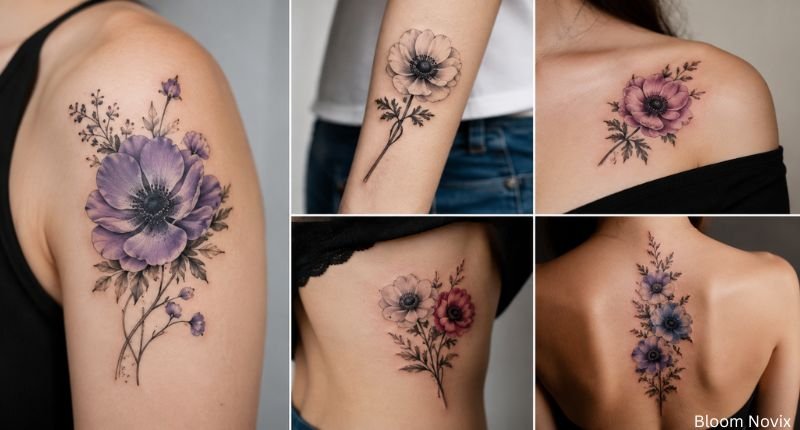
An anemone flower tattoo meaning usually centers on new beginnings and quiet strength. Many people choose this design after a hard season in life, like recovery or loss. The delicate petals represent fragility, while the flower’s history adds a layer of deeper meaning underneath.
Color choice matters a lot in tattoo designs too, just like in bouquets. A red anemone tattoo often marks lasting love or a person someone lost. A white or purple version usually points to protection, sincerity, or a fresh start after difficulty.
Anemone Flower in Art, Culture and Pop Culture
Painters have loved this flower’s delicate color for well over a century now. Claude Monet and Vincent van Gogh both painted it into lasting still-life work. Henri Matisse also featured anemones often in his own colorful compositions.
Writers use the flower in a similar spirit, often to represent things that fade fast. It appears often in poems tied closely to spring and short-lived natural beauty. More recently, the flower’s name even returned through a modern, well-known film title. This lasting presence across art forms shows how much this flower still resonates with people.
How to Grow and Care for Anemone Flowers
Anemone isn’t difficult to grow once you understand its basic needs clearly. Get the light, soil, and water roughly right, and it tends to thrive easily.
- Sunlight: partial shade in hot areas, full sun in cooler climates
- Watering: moist soil at all times, never soggy or fully waterlogged
- Soil: loose, well-drained, and rich in organic nutrients
- Planting time: fall for spring blooms, spring for summer blooms
- Feeding: a light layer of compost each spring supports stronger blooms
Once properly settled, anemone tends to return with very little extra effort required. The very first season usually needs the most care and patience from you. After that, it keeps coming back reliably with far less ongoing work involved. Many gardeners describe it as one of the easier flowering perennials to maintain long term.
Discover More: American Beauty Rose Flower
Anemone Flower Meaning in Dreams
Seeing anemones in a dream often points to hope or a coming change. Dream experts often link this flower to fresh starts and quiet anticipation. In spiritual circles, the anemone spiritual meaning often ties closely to healing and letting go of old pain. It can also suggest that something delicate in your life needs gentle care right now.
A wilting anemone in a dream may hint at a fading opportunity or feeling. A blooming one usually points toward growth, comfort, or good news arriving soon. Either way, the dream often reflects real emotions you’re already feeling in waking life. Many dream guides suggest paying attention to the flower’s color for extra context and meaning.
Final Words
The anemone flower meaning holds far more depth than its soft, delicate look first suggests. It carries myth, quiet warning, romance, and gentle protection all at once. That’s a genuine lot of meaning packed into just a few thin petals.
Next time you’re choosing flowers for someone special, think carefully about this bloom. You can match its color closely to the moment, the person, or even the season. Knowing exactly what it says makes the gift feel far more personal and thoughtful. A little understanding turns a simple bouquet into a message that truly connects.
FAQs
What do anemone flowers symbolize?
They stand for hope, protection, and gentle love overall. The exact anemone flower meaning shifts depending on the color you choose to gift. Context and occasion matter just as much as the shade itself.
What flower means “forsaken love”?
Anemone often carries this specific meaning in older traditions. It ties back closely to Victorian floriography and quiet, unspoken personal loss. Red and deep purple shades carry this meaning most strongly.
What is the meaning of gifting anemones?
It usually signals hope, care, or genuine heartfelt affection toward someone. The exact message changes slightly depending on the color you pick out. Think about the occasion first, then choose the shade that fits.
Why is it called anemone?
The name comes directly from the Greek word for wind itself. Legend says wind both opens and later scatters its delicate, thin petals. This is also why many people simply call it the windflower.
Why shouldn’t you touch anemones?
The sap inside can mildly irritate skin for some sensitive people. Handle the plant gently, especially if your own skin reacts easily to plants. Washing your hands afterward is usually enough to avoid discomfort.
What is a fun fact about anemone flowers?
True blue anemones don’t actually exist anywhere in nature at all. What looks blue is almost always a deep violet shade instead. Sellers sometimes label these violet blooms as blue for marketing purposes.
Do anemones only flower once?
No, they typically bloom for several weeks during each growing season. With good, consistent care, they often return reliably year after year. Some gardeners even get two shorter bloom periods in one year.
What are three interesting facts about anemones?
The name itself means wind in ancient Greek. It links closely to the tragic myth of Adonis. No truly natural blue variety exists anywhere in the wild.
Are anemone flowers poisonous to touch?
They can mildly irritate skin for people with sensitive reactions. Simply avoid eating any part of the plant to stay completely safe. Pets should also be kept away from the leaves and stems.
What does an anemone flower tattoo mean?
An anemone tattoo often represents new beginnings or quiet strength after a hard time. The color chosen usually adds a more specific layer of personal meaning.

BloomNovix is managed by an experienced team of content writers and SEO specialists with 4+ years of expertise in gardening and plant care. We provide well-researched guides, gardening tips, and insights on floral meanings to help plant lovers grow their indoor and outdoor gardens with confidence.