
December birth flowers aren’t just about natural beauty—they hold deep meaning for the entire winter season. While most months have only one birth flower, December gets two: the Paperwhite Narcissus and Holly, with Poinsettia often considered a third seasonal favorite.
While the Narcissus brings a feeling of hope and new beginnings, Holly is all about protection and warmth during the freezing cold. In this guide, you’ll learn what December birth flowers mean, their history, and how to look after them in the winter. If you’re curious about where these flowers came from and how to care for them properly, you’re in the right place!
What Is December’s Birth Flower
December is one of the few months with two official birth flowers instead of just one. This gives you two beautiful options to work with, making it so much easier and more fun to choose the perfect gift.
December’s birth flowers are the Narcissus and Holly. The Narcissus is a fragrant white bloom that is mostly grown indoors at home, while Holly is an evergreen plant known for its glossy leaves and vibrant red berries. Alongside these two, the Poinsettia is also widely considered a third seasonal symbol for the month.
Each flower brings something different to the table. The narcissus is soft, delicate, and full of fragrance. Holly is bold, sturdy, and full of color even in the coldest weather. This mix mirrors December itself — a month that holds both quiet reflection and lively celebration.
Florists often use one flower or the other, depending on the personality of the birthday person. Someone who loves subtle beauty and fresh scent may prefer narcissus. Someone who loves rich color and tradition may lean toward holly. Many arrangements blend both for the best of each world.
Florist Tip: If you’re not sure which flower to choose, start by looking at the person’s personality. Gentle and hopeful people usually connect more with the Narcissus, while strong and loyal personalities often prefer Holly. Matching the flower to their vibe makes picking the right one so much easier.
Why Does December Have Two Birth Flowers?
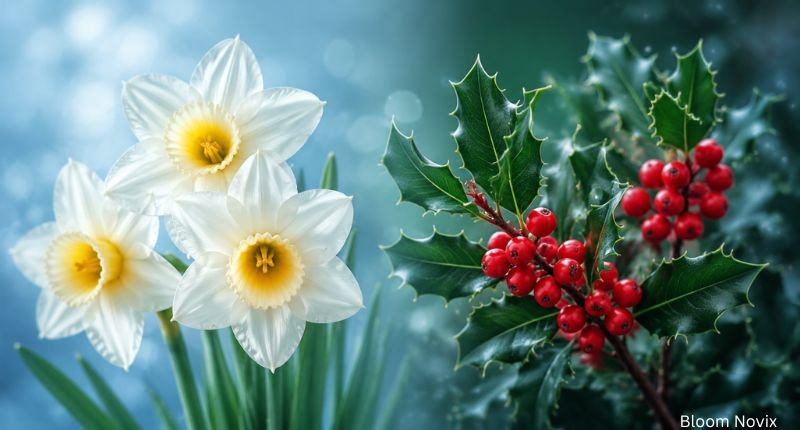
Most birth months have just a single flower attached to them, but December breaks the rule with two—and for good reason.
December has two birth flowers because the month naturally carries two different moods. Early winter calls for a bloom that brings light indoors, which is the Narcissus. As the weather turns harsh, late winter needs a resilient plant that thrives in the extreme cold, which is Holly. Together, they balance the season beautifully.
The Narcissus can bloom without any soil, growing easily with just water and pebbles—a quiet symbol of new life during the darkest weeks of the year. On the other hand, Holly needs no special attention to survive the frost; it stays vibrant green and packed with bright red berries no matter how cold it gets. Just as people explore the Shooting Star Flower spiritual meaning for deeper guidance, this contrast between a delicate indoor flower and a tough outdoor evergreen gives December a much richer meaning than a single bloom ever could.
Did You Know? Not every country agrees on birth flowers. In the UK, holly is often paired with narcissus for December, while in the US, narcissus usually gets top billing. Either way, the meaning stays close to hope and resilience.
December Birth Flower: Holly
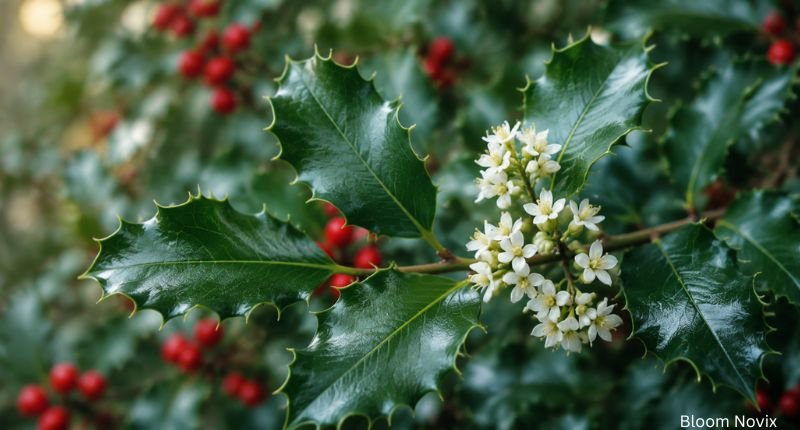
Holly
Holly is one of the most recognizable winter plants in the world, thanks to its role in holiday decorating. But its story goes back thousands of years before Christmas wreaths existed.
Holly (Ilex aquifolium) is an evergreen shrub or small tree known for its spiky, glossy leaves and bright red berries. It has been used for centuries as a symbol of protection, strength, and hope during winter. As a December birth flower, holly represents someone who is loyal, steady, and strong through hard times.
Holly plants grow in many climates around the world, from Europe to North America to parts of Asia. They stay green all year, which made them stand out in ancient times when most other plants lost their leaves in the cold.
What Does Holly Look Like?
Anyone who has seen a holiday wreath already knows holly’s basic look, but there is more detail worth noticing.
Holly has dark green, glossy leaves with sharp, spiky edges, along with clusters of small, bright red berries. The leaves stay firm and leathery all year long, which is what makes holly an evergreen plant. Some varieties have soft edges instead of spikes, and some have cream or white markings on the leaves called variegation.
| Feature | Description |
| Leaf shape | Oval, glossy, often spiky-edged |
| Leaf color | Deep green, sometimes variegated with white or cream |
| Berry color | Bright red (rarely yellow or orange) |
| Growth type | Evergreen shrub or small tree |
| Height | 6 to 50 feet, depending on variety |
| Bloom time | Small white flowers appear in spring; berries form in fall and last through winter |
Only female holly plants produce the red berries, and they need a male plant nearby for pollination. This is a detail many home gardeners miss when their holly never grows berries.
Common Mistake: People often assume any holly bush will grow berries. In reality, you need both a female and a male plant close together, or you will only get leaves.
Holly Symbolism and History
Holly’s meaning did not start with Christmas. Its symbolism stretches back to ancient cultures who saw it as something almost magical.
Holly symbolizes protection, hope, and eternal life because it stays green through the harshest winters. Ancient Celtic and Druid communities believed holly held special power to guard homes against evil spirits and bad luck. Many people hung holly branches over doorways during the darkest days of the year for protection.
The Romans connected holly to Saturn, the god of agriculture, and used it during their winter festival called Saturnalia. Gift-giving and holly decorating during this festival are considered early influences on modern Christmas customs. Later, Christian tradition gave holly a religious meaning too — the sharp leaves came to represent the crown of thorns, and the red berries came to symbolize drops of blood, turning holly into a quiet symbol of sacrifice and hope.
By the Victorian era, holly had also become part of the language of flowers. Giving someone holly was a way of wishing them domestic happiness and foresight for the future.
Expert Advice: When picking holly for a birthday gift, choose branches with the most berries. In flower language, more berries traditionally means more good fortune for the recipient.
Read Also: Unbloomed Flower Names
Holly Around the World: Cultural Significance
Like narcissus, holly’s meaning shifts depending on where and when it was used.
- Ancient Celtic Europe: Considered sacred by the Druids, who believed holly offered protection against evil spirits during the darkest days of the year.
- Ancient Rome: Linked to the god Saturn and used heavily during Saturnalia, a winter festival built around gift-giving and household decoration.
- Christian Europe: Reinterpreted through a religious lens, with the sharp leaves symbolizing the crown of thorns and the red berries symbolizing sacrifice.
- Victorian England: Added to the formal language of flowers as a symbol of domestic happiness and foresight, often given as a household gift rather than a romantic one.
- United States: Became closely tied to Christmas decorating traditions brought over by European settlers, and later adopted as an official December birth flower.
This layered history is part of why holly feels so much bigger than a simple holiday decoration. Long before it appeared on wreaths and greeting cards, it was already a symbol people trusted to protect their homes through winter.
The Meaning and Symbolism of Holly
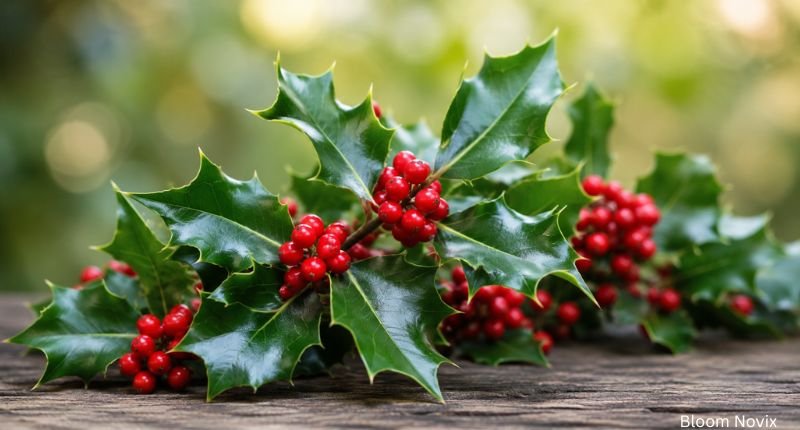
Holly’s full meaning goes beyond its holiday reputation. As a December’s birth flower, it says something specific about the person born under it.
As a birth flower, holly represents protection, resilience, and loyal love. People connected to holly are often seen as dependable, strong-willed, and quietly protective of the people they care about, much like the plant itself protects a home through winter.
This symbolism works on both a personal and emotional level. On a personal level, holly suggests someone who does not give up when things get hard. On an emotional level, it suggests deep loyalty, the kind of love that stays steady no matter the season. In Victorian floriography, giving holly was often a message that said, “I will always be here for you.”
Modern florists still use holly this way today. It shows up in sympathy arrangements as a symbol of enduring memory, in birthday bouquets as a symbol of strength, and in holiday displays as a symbol of hope during the darkest time of year.
Fun Fact: In some old European traditions, whichever holly variety was brought into the house first — smooth-leaved (“she-holly”) or spiky (“he-holly”) — was believed to predict who would rule the household that year.
December Birth Flower: Narcissus (Paperwhite)
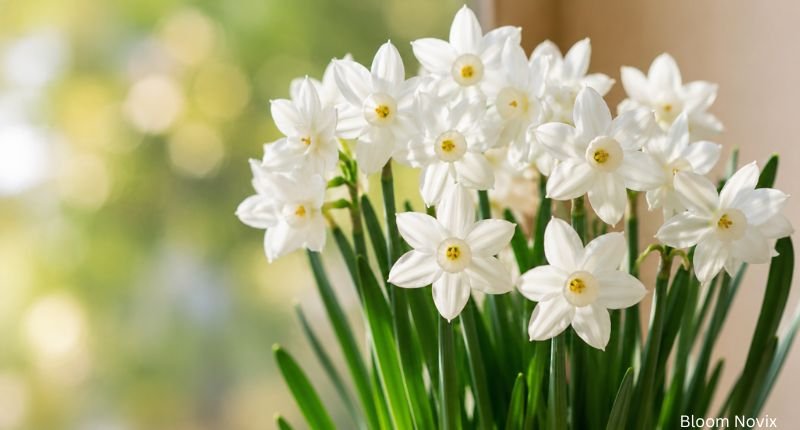
Narcissus
While holly represents strength, the narcissus brings softness and light. It is the flower most people picture first when they think of December’s birth flower.
Narcissus, especially the paperwhite variety (Narcissus papyraceus), is a fragrant white flower that blooms indoors during winter without needing soil. It belongs to the same plant family as daffodils. As a birth flower, narcissus represents hope, renewal, and sincere affection, making it a popular choice for both birthdays and thoughtful gifts.
Unlike most flowers, paperwhites do not need a cold period before blooming. This makes them one of the easiest bulbs to force into flower indoors, even for beginners.
What Makes Paperwhites So Distinct?
Paperwhites stand out from other winter flowers for a few clear reasons, starting with how little they need to grow.
Paperwhite narcissus are distinct because they can bloom in nothing more than water and pebbles, without any soil at all. Their star-shaped white petals and strong, sweet fragrance make them easy to recognize. A single stem can fill an entire room with scent, which is part of why they became a favorite winter houseplant.
| Feature | Description |
| Scientific Name | Narcissus papyraceus |
| Common Name | Paperwhite Narcissus |
| Petal Color | White, sometimes with a pale yellow center |
| Fragrance | Strong and sweet |
| Growing Medium | Water and pebbles, or well-drained soil |
| Bloom Time | 3 to 4 weeks after planting |
| Height | 12 to 18 inches |
Paperwhites usually bloom for about two to three weeks. Once the flowers fade, most people compost the bulbs rather than trying to regrow them, since paperwhites rarely rebloom well indoors after their first flowering.
Did You Know? Paperwhites can grow up to an inch a day once they start sprouting, making them a fun plant to watch with kids during winter break.
Narcissus Symbolism and the Greek Myth
No flower carries a more famous myth than the narcissus, and that story shapes how people view the flower today.
Narcissus is named after a figure in Greek mythology who fell in love with his own reflection and could not look away. In the myth, a young man named Narcissus stared at his reflection in a pool of water until he wasted away, and the flower grew where he had been sitting. This origin story is why narcissus is sometimes linked to vanity or self-obsession.
However, this negative reading is only part of the story. In practical use, especially as a December birth flower, narcissus carries a much gentler meaning tied to hope, renewal, and sincere affection. Victorian flower language leaned into this softer side, using narcissus to express devotion and the wish for feelings to be returned.
| Myth | Reality |
| Narcissus only symbolizes vanity | Modern floral meaning focuses on hope, renewal, and sincere affection |
| Narcissus flowers are rare | They are one of the easiest winter bulbs to grow and buy |
| Narcissus and daffodils are unrelated | They belong to the same genus, Narcissus |
| All narcissus varieties smell the same | Fragrance strength varies widely between varieties |
Expert Advice: If you’re worried the Greek myth makes narcissus feel like an odd birthday gift, remember that most modern gift-giving traditions focus on the flower’s meaning of hope and renewal, not the ancient story.
Narcissus Colors and Their Meanings
While paperwhites are known for pure white blooms, the narcissus family includes several colors, each with its own shade of meaning.
| Flower Color | Meaning | Best For |
| White | Purity, hope, new beginnings | Birthdays, sympathy, new starts |
| Yellow | Joy, friendship, warmth | Cheer-up gifts, friendship bouquets |
| Cream | Gentle affection, calm renewal | Quiet, thoughtful gifts |
| Bi-color (white and yellow) | Balance between hope and joy | General birthday gifts |
White remains the most traditional choice for December birthdays because it lines up so closely with the season’s themes of light and renewal.
Practical Uses and Care Notes
Narcissus is a popular gift, but it does come with a few care details that make a real difference in how long it lasts.
To care for narcissus, keep the bulbs in bright, indirect light, use cool room temperatures, and change the water every few days if growing them in water and pebbles. Direct sun and warm rooms can cause the stems to grow tall and weak, so cooler spots actually help the plant stay sturdy.
- Water: Keep water level just below the base of the bulb, not touching it directly, to prevent rot.
- Light: Bright, indirect sunlight works best; avoid strong direct sun.
- Temperature: Cool rooms (60–65°F) help the stems grow shorter and stronger.
- Support: Tall stems may need a small stake or ribbon to stay upright.
- Fragrance placement: Because the scent is strong, place paperwhites in open rooms rather than small enclosed spaces.
One detail florists always mention is that narcissus stems release a natural sap when cut. This sap can shorten the life of other flowers if mixed together too soon.
Common Mistake: Adding freshly cut narcissus straight into a mixed bouquet. Always let narcissus stems sit alone in water for about 24 hours first, so the sap does not harm other flowers in the vase.
Fertilizer and soil: If growing narcissus in soil instead of water, use a well-drained potting mix and a light bulb fertilizer once new growth appears. Avoid heavy feeding, since paperwhites rely mostly on the energy already stored in the bulb.
Propagation: Paperwhite bulbs rarely produce strong offsets indoors and are usually treated as a one-time bloom rather than a plant to propagate. Gardeners in warmer outdoor climates can sometimes replant spent bulbs in the garden, though indoor reblooming is uncommon.
Winter care for outdoor narcissus varieties: Outdoor daffodil-type narcissus (unlike indoor paperwhites) benefit from a layer of mulch before the first frost and should be left in the ground to naturally go dormant after blooming, since cutting the leaves too early weakens next year’s flowers.
Repotting: Potted narcissus rarely needs repotting since most varieties are grown for a single season. If keeping the bulb for a following year, store it in a cool, dry, dark place over summer.
Read This Article: April Birth Flowers
The Meaning and Symbolism of the Narcissus
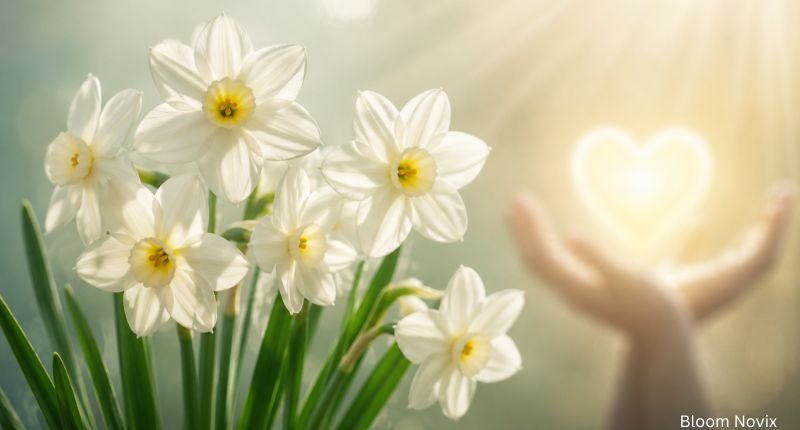
Beyond its myth and its care needs, the narcissus holds a specific emotional meaning as December’s leading birth flower.
As a birth flower, narcissus represents hope, rebirth, and genuine affection. People associated with narcissus are often seen as optimistic, warm-hearted, and quietly resilient, much like the flower that blooms fully in the coldest, darkest part of the year.
This meaning works on both a spiritual and emotional level. Spiritually, narcissus reflects the idea that light and beauty can grow even in difficult conditions, since the flower needs nothing but water to bloom. Emotionally, it reflects sincerity, since Victorian flower-givers used narcissus to express real, honest feelings rather than empty gestures.
In religious and cultural symbolism, narcissus has also been tied to purity because of its bright white petals, and to prosperity in Chinese tradition, where the flower is grown for Lunar New Year celebrations to invite good fortune into the home.
The History of Narcissus in Culture and Traditions
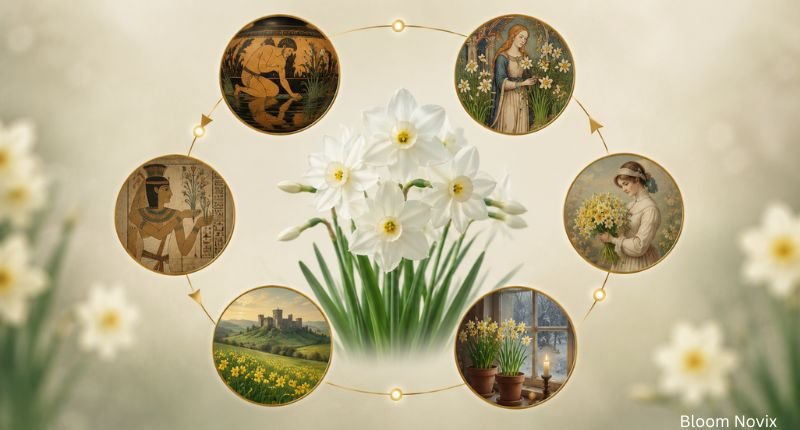
Narcissus has traveled through many cultures over thousands of years, picking up new meaning in each one.
Narcissus has been grown and admired since ancient Rome, where it was planted near temples for its fragrance, and it remains a major Lunar New Year flower in Chinese culture today. Each culture added its own layer of meaning, from Roman decoration to Chinese prosperity symbolism to Victorian romantic gift-giving.
In ancient Rome, narcissus grew in gardens and public spaces, valued for its strong scent. Roman writers, including the naturalist Pliny the Elder, documented the flower’s uses in detail.
In China, narcissus became linked to Lunar New Year celebrations because of its ability to bloom right around the holiday when carefully timed. A blooming narcissus in the home during this period is still seen as a sign of coming prosperity, and specialty markets sell narcissus bulbs every winter for exactly this purpose.
In Europe, Victorian gardeners popularized growing paperwhites indoors on windowsills throughout December. This practice combined decoration with symbolism, since a blooming flower in the middle of winter felt like a small daily reminder that spring would return.
Today, narcissus remains one of the most popular winter cut flowers and living gifts, often sold as potted bulbs in decorative bowls so the gift keeps growing after it arrives.
Narcissus Around the World: Cultural Significance
Narcissus does not carry the same meaning everywhere. Each region has shaped the flower’s symbolism through its own traditions.
- Ancient Greece: The birthplace of the Narcissus myth, where the flower became linked to reflection, self-awareness, and the fragile line between admiration and obsession.
- Ancient Rome: Grown in gardens and near temples for its fragrance, and documented by Roman naturalists as both a decorative and useful plant.
- China: A major symbol of good luck and prosperity, especially when forced to bloom for Lunar New Year celebrations in the home.
- Victorian Europe: Adopted into the formal language of flowers, where giving narcissus quietly communicated devotion and hope for returned affection.
- United States: Widely sold as a winter houseplant and birth flower gift, often marketed as an easy, low-maintenance bulb for beginners.
- Japan: Narcissus (suisen) is associated with the New Year season and is considered a symbol of good fortune, similar to its role in Chinese tradition.
This global spread is part of why narcissus feels timeless. Almost every culture that has grown the flower has found its own reason to value it, whether for scent, symbolism, or seasonal timing.
Did You Know? In some Mediterranean regions, wild narcissus still grows naturally along hillsides in late winter, long before it ever became a common houseplant elsewhere in the world.
Poinsettia
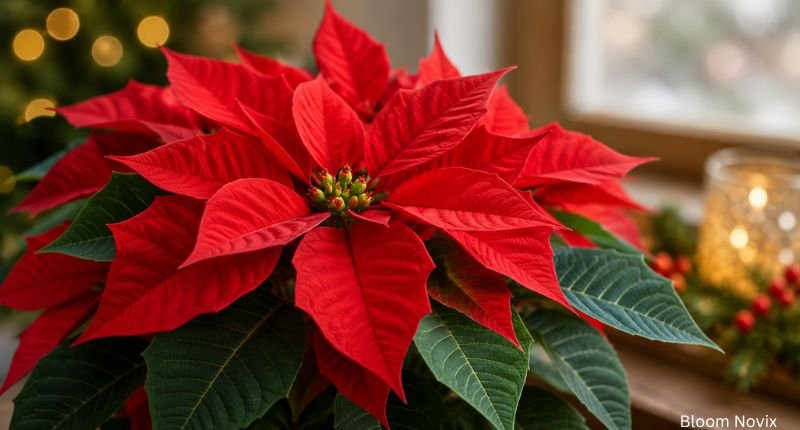
While narcissus and holly are the two official December birth flowers, many florists now include the poinsettia as an unofficial third symbol of the month, thanks to its close ties to the holiday season.
The poinsettia (Euphorbia pulcherrima) is a plant known for its bright red, pink, or white leaf-like bracts, often used as a symbol of celebration, good cheer, and success. Unlike narcissus and holly, the poinsettia is native to Mexico and Central America, where it grows as a large shrub in the wild.Aside from vibrant holiday plants, many flower lovers also pair winter arrangements with iconic blooms like the Anemone flower meaning to create deeper floral symbolism.
Poinsettias became linked to winter holidays in the United States during the 1800s, after a US ambassador brought the plant back from Mexico. What most people call the “flower” is actually a set of colorful leaves called bracts. The true flowers are the small yellow buds found in the center of each bract cluster.
| Common Name | Scientific Name | Origin | Colors | Meaning |
| Poinsettia | Euphorbia pulcherrima | Mexico and Central America | Red, pink, white, cream | Celebration, good cheer, success |
Buying Tip: When shopping for poinsettias, choose plants with tightly closed yellow centers rather than open ones. Closed centers mean the plant is fresher and will last longer.
Because poinsettias are toxic if eaten by pets, they should be placed somewhere cats and dogs cannot easily reach, especially in households celebrating a December birthday alongside the holidays.
How Narcissus and Holly Represent December
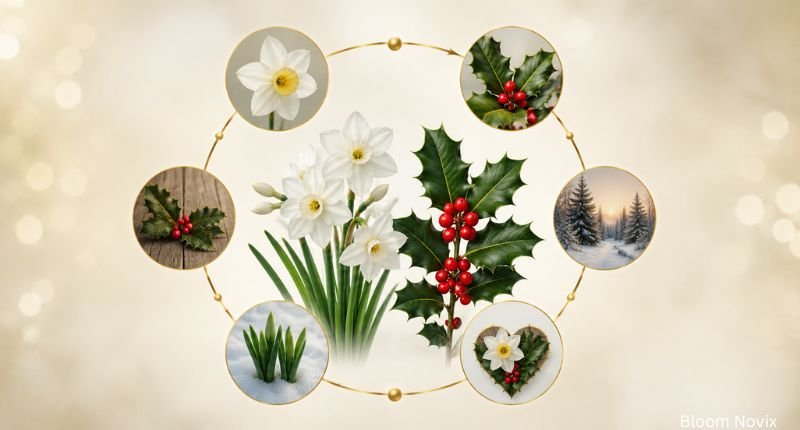
Placed side by side, narcissus and holly tell the complete story of December in a way that a single flower never could.
Narcissus represents December’s hopeful, gentle side, while holly represents its tough, protective side. The narcissus grows indoors from almost nothing and brings light into dark winter days. Holly survives outdoors in the harshest conditions and adds color when everything else looks bare. Together, they cover both moods of the month.
This pairing connects closely to December’s zodiac signs as well. Sagittarius, which runs through most of early December, is known for optimism and open-hearted generosity, which mirrors the narcissus and its free-blooming fragrance. Capricorn, which begins in late December, is known for discipline and loyalty, which mirrors holly’s steady, protective nature.
When florists combine both flowers in one arrangement, the result usually feels balanced rather than crowded — soft white blooms next to deep green leaves and red berries create natural contrast that works well for both casual and elegant birthday gifts.
Holly vs. Narcissus: Which Better Fits December Birthdays?
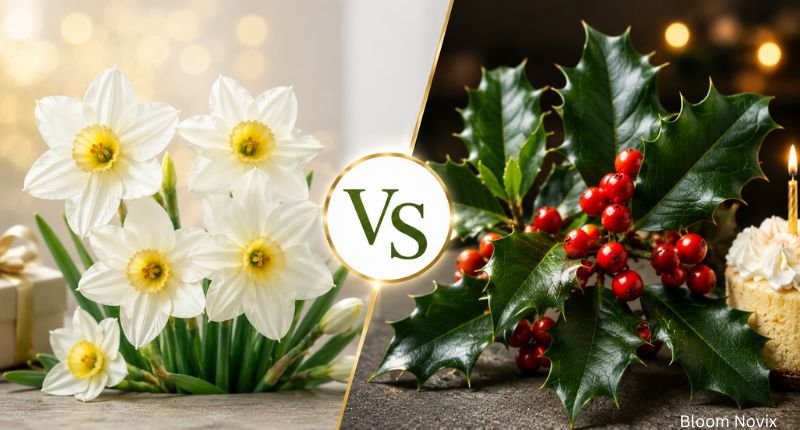
Choosing between holly and narcissus often comes down to the personality of the person celebrating their birthday.Just as people look into unique flower symbolism like the purple roses meaning to match someone’s character, selecting a December bloom depends on personal traits.
Narcissus fits December birthdays best for people who love fragrance, gentleness, and fresh starts, while holly fits best for people who value tradition, strength, and loyalty. Neither flower is a “better” choice overall — the right pick depends entirely on who you are buying for.
| Category | Narcissus | Holly |
| Symbolism | Hope, renewal, affection | Protection, strength, loyalty |
| Look | Soft white blooms | Bold green leaves, red berries |
| Fragrance | Strong and sweet | None |
| Best Personality Match | Optimistic, gentle, warm | Steady, loyal, traditional |
| Care Level | Easy, short-lived indoor bulb | Very low maintenance, long-lasting |
| Best Gift Format | Potted bulb or cut bouquet | Wreaths, sprigs, mixed arrangements |
For a gift that leans soft and romantic, narcissus wins. For a gift that leans bold and classic, holly wins. Many florists solve the choice entirely by combining both in one arrangement.
December Birth Flowers and Your Zodiac Sign
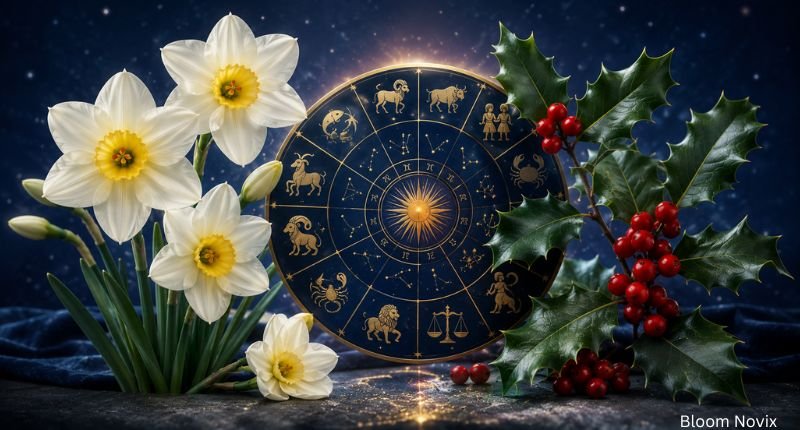
December birthdays fall under two different zodiac signs, and each sign connects naturally with one of the month’s birth flowers.
Sagittarius (November 22 to December 21) lines up most closely with the Narcissus, while Capricorn (December 22 to January 19) connects with Holly. This pairing shows how each flower’s unique traits reflect the personality of the sign.
Sagittarius is known for curiosity, honesty, and a love of freedom, all of which match the narcissus and its open, fragrant blooms that ask for nothing but water and light. Capricorn is known for ambition, patience, and loyalty, all of which match holly and its ability to stay strong and green through the harshest conditions without any extra care.
Fun Fact: Because December spans two zodiac signs, it’s common for florists to ask which half of the month someone was born in before recommending narcissus, holly, or a mix of both.
Explore More: Lotus Flower Season
Fun Facts About Holly
Holly has more surprising history behind it than most people expect from a common holiday plant.
- Only female holly plants grow the classic red berries.
- Holly berries are toxic to humans and pets if eaten in large amounts, so keep arrangements out of reach of children and animals.
- Ancient Druids wore holly wreaths during Winter Solstice as a form of protection.
- Holly was sacred to the Roman god Saturn and used during the festival of Saturnalia.
- There are more than 400 species of holly found around the world.
- Holly wood is one of the whitest natural woods and was historically used for chess pieces and inlay work.
- Birds rely on holly berries as a winter food source when other food is scarce.
- The tradition of hanging holly on doors for good luck predates Christmas by centuries.
How to Choose December Birthday Flowers
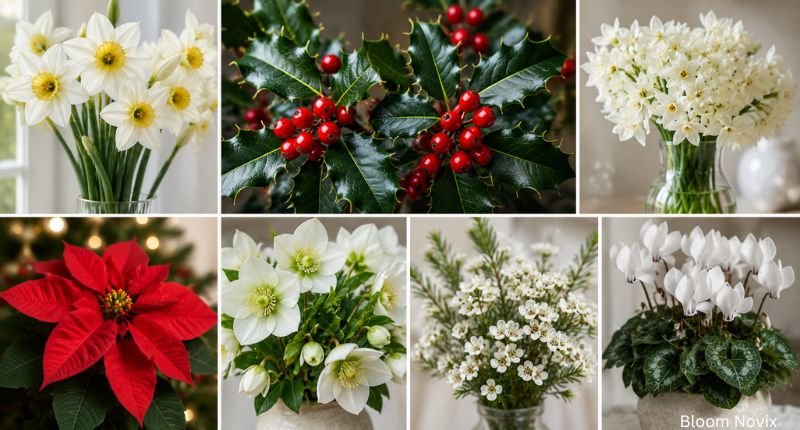
Picking the right December birth flower gift takes a little more thought than a regular birthday, mostly because the holidays are happening at the same time.
To choose the right December birthday flowers, think about the recipient’s personality, decide between narcissus, holly, or a mix of both, and pick an arrangement that feels personal rather than holiday-themed. A well-chosen gift should stand out from ordinary Christmas decorations so it feels like a real birthday celebration.
Best Occasions for Each Flower
- Birthdays: Narcissus for a soft, hopeful gift; holly for a bold, festive gift.
- New job or fresh start: Narcissus, thanks to its renewal symbolism.
- Anniversaries during winter: Holly, for its loyalty symbolism.
- Sympathy arrangements: Holly, as a symbol of enduring memory.
- Housewarming gifts: A mix of both, symbolizing hope and protection for a new home.
Best Flower Combinations
Pairing narcissus or holly with the right companion flowers makes an arrangement feel complete.
- Narcissus + white roses: Creates a soft, romantic, winter-white bouquet.
- Narcissus + dusty miller: Adds silvery texture without competing with the fragrance.
- Holly + red roses: A classic, rich winter combination.
- Holly + amaryllis: Bold color pairing for a festive but personal gift.
- Holly + white peonies or ranunculus: A more modern, elegant winter look.
Buying Guide
- Check freshness: Fresh narcissus stems should feel firm, not soft or slimy.
- Look at the berries: Fuller, brighter red berries mean fresher holly.
- Ask about scent: Paperwhites should smell strong but not overwhelming; a faint smell can mean older stock.
- Time your order: Order at least a few days ahead during December, since holiday demand fills up delivery schedules quickly.
- Consider a living gift: Potted narcissus bulbs make a gift that keeps growing well past the birthday.
Common Mistake: Buying only holiday-themed red-and-green arrangements for a December birthday flower. This can make the gift feel like a Christmas decoration instead of a personal birthday present. Adding narcissus or a non-holiday color palette helps the gift stand out.
Budget and Storage Tips
Keeping costs reasonable and flowers fresh takes a little planning, especially during a busy holiday month.
- Set a budget range first. Narcissus bouquets tend to cost less than holly-and-rose combinations, since holly arrangements often include more premium companion flowers.
- Ask about potted options. A potted narcissus bulb can sometimes cost less than a large cut-flower arrangement while lasting longer.
- Store extra stems properly. If you buy flowers a day or two early, keep them in a cool room away from direct sunlight and heating vents, which dry out blooms quickly.
- Trim stems before displaying. A fresh diagonal cut at the base of each stem helps flowers absorb water more efficiently once they arrive.
- Avoid placing arrangements near fruit bowls. Ripening fruit releases ethylene gas, which can cause flowers, especially narcissus, to fade faster than normal.
December Birth Flower Tattoo Ideas and Meanings
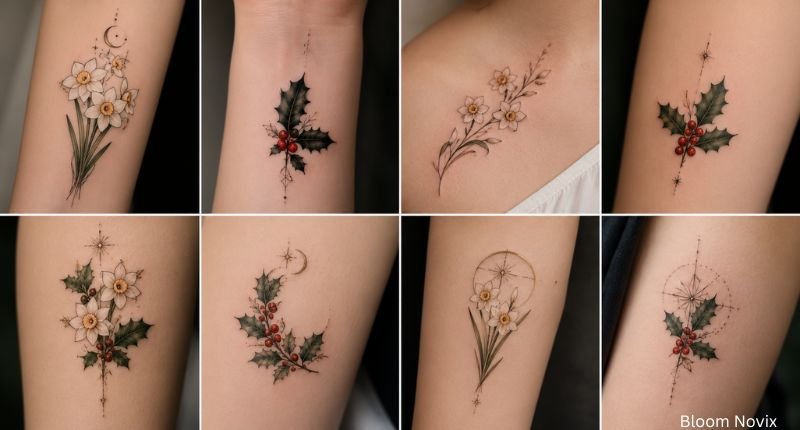
Because December has two birth flowers, tattoo designs give people more creative freedom than most other birth months.
December birth flower tattoos usually feature narcissus, holly, or both together, often in fine-line or watercolor style to capture their winter symbolism. The choice of flower in the design often reflects which meaning the person wants to carry with them — hope and renewal, or strength and protection.
Narcissus tattoos work well in delicate, fine-line designs that highlight the flower’s star-shaped petals. Small placements like the wrist, inner forearm, or behind the ear are popular because the flower’s simple shape holds up well at a small size. Watercolor styles using soft white and pale green shades can capture the flower’s gentle winter feel.
Holly tattoos usually lean into bolder, more geometric designs because of the plant’s sharp leaf shape. Black-and-grey shading highlights the structure of the leaves, while small red accents on the berries add a pop of color without overwhelming the design. Combined narcissus-and-holly tattoos are popular for people who want to represent both sides of December’s symbolism in one piece.
Did You Know? Combined birth flower tattoos, featuring both December flowers together, have grown in popularity because they let people represent their full birth month rather than picking just one symbol.
Final Words
December’s birth flower story is unlike any other month, blending the soft hope of the Narcissus with the steady strength of Holly, and sometimes the festive charm of the Poinsettia. Each bloom carries a rich history—stretching from ancient Roman gardens to Victorian windowsills and modern birthday bouquets—giving anyone born in December a deeply meaningful symbol to call their own.
Whether you choose a fragrant Narcissus bouquet, a striking Holly arrangement, or a thoughtful mix of both, the most important part is selecting a flower that reflects the personality of the person you are celebrating. Taking time to explore each bloom’s meaning, care needs, and background ensures your gift feels truly personal rather than just another ordinary winter arrangement—making it something they will genuinely appreciate.
Which birth flower would you pick for December? Share your thoughts in the comments below!
FAQs
What is the real December birth flower?
The real December birth flowers are narcissus (paperwhite) and holly. Narcissus is usually considered the primary flower, symbolizing hope and renewal, while holly serves as the secondary flower, symbolizing protection and strength. Some modern lists also add poinsettia as an unofficial third symbol tied to the holiday season.
What flower represents the 100th birthday?
There is no single universal flower assigned specifically to a 100th birthday. Instead, most florists recommend using the person’s actual birth month flower, since it carries personal meaning tied to their birth date rather than a general milestone.
What is the official birth flower for December?
The most widely recognized official birth flowers for December are narcissus and holly. Narcissus typically takes the lead position on most modern birth flower charts, while holly remains a strong secondary symbol, especially in European traditions.
Why does December have two birth flowers?
December has two birth flowers because the month reflects two very different moods. Narcissus represents the hopeful, indoor side of winter, blooming from nothing but water. Holly represents the tough, outdoor side of winter, staying green and full of berries through the cold.
What is the rarest birth flower?
Among common birth flower charts, the snowdrop (sometimes listed for January) is often considered one of the rarer and more delicate birth flowers, since it blooms for a very short window in early spring. Rarity can vary depending on region and which flower chart is being used.
What are the 12 birth flowers?
The traditional 12 birth flowers are: carnation (January), violet (February), daffodil (March), daisy (April), lily of the valley (May), rose (June), larkspur (July), gladiolus (August), aster (September), marigold (October), chrysanthemum (November), and narcissus with holly (December).
BloomNovix is managed by an experienced team of content writers and SEO specialists with 4+ years of expertise in gardening and plant care. We provide well-researched guides, gardening tips, and insights on floral meanings to help plant lovers grow their indoor and outdoor gardens with confidence.






1 thought on “What Is December’s Birth Flower? Narcissus, Holly & Poinsettia Meaning”