
Snow still covers the ground when the pasque flower begins to bloom. Its purple, cup-shaped flowers appear early in spring, often while the landscape still looks more like winter than a new growing season. That early bloom is at the heart of pasque flower symbolism, which has come to represent renewal, new life, hope, and resurrection.
The flower’s story goes beyond its connection with Easter. European folklore linked it with old battlefields, Victorian flower language gave it a meaning tied to modesty, and in South Dakota it became a symbol of the prairie and the arrival of spring. Today, its meaning can also appear in gardens, memorials, artwork, and tattoos.
There is also a practical side to know. Pasque flowers are beautiful but toxic, so they are better appreciated as ornamental plants than as edible or medicinal herbs. Here’s how their history, appearance, color, and seasonal habits shaped the meanings we associate with them today.
Quick Answer: What Does the Pasque Flower Symbolize?
The pasque flower symbolizes spring renewal, new life, and hope. It is also associated with resurrection, humility, and quiet strength. Much of this symbolism comes from its early bloom. In many places, the flowers appear around Easter, sometimes while snow is still on the ground.
Different traditions have added their own meanings over time. Christians may connect the flower with resurrection and new life, while Victorian flower language associated it with modesty. On the prairie, its early appearance can represent resilience, home, and the return of spring.
There is no single meaning for the pasque flower. Context matters. A gardener may see it as a welcome sign of spring, while a Christian may connect it with Easter and resurrection. For someone familiar with the Great Plains, it can also carry a sense of place and seasonal renewal.
What the Pasque Flower Looks Like
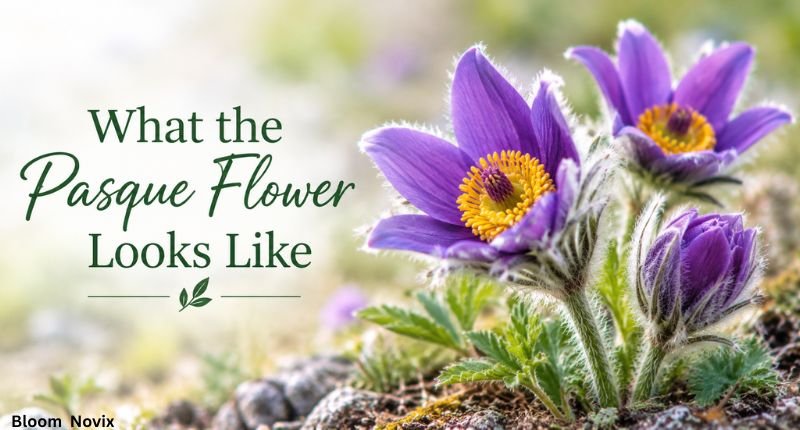
The pasque flower grows low to the ground. Most plants stay under a foot tall. Each stem carries one cup-shaped bloom. The flower opens toward the sun and often closes on cold, dim days.
Silky hairs cover the stems, buds, and leaves. These hairs help trap warmth in chilly air. They also give the plant a soft, silver glow. That glow makes the flower easy to spot on bare ground.
After flowering, the plant makes feathery seed heads. Each head looks like a tiny silver pom-pom. Wind carries the seeds across open land. Use these clues to confirm your find:
- Six petal-like sepals in violet, purple, or lavender
- A bright golden center of stamens
- Fern-like, finely cut leaves
- A fuzzy stem with a single nodding flower
Pasque Flower Names and Origin: Pulsatilla, Wind Flower and Prairie Crocus
The word pasque comes from an old French word for Easter. That word traces back to the Hebrew word for Passover. The name fits, since the plant blooms in that season. It also explains the nickname Easter flower.
The botanical name Pulsatilla likely comes from a Latin word linked to swaying or beating. Wind makes the nodding blooms tremble on their stems. That motion earned the name wind flower. Botanists once placed the plant in the anemone genus, which explains the old nickname meadow anemone.
In Canada, people call the native plant the prairie crocus. It is not a true crocus. It belongs to the buttercup family. Manitoba honors it as its provincial flower. Use the table below to sort the names.
| Name | Where You Hear It | What It Hints At |
| Pasque flower | Europe and the U.S. | Easter and Passover timing |
| Pulsatilla | Botany and herbal texts | Swaying in the wind |
| Wind flower | Gardens and folk speech | Nodding, trembling blooms |
| Prairie crocus | Canada and the northern plains | An early prairie bloom |
| Danes’ blood | English folklore | A battlefield legend |
What Does the Pasque Flower Mean in the United States?
In the United States, the pasque flower has no single official meaning. Its symbolism changes with place and purpose. In gardens, it means early spring. On the plains, it means home.
Two plants share the name here. The European pasque flower arrived in American gardens long ago. The prairie pasque flower grows wild across the northern plains. Each plant carries a slightly different story.
Many Americans use the flower as a seasonal symbol. You see it on spring cards, native plant sales, and garden club events. Churches may feature it near Easter. The meaning stays gentle rather than loud.
Pasque Flower Spiritual Meaning
Spiritually, the pasque flower stands for awakening. It rises when the world still looks asleep. Many people read this as a call to begin again. The message feels calm, not dramatic.
The flower also teaches patience. The plant waits through winter without fear. It blooms only when the light returns. Spiritual readers often link this to trust in timing.
Some people see quiet strength in its fuzzy stems. It survives cold wind with soft hair, not hard armor. That image inspires gentle resilience. These readings are modern interpretations, not fixed rules.
Why Is the Pasque Flower Associated with Easter?
The Easter link starts with timing. In much of Europe, the plant blooms in March and April. That window often overlaps with Holy Week and Easter. People noticed the match and named the flower after the feast.
Easter tells a story of death and return. The flower tells a story of winter and return. The two stories matched easily. Families and churches began to treat the bloom as a seasonal sign.
The link is cultural, not official. No church doctrine names the pasque flower as a symbol. Bloom dates also shift with climate and location. In some years, the flower opens well before or after the holiday.
Pasque Flower Bible Meaning
The Bible does not name the pasque flower. No verse mentions it. Any biblical meaning comes from tradition, not scripture. This point matters for honest research.
The connection runs through the name. Pasque points to Passover and Easter, two key festivals in Jewish and Christian life. In Christian thought, Passover also points toward the sacrifice of Christ. The flower borrows that meaning through its name.
Believers often link it to renewal and resurrection hope. They may think of verses about new life when they see it. Many Christians treat it as a gentle reminder, not a sacred object. Use it in devotion if it speaks to you.
Folklore and Medieval Roots: Battlefields and “Danes’ Blood”
English folklore tells a dark story. Legend says the flowers sprang from the blood of Danish raiders. Storytellers placed the tale on old earthworks and burial mounds. These sites often held the flower’s favorite soil.
Science offers a calmer reason. The pasque flower loves dry, chalky, open grassland. Ancient mounds and banks kept that habitat safe from the plow. The plant survived there while fields around it disappeared.
The legend still matters. It shows how people read meaning into landscapes. A purple flower on a grave-like mound felt like a message. Folklore turned a habitat fact into a story of death and return.
The Victorian Meaning: “You Are Without Pretension”
Victorians loved secret messages in flowers. Flower dictionaries listed meanings for hundreds of plants. For the pasque flower, many listed “you are without pretension.” The message praised a person’s humble nature.
The sentiment fits the plant well. The pasque flower looks soft, not showy. It grows low and blooms quietly. Its charm comes from understated beauty.
Today, you can use that message as a compliment. Give a framed botanical print or a potted plant to a modest friend. Add a card that explains the meaning. Remember that dictionaries disagreed, so treat the meaning as a charming tradition.
Pasque Flower Symbolism in South Dakota
South Dakota named the pasque flower its state flower in 1903. The state chose a plant that truly belongs to its grasslands. The flower grows on dry hills and open prairie. Locals know it as one of the first signs of spring.
On the plains, winters feel long and hard. An early bloom brings real relief. It promises that the growing season is coming. So the flower stands for resilience, patience, and home.
The prairie pasque flower also connects to native grasslands. Conservation groups use it to show why the prairie matters. Protecting the habitat protects the symbol. Many Indigenous nations hold their own knowledge of this plant, so seek those voices directly.
Purple Pasque Flower Symbolism
Purple is the classic pasque flower color. Most wild plants bloom in violet, lavender, or deep purple. This shade shapes the purple pasque flower meaning. It adds a serious, thoughtful tone to the spring message.
In Western Christian tradition, purple marks Lent and Passiontide. It stands for reflection and preparation. A purple flower near Easter fits that rhythm. The bloom feels like a quiet bridge between mourning and joy.
Outside church life, purple often means creativity and dignity. Artists and gardeners love its rich contrast with golden centers. The color also suggests calm and depth. Choose purple when you want a thoughtful, reflective symbol.
White Pasque Flower Symbolism
White pasque flowers are rare. Nurseries sell white garden forms of the European species. Wild plants usually bloom in purple. This rarity makes white blooms feel special.
White often stands for purity and fresh starts. A white bloom suggests a clean page after winter. It also echoes snow and frost. The flower seems to carry winter’s last light into spring.
White also fits remembrance. People may plant it in a memorial garden to honor someone. The calm color invites peace rather than sorrow. It works well for gentle, hopeful tributes.
Yellow Pasque Flower Symbolism
Yellow pasque flowers are uncommon in gardens. A few mountain species bloom in pale or sulfur yellow. Common purple types also show bright yellow centers. So yellow appears in nearly every pasque flower, even when the petals are purple.
Yellow stands for joy and sunshine. It adds warmth to a cool spring scene. People often read it as optimism. It says that brighter days are coming.
A yellow bloom suits cheerful gifts and art. Pair it with purple for a classic spring contrast. Always check the species name when you buy, since common names vary. Good labels prevent mix-ups.
Red Pasque Flower Symbolism
Red pasque flowers come mostly from garden breeding. Nurseries offer wine-red and rusty-red types. Wild plants rarely bloom in this shade. Red adds drama to a quiet species.
Red usually stands for passion, courage, and life force. In this flower, it also hints at sacrifice. That reading echoes old Christian legends about blood and the Passion. It gives the plant a bold, heartfelt tone.
Red also suits love symbolism. A red pasque flower says feelings run deep, but quietly. It fits a thoughtful partner better than a loud bouquet. Choose it for meaning, not for show.
| Color | Core Meaning | Where You See It | Best For |
| Purple | Reflection, faith, dignity | Wild plants and most gardens | Easter and spiritual themes |
| White | Purity, fresh starts, remembrance | Garden varieties | Memorial gardens and peace |
| Yellow | Joy, sunshine, optimism | Mountain species and flower centers | Cheerful art and gifts |
| Red | Passion, courage, sacrifice | Garden varieties | Love and bold designs |
Pasque Flower Meanings at a Glance
This table sums up the main meanings. Use it as a quick reference. Each row shows where the meaning comes from. The last column shows the best use.
| Context | Core Meaning | Where It Comes From | Best Use |
| Easter | Resurrection and renewal | Bloom time and name | Spring cards and church decor |
| Spiritual | Awakening and patience | Modern interpretation | Meditation and journaling |
| Victorian | Modesty | Flower dictionaries | Thoughtful gifts |
| South Dakota | Resilience and home | State flower since 1903 | Regional art and education |
| Mourning | Remembrance | Folklore and seed heads | Memorial gardens |
| Garden | Early spring | The plant’s life cycle | Native plant beds |
| Tattoo | Personal change | Individual stories | Custom botanical art |
Notice the pattern. Nearly every meaning links to seasonal change. Faith, folklore, and place each add a layer. The core idea stays simple: life returns.
Pick the meaning that fits your goal. A writer may choose renewal. A mourner may choose remembrance. A gardener may simply choose spring.
Emotional Meaning: Starting Over After a Hard Season
The pasque flower speaks to people who feel worn down. It blooms after a long, hard season. That timing makes it a symbol of starting over. It does not promise instant joy.
Instead, it offers cautious optimism. The bloom nods downward at first. It looks shy before it opens wide. That slow opening matches how healing often feels.
You can use this symbol in daily life. Keep a picture near your desk. Write a note about one small step forward. Plant a pasque flower on a day that marks a new chapter.
Pasque Flowers in Mourning and Remembrance
The pasque flower is not a traditional funeral flower in the United States. Lilies, roses, and carnations hold that role. Still, its history carries grief and hope together. That balance suits personal remembrance.
Its seed heads add a tender idea. The bloom fades, but silver plumes remain. Wind then spreads the seeds. Many people read this as memory that lives on.
Families can use the flower in a quiet way. Plant it in a memorial garden near a favorite bench. Frame a botanical print of the bloom. Choose a spring anniversary for the planting.
What Pasque Flowers Symbolize in Gardens
Gardeners treasure the pasque flower for its early show. It blooms before most perennials wake up. It also gives early insects a rare food source. In a bed, it stands for the first promise of spring.
The plant tells a full story in one season. Buds appear, blooms open, and seed plumes follow. Each stage has its own charm. The cycle shows renewal and continuation in real time.
Give it sun and well-drained soil. Avoid wet ground, which can rot the roots. Plant it once, since the long taproot dislikes moving. Choose a spot near a path so you can enjoy the first blooms.
What Does a Pasque Flower Tattoo Mean?
A pasque flower tattoo carries a personal story. Most wearers choose it to mark a new chapter. Others honor faith, healing, or a loved one. Few people choose it by accident.
Design shapes the message. A fine-line purple bloom feels calm and spiritual. A silver seed head speaks of change and letting go. Add a date or Roman numerals to mark a milestone. Pair the flower with a bird for freedom.
Delicate botanical work often suits the forearm, wrist, or ribs. Soft shading keeps the silky hairs looking real. Pick an artist with strong botanical samples. Share the meaning with your artist before the design begins.
Is the Pasque Flower Poisonous? Safety and Herbal History
The pasque flower is poisonous. Like many buttercup relatives, it contains ranunculin. When the plant is crushed, this turns into an irritating compound called protoanemonin. Touching or chewing the fresh plant can irritate skin and mouth.
Handle it with care. Follow these simple steps:
- Wear gloves when you cut or move plants
- Wash your hands after any contact
- Keep pets and children away from the plant
- Call Poison Help at 1-800-222-1222 in the U.S. if someone swallows it
Herbal history adds a twist. Traditional European herbalists used pasque flower preparations, and homeopathy still uses Pulsatilla. Safe preparation needs expert knowledge. Never make teas or remedies from garden plants. Ask a licensed professional before using any product.
Common Misconceptions About Pasque Flower Symbolism
Myth one says the pasque flower is a crocus. It is not. The nickname prairie crocus causes the mix-up. The plant belongs to the buttercup family, while true crocuses belong to the iris family.
Myth two says it always blooms on Easter. Bloom time depends on weather and region. A warm spring can bring flowers weeks early. A cold one can delay them until after the holiday.
Myth three says the silver seed heads mean the plant is dying. They are a normal stage of its life cycle. The plume carries seeds to new ground. Treat it as a second bloom with its own meaning.
How the Meaning Has Changed Over Time
The meaning of the pasque flower has changed as the people using it have changed. Early associations came from Easter traditions, Christian stories, and European folklore. Victorian flower books later gave it a more personal meaning, including modesty and a lack of pretension. Today, people often connect the flower with meanings that reflect their own experiences.
Conservation has also influenced how the flower is viewed. Wild pasque flowers have declined in parts of Europe as grassland habitats have disappeared. In prairie regions, protecting native plants and restoring their habitat has given the flower another connection: care for the landscape where it grows.
The flower has also found a place in modern photography, art, and tattoos. People share its first spring blooms, use its shape in artwork, or choose it to represent a new beginning. Even with these newer uses, renewal remains one of the strongest ideas associated with the pasque flower.
FAQs
What does a pasque flower symbolize?
It symbolizes spring renewal, new life, resurrection, humility, and hope. Pasque flower symbolism grows mostly from the plant’s early bloom near Easter.
What does the pasque flower symbolize in Christianity?
It represents resurrection, new life, and remembrance of Christ’s Passion. These meanings come from its Easter-season bloom and European folklore, not from church doctrine.
Why is it called the pasque flower?
The name comes from an old word for Easter and Passover. The plant earned it by blooming around that season.
Is the pasque flower a symbol of mourning?
It can be, but it is not mainly a mourning flower. Folklore linked it to suffering and battlefields, yet renewal remains its stronger message.
What does the pasque flower symbolize in South Dakota?
It represents prairie identity, early spring, and regional pride. South Dakota adopted it as the state flower in 1903.
What does a pasque flower tattoo mean?
It usually means a new beginning, faith, remembrance, or personal growth. The wearer’s own story matters most, since no standard meaning exists.
Is the pasque flower associated with humility?
Yes. Victorian flower dictionaries paired it with the message “you are without pretension,” which highlights modesty.
What is the spiritual meaning of the pasque flower?
It stands for awakening, patience, and quiet strength. The plant blooms when winter still lingers, so many people read it as trust in timing.
What does a white pasque flower mean?
It usually means purity, fresh starts, and gentle remembrance. White blooms are rare, which makes them feel especially meaningful.
Is the pasque flower poisonous to touch?
Yes, the fresh plant can irritate skin. Wear gloves, wash your hands afterward, and keep pets and children away.
Conclusion
Pasque flower symbolism starts with the plant’s early spring bloom. It can appear while winter is still fading, which is why the flower became associated with renewal, hope, and new life. Over time, Easter traditions, European folklore, Victorian flower language, and the prairie history of South Dakota added other meanings, including resurrection, humility, remembrance, and resilience.
The meaning can change with the context. In a garden, the pasque flower may simply mark the arrival of spring. In religious artwork, it can suggest resurrection and new life. In a tattoo or memorial garden, it may represent personal growth, remembrance, or a new beginning.
One practical point is worth remembering: pasque flowers are toxic, so they should be handled carefully and never treated as an edible or medicinal plant. Beyond that, their symbolism comes back to something simple and easy to understand—the sight of a flower returning when winter has not quite left yet.
BloomNovix is managed by an experienced team of content writers and SEO specialists with 4+ years of expertise in gardening and plant care. We provide well-researched guides, gardening tips, and insights on floral meanings to help plant lovers grow their indoor and outdoor gardens with confidence.



2 thoughts on “Pasque Flower Symbolism: Spiritual Meaning, Colors & Easter Legends”