A mandevilla vine can change the look of a space in just a few weeks. Its glossy green leaves spread quickly, followed by large trumpet-shaped flowers in pink, red, white, or other shades. That fresh growth is one reason people connect this flower with beauty, growth, and a lively spirit.
But what does mandevilla symbolism actually mean? Unlike roses or lilies, mandevilla does not have a long-established symbolic tradition in every culture. Much of its modern meaning comes from its appearance, climbing growth, and bright flowers. Here, we’ll look at those meanings without adding stories that the flower does not really have.
What Is Mandevilla?
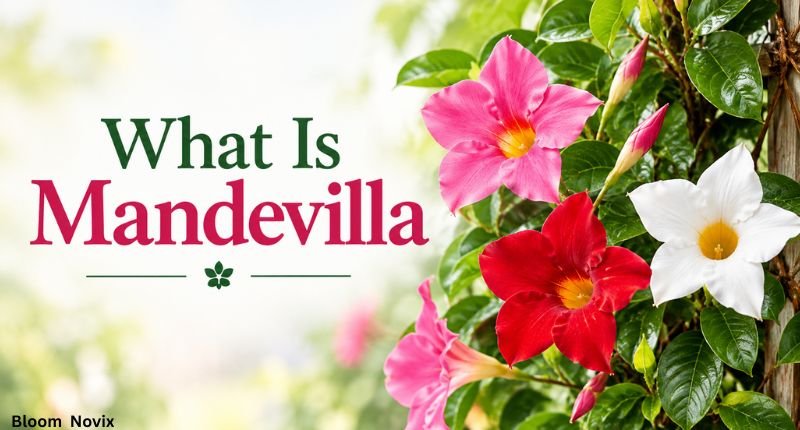
Mandevilla is a tropical flowering vine in the Apocynaceae family. It has glossy green leaves and big trumpet-shaped flowers. Gardeners train it on trellises, fences, and porch rails. Its blooms open from early summer into fall. Each bloom fades in days, but new ones keep opening. The vine looks full for months.
The genus holds over 100 species. Most grow wild across Central and South America. Some climb tall, while others stay shrubby. This variety explains why plants look so different from one nursery to the next. Garden centers sell only a handful of them. Hybrids dominate the market because they bloom more and stay tidy. Most buyers never meet a wild species.
In cool regions, mandevilla acts like a tender plant. Frost kills it fast. Even a light freeze can blacken the leaves. Many gardeners grow it in a pot and move it indoors for winter. That habit makes it a true summer garden star. Warm patios give it the best show. Cool corners give it a slow start.
- Type: flowering vine
- Bloom time: summer to fall
- Light: full sun
- Needs: a trellis or other support
Common Names and Types of Mandevilla and Their Symbolism
Mandevilla goes by many nicknames. People call it rocktrumpet, Chilean jasmine, or Brazilian jasmine. These names confuse buyers. Mandevilla is not a true jasmine. True jasmine belongs to a different plant family. Only the sweet scent of a few types explains the nickname.
Each type carries a slightly different mood. Fragrant white vines feel calm and romantic. Bold red hybrids feel festive. The table below sums it up.
| Type | Look | Mood and Symbolism |
| Pink hybrids (such as ‘Alice du Pont’) | Large pink trumpets | Affection and cheer |
| Mandevilla laxa (Chilean jasmine) | White, sweetly scented blooms | Grace and calm |
| Mandevilla boliviensis | White flowers with a yellow throat | Fresh starts |
| Red hybrids | Deep red, showy trumpets | Passion and confidence |
These meanings are modern. They come from looks and moods, not from old tradition. Pick the type that matches the feeling you want. Check the plant tag for the exact name. Sellers often use common names loosely.
Read Also: Nightshade Flower Meaning
Does Mandevilla Have a Traditional Meaning?
No. Mandevilla does not appear in the Victorian language of flowers. Old flower dictionaries skip it. No religion or folklore claims it either. That gap is normal for ornamental hybrids. Most garden plants gained meaning only after they became popular.
Why the confusion? Many people mix it up with true jasmine. Victorians linked jasmine with grace and elegance. The nickname “jasmine” lets those old ideas leak onto mandevilla.
This honesty helps you. Readers trust pages that admit gaps. Gardeners spot hype quickly. Clear facts win loyalty. So treat every meaning here as a modern interpretation, then add your own. Honest writers label modern ideas as modern. You should do the same when you share them.
- Appearance shapes the first impression.
- Growth habit adds the idea of progress.
- Personal memory adds the deepest layer.
What Does Mandevilla Symbolize?
Mandevilla stands for beauty, vitality, and growth. It also suggests warmth and hospitality. These ideas come from how the plant looks and lives. Nothing here is ancient code. Think of it as shared garden language. People agree on it because they see the same things.
Think of three layers. First, the flowers show joy. Second, the climbing stems show progress. Third, the tropical roots show warmth.
Each layer gets its own section below. Together they paint one clear picture. This vine means life moving upward, in full color. Keep that big picture in mind as you read on. The next sections add detail and proof.
- Flowers: joy and affection
- Stems: progress and persistence
- Origin: warmth and abundance
Beauty and Vitality
Mandevilla blooms are huge. Close up, many blooms show a deeper shade in the throat. Some measure three inches or more across. Dark leaves make the colors pop. Even a small pot looks rich. A single plant can fill a doorway. That impact is rare for a container flower.
Vitality shows in the speed. In warm weather, stems can stretch many feet in one season. New buds keep forming as the vine grows. The plant seems to never rest. Gardeners often spot new shoots within days of a warm spell. That speed feels hopeful.
Mandevilla blooms on new growth. A late-winter trim sparks more flowers. So the plant rewards bold renewal, and vitality becomes a habit instead of a one-time show.
Growth, Progress, and Adaptability
A mandevilla cannot stand alone. Its stems twine around a trellis, wire, or rail. They need support to rise. That makes the vine a symbol of personal development with help.
Adaptability shows in its habits. It trains easily on arches and obelisks. It copes with pots, walls, and small balconies. Many gardeners prune it to fit any space. Pruning also shows care and control. You shape the growth without stopping it.
Use it as a quiet reminder. Progress needs structure. Growth also needs patience. A young vine may sit still for weeks. Then it surges. Slow starts often lead to big finishes.
- Reaching upward toward a goal
- Persistence through slow weeks
- Using the support you already have
- Starting small in a single pot
Why Mandevilla Represents Warmth
Mandevilla loves heat. It wants six or more hours of sun. Warm nights keep it blooming. Cold snaps stop it fast. Gardeners know this well. They watch the forecast and move pots before the first chill.
Because of this, it feels like summer in plant form. It brings to mind pool decks, patios, and slow evenings. Many people link it with vacations in warm places. That link adds emotional warmth to the physical kind.
Its home range backs up the feeling. Wild species grow across the tropical and subtropical Americas. Gardeners in cold states carry pots indoors to keep that warmth alive. The vine literally travels with the season. It rides indoors in fall and returns outside in spring. That cycle gives the plant a rhythm people can feel.
Mandevilla Spiritual Meaning
Mandevilla has no official spiritual tradition. Still, many people find spiritual meaning in it. Climbing vines often stand for ascent and reaching upward. A bloom facing the sun can feel like a daily prayer. Morning light on the petals adds to that mood.
People use it in simple ways. Some place a pot near a meditation spot. Others water it as a morning ritual. These habits turn gardening into a mindful practice.
Overwintering offers another lesson. Many gardeners keep pots in a bright, cool room. The vine rests while you wait. You cut back, rest, and wait. Spring brings new growth. Many gardeners see this cycle as renewal. The rest period matters as much as the bloom. It teaches that pauses have purpose.
- Renewal each spring
- Gratitude for abundance
- Trust in support
- Joy in the present moment
Mandevilla Biblical Meaning
The Bible does not mention mandevilla. The plant is native to the Americas. Biblical plants grew in the lands of the Bible. So no verse names it. Scripture names plants of its own region instead. Mandevilla grew an ocean away.
Some people still draw faith-based lessons. A vine that clings to its support echoes the image of the vine and branches in John 15. That link is a personal reading, not a teaching. Keep that difference clear.
If you need a plant with true biblical roots, look elsewhere. Olive, grape, fig, and lily all appear in scripture. Mandevilla works better as a gift of encouragement. Say that plainly in your card. Honest notes build trust. They also let the receiver enjoy the plant without false claims.
Mandevilla Flower Colors and Their Meanings
Color shapes the feeling more than anything else. People notice hue before leaf shape, scent, or size. People read the plant and its shade together. Pink feels soft, and red feels bold. The table gives a quick guide.
| Color | Core Meaning | Best For | Mood |
| Pink | Affection, tenderness | Friends, Mother’s Day | Warm and friendly |
| Red | Passion, confidence | Anniversaries, focal points | Bold and festive |
| White | Peace, elegance | Weddings, memorials | Calm and fresh |
| Yellow look-alike | Optimism, cheer | Sunny patios | Bright and happy |
Breeders keep adding new shades, from soft blush to deep crimson. Each new shade follows the meaning of its nearest main color. That rule keeps things simple. You do not need a separate guide for every cultivar.
Color also changes with place. A red vine at the front door says welcome with energy. A white one at a gate says peace. Choose by setting, not just by taste. Think about the view guests see first. Then match the shade to that mood.
Pink Mandevilla Meaning
Pink is the classic mandevilla shade. It stands for affection, tenderness, and friendliness. The feeling is warm, not intense. It says, “I care about you.”
Pale blush tones feel gentle and sweet. Hot pink feels playful and bold. Pink also suits appreciation. A thank-you gift in pink lands softly.
Pink is also one of the most common shades in stores. Many American gardeners meet it first. That familiarity gives it a homey feel. It reminds people of porches and summer visits. Pink also blends well with other garden colors. It rarely clashes.
Red Mandevilla Meaning
Red brings passion, confidence, and celebration. It is the boldest shade. A red vine pulls the eye at once. It suits people who like drama. Shy gardeners may prefer pink.
Red flower also signals romantic love. A rose is still the classic love flower. Red mandevilla adds a summery, playful note. It feels like love on vacation.
Use red where you want a focal point. A front entry, a gate, or a party patio works well. Pair it with green foliage for strong contrast. Keep the rest of the scene simple. Too many bold colors compete for attention. One red star is enough.
White Mandevilla Meaning
White suggests elegance, simplicity, and peace. It looks clean against dark leaves. A white vine calms a busy yard. It feels fresh at dawn. Dew on white petals looks especially clean.
Some white types carry a sweet scent. That adds a soft, romantic layer. Evening patios feel magical with them. The pale blooms glow at dusk.
White can also mean remembrance. Some families plant white vines in memory of a loved one. Context decides the mood. At a wedding it means fresh starts, and in a memorial garden it means quiet respect. Always ask what the space needs.
Yellow and Other Shades
Most “yellow mandevilla” vines are not mandevilla. They are usually allamanda, a close relative with golden trumpets. Check the plant tag before you buy.
Yellow flower itself means optimism and cheerfulness. That meaning fits allamanda too. If you want the true yellow feel, either plant works. Just know which one you own. Allamanda also grows fast and loves heat. So the care steps look much the same.
Other shades follow the same rule. Blush pink acts like pink. Deep crimson acts like red. Use the nearest main color to read the meaning. This shortcut works for new hybrids too. You never need to memorize each name.
What Mandevilla Means in American Gardens
In the U.S., mandevilla means hospitality. People plant it where guests arrive. Porches, gates, and front steps are favorite spots. It tells visitors someone cares for this home. A thriving vine shows steady attention. Even one pot sends that message.
Where you live changes how you use it. In warm zones (USDA 9 to 11), it can stay outside much of the year. In colder states, it becomes a seasonal pot plant. Either way, it signals summer.
Garden centers stock it each spring. That timing ties it to Mother’s Day, graduations, and patio season. Hummingbirds sometimes visit the trumpet blooms too. So it also stands for lively outdoor life. Buzzing wings and bright petals make a patio feel busy and happy.
- Front porch: a warm welcome
- Deck rail: relaxed summer evenings
- Balcony pot: big color in small space
- Entry arch: a grand first impression
Emotional and Personal Meaning
Mandevilla speaks in outward feelings. It shares joy with everyone who passes by. These include joy, celebration, and encouragement. Its blooms sit in plain sight. That openness invites conversation. Neighbors often stop to ask its name. A plant like that connects people.
Memory adds the deepest layer. A vine on a grandmother’s porch can mean home. A pot from a first apartment can mean independence. Your own story beats any dictionary.
Try a simple exercise. Note when and where you first saw mandevilla. Write down the feeling it gave you. That feeling is your personal meaning. It matters more than any list online. Keep it as your own guide.
Mandevilla Dream Meaning
Dream dictionaries do not list mandevilla. Dream readers still use general plant ideas. They treat vines as signs of growth and connection. Remember, dream meaning stays personal. Use this section as a starting point, not a verdict.
A climbing vine points to progress toward a goal. A blooming vine points to joy and good news. A wilting vine points to neglected effort.
Colors matter in dreams too. Pink hints at affection, red at strong emotion, and white at peace. Ask yourself how the dream felt. That feeling gives the best clue. Write the dream down soon after you wake. Details fade quickly.
- Tangled vine: feeling stuck
- Vine on a wall: steady progress
- Many blooms: abundance and joy
Mandevilla Tattoo Meaning
A mandevilla tattoo usually symbolizes growth, beauty, and warmth. The climbing vine suits arms, legs, and ribs. The trumpet bloom makes a bold focal point. Many people choose it to honor tropical roots. Others choose it for the trumpet shape. Some simply love how it looks.
Color changes the message. Pink suggests tender love. Red shows passion and courage. White or blackwork shows calm and remembrance.
Pair it with other symbols. A hummingbird adds joy and freedom. A trellis adds support. A date or name adds memory. Ask your artist to match the design to the body area. A vine flows well along natural lines.
- Fine-line style: delicate and modern
- Watercolor style: soft and dreamy
- Bold color style: tropical and lively
Where the Name “Mandevilla” Comes From
The name honors Henry Mandeville. He was a British diplomat in Buenos Aires. He also loved gardening. English botanist John Lindley named the genus after him in 1840.
So the name comes from a person, not a myth. No legend sits behind it. Its story belongs to an age of exploration and plant collecting. Plant lovers prized new tropical finds back home. Collectors spread tropical plants around the world in that era.
That origin shapes today’s meaning. People meet mandevilla at nurseries, not in folklore. So they read meaning from sight and feel. Modern symbolism grows from that. Names stay while stories change. Today’s story is about gardens and gifts.
Mandevilla in Latin American Culture and History
Wild mandevillas grow from Mexico and Central America down to Argentina. Brazil, Bolivia, and Argentina host many species. They climb through forest edges and rocky slopes. The name rocktrumpet hints at that rugged habitat.
No single national tradition surrounds the plant. Folk meanings, where they exist, stay local and informal. Still, the region loves colorful gardens. Courtyards and balconies there often burst with vines and blooms. Mandevilla fits that vibrant style.
The plant reached European glasshouses in the 1800s. Later, breeders developed compact hybrids for patio pots. That journey turned a wild vine into a global garden favorite. Its meaning shifted from wild to welcoming. Today it grows beside doors in many countries.
Mandevilla vs Dipladenia: Meaning and Differences
Shoppers often see two names: mandevilla and dipladenia. Botanists now place both in the mandevilla genus. Nurseries still use the names for two looks. The difference is mostly growth habit.
| Feature | Mandevilla | Dipladenia |
| Habit | Tall climber | Bushy and compact |
| Leaves | Larger and wider | Smaller and narrower |
| Best use | Trellis, arbor, fence | Pots, baskets, borders |
| Symbolism | Upward progress | Steady abundance |
Symbolism follows habit. A climbing mandevilla stands for upward progress. A bushy dipladenia stands for steady abundance. Both share the same warm, joyful spirit. Nurseries often label them by shape alone. Read the tag to confirm what you get.
Choose by space. Need height? Pick mandevilla. Need a compact pot? Pick dipladenia. Either way, the heart of the meaning stays the same. Care needs stay similar as well: sun, warmth, and support.
Common Misconceptions About Mandevilla Symbolism
Myth one says every flower has a fixed meaning. Mandevilla proves otherwise. Its meanings are modern and flexible. Treat them as guides, not rules. Flexible meaning gives you freedom. You can shape it to fit your own story.
Another myth blends tropical flowers together. Hibiscus, plumeria, and bougainvillea have their own stories. Plumeria, for example, holds deep cultural roots in places like Hawaii. Do not borrow their meanings. Give mandevilla its own voice.
Several other myths need to go too. Clear them up before you buy or gift.
- It is not a true jasmine.
- Every “yellow mandevilla” is not a mandevilla.
- It is not only a love symbol.
- It is not hardy in cold winters.
Is Mandevilla a Good Gift?
Yes, for the right person. Not everyone has space for a vine, so ask first. Mandevilla suits gardeners and warm-weather lovers. It expresses appreciation, congratulations, or encouragement. It carries no heavy formal rules. Nobody expects a fixed message. That freedom makes it easy to give.
Match the color to the moment. Choose pink for thanks and friendship. Choose red for love and celebration. Choose white for peace, weddings, or remembrance.
Add a small card. A plant has no built-in message. Your note gives it meaning. Include basic care tips too: sun, support, and steady water. A short tip helps the plant thrive. A thriving plant keeps your message alive.
- Housewarming: a welcoming start
- Mother’s Day: thanks and affection
- Birthday: celebration and joy
- New patio: a living decoration
Is Mandevilla Poisonous? Safety Tips for Gifting and Gardens
Treat mandevilla with care. Its milky sap can irritate skin. Eating the plant may upset the stomach. Sources vary on how toxic it is, so play it safe.
Pets and small children need extra care. Keep pots out of reach. Call your vet or poison control if a pet chews it. Do not wait for symptoms to worsen. The yellow look-alike, allamanda, is toxic too.
Gloves help during pruning. Sap can drip when you cut stems. Wash your hands afterward. Add a short safety note when you give one as a gift. Safe giving builds trust.
- Wear gloves when you trim.
- Keep pots out of reach of pets and kids.
- Wash hands after handling.
FAQs
What does mandevilla symbolize?
It symbolizes beauty, vitality, affection, and growth. Mandevilla symbolism comes from its bright blooms and climbing habit, not ancient tradition.
What does a pink mandevilla symbolize?
Pink mandevilla symbolizes affection, tenderness, and appreciation. It feels warm and friendly rather than intensely romantic.
What does a red mandevilla symbolize?
Red mandevilla symbolizes passion, confidence, and celebration. It borrows this meaning from red flowers in general.
Is mandevilla a symbol of love?
It can be, especially in pink or red. Still, tradition does not label it a love flower, so roses carry stronger romantic meaning.
Does mandevilla have a biblical or spiritual meaning?
No, it has no established biblical meaning. Some people still find personal spiritual meaning in renewal, gratitude, and upward growth.
What does mandevilla symbolize in a garden?
In a garden, it symbolizes beauty, hospitality, and growth. Its climbing habit adds the idea of reaching upward with support.
Does mandevilla have a negative meaning?
No broad negative meaning exists. Any dark reading comes from personal experience or from color, such as red for intense feeling.
What does a mandevilla tattoo symbolize?
A mandevilla tattoo usually symbolizes growth, beauty, and warmth. The meaning shifts with color and paired symbols.
What does it mean to dream about a mandevilla?
It often points to progress, joy, or connection. No tradition fixes the meaning, so your feelings in the dream matter most.
Is mandevilla poisonous to give as a gift?
It can be risky for pets and kids, because the sap irritates and eating it may upset the stomach. Place it out of reach and add a short safety note.
Conclusion
The mandevilla symbolism is mostly about beauty, energy, warmth, and growth. Its climbing habit can suggest progress and the support needed to thrive, while its bright trumpet-shaped flowers bring a cheerful and welcoming feeling. Pink, red, and white mandevilla can each add a slightly different meaning.
Unlike flowers with centuries-old symbolic traditions, mandevilla has a more modern and personal meaning. You can enjoy it simply for its beauty, or choose a color that matches a feeling, memory, gift, or tattoo idea. Sometimes, the meaning of a flower does not need to be complicated. It can simply be about the way it makes you feel.
BloomNovix is managed by an experienced team of content writers and SEO specialists with 4+ years of expertise in gardening and plant care. We provide well-researched guides, gardening tips, and insights on floral meanings to help plant lovers grow their indoor and outdoor gardens with confidence.