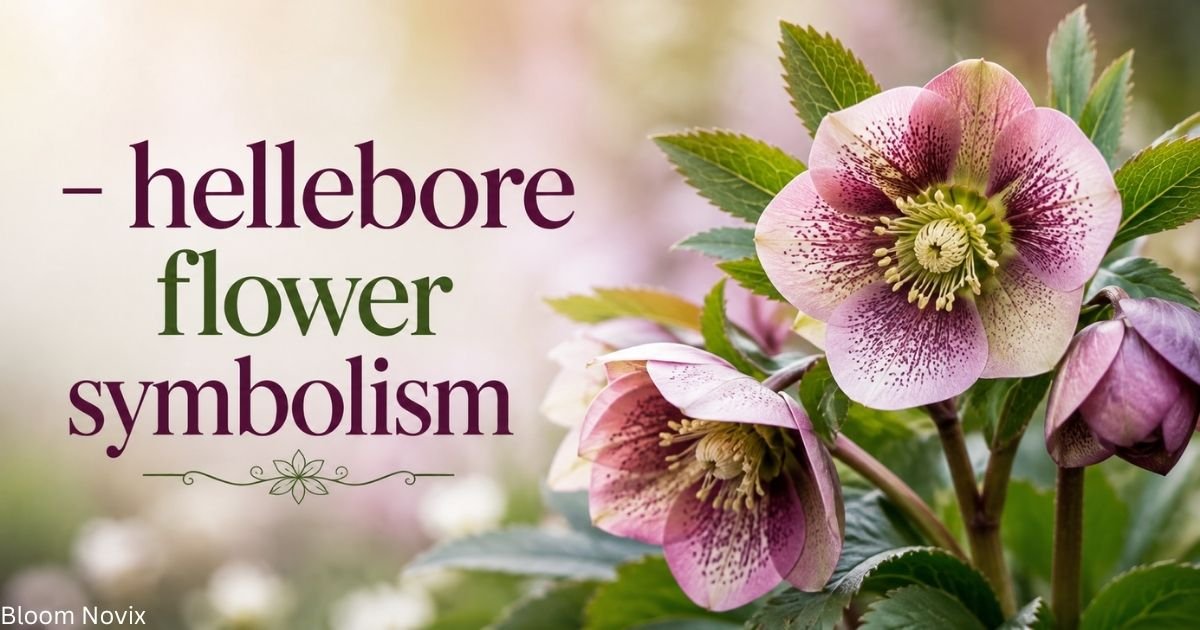
Have you ever seen a flower bloom while everything around it looks frozen and empty? That is exactly what a hellebore does. Its rare winter bloom carries powerful hellebore flower symbolism rooted in hope, calm, and quiet strength. This guide breaks down every layer of that meaning, so you understand exactly what this flower says.
You will discover what different colors mean, why ancient healers both feared and prized this plant, and how Victorian writers gave it a darker reputation. You will also learn what hellebore symbolizes in dreams, tattoos, and gifts. By the end, you will know exactly why this flower still matters today. Keep reading, because the full story is more layered than it looks.
Quick Answer
Hellebore flower symbolism centers on resilience, hope, and renewal. This plant blooms in winter, when most gardens stay dormant. That timing makes it a strong symbol of endurance through hard times. Older traditions also connect hellebore to healing, protection, and even anxiety, so the flower carries both light and shadow.
TL;DR
- Hellebore represents resilience, hope, and quiet strength.
- Winter blooming links it to renewal before spring fully arrives.
- Ancient medicine connected hellebore to healing and mental health.
- Christian legend ties it to humility and grace.
- Victorian flower language added darker meanings like anxiety and scandal.
- Modern gardeners mostly read it as a sign of hope and inner strength.
- Dream and zodiac interpretations give the flower a newer, personal layer.
What a Hellebore Actually Looks Like
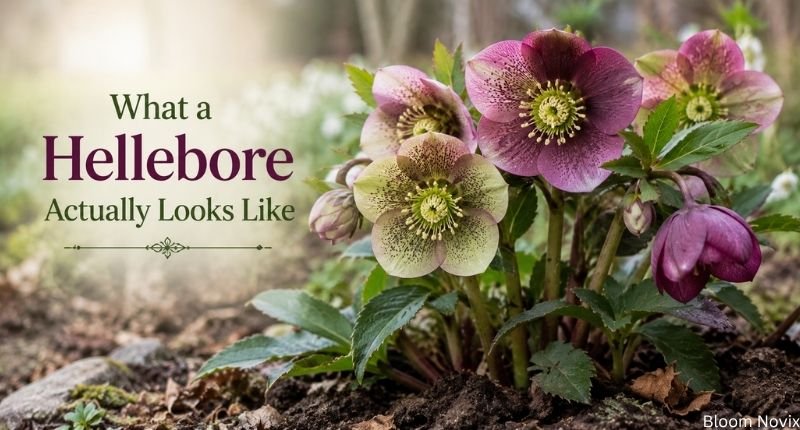
Helleborus is the botanical name for this plant. It belongs to the buttercup family, not the rose family, even though common names like Christmas rose suggest otherwise. The leaves are thick, leathery, and deeply cut. Many blossoms nod downward instead of facing the sky.
This nodding shape gives the flower a calm, private feel. Colors range from pure white to deep purple, and even shades close to black. Depending on the variety, a single plant can stay in bloom for several weeks, sometimes through snow.
- Family: Ranunculaceae (buttercup family)
- Growth habit: low, spreading perennial
- Bloom season: late winter through early spring
- Flower shape: cup-like, often nodding
The Core Meanings of Hellebore Today
Modern hellebore meaning draws mostly from what the plant actually does in a garden. It survives cold. It blooms early. It stays composed rather than showy. Those simple facts shape almost every positive interpretation people give it today.
| Context | Core Meaning | Why It Fits |
| Winter garden | Resilience | Blooms through frost and cold |
| Early spring | Hope | Arrives before most other flowers |
| Personal gift | Quiet strength | Communicates support without drama |
| Grief or recovery | Renewal | Signals change is already beginning |
| Historical texts | Anxiety, scandal | Older floral dictionaries used harsher terms |
Unlike a bold flower such as a sunflower, hellebore never shouts for attention. It simply keeps growing. That is why so many people now use it to represent strength that does not need to be loud.
Why Winter Blooming Became a Symbol of Resilience
A flower opening in the cold creates instant contrast. Everything nearby looks brown and lifeless, yet the hellebore keeps producing color. That single image explains most of its hellebore symbolism for resilience.
This is not about dramatic victory. The plant does not fight winter with height or bright color. It simply continues. That distinction matters for anyone using flowers to represent a hard chapter in life.
A hellebore can quietly say:
- I kept going even when things were difficult.
- Hope can appear before life fully improves.
- Strength does not always need to be visible.
- Renewal can start slowly, one small step at a time.
Ancient Medicine Gave Hellebore a Darker Reputation
Long before it became a garden favorite, hellebore had a medical history. Ancient healers used plants called hellebore as strong purgatives. Physicians of that era linked the plant to treatments for what they called melancholy or madness.
This backstory adds real complexity to hellebore flower meaning. The plant was not simply a pretty bloom. It sat close to danger, since the line between medicine and poison was poorly understood at the time.
- Healing: seen as a tool to restore balance in the body
- Danger: contains compounds that are toxic if eaten
- Mental health: linked to early, imprecise treatments for the mind
None of this makes hellebore a safe home remedy today. Its toxicity is well documented, and its old medical use belongs firmly in history, not in modern self-treatment.
Greek Tradition Connected Hellebore With Madness and Restoration
One old story involves the healer Melampus, who is said to have used a hellebore-like remedy to treat a group of women suffering from mental distress. Different versions of the tale exist, and later retellings often simplify the original details.
Still, the core idea survived: hellebore became associated with purging something harmful from the mind. Over time, stories and literature helped keep these ideas alive, especially as writers used green color symbolism in literature to explore healing, renewal, and the return of balance. This gave hellebore an early symbolic contrast between disorder and restoration, an idea that still echoes in modern readings of hellebore spiritual meaning.
Hellebore Mythology and Folklore Beyond Ancient Greece
Greek medicine is not the only old story tied to this plant. European folk traditions outside Greece also treated hellebore as unusual and powerful. Some rural communities hung dried hellebore near doorways, believing it could ward off harmful spirits or bad luck.
Other folk beliefs treated the plant as a tool used in old rituals meant to protect livestock or homes during the darkest part of winter. These stories were rarely written down in formal texts, so they survive mostly through local tradition rather than a single agreed history.
- Protective folklore: hung near entrances in some regions
- Ritual use: appears in old winter protection customs
- Regional variation: meanings shift depending on the country
This wider folklore adds a layer competitors often skip. It shows that hellebore was never viewed as an ordinary plant anywhere it grew.
The Christmas Rose and Christian Symbolism
Helleborus niger, known as the Christmas rose, carries its own gentle legend. A poor girl wanted to bring a gift for the infant Jesus but had nothing to offer. After she cried in the snow, flowers appeared, giving her something meaningful to give.
This story shaped Christmas rose symbolism around three ideas:
- Humility: a modest gift can still matter
- Devotion: intention outweighs material value
- Grace after sorrow: something beautiful follows tears
This legend comes from Christian folklore, not the biblical Nativity story itself. That distinction matters if you want the meaning to stay accurate.
Victorian Flower Language Made the Meaning More Complicated
Nineteenth-century flower dictionaries did not agree on much. Victorian flower language gave the Christmas rose the message “relieve my anxiety,” according to Kate Greenaway’s well-known guide. The same tradition linked hellebore itself with scandal and calumny.
That range is unusually wide for one flower. One meaning asks for emotional comfort. The other suggests damaged reputation and gossip. This gap is a useful reminder that Victorian floriography was never a fixed, universal code.
Today, these older meanings work best as historical context, not as rules for a modern bouquet.
What Hellebore Commonly Means in the United States
Since Helleborus is native to Europe and parts of Asia, its symbolism in America is largely borrowed rather than rooted in local tradition. Most people encounter it in shade gardens, winter arrangements, or botanical collections.
American gardeners tend to focus on what they actually observe:
- Resilience, because the plant tolerates freezing temperatures
- Hope, since it blooms before spring truly begins
- Individuality, because it ignores the normal flowering calendar
This practical, garden-based reading is now the most common version of hellebore symbolism in the US.
Hellebore as a Symbol of Quiet Strength
“Strength” gets used so often in flower meanings that it can feel empty. Hellebore offers a sharper version: strength without display. The plant stays low, its blooms often nod, and its colors rarely shout for attention.
Its power comes from timing, not size. That fits someone who keeps functioning through a hard period without needing recognition for it. It also suits people who value patience and emotional control over loud displays of confidence.
Emotional Meaning: Hope Before the Hardship Is Over
Hellebore often blooms while winter is still active, not after it ends. That timing gives it a specific emotional message: change can begin before conditions feel comfortable.
This makes it a fitting symbol for:
- Starting recovery while challenges are still present
- Rebuilding life slowly after a loss
- Staying steady during ongoing uncertainty
- Beginning again without pretending the past was easy
The message stays realistic. It never promises hardship disappears instantly.
Hellebore in Dreams and Spiritual Symbolism
Dream symbolism is personal, but flowers that appear in dreams often point to hidden emotions or a shift the dreamer senses is coming. Because hellebore blooms in the coldest season, dreaming about it often reflects inner resilience the person may not fully recognize yet while awake.
Some interpretations link a hellebore dream to:
- Strength you have not fully noticed in yourself
- A quiet change approaching before you feel ready
- Comfort arriving during a stressful period
This reading has no ancient, fixed source. It builds naturally from the plant’s real behavior, much like its garden symbolism does.
Hellebore and Zodiac or Birth Flower Symbolism
Some modern flower calendars list hellebore as a December birth flower, since it often blooms close to Christmas. This is a newer tradition, not an ancient one, and it varies between different flower charts.
The timing lines up neatly with Capricorn, the sign linked to December and January. Capricorn is often described as practical, patient, and resilient, which mirrors hellebore’s own quiet, steady symbolism almost perfectly.
Read Also: Hydrangea Symbolism Death: Sadness, Love & Remembrance
What Different Hellebore Colors Can Suggest
Hellebore colors do not follow one official historical code. These readings work best as personal symbolism rather than fixed rules.
| Color | Suggested Meaning |
| White | Peace, remembrance, sincerity |
| Pink | Tenderness, gratitude, emotional recovery |
| Purple or burgundy | Dignity, introspection, individuality |
| Green | Regeneration, endurance, growth |
| Very dark or near-black | Mystery, mourning, survival after hardship |
White varieties pair especially well with the Christmas rose legend, since both lean toward hope and humility.
Hellebore Meaning by Occasion
Choosing hellebore for a specific moment becomes easier once you match the flower to the occasion. Its calm, resilient tone fits situations that need comfort more than celebration.
| Occasion | Why Hellebore Fits |
| Sympathy | Represents remembrance and quiet strength |
| Get well | Signals hope and steady recovery |
| New home | Suggests a fresh start during a transition |
| Anniversary | Reflects enduring commitment through hard seasons |
| Winter wedding | Symbolizes steady love through difficult conditions |
Sympathy and get-well gifts are where hellebore performs best, since its symbolism naturally leans toward comfort rather than pure celebration.
Hellebore Tattoos and Personal Symbolism
Hellebore is far less common in tattoo art than roses or lotuses, which makes it appealing to people who want a quieter, more personal design. Hellebore tattoo meaning usually centers on private strength rather than public statement.
- Surviving a hard period, since the flower blooms through cold
- Recovery, tied loosely to its old medicinal history
- Calm under pressure, shown through its nodding shape
- Duality, since beauty and toxicity exist in the same plant
Someone who wants extra depth can pair the design with the Christmas rose legend for a softer, more hopeful meaning.
Hellebore in Weddings, Gifts, and Home Decor
In a winter wedding, hellebore can represent love that stays steady through difficult seasons. This is a modern reading rather than an old bridal tradition, but it fits naturally.
As a gift, hellebore works well for someone facing grief, stress, or a major life change. As hellebore meaning as a gift, it says “keep going” more than it says “congratulations.”
In home decor, white Christmas roses bring quiet winter hope without the bright, busy energy of typical holiday flowers. Since the plant is toxic if eaten, keep it away from small children and pets.
Best Flowers to Pair With Hellebore in Arrangements
Hellebore looks strongest when paired with flowers or greenery that share its quiet winter mood. The goal is contrast in texture, not competition in color.
- Snowdrops: reinforce the theme of early hope
- Evergreen foliage: adds structure and a sense of endurance
- Amaryllis: brings gentle warmth without overpowering the hellebore
- Winter berries: add color while keeping a natural, seasonal feel
- Eucalyptus: softens the arrangement with muted green tones
These pairings keep the bouquet calm and cohesive instead of visually competing with the hellebore’s understated blooms.
Beauty and Poison Create a Symbolic Duality
Hellebore looks delicate, yet it contains compounds that make it unsafe to eat. That contrast between appearance and chemistry gives the flower a layered symbolic identity.
- Beauty paired with real boundaries
- Attraction that comes with genuine caution
- Strength hidden beneath a soft, delicate look
- A personality or situation that resists a simple label
This duality should not be stretched into a claim that hellebore represents deception. Its darker reputation comes from toxicity, old medical use, and Victorian floriography, not from a myth about dishonesty.
Common Misunderstandings About Hellebore Symbolism
A few claims about this flower get repeated so often that they need correcting.
- Hellebore is not a true rose. It belongs to the buttercup family, not Rosaceae.
- It does not have one single official meaning. Its symbolism shifted across medicine, religion, and folklore.
- “Black hellebore” refers to dark roots, not black petals. Most flowers are pale and age toward pink.
- Hellebore is not mentioned in the Bible. The Christmas rose story is folklore, not scripture.
- Its old medicinal use does not make it a safe modern remedy, since the plant remains toxic.
How the Meaning Changed Over Time
Hellebore symbolism did not form all at once. It built up in layers across very different eras.
In antiquity, the focus stayed on medicine, purging, and mental health treatments. Medieval European folklore then added protective and ritual associations outside of Greek tradition. The Christmas rose legend softened the plant’s image with humility and grace.
Victorian writers later added anxiety and scandal, proving that flower meanings were never purely romantic. Modern gardening culture shifted the focus again, this time toward what people actually observe: a plant that blooms through winter and quietly represents hope.
Why Hellebore Still Feels Relevant Today
Hellebore fits a modern preference for honest symbolism. It does not pretend hardship disappears the moment something good happens. Instead, it shows that difficult conditions and new growth can exist at the same time.
That honesty is exactly why people still choose it for grief, recovery, and quiet personal milestones. A cold, empty garden and a fresh bloom can share the same moment, and that idea resonates with almost anyone going through change.
Frequently Asked Questions
What do hellebores symbolize?
Hellebores mainly symbolize resilience, hope, and renewal. This meaning comes directly from the plant’s habit of blooming through winter, when most gardens stay dormant and bare.
Is hellebore a positive or negative symbol?
Hellebore can be both, depending on context. Modern readings favor hope and strength, while older traditions add anxiety, danger, and scandal.
What is the myth of the hellebore?
The best-known myth involves Melampus using a hellebore-based remedy to treat a group of women suffering from mental distress in ancient Greek tradition. Other regions also developed separate protective folklore around the plant.
What does the Christmas rose symbolize?
The Christmas rose symbolizes humility, devotion, and hope appearing during hardship. This comes from a Christian legend about a poor girl’s tears turning into flowers meant as a gift.
What does a hellebore tattoo symbolize?
A hellebore tattoo usually represents quiet strength, survival through hardship, or personal duality. Many people choose it specifically because it feels less common than typical floral tattoos.
Why is hellebore associated with anxiety?
The anxiety association comes from Victorian flower language. Kate Greenaway’s guide assigned the Christmas rose the message “relieve my anxiety,” alongside darker terms like scandal for hellebore itself.
Does hellebore symbolize death?
Death is not its central meaning, though dark colors and toxicity make it suitable for mourning contexts. In memorial settings, renewal and remembrance usually fit better than death alone.
What does hellebore mean as a gift?
As a gift, hellebore signals encouragement and steady support during a hard time. It communicates “keep going” more naturally than it communicates simple celebration.
Conclusion
Hellebore flower symbolism carries far more depth than its quiet appearance suggests. Between ancient medicine, Christian legend, Victorian floriography, and modern garden culture, this flower has meant healing, danger, humility, and hope, sometimes all at once. That layered history is exactly what makes it feel honest rather than purely decorative.
Today, its clearest message stays simple: new growth does not always wait for hardship to end first. Whether you choose hellebore for a sympathy gift, a personal tattoo, or your own winter garden, you are choosing a flower that tells the truth about difficult seasons. That honesty, more than anything else, is why this plant still matters.
BloomNovix is managed by an experienced team of content writers and SEO specialists with 4+ years of expertise in gardening and plant care. We provide well-researched guides, gardening tips, and insights on floral meanings to help plant lovers grow their indoor and outdoor gardens with confidence.




1 thought on “Hellebore Flower Symbolism: Full Meaning, Colors, and History Guide”