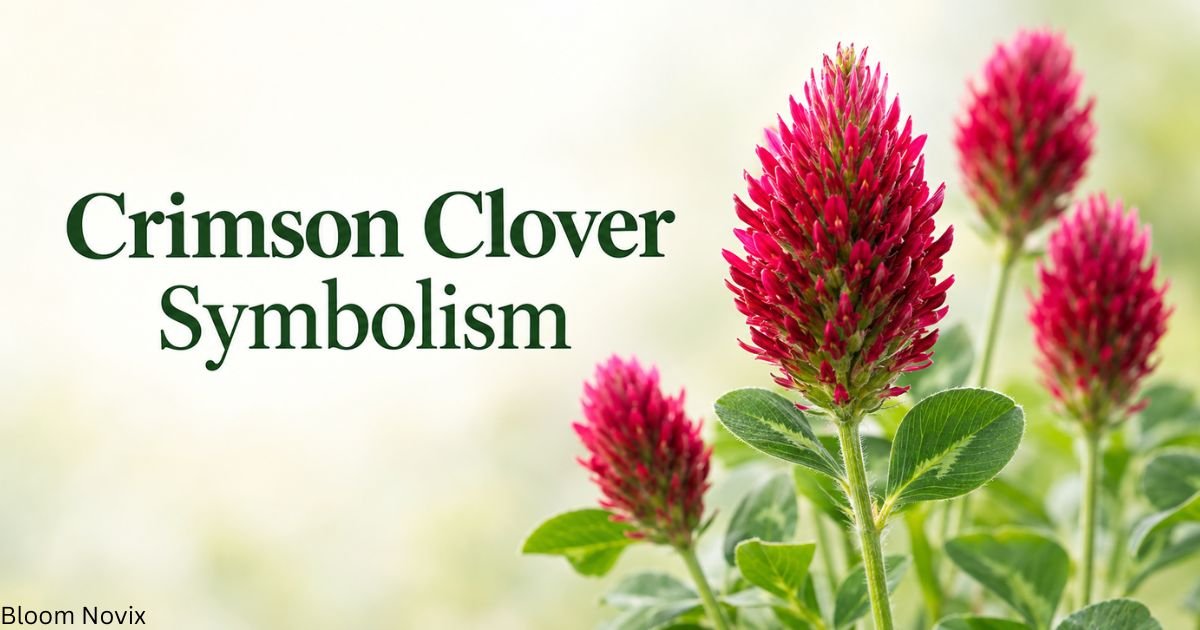
Crimson clover symbolism connects this striking red flower with love, luck, renewal, and spiritual growth. Its tall crimson flower heads stand out in fields and gardens, making it easy to see why this clover has gained symbolic meaning beyond its practical uses.
So, what does crimson clover actually represent? In this guide, you’ll discover crimson clover meaning in love, spirituality, luck, and everyday life. You’ll also learn about its history, appearance, uses, and the qualities that make this flower so meaningful.
Crimson Clover Symbolism (Quick Answer)
Crimson clover symbolism centers on renewal, vitality, passion, and abundance. The plant’s deep red color adds emotional intensity, while its farming role connects it to fertility and growth. It is not the same as the lucky four-leaf clover.
- Symbolizes renewal, vitality, and abundance
- Red color adds passion and emotional strength
- Different species from red clover and shamrock
- Popular in gardens, tattoos, and conservation projects
The plant’s meaning blends beauty with usefulness. That balance makes it stand out among flower symbols. Most flowers earn meaning through appearance alone, but crimson clover earns it through what it actually does for the land.
Farmers value it for fixing nitrogen in soil naturally. Gardeners value it for feeding bees and butterflies. This dual purpose gives the flower a grounded, practical kind of symbolism that few other plants share.
What Is Crimson Clover?
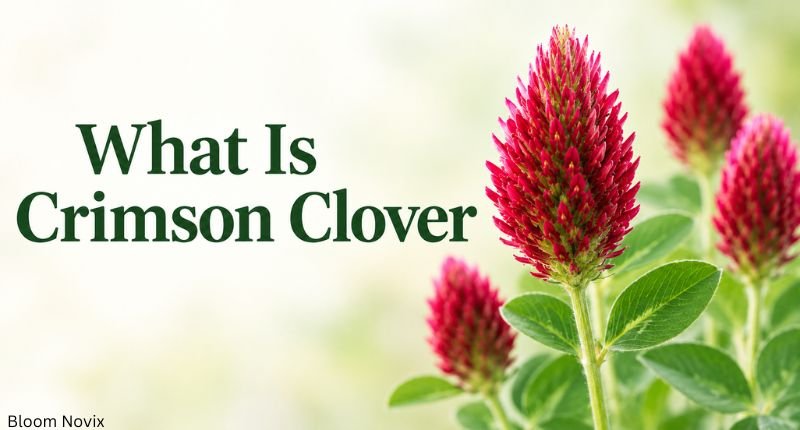
Crimson clover (Trifolium incarnatum) is an annual flowering plant from the Fabaceae family, also called the legume family. It grows naturally across Europe and parts of the Middle East. American farmers later adopted it widely as a cover crop and forage plant.
The plant produces tall, cone-shaped flower heads packed with tiny crimson blooms. Each stem carries the classic three-leaf clover pattern underneath. Plants typically grow between one and three feet tall, depending on soil and climate.
- Scientific name: Trifolium incarnatum
- Plant family: Fabaceae (legume family)
- Native region: Europe and the Middle East
- Common uses: cover crop, forage, pollinator habitat
Unlike ornamental flowers grown purely for looks, crimson clover earns its place through function. It improves soil, feeds livestock, and supports pollinators. This working-plant identity shapes almost every layer of its symbolism today.
Crimson Clover vs Red Clover vs Four-Leaf Clover: Key Differences
Many people confuse crimson clover with red clover or the lucky four-leaf clover. These plants may look similar at first glance, but their meanings and uses can differ. If you are curious about how clover is connected with romance and relationships, our guide to clover meaning in love offers a closer look. Understanding these differences makes it easier to identify crimson clover and appreciate its unique symbolism.
Crimson clover produces long, narrow, cone-shaped flower heads in a deep red shade. Red clover produces round, pinkish-purple flower heads instead. The four-leaf clover is not even a separate species. It is simply a rare genetic variation of ordinary three-leaf clover plants.
| Feature | Crimson Clover | Red Clover | Four-Leaf Clover |
| Scientific Name | Trifolium incarnatum | Trifolium pratense | Genetic variation (species varies) |
| Flower Shape | Cone-shaped spike | Round flower head | Not flower-based |
| Flower Color | Deep crimson red | Pink to purple | N/A |
| Main Symbolism | Renewal, vitality, abundance | Love, healing | Good luck |
| Common Use | Cover crop, forage | Herbal remedy, forage | Charm, folklore symbol |
Understanding this difference matters for anyone using the flower symbolically. A crimson clover tattoo means something different than a four-leaf clover tattoo, even though people often mix them up online.
What Crimson Clover Symbolizes
At its core, crimson clover symbolism reflects a mix of natural traits and cultural interpretation. The flower’s color, shape, and growing pattern all feed into its deeper meaning. Four themes stand out clearly across most sources.
- Renewal – tied to its yearly growth cycle after winter dormancy
- Vitality – linked to the intense energy of its red color
- Abundance – connected to its role in improving soil fertility
- Commitment – a modern interpretation based on its quiet reliability
These themes work together rather than separately. A field of crimson clover blooming each spring represents life returning after a quiet season. That single image carries renewal, vitality, and abundance all at once.
People also connect the plant to inner strength and determination. Because it thrives in tough farmland conditions rather than delicate gardens, it symbolizes resilience through steady effort rather than sudden transformation.
Why Color Changes the Meaning
Color plays a massive role in how people interpret flowers. Crimson, a deep and intense shade of red, carries strong emotional weight across nearly every culture. It signals passion, courage, and urgency more than lighter reds or pinks do.
Unlike a red rose, crimson clover grows in open fields rather than formal gardens. This setting changes how people read its color. The crimson color meaning here feels more raw and grounded, less about romance and more about strength and energy.
- Deep red often signals passion and determination
- Field-grown flowers feel more natural than romantic
- Color intensity affects emotional interpretation directly
- Crimson differs slightly from bright or fire-engine red
This distinction matters for creative use. Someone designing a tattoo or artwork around crimson flower symbolism should understand that the meaning leans toward vitality and courage, not just love. The color still supports passion, but through strength rather than softness.
The Three-Leaf Connection to Broader Clover Tradition
Clover’s three-leaf shape carries centuries of symbolic history. The most famous connection comes from the Irish shamrock, tied to the legend of St. Patrick explaining the Christian Trinity using a three-leafed plant. Historians still debate how accurate that story really is.
Crimson clover shares this three-leaf structure but not the same cultural background. Its symbolism grew through European farming traditions rather than religious storytelling. Still, the shared shape naturally invites comparison between the two plants.
Modern interpretations often connect the three leaflets to:
- Unity – three parts working as one whole
- Balance – equal parts forming a stable structure
- Cooperation – shared purpose between separate elements
This makes crimson clover a fitting symbol for family bonds or partnership, even without direct ties to shamrock folklore. The shape alone communicates harmony, regardless of the plant’s specific history.
Clover, Luck, and the Four-Leaf Exception
Clover carries a strong reputation for luck, but this reputation belongs mainly to the rare four-leaf clover, not crimson clover specifically. Understanding this separation prevents a common mix-up in flower symbolism discussions.
The four-leaf clover earns its luck symbolism through rarity. Most clover plants grow with three leaflets, so a natural four-leaf mutation feels special and rare. Crimson clover almost never produces this mutation, so its meaning stays separate from luck-based folklore.
- Four-leaf clovers are rare genetic exceptions
- Crimson clover rarely grows four leaflets
- Luck symbolism comes from rarity, not species
- Crimson clover’s meaning centers on growth, not chance
Crimson clover can still borrow a small amount of luck symbolism through general clover association. However, calling it a “lucky flower” in the traditional sense would be inaccurate and misleading to readers researching the topic.
Crimson Clover and Agricultural Abundance
Crimson clover earns its reputation for abundance through real agricultural function, not just appearance. As a legume, it partners with soil bacteria to pull nitrogen from the air and deposit it into the ground. This process naturally improves soil fertility.
Farmers plant crimson clover as a cover crop for several practical reasons. It suppresses weeds, reduces soil erosion, and adds organic material back into farmland. It also feeds livestock and supports local pollinators like bees and butterflies.
| Context | Meaning | Key Benefit |
| Farming | Soil fertility | Nitrogen fixation |
| Conservation | Land health | Erosion control |
| Wildlife | Pollinator support | Bee and butterfly food source |
This practical role gives crimson clover a symbolism rooted in giving back. It doesn’t just take resources to grow; it improves the environment around it while growing. That quality makes it a strong symbol for generosity and productive effort.
Best Growing Conditions and USDA Hardiness Zones
Crimson clover grows best in cool-season climates with mild winters. It thrives in USDA hardiness zones 6 through 9, making it a popular choice across much of the southern and central United States. Farmers usually plant it in early fall for winter establishment.
The plant prefers well-drained soil with a slightly acidic to neutral pH level. It tolerates poor soil better than many other cover crops, which explains its popularity among farmers working with depleted land.
- Ideal zones: USDA 6–9
- Soil type: well-drained, slightly acidic to neutral
- Planting season: early fall for winter cover
- Sunlight needs: full sun for best flowering
Gardeners in colder zones can still grow crimson clover as a spring annual instead of a fall cover crop. This flexibility makes it accessible to a wide range of climates, adding to its practical appeal beyond symbolism alone.
How to Plant and Care for Crimson Clover
Planting crimson clover requires minimal effort compared to many ornamental flowers. Farmers and home gardeners both appreciate its low-maintenance nature once it establishes in the soil.
Start by preparing loose, well-drained soil and scattering seeds evenly across the area. Light raking helps seeds settle without burying them too deep. Water lightly after planting to support germination.
Simple care steps:
- Plant seeds in early fall or early spring
- Rake lightly to cover seeds with soil
- Water consistently until seedlings establish
- Avoid heavy fertilizer; the plant fixes its own nitrogen
- Mow or till under before seed drop to prevent unwanted spread
Once established, crimson clover requires very little upkeep. It handles dry spells reasonably well and rarely needs pest control. This ease of care adds another layer to its symbolism: quiet reliability without constant attention.
Companion Planting: What Grows Well With Crimson Clover
Crimson clover works well alongside many other plants in both farm fields and home gardens. Its nitrogen-fixing ability makes it a helpful neighbor for crops that need extra soil nutrients to thrive.
Farmers often pair it with corn, wheat, or vegetable rotations to boost soil health naturally between growing seasons. Home gardeners use it near flower beds or vegetable patches to attract pollinators while improving soil quality.
Good companion plants include:
- Corn and other heavy nitrogen-feeding crops
- Wheat and grain rotations
- Vegetable garden beds needing soil improvement
- Wildflower mixes for pollinator gardens
This companion role reinforces the plant’s symbolism of cooperation and support. It doesn’t just grow for itself; it actively helps neighboring plants succeed, which mirrors the plant’s broader theme of quiet, productive generosity.
What Crimson Clover Represents in the U.S.
American gardeners and farmers mostly encounter crimson clover through cover cropping and conservation programs. This practical, working-field context shapes how Americans interpret the flower differently than more formal garden traditions might.
In the U.S., crimson clover symbolizes responsible land stewardship. It represents growth that benefits more than just itself, improving soil while supporting pollinators and wildlife. This aligns closely with modern environmental values.
- Represents soil health and land stewardship
- Connects to regenerative agriculture movements
- Symbolizes usefulness alongside natural beauty
- Reflects growing interest in sustainable gardening
This American interpretation feels less romantic and more practical compared to European flower traditions. It positions crimson clover as a symbol of doing good quietly, rather than standing out for beauty alone.
Emotional and Personal Symbolism
Beyond agriculture, people connect crimson clover to personal emotional journeys. Its growth pattern after winter dormancy naturally suggests themes of recovery, renewal, and quiet strength during difficult periods.
Many people use crimson clover symbolism to represent starting over after a hard chapter in life. The flower’s ability to enrich depleted soil mirrors personal stories of rebuilding after loss or struggle.
Common personal associations include:
- Starting fresh after a difficult period
- Staying productive without seeking attention
- Building something valuable for others
- Turning hardship into eventual growth
Compared to dramatic symbols like a phoenix rising from ashes, crimson clover suggests something quieter. It represents steady renewal rather than sudden transformation, appealing to people who value gradual, grounded personal growth.
Is Crimson Clover a Religious or Spiritual Symbol?
Crimson clover does not carry any standardized religious meaning on its own. The broader clover family holds Christian symbolism through the shamrock-Trinity legend, but this tradition does not extend specifically to the crimson species.
In modern spiritual contexts, some people interpret the three leaflets as symbols of unity or balance. Others connect the seasonal growth cycle to spiritual renewal. These interpretations remain personal rather than part of any established doctrine.
- No official religious symbolism tied to the species
- Shamrock-Trinity legend applies to clover broadly, not crimson specifically
- Modern spiritual meanings are personal interpretations
- Three leaves often linked to balance or unity in spiritual practice
Anyone exploring crimson clover spiritual meaning should understand that these interpretations come from personal or contemporary sources. They are not backed by long-standing religious tradition specific to this plant.
Modern Uses: Tattoos, Art, and Decor
Crimson clover’s bold color and unique shape make it popular in modern creative design. People increasingly choose it over more common flower symbols to represent something more grounded and less traditional.
In tattoo art, crimson clover often represents renewal, personal growth, and a strong connection to nature. People may choose it after major life changes as a visual reminder of resilience and quiet strength. Like other birth flower tattoos, the design can carry a personal meaning tied to growth, change, or an important stage of life.
Popular modern applications:
- Tattoos symbolizing renewal or personal growth
- Rustic and farmhouse-style home decor
- Botanical jewelry designs featuring clover shapes
- Social media content about pollinators and sustainable gardening
Home decor featuring crimson clover fits naturally into farmhouse, cottage, and rustic design styles. Its earthy, working-field origin pairs well with wildflower motifs and natural textures throughout a space.
Crimson Clover in Bouquets, Weddings, and Gift-Giving
Crimson clover has started appearing more often in wedding bouquets and thoughtful gift arrangements. Its deep red color adds visual intensity, while its symbolism adds meaningful depth beyond simple decoration.
Couples sometimes choose crimson clover to represent growth together as partners, drawing on the three-leaf symbolism of unity and balance. Its rustic appearance also fits naturally into countryside or farm-themed wedding styles.
- Represents growth and partnership in weddings
- Adds rustic texture to bouquet arrangements
- Works well in countryside or farmhouse wedding themes
- Makes a thoughtful gift for new beginnings or fresh starts
As a gift, crimson clover suits occasions tied to new chapters in life. A new home, a fresh job, or a personal milestone all pair naturally with the flower’s renewal-focused symbolism.
Common Mix-Ups to Avoid
Several misconceptions surround crimson clover, often causing confusion in casual conversation and online searches. Clearing these up helps readers use the flower’s symbolism accurately going forward.
The biggest mix-up involves assuming crimson clover and red clover are the same plant. They are closely related but botanically distinct species with different appearances and uses.
Common misconceptions:
- Crimson clover and red clover are not the same species
- Crimson clover is not the lucky four-leaf clover
- Not all clover symbolism relates to Irish or St. Patrick’s Day traditions
- The plant does not carry one single fixed meaning
Understanding these distinctions prevents inaccurate symbolism from spreading further online. Each clover variety deserves its own accurate meaning rather than a blended, oversimplified interpretation.
How the Meaning Has Evolved
Crimson clover’s symbolism has shifted significantly over time. Older agricultural cultures valued the plant mainly for practical reasons, focusing on forage quality and soil improvement rather than symbolic meaning.
European folklore later added layers of luck and protection to clover symbolism broadly. Christian tradition contributed to the shamrock’s Trinity association, further expanding clover’s cultural weight across generations.
Today, Americans primarily encounter crimson clover through gardening and conservation work. This shift has moved its symbolism toward environmental responsibility and ecological renewal, blending older meanings with newer, sustainability-focused values.
The flower’s meaning hasn’t replaced older interpretations; it has simply expanded to include them. A crimson clover field today can represent abundance, vitality, and environmental stewardship all at the same time.
FAQs
What does crimson clover symbolize?
Crimson clover symbolizes renewal, vitality, and abundance. Its red color adds passion, while its farming role connects it to fertility and growth.
Does crimson clover symbolize love?
It can, mainly through its red color. However, it does not carry the traditional romantic weight of a red rose.
Does crimson clover mean good luck?
Only loosely, through general clover folklore. True luck symbolism belongs to the rare four-leaf clover, not this species.
Is crimson clover the same as red clover?
No. Crimson clover (Trifolium incarnatum) and red clover (Trifolium pratense) are different species with distinct appearances.
What does a crimson clover tattoo mean?
It commonly represents renewal, personal growth, or resilience. The three-leaf shape can also symbolize unity or balance.
Is a crimson clover the same as a shamrock?
No. Shamrock refers broadly to three-leaf clover used in Irish tradition, while crimson clover is a specific, unrelated species.
What is the best time to plant crimson clover?
Early fall works best in mild climates, while early spring suits colder regions. Both seasons support strong germination.
Can you eat crimson clover?
Yes, in small amounts. It is mainly used as livestock forage rather than a common human food source.
Does crimson clover attract bees and pollinators?
Yes. Its dense flower heads provide excellent nectar sources for bees, butterflies, and other beneficial pollinators.
What does it mean to dream about crimson clover?
Dreaming about crimson clovers often symbolizes personal renewal or upcoming growth. Some interpret it as a sign of emotional healing.
Conclusion
Crimson clover symbolism reflects more than its deep red blooms. Its color suggests passion, energy, and vitality, while its role as a valuable cover crop adds meanings of growth, renewal, strength, and resilience. Unlike flowers grown only for their beauty, crimson clover also gives something back to the land.
From fields and gardens to tattoos and personal symbolism, crimson clover can represent the idea that true growth has a purpose. It reminds us that beauty, strength, and usefulness can grow together.

BloomNovix is managed by an experienced team of content writers and SEO specialists with 4+ years of expertise in gardening and plant care. We provide well-researched guides, gardening tips, and insights on floral meanings to help plant lovers grow their indoor and outdoor gardens with confidence.