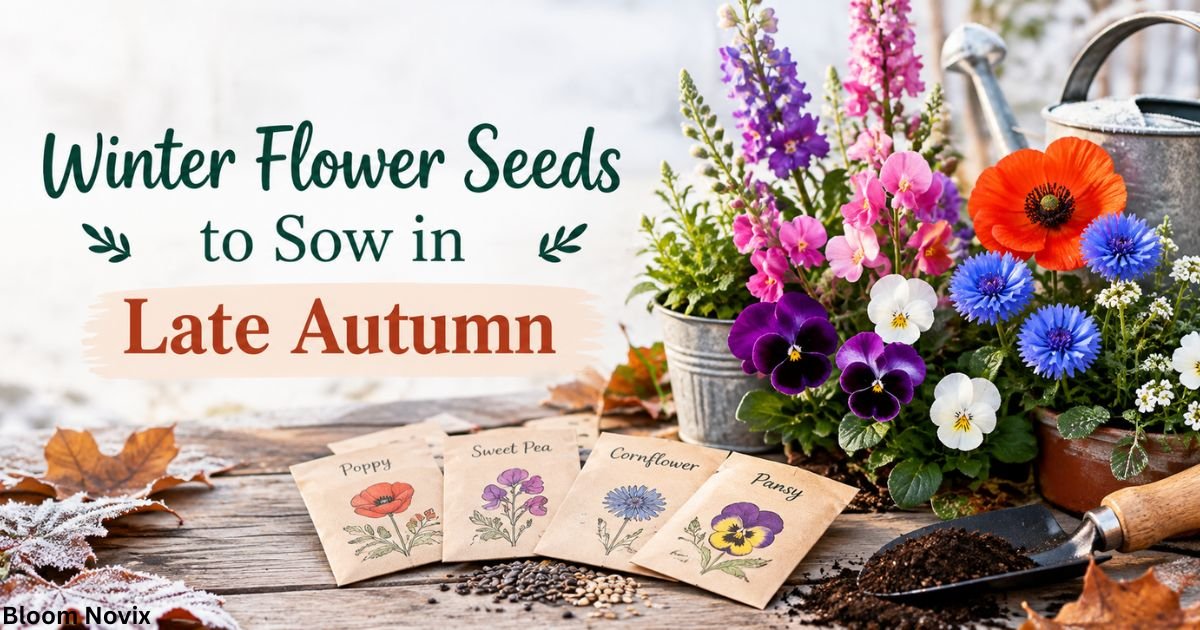
Picture a garden bursting with color while the rest of the yard still looks bare. It may sound too early to think about flowers, but late autumn is actually a great time to sow certain seeds. The cold weather can help some seeds rest in the soil until the conditions are right for growth.
Many gardeners stop sowing once summer ends. But a few hardy flowers can handle the cold and get a head start before spring arrives. In this guide, you’ll find 20 winter flower seeds to sow in late autumn, along with the best planting time, growing zones, and simple tips to help them through the colder months.
Why Late Autumn Is the Best Time to Sow Winter Flower Seeds
Late autumn can be a useful time to sow certain flower seeds. The air is getting colder, but the soil may still hold enough warmth for the seeds to settle in. As winter arrives, many seeds stay dormant until conditions become better for growth in spring.
Some hardy flowers also benefit from a period of cold before they germinate. This process is called cold stratification. In the garden, winter can provide that natural cold period without the need to store seeds in the refrigerator.
The timing is important. You want the soil to be cold enough that the seeds are unlikely to sprout right away, but not frozen solid when you sow them. The right window varies by flower and climate, so watch your local weather rather than following one temperature rule for every seed.
Best Winter Flower Seeds to Sow in Late Autumn (Quick List)
You do not need a huge seed stash. A few reliable varieties give you months of color. This list covers 20 proven picks. Each one handles cold, frost, and wet soil.
The table below shows the plant type and the bloom window. Annuals finish in one season. Biennials bloom in their second year. Perennials return year after year.
| Flower | Plant Type | Main Bloom Window |
| Pansy | Hardy annual | Early spring |
| Viola | Hardy annual | Early spring |
| Sweet pea | Hardy annual | Late spring |
| California poppy | Annual | Spring to summer |
| Corn poppy | Annual | Late spring |
| Larkspur | Hardy annual | Late spring |
| Bachelor’s button | Hardy annual | Spring |
| Calendula | Hardy annual | Spring to fall |
| Nigella (love-in-a-mist) | Hardy annual | Late spring |
| Snapdragon | Tender perennial | Spring to summer |
| Sweet alyssum | Hardy annual | Early spring to fall |
| Foxglove | Biennial | Late spring |
| Hollyhock | Biennial | Summer |
| Forget-me-not | Biennial | Early spring |
| Columbine | Perennial | Late spring |
| Echinacea (coneflower) | Perennial | Summer |
| Lupine | Perennial | Late spring |
| Candytuft | Perennial | Spring |
| Delphinium | Perennial | Early summer |
| Sweet William | Biennial | Late spring |
Hardy, Half-Hardy and Tender Flower Seeds: What’s the Difference?
Seed packets use three labels. They tell you how much cold a plant can take. Pick the wrong label, and your seeds will not survive.
Hardy seeds shrug off frost and freezing soil. Sow these in late autumn. Half-hardy seeds handle light frost but suffer in a deep freeze. Tender seeds die at the first frost.
Check the packet before you sow. Look for phrases like “direct sow in fall” or “frost tolerant.”
- Hardy: poppies, larkspur, bachelor’s button, calendula
- Half-hardy: snapdragons, stock, sweet alyssum in cold zones
- Tender (skip in fall): zinnia, cosmos, marigold, sunflower
When to Sow Winter Flower Seeds by USDA Hardiness Zone
Your zone decides your sowing date. The USDA hardiness zone map shows your average winter low. Find your zone first, then use the table below.
Cold zones need patience. Wait until the ground is nearly frozen. Gardeners call this dormant sowing. Warm zones start earlier, because their winters stay mild.
| USDA Zone | Best Sowing Window | Quick Tip |
| 3–4 | Late November to December | Sow after the ground cools, just before it freezes |
| 5–6 | November to early December | Wait for several frosty nights |
| 7–8 | November to December | Sow pansies in October in zone 8 |
| 9–10 | October to January | Choose cool-season flowers only |
A cheap soil thermometer removes the guesswork. Aim for steady readings under 40°F. Mark your calendar for the same week next year.
Hardy Annual Flower Seeds to Direct Sow in Late Autumn
Hardy annuals love fall sowing. They grow, bloom, set seed, and die within one year. Fall-sown plants often bloom bigger than spring-sown ones.
Direct sowing works best for plants with a taproot. Poppies and larkspur hate being moved. Their roots break easily. Sow them where you want them to grow.
Add these easy choices to your list:
- Poppies: scatter the tiny seeds on bare soil
- Larkspur: this cold-lover germinates best after frost
- Bachelor’s button: it blooms fast and reseeds itself
- Calendula: it tolerates light frost and keeps blooming
- Sweet peas: they climb and smell wonderful
One caution for pansies and violas. In zones 3 to 5, fall-sown seedlings may not survive. Start them indoors in late winter instead.
Biennial and Perennial Flower Seeds to Sow in Late Autumn
Biennials and perennials reward your patience. They spend the first season building roots and leaves. Big blooms arrive in the second year. Perennials then return for years.
Fall sowing suits these plants well. The winter chill breaks seed dormancy. Seedlings appear in spring and grow at their own pace.
Try these reliable options:
- Foxglove: tall spikes that bumblebees adore
- Hollyhock: old-fashioned height for fences
- Sweet William: dense clusters with a clove scent
- Forget-me-not: soft blue carpets under shrubs
- Columbine: nodding flowers that suit shade
Keep foxglove away from pets and small children. All parts of the plant are toxic if eaten.
Flower Seeds That Need Cold Stratification
Some seeds refuse to sprout without a long chill. Their hard coats or inner chemicals block growth. Cold, damp weeks soften the coat and flip the switch. That process is cold stratification.
Most seeds need 30 to 90 days at 33–40°F. Fall sowing outdoors does this naturally. Winter rain and snow keep the seeds moist. You do not have to lift a finger.
These flowers benefit the most:
- Echinacea: needs about four to eight weeks of cold
- Columbine: germinates better after a long chill
- Lupine: nick the seed coat first, then sow
- Delphinium: needs cold and darkness
- Milkweed: a must-have for monarch butterflies
No garden space? Try the fridge method. Mix seeds with damp sand in a sealed bag. Label it and chill it, then sow in spring.
Best Winter Flower Seeds for Pots, Containers and Window Boxes
Containers brighten patios, steps, and balconies. Cold-hardy seeds grow well in them. You also control the soil quality and drainage.
Choose compact plants for pots. Pansies, violas, sweet alyssum, and dwarf snapdragons all fit nicely. Sweet peas need a deep pot and a small trellis. Calendula adds sunny orange.
Containers freeze harder than the ground. Roots sit above the soil line, with no insulation. Treat your pot as if you live two zones colder.
- Use fresh potting mix, not garden soil
- Pick pots with drainage holes
- Move pots against a sheltered wall
- Wrap clay pots, because they crack in hard freezes
Best Winter Flower Seeds for Cut Flower Gardens
Fall-sown flowers make cut flower gardens shine. They bloom earlier and grow taller. Stems come out longer and stronger too. You can fill vases weeks before store bouquets look good.
Larkspur, sweet peas, snapdragons, and bachelor’s buttons top the list. Nigella adds unusual seed pods for dried arrangements. Foxglove adds height to big vases.
Harvest with care. Cut early in the morning, when stems hold the most water. Plunge stems into water right away. Pick often, because regular cutting tells plants to make more flowers.
- Sweet peas: pick every few days to extend the season
- Snapdragons: cut when the lower third of the spike has opened
- Larkspur: strip the leaves below the waterline
- Calendula: harvest when petals fully open
Winter Flower Seeds That Attract Pollinators in Early Spring
Early spring is a tough time for bees. Few plants bloom, and hungry queens search for food. Your fall-sown flowers can save them. Early nectar helps entire colonies get started.
Choose plants with open, simple blooms. Poppies offer pollen. Sweet alyssum draws tiny hoverflies that eat aphids. Forget-me-nots, calendula, and lupine feed many bee types.
Columbine attracts hummingbirds with its long spurs. Foxglove draws bumblebees deep into its tubes. Echinacea feeds butterflies all summer. Skip pesticides, because they harm the very insects you invite.
Read Also: Lotus Flower Season
Flower Seeds to Sow in Late Autumn for Early Spring Blooms
Everyone wants color the minute winter ends. Fall sowing delivers it. Seeds sit ready, and growth begins as soon as the soil warms. Plants then bloom weeks before spring-sown ones.
Plan your garden by bloom order. That way, color never stops. Mix early, mid, and late performers in the same bed.
- Earliest (late winter to early spring): pansies, violas, forget-me-nots, sweet alyssum
- Mid spring: poppies, bachelor’s buttons, calendula, candytuft
- Late spring to early summer: larkspur, sweet peas, nigella, columbine, lupine, delphinium
This succession planting keeps bees fed and your yard colorful. Add a second sowing of fast annuals in early spring for even more blooms.
How to Prepare Your Soil Before Sowing in Late Autumn
Good soil prep takes about an hour. It pays off all spring. Seeds struggle in compacted or weedy ground. Clean, loose soil gives them an easy start.
Start by clearing the bed. Pull weeds, roots and all. Remove old leaves and stones. Loosen only the top two to three inches. Deep digging brings up fresh weed seeds.
Rake the surface until it looks fine and level. Most flowers like soil with a pH between 6.0 and 7.0. Skip heavy fertilizer, because too much nitrogen gives you leaves instead of blooms.
- Clear weeds and debris
- Loosen the top few inches
- Mix in a thin layer of compost
- Rake smooth and level
- Mark the bed with stakes
How to Direct Sow Flower Seeds in Late Autumn (Step-by-Step)
Direct sowing is simple. You need seeds, a rake, and a watering can. Pick a calm, dry day for the job. The wind blows tiny seeds away.
Follow these steps in order:
- Wait until the soil stays below 40°F.
- Prepare the bed and rake it smooth.
- Check each packet for sowing depth.
- Scatter small seeds or drop larger ones in rows.
- Press tiny seeds gently into the soil.
- Cover seeds that need darkness with fine soil.
- Water lightly once, then label the spot.
Some seeds need light to sprout. Poppies, snapdragons, and foxglove belong on the surface. Pressing them in is enough. Cover darkness-lovers with a thin layer of shredded leaves. Skip thick mulch, because it blocks light and holds too much moisture.
Explore More: April Birth Flowers
Winter Sowing in Milk Jugs and Containers
Winter sowing turns a plastic jug into a mini greenhouse. You sow seeds in the jug, and the jug sits outside all winter. The seeds sense the weather changes. They sprout when conditions turn right.
The method protects seeds from birds, mice, and heavy rain. It works well for tiny spaces. It also helps you avoid mixing up spots in the garden. You can move the seedlings later.
- Cut a clean jug in half, leaving a hinge near the handle
- Poke drainage holes in the bottom
- Add three to four inches of damp potting mix
- Sow seeds at the right depth
- Tape the jug shut and add vent holes on top
- Label the jug with a permanent marker
- Set it outside in a sunny, open place
Hardy flowers like larkspur, calendula, and echinacea work best. Remove the tape when spring warms up. Plant seedlings out once the last frost passes.
Seed Depth, Spacing and Germination Time Chart
Depth and spacing make or break your success. Plant too deep, and seeds never reach the light. Plant too close, and seedlings fight for food. Use this chart as your quick reference.
| Flower | Sowing Depth | Spacing | Germination Time |
| Sweet pea | 1 inch | 6 inches | 10–21 days |
| Larkspur | 1/8 inch | 8–12 inches | 14–21 days |
| California poppy | Surface | 6–8 inches | 10–14 days |
| Calendula | 1/2 inch | 6–10 inches | 7–14 days |
| Bachelor’s button | 1/4 inch | 6–8 inches | 7–14 days |
| Snapdragon | Surface | 8–12 inches | 7–14 days |
| Foxglove | Surface | 18 inches | 14–21 days |
| Pansy | 1/8 inch | 6–8 inches | 10–21 days |
| Echinacea | 1/4 inch | 18 inches | 14–28 days |
| Columbine | Surface | 12 inches | 21–30 days |
| Lupine | 1/4 inch | 12–18 inches | 14–28 days |
| Forget-me-not | 1/8 inch | 6–8 inches | 8–14 days |
Remember one rule of thumb. Bury seeds about two to three times their width. Mix very fine seeds with a little sand. This helps you spread them evenly.
How to Protect Late Autumn Seedlings from Frost, Snow and Pests
Cold-hardy seeds rarely need rescue. Snow acts like a warm blanket for them. Frost seldom hurts dormant seeds. A few smart steps still help.
Watch for frost heave. Repeated freezing and thawing pushes seeds and young plants out of the soil. Add a thin layer of shredded leaves after the first hard freeze. Check the bed after each thaw.
Protect seeds from hungry animals too. Birds, squirrels, and mice dig up fresh soil. Lay chicken wire or garden netting over the bed. Remove it when seedlings grow. In spring, check for slugs and cover tender seedlings with row cover during hard freezes.
Common Mistakes to Avoid When Sowing Winter Flower Seeds
Small errors cause most failures. Avoid these and you will beat many new gardeners. Learn from other people’s mistakes rather than your own.
- Sowing too early: warm spells trigger sprouting, then frost kills seedlings
- Burying light-loving seeds: poppies and snapdragons need sunlight
- Choosing tender seeds: zinnias and cosmos need warm soil
- Mulching too thickly: heavy mulch blocks light and encourages rot
- Feeding too much: rich soil grows leaves, not flowers
- Skipping labels: you will forget where you sowed what
- Sowing too thickly: crowded seedlings stay weak
Give yourself grace if seeds do not show in winter. Many wait until spring. Be patient and do not dig them up.
Winter Flower Seed Care Calendar: Late Autumn to Early Spring
A simple calendar keeps you on track when planting winter flower seeds to sow in late autumn. Fall sowing needs little care, but timing matters. Follow this schedule, and your flowers will be ready for the right conditions.
Start with the big jobs in autumn, then let the seeds rest through winter. Spring brings the next round of simple tasks. Mark each date in your phone for easy reminders.
- Late autumn: sow hardy seeds once soil stays below 40°F
- Early winter: add a thin layer of leaf mulch and cover with netting
- Midwinter: check for frost heave after thaws
- Late winter: start tender seeds indoors for summer color
- Early spring: remove netting and watch for seedlings
- Mid spring: thin crowded seedlings and water during dry spells
Frequently Asked Questions
1. What flower seeds can I sow in late autumn?
Hardy annuals, biennials, and many perennials work well. The best winter flower seeds to sow in late autumn include poppies, larkspur, sweet peas, calendula, bachelor’s buttons, foxglove, and echinacea. These plants tolerate frost and often need cold to germinate.
2. Can I sow flower seeds in November?
Yes, November suits many cold-hardy flowers. It works best in zones 5 to 8. Wait until the soil stays cold so seeds do not sprout too early.
3. Do winter flower seeds need cold stratification?
Some do, and many others simply benefit from it. Echinacea, columbine, lupine, and delphinium germinate better after a long chill. Fall sowing gives them that chill naturally.
4. Which flower seeds germinate best in cold weather?
Poppies, larkspur, calendula, and pansies handle cold well. They sprout in cool soil. Many fail if the weather turns too warm.
5. Will flower seeds survive winter if sown in late autumn?
Yes, hardy seeds survive winter easily. Their tough coats protect them. Snow acts as insulation, and the seeds stay dormant until spring.
6. Should I cover flower seeds with mulch after sowing in autumn?
Use only a thin layer of mulch, or skip it. Thick mulch blocks light and holds moisture that rots seeds. Surface-sown seeds need no mulch at all.
7. What is the difference between direct sowing and winter sowing?
Direct sowing happens in the garden bed; winter sowing happens in containers. Winter sowing protects seeds from animals and rain. Direct sowing saves time and avoids transplanting.
8. Which winter flower seeds bloom the earliest in spring?
Pansies, violas, and forget-me-nots bloom first. Sweet alyssum and poppies follow soon after. These flowers start when the soil barely warms.
9. Can I sow winter flower seeds in pots or containers?
Yes, many hardy flowers thrive in pots. Use fresh potting mix and drainage holes. Place pots in a sheltered spot, because containers freeze harder than soil.
10. How deep should I plant flower seeds in late autumn?
Plant seeds two to three times as deep as their width. Tiny seeds like poppies and snapdragons stay on the surface. Larger seeds like sweet peas go about an inch deep.
Conclusion
The winter flower seeds to sow in late autumn can give your garden a beautiful head start before spring fully arrives. With the right varieties, timing, and planting method, many cold-hardy flowers can rest through winter and begin growing when the conditions are right.
Choose a few flowers that suit your garden and climate, prepare a clean, loose bed, and give the seeds time to settle in. A little planning in late autumn can bring early color, fresh growth, and a lively garden when winter finally gives way to spring.

BloomNovix is managed by an experienced team of content writers and SEO specialists with 4+ years of expertise in gardening and plant care. We provide well-researched guides, gardening tips, and insights on floral meanings to help plant lovers grow their indoor and outdoor gardens with confidence.