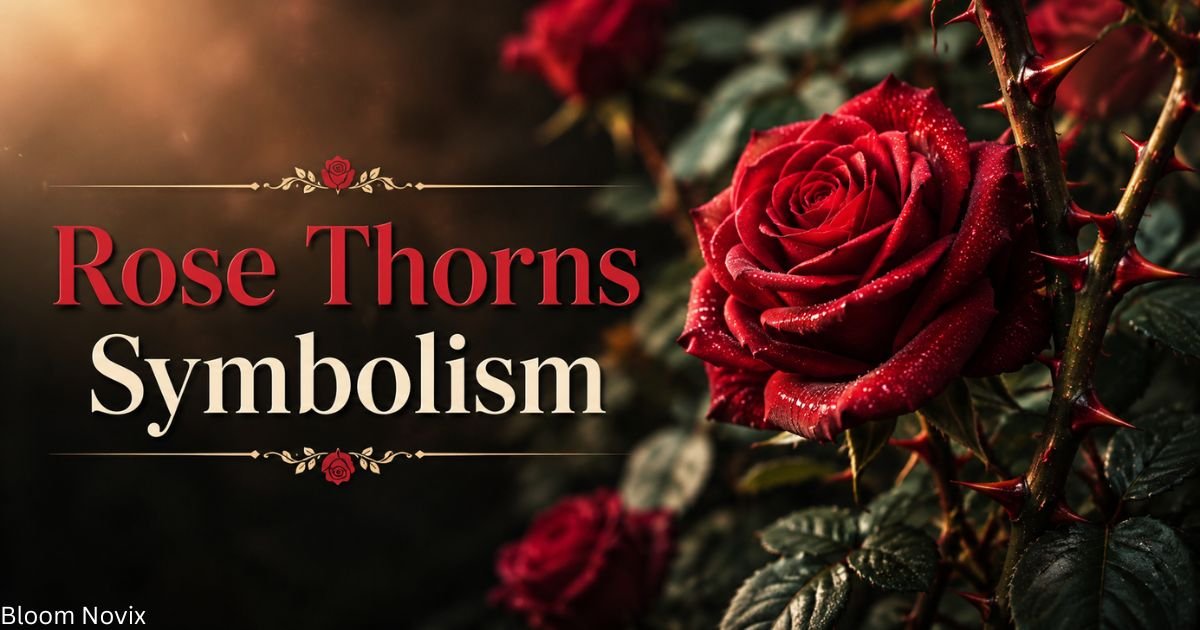
Have you ever picked up a rose and felt a sharp sting before you even got close enough to smell it? That little moment captures something surprisingly meaningful. Rose thorns symbolism reminds us that beauty and pain can exist side by side. A rose may look delicate, but its thorns protect it—and that simple contrast has inspired people for centuries.
But what do rose thorns actually symbolize? Their meaning can change depending on the context. They may represent protection, resilience, love, sacrifice, or the painful lessons that come with life. In this guide, we’ll explore what rose thorns mean in the Bible, dreams, tattoos, relationships, and different spiritual traditions, so you can understand the deeper meaning behind this familiar part of the rose.
Quick Answer
Rose thorns represent protection, resilience, and the idea that beauty always comes with a price. They remind us that love, growth, and strength often involve some form of struggle.
TL;DR
- Rose thorns symbolize protection and personal boundaries.
- They connect beauty with hardship and sacrifice.
- The Bible links thorns with suffering and redemption.
- Dreams about thorns often reveal hidden emotional vulnerability.
- Tattoos use thorns to show strength after hardship.
- Colors change the deeper meaning behind the thorn.
The Physical Meaning Behind Rose Thorns
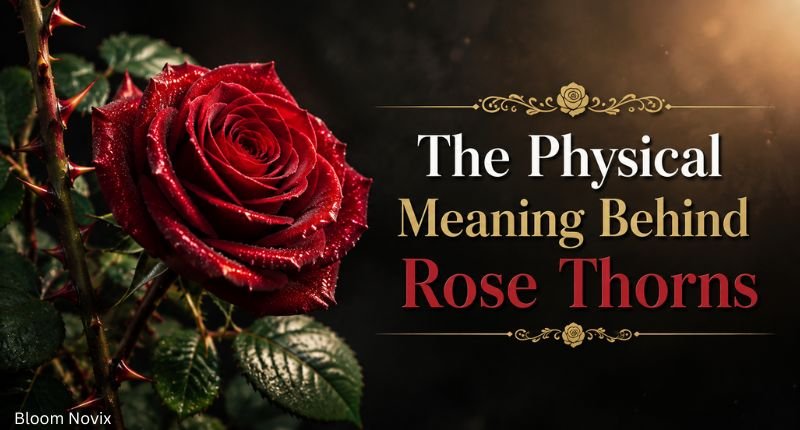
A rose thorn is a sharp, woody growth on the stem of a rose plant. Botanists actually call them prickles, not true thorns, because they grow from the outer skin of the stem rather than the wood itself. This small detail matters more than people think.
Nature designed these prickles for one main job: defense. They stop animals from grazing on the plant and help the rose survive in the wild. This survival function is the seed of every symbolic meaning that follows.
Here is what makes the physical structure so meaningful:
- Prickles grow downward and curved, which helps the plant cling to nearby branches for support.
- Different rose species grow different thorn densities — wild roses often have far more prickles than cultivated garden varieties.
- The rose does not “choose” to be defensive; it simply grows this way to survive, which is why many people connect the plant with natural resilience rather than aggression.
Gardeners have long noticed that roses bred purely for beauty, with fewer thorns, are often more fragile and prone to disease. Nature seems to reward the plant that protects itself. That single observation is the real root of every “beauty needs protection” idea that follows in this guide.
What Rose Thorns Commonly Mean in the United States
In modern America, rose thorn meaning rarely follows one fixed rule. It shifts with the person, the story, and the setting. A single tattoo can mean something completely different from one person to the next.
The most common interpretation is protection. People often say a thorn shows that something valuable — love, identity, or peace of mind — deserves a boundary. Right behind that comes resilience, since a rose survives despite its sharp defenses.
| Context | Common Meaning | Typical Use |
| Personal tattoos | Strength after struggle | Body art, memorial ink |
| Romantic relationships | Love that takes effort | Gifts, vows, anniversaries |
| Self-identity | Emotional boundaries | Journaling, jewelry |
| Home and art decor | Balance of beauty and grit | Wall art, framed prints |
| Gifting occasions | Respect and thoughtfulness | Bouquets, floral cards |
In real American floral tradition, many florists still remove thorns before handing over a bouquet, especially for romantic gifts. This small act is itself symbolic — it shows the giver wants to offer love without the risk of pain, which softens the entire meaning of the rose.
Ancient Roots and Early Symbolism of Rose Thorns
The bond between roses and thorns is not new. It stretches back thousands of years across many early civilizations that prized the rose for its rarity and fragrance.
Ancient Greek and Roman cultures treated roses as symbols of love, secrecy, and celebration. One specific myth stands out that many modern articles skip entirely: in Greek mythology, the rose is said to have turned red only after Aphrodite pricked her foot on a thorn while rushing to save Adonis. Her blood, according to the legend, stained the white rose petals red. This single story explains why red roses and thorns have been tied to passion mixed with pain for over two thousand years. Similar flower symbolism can also be seen in the clover meaning in love, where the flower carries its own associations with affection and romantic connection.
Key early associations included:
- Desire paired with risk — pleasure was never seen as free of consequence.
- Secrecy and privacy — Romans hung roses above meeting rooms to signal confidential talks, a tradition called sub rosa.
- Devotion tested by hardship — early poets used thorns to show that real love survives discomfort.
As the symbol travelled through Europe, it picked up new layers through art, folklore, and eventually religion — which brings us to one of the most searched angles on this topic.
Religious Interpretations of Rose Thorns
Religious symbolism gave rose thorns some of their most powerful meaning. Faith traditions turned a simple garden plant into a lesson about sacrifice and redemption.
In many Christian teachings, thorns are tied directly to suffering because of the crown of thorns placed on Jesus before the crucifixion. This connection turned the thorn into a lasting image of pain that leads to something greater. The rose itself gained purity symbolism, often linked with devotion and the Virgin Mary in certain traditions.
- Thorns often represent endurance through suffering.
- Roses commonly stand for purity and grace.
- Together, they express that hardship and holiness can exist side by side.
Interpretations still vary widely between denominations and individual believers, so no single meaning fits everyone. The next two sections dig even deeper into this religious thread, since search data shows readers actively want Bible-specific and spiritual answers, not just a general overview.
Rose Thorns Symbolism in the Bible
The Bible never mentions roses directly by name in most translations, but thorns appear repeatedly as a symbol of hardship, punishment, and eventual redemption.
- In Genesis, thorns and thistles appear as part of the curse on the ground after the fall of man, linking them to labor and struggle.
- The crown of thorns in the New Testament remains the most referenced connection, symbolizing suffering carried for a greater purpose.
- Some readers interpret thorns as a reminder that growth often follows difficulty, a theme repeated across several biblical parables about seeds and soil.
This biblical thread gives the thorn a weight that goes beyond decoration. It becomes a symbol of a burden that eventually leads to grace, which is exactly why so many people search for this meaning before getting a memorial tattoo or choosing scripture for a difficult season.
Read Also: Sunflower and Purple Flower Meaning
Rose Thorns Spiritual Meaning
Spiritually, thorns are often read as a message about inner protection. Many spiritual practices treat the thorn as a signal to guard your energy from people or situations that drain you.
- Some spiritual teachers describe thorns as karmic lessons — reminders that pain can carry a purpose.
- Others connect thorns with setting energetic boundaries, especially during periods of healing or transition.
- A thorn can also symbolize spiritual awakening, where discomfort pushes a person toward growth they were avoiding.
The Connection Between Roses, Love, and Emotional Pain
Roses are one of the strongest love symbols in the world, especially in the United States. Red roses alone are almost universally tied to romance and passion. But the thorn changes the story slightly, reminding us that love can carry both beauty and pain. This duality is also reflected in the meanings associated with other flowers, such as the petunia flower meaning, which is often connected with love and emotional expression.
A rose without thorns can feel idealized, almost too perfect. A rose with thorns feels honest. It admits that real relationships include effort, vulnerability, and the occasional disagreement.
Common emotional meanings include:
- Love that requires effort rather than staying effortless forever.
- Protecting your heart after a past disappointment.
- Lessons learned from a relationship that did not last.
- Emotional vulnerability shown openly instead of hidden.
Many couples now choose thorned rose imagery specifically because it feels more realistic than a “perfect” flower. It tells a truer love story — one with growth, not just flawless romance.
Red Rose Thorns Symbolism
Red rose thorns carry the heaviest emotional weight of any color combination. Red already stands for passion, desire, and deep love, and the thorn adds a layer of sacrifice to that passion.
- A red rose with visible thorns often symbolizes love worth protecting.
- It can also represent a relationship that survived real conflict or hardship.
- In tattoo culture, red thorned roses frequently mark a turning point in someone’s romantic life.
This combination is popular precisely because it feels emotionally complete — passion, commitment, and struggle shown in a single image.
Red Rose With Thorns Meaning
A red rose with thorns specifically (as a gift or standalone symbol, not just color theory) usually signals serious, committed love rather than a casual gesture.
- Giving a red rose still attached to its thorns can suggest the giver is not hiding the relationship’s challenges.
- It is often used in anniversary gifts to represent years of effort, not just current affection.
- Some couples now request bouquets with thorns intentionally left on, as a symbol of accepting each other fully, imperfections included.
This is a small but meaningful shift from the older tradition of stripping every thorn before gifting a rose.
Rose Thorns in American Tattoos and Personal Identity
Rose and thorn tattoos remain one of the most requested floral designs across American tattoo studios. Their popularity comes from one simple fact: they say something personal without needing a single word.
People often choose this design after surviving a hard chapter — grief, illness, a breakup, or major life change. The thorn becomes proof that they made it through.
Common tattoo pairings include:
- Roses with names or dates for remembrance.
- Roses with skulls, blending beauty with mortality.
- Thorned vines wrapping the arm or leg to show ongoing endurance.
- Roses without a full bloom, representing a story still in progress.
Placement also changes meaning. A large piece on the forearm often signals visible strength, while a small hidden design usually reflects something private the wearer is not ready to explain to strangers.
Rose With Thorns Tattoo Meaning
Beyond general tattoo culture, the specific phrase “rose with thorns tattoo” usually points to one core idea: surviving pain without losing softness.
- The rose represents the gentle, caring side a person kept intact.
- The thorn represents the defenses they had to build along the way.
- Together, the design tells others: I am still kind, but I will not be hurt the same way twice.
This is why therapists and grief counselors sometimes mention this tattoo style when discussing symbols their clients choose after trauma recovery — it is rarely random.
Rose Thorns in American Culture and Design
Beyond tattoos, rose and thorn imagery shows up across everyday American design because it instantly communicates two feelings at once: attraction and caution.
- Fashion uses thorn patterns to suggest confidence paired with self-respect.
- Home decor leans on rose and thorn art for a romantic, slightly vintage mood.
- Wedding stationery sometimes includes thorned roses to represent a love built on more than just the easy moments.
- Personal branding, especially among small business owners, uses the symbol to show resilience in a competitive market.
This visual shorthand works because American audiences generally value personal storytelling over rigid tradition. The same image can mean recovery to one person and independence to another, and that flexibility is exactly why it keeps appearing everywhere.
Rose With Thorns Drawing
When people search specifically for a “rose with thorns drawing,” they are usually looking for design inspiration with symbolic weight, not just a pretty sketch.
- Artists often draw the stem with exaggerated, sharp thorns to emphasize protection or pain.
- A wilting petal paired with sharp thorns is a common way to show heartbreak in illustration.
- Minimalist line-art versions are popular for memorial pieces, where simplicity feels more respectful than a detailed, busy design.
This style of drawing has become especially popular on social media, where a single small sketch can carry an entire emotional story in one image.
Cross-Cultural Meanings of Rose Thorns
While American culture leans heavily on personal identity, other regions built their own layered meanings around the rose and its thorn.
- European folklore often used thorns as a moral lesson, warning that beauty or temptation always carries a hidden cost.
- Persian and Middle Eastern poetry frequently paired the rose (gol) with the thorn (khar) to represent the inseparable nature of joy and hardship.
- Victorian England developed an entire “language of flowers,” where a rose given with thorns intact carried a very different message than one carefully stripped clean.
| Region/Tradition | Core Meaning | Notable Use |
| Ancient Greece/Rome | Passion mixed with risk | Mythology, love poetry |
| Persian poetry | Beauty inseparable from pain | Classic literature |
| Victorian England | Coded romantic messages | Flower-giving etiquette |
| Christian tradition | Suffering and redemption | Religious art |
Across nearly every culture, one idea repeats: something precious usually demands patience, respect, or protection before it can be fully enjoyed.
The Emotional and Psychological Meaning of Rose Thorns
Psychologically, the thorn reflects a very human balancing act between openness and self-protection.
People naturally connect the rose with warmth, love, and appreciation. The thorn adds the other half of the story: the instinct to defend what actually matters. This same idea of strength and protection can also be found in the amaranth symbolism, where the flower carries deeper meanings beyond its delicate appearance.
Rose thorns can quietly communicate:
- Strength built after hardship, not before it.
- Awareness of personal limits, without guilt attached.
- Acceptance of imperfection as part of a healthy identity.
- Emotional maturity, choosing boundaries over resentment.
This symbol resonates because it never denies pain. Instead, it treats pain as one chapter in a longer, still-unfolding story — not the whole book.
Rose Thorns in Dreams: What They Really Mean
Dreaming about rose thorns is more common than most people expect, and dream interpretation communities treat it as a strong emotional signal rather than a random image.
- Getting pricked by a thorn in a dream often points to a real-life situation where you feel emotionally exposed or unprotected.
- Holding a rose full of thorns without pain can suggest you have finally made peace with a difficult past experience.
- Cutting thorns off a rose in a dream frequently reflects a desire to simplify a relationship or remove unnecessary conflict from your life.
- A wilted rose covered in thorns may point to lingering resentment that has not been resolved yet.
Dream analysts generally agree that thorn dreams rarely predict the future. Instead, they mirror what your subconscious mind is already processing about protection, trust, or unresolved hurt.
Rose Thorns in Mourning and Remembrance Traditions
Flowers hold a long-standing place in American mourning customs, and roses appear often in memorial settings because of their emotional flexibility.
When thorns are included in memorial art or tattoos, they usually add a message of endurance through loss. The design honors both the pain of grief and the value of the relationship that caused it.
You will commonly see thorned roses in:
- Memorial tattoos dedicated to a specific person.
- Cemetery headstones and plaques.
- Sympathy cards and remembrance jewelry.
In this setting, the thorn is not just about suffering. It becomes a quiet reminder that grief this deep only happens because the love was real.
The Role of Color in Rose Thorn Symbolism
Color changes the emotional tone of thorn symbolism significantly. The thorn itself always suggests protection and challenge, but the petal color shifts the full message.
| Rose Color | Meaning With Thorns | Common Setting |
| Red | Passionate love with sacrifice | Anniversaries, romance |
| White | Protected innocence or new beginnings | Weddings, sympathy |
| Black | Transformation or major life change | Gothic art, mourning |
| Pink | Gentle strength and affection | Friendship gifts |
| Yellow | Cautious friendship or warning | Casual gifting |
These pairings are not fixed rules, but they show up consistently enough in American tattoos, gifting habits, and art to be treated as reliable guides.
Rose Thorns in Modern Pop Culture and Media
Movies, music, and books continue to lean on rose and thorn imagery because it delivers a complex emotional message instantly, without a single line of dialogue.
- Album covers often use thorned roses to hint at themes of heartbreak or rebellion.
- Film posters use the image to suggest a character who is both dangerous and vulnerable.
- Social media has amplified the symbol further, with thorned rose designs trending as profile art that signals personal growth after hard times.
The image works because it mirrors real people — capable of love, but shaped by real struggle.
Rose With Thorns Quotes
Quotes pairing roses and thorns remain some of the most saved and shared lines online, largely because they compress a big life lesson into one short sentence. Flowers have long been used in the same way to express feelings that are difficult to put into words, with the begonia flower meaning offering another example of how a simple bloom can carry a deeper emotional message.
- Popular quote themes usually focus on choosing to see the rose instead of only the thorn.
- Others flip the message, reminding readers that the thorn is what proves the rose is real, not artificial.
- A third common theme centers on resilience, comparing personal struggle to a rose that still blooms despite its sharp defenses.
These quotes are frequently used in tattoo captions, memorial cards, and social posts because they turn a private feeling into something universal and easy to relate to.
Common Misunderstandings About Rose Thorns
Because this symbol has traveled through so many cultures, a few misconceptions keep repeating.
- Myth: Thorns always mean something negative. Reality: They frequently represent protection and strength instead.
- Myth: There is only one historical meaning. Reality: Religion, folklore, art, and personal experience all shaped different layers of meaning.
- Myth: A thorned rose always signals heartbreak. Reality: Many people choose it to represent confidence and personal growth, not pain alone.
Context always decides the real meaning. The same tattoo can represent healing for one person and pure aesthetic preference for another.
How Rose Thorns Symbolism Has Changed Over Time
Meaning tends to shift as society changes, and rose thorn symbolism is no exception.
Earlier interpretations leaned heavily on religious sacrifice and moral lessons about hardship. Modern audiences, especially in the United States, now read the same symbol through a far more personal lens — identity, mental health awareness, and individual resilience.
This shift reflects a broader cultural move away from fixed, traditional symbolism toward personal storytelling. A single thorned rose today might represent a spiritual journey to one person, a mental health milestone to another, and simply a favorite art style to someone else entirely.
Why People Still Choose Thorned Roses Today
The symbol has not faded because it manages to hold several emotions at once, which most single-meaning symbols cannot do.
People continue choosing thorned roses to represent:
- Surviving a hard season without losing softness.
- Protecting their peace after past hurt.
- Honoring someone they lost.
- Accepting imperfection as part of a real, lived story.
In a culture that increasingly values authenticity over perfection, a flower that admits it can hurt you — and still chooses to bloom — remains one of the most honest symbols available.
FAQs
What does a rose with thorns symbolize?
A rose with thorns symbolizes protection, resilience, and the idea that beauty always comes with some difficulty. It reminds people that meaningful things are usually worth guarding.
Are rose thorns a positive or negative symbol?
They can be both, depending on context. Thorns often represent pain, but far more commonly they stand for strength, survival, and healthy boundaries.
What do thorns symbolize spiritually?
Spiritually, thorns often represent protective energy and personal growth through hardship. Many spiritual traditions treat them as a reminder to guard your peace.
Do rose thorns have religious meanings?
Yes. In Christian tradition, thorns are closely tied to suffering because of the crown of thorns worn by Jesus. Other faiths interpret them through their own cultural lens.
What do rose thorn tattoos mean?
Rose thorn tattoos usually represent surviving hardship while staying emotionally open. The exact meaning depends heavily on the wearer’s personal story.
Why are roses and thorns often shown together?
They are shown together because they create an instant contrast between beauty and protection. This pairing suggests that valuable things often require care or defense.
What does a black rose with thorns symbolize?
A black rose with thorns usually represents major transformation, mourning, or a significant turning point in someone’s life.
What is a famous quote about rose thorns?
Many popular quotes focus on choosing to notice the rose instead of only the thorn, encouraging people to see beauty despite present difficulty.
What are rose thorns used for in witchcraft?
In some folk-magic and witchcraft traditions, rose thorns are used in protection spells or charms meant to guard a home, person, or relationship from negative energy.
What happens when a rose thorn pricks you?
A rose thorn prick usually causes a small, sharp sting followed by minor bleeding. In folklore, this small pain is often treated as a reminder that beauty always carries a bit of risk.
Conclusion
Rose thorns symbolism ultimately teaches a simple but meaningful lesson: beauty and difficulty can exist side by side. Whether the thorn is viewed through a biblical, spiritual, emotional, or cultural lens, it often comes back to ideas of protection, resilience, and the challenges that make life meaningful.
Whether you are choosing a rose thorn tattoo, trying to understand a dream, or simply admiring a bouquet, the thorns add another layer to the flower’s meaning. They remind us that being strong does not mean losing our softness. Sometimes, the most beautiful things in life come with a few sharp edges—and that is part of what makes them worth appreciating.

BloomNovix is managed by an experienced team of content writers and SEO specialists with 4+ years of expertise in gardening and plant care. We provide well-researched guides, gardening tips, and insights on floral meanings to help plant lovers grow their indoor and outdoor gardens with confidence.







2 thoughts on “Rose Thorns Symbolism: Meaning, Bible, Dreams, Tattoos & Spiritual Insights”