Have you ever brought home a fresh bunch of tulips, only to find them drooping a day or two later? Flower food for tulips can help, but it is not a magic fix.
Your tulips also need fresh water, clean stems, and a cool spot to stay looking their best. The good news? You do not need a complicated routine to keep them fresh. A few simple changes can help your bouquet stay beautiful and upright for much longer.
What Is Flower Food for Tulips and Why Does It Matter?
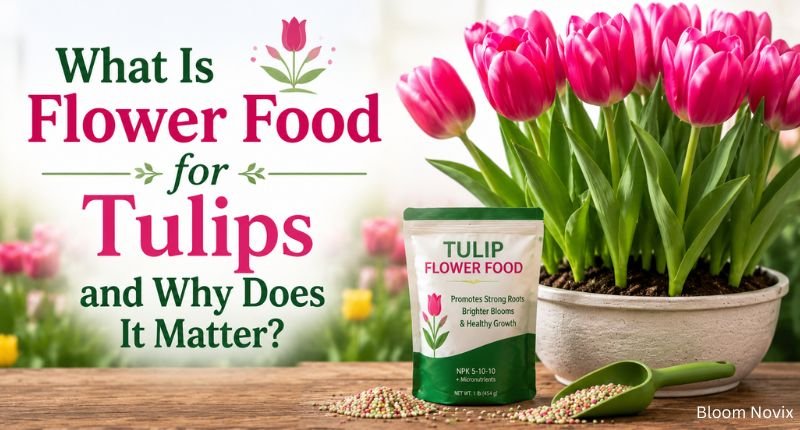
Flower food is a solution made for fresh-cut flowers. It helps create better conditions inside the vase. Most commercial formulas combine an energy source, an acidifier, and ingredients that limit microbial growth.
Cut tulips no longer receive water and nutrients from their roots. They depend on the vase water instead. A good preservative can support water uptake and help slow the decline of the flowers.
What Does Flower Food Do for Cut Tulips?
Think of flower food as support rather than plant fertilizer. It does not turn a vase into a garden.
A quality formula can:
- Provide a small energy source through sugar or sucrose
- Help maintain a suitable water pH
- Limit bacterial growth
- Support better water movement through the stems
- Help flowers maintain their appearance for longer
The formula matters, but clean water matters just as much. A dirty vase can undo much of the benefit.
Flower Food, an Essential Item for Florists
Florists often use commercial preservatives because they need predictable results. They handle many bouquets and need solutions that are easy to measure and repeat.
For home use, you do not need complicated products. A properly diluted flower preservative is usually enough.
Flower Food as a Preservative for Homeowners
At home, flower food can make vase care easier. You simply mix the packet according to its label and keep the water clean.
Do not assume that adding more food will make your tulips last longer. More is not better. A concentrated solution can stress delicate plant tissue.
Do Tulips Need Flower Food in a Vase?
No, tulips do not strictly need flower food to survive in a vase. They can stay fresh in clean water with good care.
However, a suitable flower preservative for tulips can offer extra support. The biggest mistake is treating flower food as a replacement for proper vase care.
Why Tulips Benefit From Flower Food
Tulips continue to take up water after cutting. They also keep growing and bending in a vase.
Flower food may help by:
- Providing an energy source
- Supporting water uptake
- Reducing microbial problems
- Creating a more suitable water environment
Your tulips still need fresh water and a clean vase.
Tulips Keep Growing After They Are Cut
This is one reason tulips behave differently from many other cut flowers.
After you place them in a vase, their stems can continue to elongate. They may also bend toward a window or another light source.
That does not always mean something is wrong.
If the stems look firm and the petals look healthy, gentle bending can be completely normal.
Can Tulips Survive Without Flower Food?
Yes. Fresh, cool water can work very well.
If you do not have flower food, focus on the basics:
- Use a clean vase
- Start with fresh water
- Remove submerged leaves
- Recut the stems when needed
- Keep the bouquet away from heat and strong sunlight
- Change the water regularly
In many homes, these simple steps make a bigger difference than a complicated homemade recipe.
Read More: Lotus Flower Season
Ingredients Used in Flower Food for Tulips
Commercial flower food usually contains a carefully balanced mixture. The exact formula varies between brands.
| Ingredient | Main Role | Why It Matters |
| Sugar or sucrose | Energy source | Supports cut-flower metabolism |
| Citric acid or another acidifier | Adjusts pH | Helps create a suitable water environment |
| Antimicrobial ingredients | Control microbes | Helps keep vase water cleaner |
| Water | Carries the solution | Delivers ingredients to the stems |
Sugar Is a Primary Source of Energy
Sugar gives cut flowers an available energy source. Tulips cannot get fresh sugars from their roots once you cut them.
Still, plain sugar water has a weakness. Sugar can also encourage microbial growth if you do not control the water quality.
That is why commercial flower food usually combines sugar with other ingredients.
Citric Acid Helps Lower the pH
Acidifiers such as citric acid help adjust the water environment. A suitable pH can support water movement through cut stems.
You should not add large amounts of lemon juice or acid to the vase. More acid does not automatically mean better hydration.
Antibacterial Ingredients Help Control Bacteria
Microbes can multiply in old vase water. They can also contribute to blocked stem tissue.
Commercial preservatives often include antimicrobial ingredients for this reason.
However, clean equipment still matters. Do not rely on flower food to fix a dirty vase.
Does Bleach Work as a Disinfectant?
Bleach can act as a disinfectant, but that does not make it a good DIY flower-food ingredient.
Household bleach is easy to misuse. Too much can damage plant tissue, and mixing bleach with other chemicals can create dangerous fumes.
For home tulip care, a commercial flower preservative is the safer choice. If you use bleach to clean a vase, rinse the vase thoroughly before adding flowers.
Best Types of Flower Food for Tulips
You have several choices, but they do not all serve the same purpose.
Commercial Flower Food Packets
Packets are convenient and easy to measure. Many bouquets come with one for this reason.
Use the full packet only according to the amount of water stated on the label. Do not guess the concentration.
Flower Food for Cut Tulips
A preservative designed for cut flowers can work well for tulips. Look for a product that clearly states that it suits fresh-cut flowers.
The best choice is not necessarily the strongest formula. Proper dilution matters more.
Tulip-Specific Flower Food
Some products are designed specifically for tulips or bulb flowers. These can be useful when you want a formula tailored to their vase needs.
Always follow the product directions.
Flower Food for Mixed Bouquets
If your vase contains tulips with roses, carnations, or other flowers, choose a preservative suitable for mixed cut flowers.
Check the label before using it. Different flowers can have different care requirements.
Homemade Flower Food for Tulips
Homemade mixtures can be useful when you have no commercial preservative. They are not as standardized, though.
If you use one, keep the recipe simple. Clean water remains the priority.
Best Flower Food for Tulips: What Should You Choose?
The “best” product depends on what you need. You do not need to buy the most expensive option.
Chrysal Flower Food
Chrysal makes several cut-flower care products. A product labeled for the type of flowers you have can be a convenient choice.
Check the current label and dilution instructions before use.
Chrysal Clear Tulipa
A tulip-focused formula can be worth considering when you mainly keep tulips in vases.
Use it exactly as directed. Avoid increasing the concentration because the flowers look thirsty.
FloraLife Crystal Clear
FloraLife offers professional-style flower care products for cut arrangements.
A general preservative can work well when your vase contains several flower types. Follow the package directions for the correct amount.
FloraLife Fresh-Cut Flower Food Sachets
Sachets are useful when you want simple, measured portions. They also make storage easy.
They work best when you match the packet to the correct water volume.
Generic Flower Food Packets
You do not always need a specialist brand. A reputable general cut-flower preservative can be enough.
Before buying, check:
- Flower compatibility
- Mixing instructions
- Packet size
- Intended water volume
- Storage instructions
The Ultimate Guide to Buying Flower Food for Tulips
Choosing flower food does not have to feel complicated. Focus on the formula and instructions instead of flashy packaging.
Value for Money
Compare the number of treatments you get from one package.
A cheaper packet is not always better if it treats only a small amount of water.
Check Potency and Effectiveness
Look for clear usage instructions. A trustworthy product should tell you how much to use and how much water it treats.
Avoid products that make extreme promises without explaining how to use them.
Choose a Clear Solution
A clear solution makes it easier to notice cloudy water or debris.
Still, clear water does not automatically mean the water is clean. Change it when it becomes dirty or according to your care routine.
Look for Tulip-Suitable Ingredients
Choose a product intended for cut flowers. If the label mentions tulips or bulb flowers, that can make the choice easier.
Do not use garden fertilizer as a substitute.
Follow the Recommended Dosage
This step sounds simple, but it matters.
Measure the water first. Then add the amount of flower food recommended by the manufacturer.
Never assume that a stronger mixture will provide stronger results.
DIY Flower Food for Tulips
A homemade solution can help when commercial flower food is not available. Keep your expectations realistic.
The main goal is to support the flowers without creating a dirty or overly concentrated vase solution.
Simple Sugar Water for Tulips
A small amount of sugar can provide an energy source for cut flowers.
But sugar alone does not control bacteria. If you use sugar water, change the water frequently and clean the vase.
Lemon Juice and Sugar Solution
Some home recipes combine a little sugar with lemon juice.
The lemon juice provides acidity, while the sugar provides an energy source.
Use only a small amount. A strong acidic mixture can harm flowers rather than help them.
Homemade Flower Food Without Bleach
You do not need bleach to make a basic homemade solution.
A simple approach uses:
- Fresh water
- A small amount of sugar
- A small amount of lemon juice or another mild acidifier
Keep the mixture weak. When in doubt, plain clean water is better than an overly strong homemade recipe.
How Much Homemade Flower Food Should You Use?
There is no universal homemade formula that matches every commercial preservative.
That is why commercial products are easier to use. Their instructions are designed around a specific concentration.
With homemade mixtures, prioritize clean water and frequent changes over adding more ingredients.
Why Commercial Flower Food May Be More Reliable
Commercial products use measured formulas. They can combine several functions in one solution.
A homemade mixture may provide sugar and acidity but lack the same antimicrobial balance.
For regular bouquet care, a commercial preservative is usually the more consistent option.
How to Make Tulips Last Longer With Flower Food
Flower food works best when you combine it with good tulip care.
Choose Fresh Tulips
Start with flowers that still have plenty of life ahead of them.
Look for:
- Firm stems
- Healthy green leaves
- Tight or partly colored buds
- No slimy stems
- No damaged or brown petals
Fresh tulips usually give you more time to enjoy the bouquet.
Prepare the Vase Properly
Wash the vase with soap and water before use.
Rinse it well. Then add fresh water and the correct amount of flower food.
A clean vase gives bacteria fewer places to grow.
Trim Tulip Stems Correctly
Use a sharp, clean knife or scissors. Make a clean cut without crushing the stem.
A modest recut removes the dried end of the stem and can improve water uptake.
You do not need to remove a large section every time.
Add Flower Food Correctly
Measure the water before adding the preservative.
Then follow the product instructions.
Do not add extra powder or liquid because your tulips look droopy.
Change the Water Regularly
Tulips can drink quickly. Their water may also become cloudy as the bouquet ages.
Replace the water when it becomes dirty and as part of your regular care routine. Clean the vase if residue builds up.
How to Care for Tulips in a Vase
Good vase care often matters more than the exact brand of flower food you choose.
Re-Cut the Stems at a 45-Degree Angle
A clean angled cut can increase the exposed surface area at the end of a stem.
However, the exact angle matters less than making a clean cut without crushing the tissue.
Use Cool Water Instead of Warm Water
Cool water suits tulips well.
Avoid very hot water. Heat can speed up flower aging and make the arrangement struggle in a warm room.
Remove Leaves Below the Waterline
Leaves sitting underwater can decay quickly.
Remove them before they become a source of debris and microbial growth.
Keep Tulips Away From Direct Sun and Heat
Place your vase in a bright but relatively cool area.
Avoid:
- Radiators
- Heating vents
- Hot appliances
- Strong afternoon sunlight
- Very warm windowsills
Cooler conditions usually help flowers last longer.
Keep Water Levels at the Right Height
Tulips do not need their entire stems submerged.
Use enough water to keep the lower stems hydrated while keeping leaves above the waterline.
Check the level daily because tulips can drink more than you expect.
Change the Water Every One to Two Days
A regular water change keeps the vase environment fresher.
When you change it:
- Empty the old water.
- Rinse or clean the vase.
- Add fresh water.
- Add flower food if the product instructions call for it.
- Recheck the stems and leaves.
Keep Tulips Away From Ripening Fruit
Ripening fruit releases ethylene gas, which can speed up aging in many flowers.
Keep your tulip vase away from fruit bowls, especially when the fruit is ripening.
When to Feed Tulips: A Complete Feeding Schedule
Cut tulips do not follow the same feeding schedule as tulips growing in soil.
Feeding Schedule for Cut Tulips
For cut tulips, think in terms of vase-water maintenance, not fertilizer feeding.
Use flower food when you prepare the vase if the product is recommended for your flowers. Follow the label when refreshing the solution.
How Often Should You Add Flower Food?
Follow the product instructions.
Do not automatically add a full dose every time you top up the vase. The correct amount depends on the product and water volume.
Should You Add Flower Food After Every Water Change?
Usually, you should follow the product’s directions rather than guessing.
If you completely replace the vase water, prepare the new solution according to the label. If you only top up the water, do not blindly add another full dose.
Common Tulip Feeding Mistakes to Avoid
Even good flower food cannot fix poor vase care.
Using Too Much Flower Food
A stronger solution does not mean better results.
Too much preservative can create an overly concentrated solution and may interfere with normal water uptake.
Using Warm Water in the Vase
Warm conditions can speed up flower aging.
Use cool water and keep the entire arrangement in a cooler location.
Skipping the Stem Re-Cut
Old stem ends can become less effective at taking up water.
A clean recut can help refresh the stem when the flowers become thirsty or after you bring them home.
Keeping Leaves Underwater
Submerged leaves break down quickly.
Always keep the waterline below the leaves whenever possible.
Mixing Different Flower Foods
Do not combine two commercial preservatives.
Their formulas may have different concentrations and ingredients. Mixing them gives you an unknown solution.
Using Garden Fertilizer for Cut Tulips
This mistake is easy to make.
Garden fertilizer and cut-flower food serve different purposes. Fertilizer supports plants growing in soil. Flower food supports cut flowers in a vase.
Do not use an NPK garden fertilizer as a replacement for cut-flower preservative.
Explore More: Anemone Flower Meaning
Why Are My Tulips Drooping Even With Flower Food?
Flower food does not guarantee upright tulips.
Several other factors can cause drooping.
Natural Tulip Bending
Tulips naturally bend and continue growing after cutting.
If the stems remain firm and the petals look fresh, the bending may simply be part of their normal behavior.
Dehydration
A low water level, blocked stem, or old vase water can reduce hydration.
Check the water first. Then inspect the stems and recut them if needed.
Dirty Vase Water
Cloudy or foul-smelling water signals a problem.
Replace it and clean the vase before returning the flowers.
Warm Temperatures
Heat speeds up many processes that shorten flower life.
Move the arrangement to a cooler spot away from direct sun and heating sources.
Blocked or Damaged Stems
Crushed stems may struggle to take up water.
Make a clean recut with a sharp tool and handle the stems gently.
Aging Blooms
Sometimes your tulips are simply reaching the end of their vase life.
Flower food can support fresh flowers, but it cannot make old blooms new again.
Read Also: What Is December’s Birth Flower
Can You Revive Drooping Tulips?
Yes, you can sometimes bring drooping tulips back to a firmer position.
Re-Cut the Stems
Remove a small section from the stem with a clean, sharp tool.
Do not crush the cut end.
Wrap the Tulips Upright
Loosely wrap the stems in paper so they stay upright while they rehydrate.
Do not squeeze the flowers tightly.
Place Them in Fresh Cool Water
Put the wrapped tulips in a clean vase with fresh cool water.
Make sure the stems can take up water freely.
Give Them Time to Rehydrate
Leave them upright for a few hours.
If dehydration caused the drooping, you may see the stems become firmer.
How Long Do Tulips Last With Flower Food?
Tulip vase life varies. Freshness, variety, temperature, water quality, and care all affect the result.
| Care Method | Typical Result |
| Poor water and warm conditions | Shorter vase life |
| Clean water with basic care | Several days |
| Flower food plus good care | Often about a week or more |
| Very fresh tulips in ideal conditions | May last longer |
How Long Do Tulips Last Without Flower Food?
Fresh tulips can still last several days in plain water.
Good hygiene and cool conditions matter greatly.
How Long Can Cut Tulips Last With Proper Care?
Many tulips can remain attractive for around a week, and some can last longer under favorable conditions.
Do not judge the bouquet only by stem position. Natural bending does not always mean the flowers have failed.
What Affects Tulip Vase Life?
The biggest factors include:
- Flower freshness
- Variety
- Temperature
- Water quality
- Vase cleanliness
- Stem condition
- Light exposure
- Care routine
Flower Food vs Plain Water for Tulips
Both options can work. Your choice depends on what you have available and how much maintenance you want to do.
| Feature | Flower Food | Plain Water |
| Energy source | Usually included | None added |
| pH adjustment | Often included | Depends on water |
| Microbial control | Often included | No added preservative |
| Convenience | Easy when pre-measured | Very simple |
| Main requirement | Correct dilution | Frequent water changes |
Benefits of Flower Food
A proper cut-flower preservative can provide several functions in one solution.
It can support hydration, provide an energy source, and help control microbial growth.
Benefits of Fresh Water
Fresh water is simple and readily available.
If you do not have flower food, do not worry. Clean water, a clean vase, and cool conditions can still give tulips a good start.
Which Option Is Better for Tulips?
A properly diluted commercial flower food can be useful, but it is not essential.
If you use plain water, focus on keeping it fresh and the vase clean.
What Is the Best Water for Tulips?
Water quality matters more than fancy additives.
Cool Water vs Warm Water
Use cool water for tulips.
Avoid very hot water because it can create an unfavorable environment for delicate cut flowers.
How Much Water Do Tulips Need?
Use enough water to keep the lower stems hydrated.
Do not submerge leaves. Check the level every day because tulips can drink quickly.
When Should You Replace Tulip Water?
Replace cloudy, dirty, or foul-smelling water immediately.
As a general routine, refresh the water every one to two days and clean the vase when needed.
What Is the Best Vase for Tulips?
Your vase can affect how the arrangement looks and how well the stems stay supported.
Why a Tall Vase Works Well
Tulip stems can become long and flexible.
A tall vase gives them more support and can keep the arrangement looking neat.
How to Support Flexible Tulip Stems
Choose a vase that supports the stems without squeezing them together.
If the flowers start leaning, reposition them rather than forcing the stems straight.
How Much Space Should Tulips Have in a Vase?
Avoid packing too many stems into one small vase.
Give each tulip enough room to open and move naturally.
Tips for Arranging Tulips Like a Florist
You do not need professional tools to create a polished tulip arrangement.
Arrange Tulips Loosely
Tulips continue to grow after cutting.
Leave some space between stems so they have room to move.
Rotate the Vase Regularly
Tulips can lean toward light.
Rotate the vase occasionally to encourage a more balanced display.
Give Growing Stems Enough Room
Do not expect the arrangement to look exactly the same after two days.
Tulips can change shape and height as they mature.
Keep the Arrangement Away From Fruit
Fruit releases ethylene gas as it ripens.
A separate location can help protect the freshness of your bouquet.
FAQs
Can I Use Regular Flower Food for Tulips?
Yes. A general cut-flower preservative can work if its label is suitable for tulips.
What Is the Best Flower Food for Tulips?
A properly diluted cut-flower preservative is a good choice. Choose one with clear instructions and use the recommended amount.
Is Homemade Flower Food Good for Tulips?
It can help when commercial food is unavailable. Commercial formulas usually offer more consistent ingredients and concentrations.
Does Sugar Water Keep Tulips Alive Longer?
Sugar can provide energy, but sugar alone is not enough. Clean water and good vase hygiene remain essential.
Can I Use Flower Food Made for Roses on Tulips?
A general cut-flower food may work. Check the label first and never use more than the recommended concentration.
How Often Should I Add Flower Food to Tulips?
Follow the product instructions. Do not add a full dose simply because you topped up the water.
Why Are My Tulips Drooping Even With Flower Food?
Flower food does not stop natural bending. Dehydration, heat, dirty water, damaged stems, and aging can also cause drooping.
Should Tulips Be Placed in Warm or Cool Water?
Cool water is the better choice. Keep the vase in a cool location as well.
Can Tulips Last Two Weeks in a Vase?
Some may last close to that under excellent conditions, but it is not guaranteed. Freshness and temperature have a major effect on vase life.
Can I Use Bleach in Tulip Water?
It is better not to improvise with bleach. Use a commercial preservative instead and keep your vase clean.
Can I Use Plain Water Instead of Flower Food?
Yes. Fresh water can keep tulips healthy when you change it regularly and maintain good vase hygiene.
How Do I Keep Tulips From Drooping?
Keep them hydrated and cool. Recut the stems, use fresh water, and protect the bouquet from heat and direct sunlight.
Final Thoughts
The right flower food for tulips can help keep your bouquet fresh, but good care matters just as much. Fresh water, clean stems, and a cool spot can make a noticeable difference. Keep an eye on the water, remove leaves that sit below it, and do not worry if the stems bend a little.
Tulips naturally keep growing after they are cut, so some movement is perfectly normal. You do not need a complicated routine to enjoy fresh tulips at home. Give them a clean vase, cool water, and the right amount of flower food. Keep them away from heat, direct sunlight, and ripening fruit. Treat them well, and your tulips can stay bright, fresh, and beautiful for days to come.

BloomNovix is managed by an experienced team of content writers and SEO specialists with 4+ years of expertise in gardening and plant care. We provide well-researched guides, gardening tips, and insights on floral meanings to help plant lovers grow their indoor and outdoor gardens with confidence.