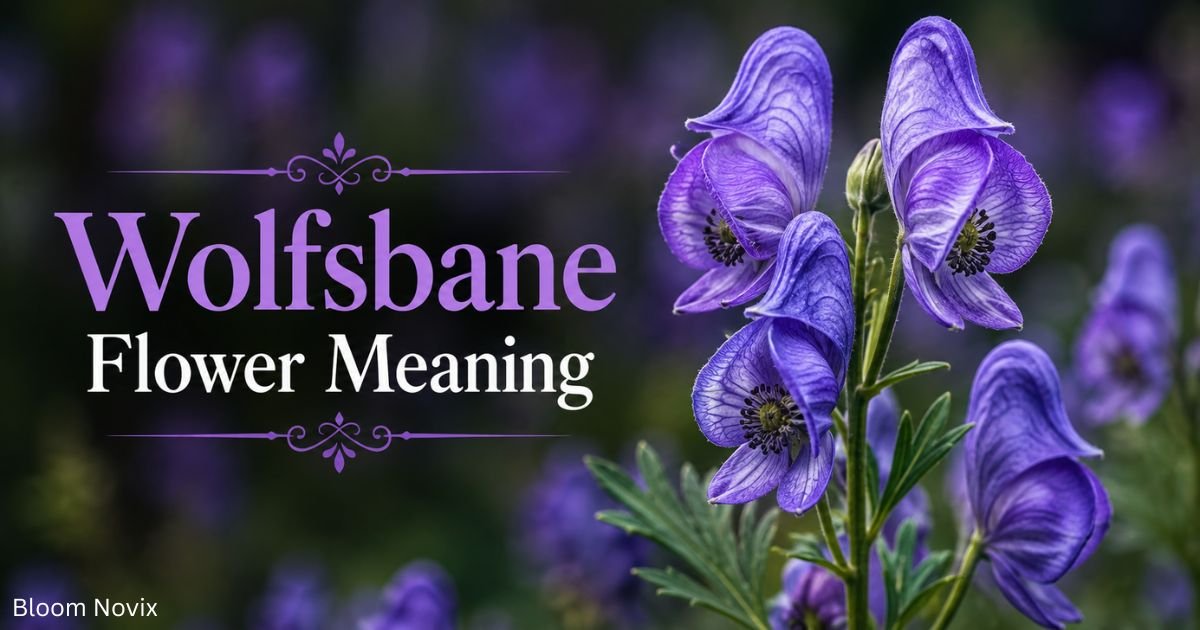
The wolfsbane flower meaning is like something out of a fantasy world – it’s so pretty, but also super deadly. A long time ago, warriors even used it to make their weapons poisonous. This flower has a really interesting story that combines its beautiful looks with its dark and mysterious side. When you hear the whole story, you’ll see wolfsbane in a completely new light. It’s a mix of protection, legend, and truth all rolled into one, which is probably why it’s been fascinating people for so long. The meaning of wolfsbane is complex, with its beauty and danger going hand in hand, making it a pretty captivating flower.
This flower, with its hood-like shape, has a lot more to it than just being poisonous. For thousands of years, people have connected it to all sorts of things like werewolves, witches, gods, and even the underworld. But what’s really interesting is how its meaning changes depending on the culture, myth, or dark story it’s a part of. Let’s dive in and explore all the secrets this mysterious flower holds.
What Is Wolfsbane?
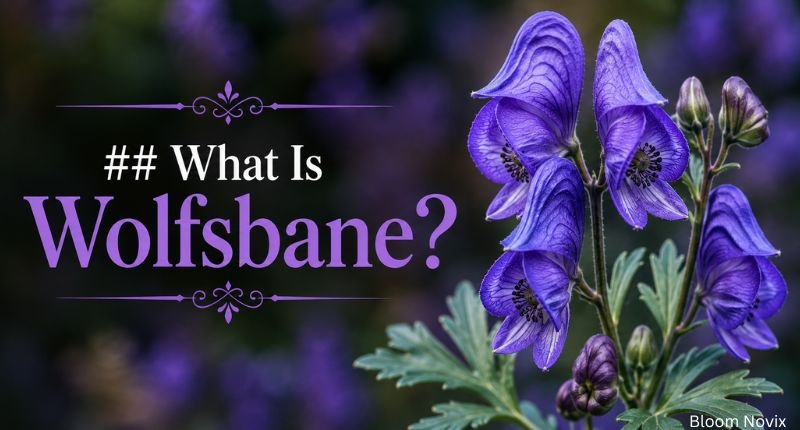
Wolfsbane belongs to the Aconitum genus, and its most common species is Aconitum napellus. Gardeners and herbalists also call it by several other names, including:
- Monkshood
- Aconite
- Wolf’s bane
- Blue rocket
- Helmet flower
The flower earned the name “monkshood” because its top petal curls into a hood, almost like a monk’s robe. Its blooms usually appear in deep blue, purple, or violet shades, though white varieties also exist. The plant grows wild across parts of Europe and Asia, thriving in cool, damp mountain regions. Despite its elegant look, every part of wolfsbane contains powerful toxins, which is exactly why its symbolism runs so deep.
Wolfsbane Colors and Their Meaning
Color plays a bigger role in the wolfsbane symbolism than most people realize. Each shade adds its own layer of meaning to this already complex flower.
| Wolfsbane Color | Symbolic Meaning |
| Deep Purple/Violet | Mystery, magic, and hidden power |
| Blue | Protection, loyalty, and calm strength |
| White | Purity mixed with hidden danger |
| Dark Indigo | Death, transformation, and the unknown |
The wolfsbane flower comes in a few different colors, but the purple one is probably the most well-known. It’s a color that suggests secrecy and magic. On the other hand, the blue wolfsbane is more about protection – blue is a color that usually means trust and stability. Then there’s the white wolfsbane, which is kind of surprising because it looks so innocent, but it’s actually just as poisonous as the other colors. This mix of looks and reality is what makes the wolfsbane so interesting and full of symbolism.
The different colors of the flower can represent different things, but they all have a certain power to them. The purple flower one is all about mystery and enchantment, while the blue one is more about keeping safe. And the white one, well, it’s like a warning – it might look harmless, but it’s not something to be trifled with.
Wolfsbane Flower Meaning and Symbolism
The wolfsbane flower meaning rests on three central themes: danger, protection, and mystery. Each theme reflects a different side of the plant’s dual nature.
1. Danger and Warning
Wolfsbane’s toxicity makes it a natural symbol of caution. In floriography, it silently tells the receiver to slow down and think twice.
- Something beautiful may still be harmful
- Trust should be earned, not assumed
- Certain boundaries exist to keep you safe
- Not everything attractive is good for you
2. Protection and Defense
Older folk traditions believed poisonous plants could shield people from evil. Wolfsbane became a symbol of strength used to guard against threats rather than cause them.
- Standing firm against outside pressure
- Guarding your personal space
- Facing danger instead of running from it
- Drawing power from your own resilience
3. Mystery and the Unknown
Wolfsbane’s hooded shape and dark history give it an air of secrecy that few flowers can match.
- Knowledge that stays hidden until it’s needed
- Curiosity about what lies beneath the surface
- A pull toward the unexplained
- Respect for things that cannot be fully controlled
The Meaning Behind the Name “Wolfsbane”
The term “bane” actually originated from an old word that meant something that destroys or causes harm. A long time ago, people used wolfsbane for a very specific purpose: they would put the plant’s poisonous parts on the tips of arrows and on bait to kill wolves that were a threat to their animals. This is where the flower got its name, and it’s a pretty dark history that happened way before people started telling stories about werewolves. The name “wolfsbane” really comes from this old practice, not from any fantasy stories.
Over time, this practical purpose grew into something symbolic. The name began to represent:
- Confronting a real threat rather than fearing it from a distance
- Survival in harsh or dangerous conditions
- Strength drawn from facing predators head-on
- Protection earned through action, not luck
Wolfsbane in Greek Mythology
In Greek mythology, there’s a really dark story about where wolfsbane came from. The legend says that the plant grew out of the ground where Cerberus, the three-headed dog that guards the underworld, drooled as Hercules pulled him out into the daylight. This one story linked wolfsbane to death, the underworld, and secret knowledge that’s better left unspoken. It’s a pretty eerie origin story, and it’s stuck with wolfsbane ever since. The whole thing is pretty fascinating, and it’s easy to see why people have always been a little spooked by this plant.
There’s something really interesting about wolfsbane that not a lot of people know. It’s connected to Hecate, the Greek goddess of magic and witchcraft. Apparently, she used this plant in her spells, which is why people later thought it was linked to sorcery, not just poison. This connection to a goddess is often left out of other stories, but it’s what makes wolfsbane seem so magical and special, rather than just being a toxic plant.
Wolfsbane in Norse and Celtic Legends
Other stories, like those from Northern Europe, also played a part in making wolfsbane famous. These tales gave the flower its own special meaning, adding to what we already knew from Greek mythology. Wolfsbane, it seems, has a pretty interesting history, with many different cultures contributing to its reputation over time.
In old Norse stories, plants that were poisonous were often tied to tests of how strong and tough someone was. This is similar to how wolfsbane is associated with staying alive when predators are around. On the other hand, Celtic druids didn’t fear poisonous plants, but instead respected them for their spiritual power. They thought that dangerous herbs like wolfsbane could protect them from bad spirits if used in the right way during rituals.
People from different cultures see wolfsbane in a similar way: it’s not just something bad, but something that needs to be treated with care and respect. This plant is like a powerful tool that can be used for good or bad, depending on how it’s handled. Rather than avoiding it completely, people have learned to use it in a controlled way, which shows that they have a certain level of respect for its power.
Wolfsbane Meaning in Folklore and Supernatural Legends
Beyond ancient mythology, European folk tales transformed wolfsbane into a staple of supernatural storytelling.
Wolfsbane and Werewolves
Modern fantasy owes much of its werewolf lore to this single plant. Stories often claim wolfsbane can repel, weaken, or even cure a werewolf, linking the flower directly to:
- The battle between human will and animal instinct
- Fear of losing control during transformation
- Protection from supernatural predators
- Silver-and-wolfsbane combinations in modern films and books
Wolfsbane and Witchcraft
Historical witch trials often mentioned toxic plants as ingredients in dark rituals. Some folklore even claimed witches added wolfsbane to “flying ointments,” believing it caused hallucinations that felt like flight. Today, this connection gives wolfsbane a strong tie to:
- Forbidden or secret knowledge
- Feminine power and independence
- Ritual magic and spellwork
- A rebellious, untamed identity
What Does a Wolfsbane Flower Symbolize?
Every theme discussed so far comes together in one central idea: wolfsbane represents the razor-thin line between beauty and destruction. Its mysterious beauty can be compared with the purple rose, a flower often associated with enchantment, mystery, and deep emotions.
| Symbol | What It Represents |
| Danger | A warning hidden behind something attractive |
| Protection | Strength used to guard against harm |
| Mystery | Secrets and knowledge that stay hidden |
| Transformation | Change that comes through struggle |
| Death | A link to the underworld and endings |
No single meaning defines wolfsbane completely. Its message always depends on the story being told and the person interpreting it.
Wolfsbane Flower Meaning in the Language of Flowers
In this real-life Victorian practice, flowers were given secret meanings that were far too rude to say aloud. Naturally events like wolfsbane poisonous blooms immediately fell into the “warning” part of this floral code.
In Victorian times, wolfsbane was sometimes included in a bouquet along with other flowers carrying their own symbolic meanings for an even more nuanced message: pairing it with a rose might say “beautiful but beware.” Wolfsbane, seldom a present that signified mere affection; it was more than that. Rather, it often warned the recipient of an unacknowledged threat, a trusted person who could not be completely trustworthy, or a situation that merited greater vigilance than it appeared to require.
What Does Wolfsbane Mean Spiritually?
Spiritually, wolfsbane does not belong to one specific religion or tradition. Its meaning instead comes from the balance it represents between light and shadow.
Many people connect the flower’s spiritual message to:
- Protecting personal energy from people or situations that drain it
- Facing fears instead of avoiding them
- Recognizing danger early, before it causes real harm
- Embracing transformation, even when the process feels uncomfortable
Rather than a purely negative symbol, wolfsbane can act as a spiritual reminder to trust your instincts and protect your own boundaries.
Wolfsbane in Dreams: What It Means
Seeing wolfsbane in a dream often reflects something your subconscious wants you to notice while you are awake.
- Dreaming of a wolfsbane flower usually points to a hidden threat or a warning you have been ignoring.
- Dreaming of touching the plant can suggest you are aware of a risk but choosing to move forward anyway.
- Dreaming of giving or receiving wolfsbane often reflects a relationship that feels both attractive and complicated.
- Dreaming of a wolfsbane garden may symbolize a period of personal growth that comes with real challenges attached.
Dream symbolism is never exact, but wolfsbane’s appearance almost always signals a need for caution, awareness, or protection in waking life.
Wolfsbane Flower Tattoo Meaning
A wolfsbane tattoo tells a personal story, and its meaning changes based on the design chosen.
- Strength after hardship — often chosen by people who have survived something difficult
- Protection and boundaries — a reminder to guard your own peace
- Mystery and independence — popular among those who value their privacy
- Werewolf mythology — frequently paired with wolf or moon imagery
- Transformation — a nod to major life changes
Adding elements like skulls, snakes, or moons to the design deepens the mysterious, Gothic feel that many people are drawn to.
Wolfsbane Meaning in Love and Relationships
Wolfsbane is not a conventional romantic flower, but its symbolism still applies to matters of the heart. Unlike the gentle bluebell flower, which is often associated with love and loyalty, wolfsbane represents attraction that feels intense, complicated, or slightly dangerous.
In relationships, wolfsbane can symbolize:
- A connection that feels irresistible but risky
- Attraction to someone mysterious or hard to read
- The importance of keeping healthy emotional boundaries
- A gentle warning against ignoring obvious red flags
Writers and artists frequently use wolfsbane in dark romance stories precisely because it captures this tension between love and danger so well.
Is Wolfsbane a Symbol of Death?
Yes, but death is only one part of its meaning, not the whole story.
Wolfsbane is often thought of as a symbol of death and darkness, and for good reason – it’s toxic and has a strong connection to the Greek underworld, where Cerberus, the three-headed dog, roams. But if we only focus on this side of wolfsbane, we’re missing out on its other, equally important meanings. It’s also a symbol of protection, courage, and transformation – a reminder that even in the darkest places, there’s always the potential for growth and change.
Really, wolfsbane represents the thin line between being drawn to something and being destroyed by it. It’s not just a flower that means death, but a complex symbol that shows us how attraction and danger can be two sides of the same coin.
Wolfsbane vs Other Poisonous Flowers
Wolfsbane is far from the only toxic bloom with symbolic weight. Comparing it to other poisonous flowers helps highlight what makes its meaning unique.
| Flower | Toxicity Level | Core Symbolic Meaning |
| Wolfsbane (Monkshood) | Very High | Danger, protection, mystery, transformation |
| Oleander | High | Caution, danger, hidden charm |
| Nightshade | High | Deception, temptation, darkness |
| Foxglove | Moderate to High | Insincerity, secrets, ambition |
While all four flowers share a warning-based theme, wolfsbane stands apart because of its added layers of protection and transformation. Most poisonous flowers focus purely on danger, but wolfsbane’s mythology gives it a more balanced, complex identity.
The Beauty and Danger of Wolfsbane
Wolfsbane’s symbolism mirrors its real biology almost perfectly — stunning to look at, yet genuinely hazardous to handle. If you ever come across this plant in a garden or in the wild, keep these precautions in mind:
- Never taste or chew any part of the plant
- Keep children and pets far away from it
- Wear gloves when touching or trimming it
- Wash your hands thoroughly after any contact
- Avoid using it in homemade remedies or teas
Respecting these limits is exactly what the flower’s symbolism encourages: appreciate the beauty, but never underestimate the risk.
How to Grow Wolfsbane Safely
Many gardeners still choose to grow wolfsbane for its dramatic, eye-catching blooms. With the right precautions, it can be grown safely.
- Climate: Wolfsbane prefers cool climates and partial shade, making it ideal for temperate gardens.
- Soil: Rich, well-drained, and consistently moist soil helps the plant thrive.
- Placement: Plant it away from vegetable patches, children’s play areas, and pet-friendly zones.
- Handling: Always wear gloves when pruning, and wash tools after use.
- Labeling: Mark the plant clearly in shared or community gardens to warn visitors.
Grown responsibly, wolfsbane adds a striking, almost mythical presence to any garden without putting anyone at risk.
When (and When Not) to Gift Wolfsbane
Because of its symbolism and toxicity, wolfsbane is not a flower you hand someone casually.
When it works well:
- Gothic-themed weddings or events
- Gifts for someone who loves mythology or dark botanical art
- Symbolic gifts marking personal transformation or resilience
When to avoid it:
- Hospital visits or gifts for anyone with young children or pets at home
- Traditional romantic gestures where the message could be misread
- Fresh-cut arrangements meant to be touched or displayed casually
If you do want to gift wolfsbane, consider dried stems in a sealed frame or a botanical illustration instead of the live plant. This keeps the symbolism intact without any real safety concerns.
Why Is Wolfsbane Still Popular Today?
Wolfsbane’s flexible symbolism keeps it relevant across many creative fields. Today, it frequently appears in:
- Fantasy novels and werewolf fiction
- Gothic and dark academia art
- Witchy, mystical home décor
- Mythology-inspired tattoo designs
- Supernatural TV shows and films
- Botanical illustration collections
Because it can represent danger, protection, mystery, or transformation depending on context, wolfsbane continues to inspire fresh interpretations in modern storytelling and art.
FAQs
What is the main wolfsbane flower meaning?
The wolfsbane flower meaning centers on danger, protection, and mystery. Its toxic nature and mythological history shaped these lasting associations.
Is wolfsbane the same as monkshood or aconite?
Yes, all three names refer to the same plant. “Monkshood” and “aconite” are simply alternate names for wolfsbane within the Aconitum genus.
Is wolfsbane poisonous?
Yes, every part of the wolfsbane plant is highly toxic. This toxicity is the main reason behind its dangerous symbolism.
What does wolfsbane do to humans?
Wolfsbane can cause serious poisoning if touched or ingested, leading to numbness, nausea, or worse. It should never be handled without gloves or consumed in any form.
What does wolfsbane symbolize spiritually?
Spiritually, wolfsbane represents protection, personal boundaries, and transformation through hardship. It reminds people to trust their instincts around hidden danger.
Does wolfsbane symbolize werewolves?
Yes, folklore and modern fantasy closely link wolfsbane to werewolves. Many stories portray it as a plant that repels or weakens these creatures.
What does wolfsbane mean in love?
In love, wolfsbane represents intense but risky attraction. It often warns against ignoring red flags in an otherwise appealing relationship.
Is wolfsbane a good tattoo symbol?
Yes, it works well for anyone drawn to mythology, protection themes, or dark botanical designs. Its meaning ultimately depends on the personal story behind it.
Which flower has the saddest meaning — is wolfsbane one of them?
Wolfsbane is often listed among flowers with darker meanings due to its ties to death and the underworld. However, flowers like the marigold or cypress are more commonly cited as the “saddest” in traditional floriography.
Conclusion
The wolfsbane flower’s meaning has a lot more to it than just being a poisonous plant. It’s actually really important in Greek, Norse, and Celtic cultures, where it represents some pretty big ideas like danger, protection, mystery, and change. You can find it in all sorts of stories, from mythology to witchcraft, and even in old tales about werewolves. It’s also still used today in dream symbolism. What’s really interesting is that this one flower can mean so many different things, which is pretty rare. It’s like it’s carrying around a bunch of contradictions, all wrapped up in one little bloom.
Wolfsbane is a pretty interesting flower – it’s got a lot to teach us. You see, sometimes things that are really beautiful can also be really dangerous. That’s definitely for wolfsbane. People like it for all sorts of reasons – some like the stories and myths surrounding it, others like its bold colors, and some even get it tattooed on their skin as a symbol of love. But no matter why you’re interested in wolfsbane, it’s definitely a flower with a lot of depth and meaning.
If you’re into learning about what different flowers mean, wolfsbane is one of the most fascinating ones out there. It’s a dark and mysterious bloom, but it’s also really rewarding to learn about – as long as you’re willing to look past its poisonous side.

BloomNovix is managed by an experienced team of content writers and SEO specialists with 4+ years of expertise in gardening and plant care. We provide well-researched guides, gardening tips, and insights on floral meanings to help plant lovers grow their indoor and outdoor gardens with confidence.





1 thought on “Wolfsbane Flower Meaning: Danger, Mystery & Folklore”