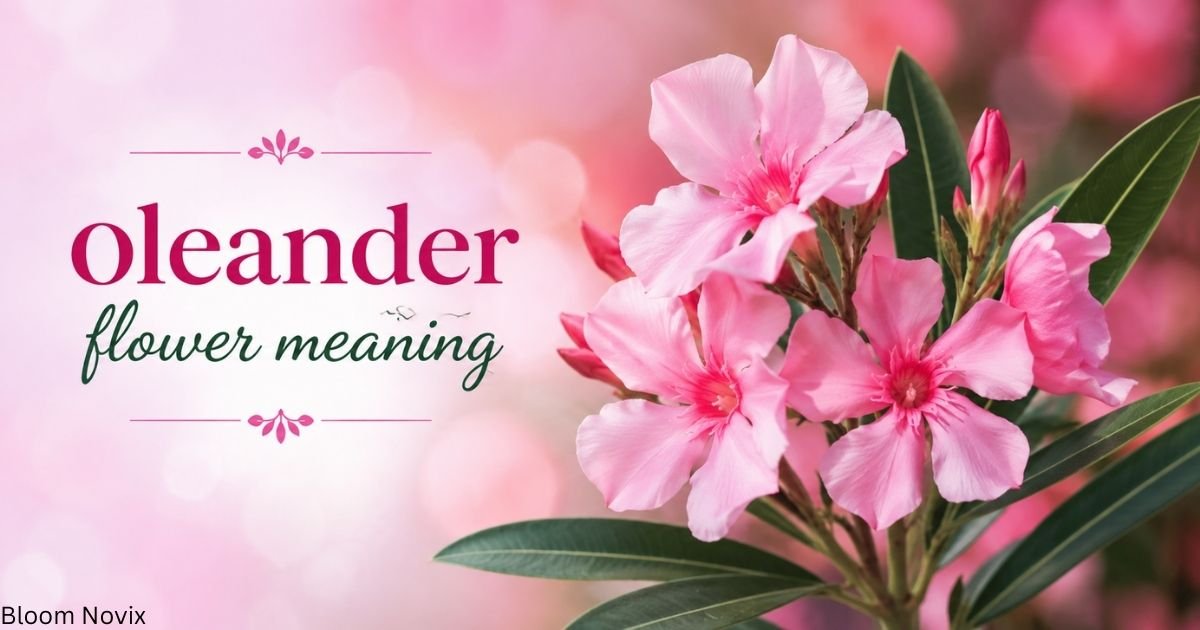
You have probably walked past an oleander bush without a second thought. It grows fast, blooms nonstop, and looks completely harmless. But the real oleander flower meaning is anything but simple. This plant hides one of nature’s biggest contradictions right inside its petals.
Behind every soft pink or white bloom sits a plant that can stop a heart. That single fact changes everything you thought you knew about this flower. Stay with us, because by the end of this guide, you will never look at oleander the same way again.
Oleander Meaning Flower: What Does Oleander Symbolize?
Oleander does not carry one simple meaning. It carries several, and they often clash with each other.
You will find oleander linked to these ideas most often:
- Beauty paired with hidden risk
- Caution and quiet warning
- Resilience in harsh conditions
- Protection of personal space
- Complicated or intense love
- Inner strength
Most flowers stick to one clean message. Oleander refuses to do that. It forces you to hold two opposite truths at once: something can look gentle and still be dangerous.
Oleander Flower Meaning and Symbolism
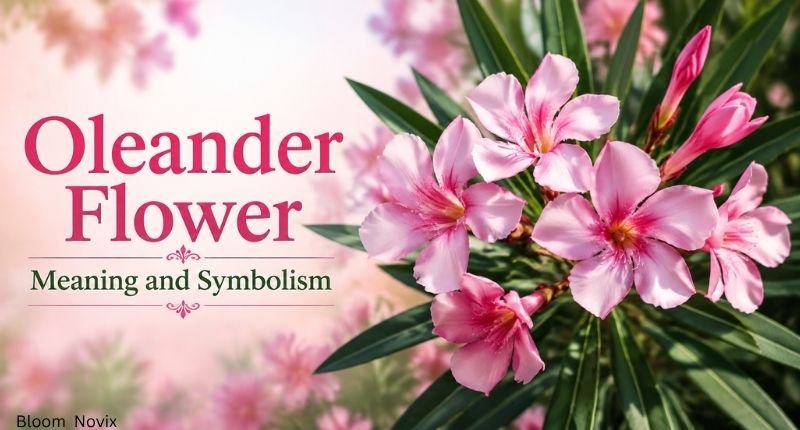
The core of oleander flower symbolism comes from contrast. The plant blooms constantly, even through heat and drought. Yet every part of it, from root to petal, is toxic.
This duality gives oleander a symbolic weight that softer flowers simply do not have. People use it to represent situations where appearances mislead. A relationship that looks perfect on the surface. A person who seems calm but hides intensity. A period of life that looks stable but carries risk underneath.
Gardeners also prize oleander because it survives where other plants fail. That toughness adds another layer: the idea of pushing through hardship without losing your bloom.
Is Oleander a Symbol of Love?
Yes, but it is a complicated kind of love, not a simple one.
Oleander does not represent easy romance the way a red rose does. It represents love that comes with intensity, risk, or emotional weight attached. Think of a relationship that feels magnetic but also unpredictable. That tension is what oleander captures.
You could gift oleander to express deep affection mixed with longing. Just remember that its meaning always carries a whisper of caution alongside the warmth.
Oleander in Greek Mythology and Hindu Traditions
This is where most articles stop short. Oleander’s cultural roots run much deeper than a quick color chart.
In Greek mythology, the flower’s story ties back to Leander, a young man who swam across the Hellespont every night to visit his lover, Hero. A lamp in her tower guided him home. One stormy night, the flame went out, Leander lost his way, and he drowned. Hero found his body on the shore, still holding a flower. She planted it as a symbol of a love that outlasted death. Some legends also connect the plant’s name to Nereus, the Greek sea god, and the Nereids, his daughters, whom ancient Greeks honored with oleander blossoms at sacred altars.
In Hindu tradition, oleander plays a very different but equally meaningful role. White oleander is considered sacred to Lord Shiva and appears in temple rituals and home pujas. Devotees offer the flower during Navratri and other festivals as a symbol of devotion and protection. Some tantric traditions even connect red oleander to specific rituals near the plant itself.
Two cultures, two continents, one flower carrying deep spiritual weight in both.
Victorian Language of Flowers Oleander Meaning
During the Victorian era, people spoke through flowers instead of words. This practice was called floriography, and it let people send messages that etiquette would not allow them to say directly. Flower dictionaries from that period commonly listed oleander under one heading: beware.
That single word fits the plant perfectly. Its beauty draws you in. Its toxicity gives you a real reason to stay alert. Victorians clearly understood the plant’s dual nature long before modern science explained the exact chemistry behind it.
Nerium Oleander Meaning
The scientific name of the plant is Nerium oleander. It belongs to the Apocynaceae family, also known as the dogbane family.
You will find this evergreen shrub thriving in warm, dry climates across the Mediterranean, South Asia, and parts of the southern United States. It handles drought, poor soil, and intense heat without complaint.
That resilience is exactly why the plant’s symbolic meaning so often includes endurance and adaptability. A shrub that keeps flowering under stress naturally becomes a metaphor for people who do the same. This connection between nature and symbolism can also be seen in other flowers, as explored in this article about hellebore flower symbolism, where the plant’s characteristics shape its deeper meanings.
Oleander Meaning by Flower Color
Color changes the emotional tone of oleander symbolism. Here is a quick breakdown before you dive into each shade.
| Color | Core Meaning | Emotional Tone |
| White | Purity, peace, remembrance | Calm and sincere |
| Pink | Affection, tenderness, grace | Warm and gentle |
| Red | Passion, intensity, desire | Bold and urgent |
| Yellow | Caution, alertness, warning | Sharp and direct |
White Oleander Meaning
White oleander leans toward purity and remembrance. Its pale petals against dark green leaves create a peaceful, almost sacred look. Many people connect white oleander with quiet strength — feelings that stay calm on the outside even during inner turmoil.
Pink Oleander Meaning
Pink oleander softens the plant’s message. It leans into affection, tenderness, and admiration. You could use pink oleander to express warmth without the intensity that red or white can carry.
Red Oleander Meaning
Red oleander pulls from red’s traditional symbolism: passion and desire. It suggests strong emotions that demand attention. Given the plant’s toxicity, red oleander also carries a subtle reminder that intense feelings need self-awareness, not just intensity.
Yellow Oleander Meaning
Here is something most articles get wrong or skip entirely. True yellow-flowered Nerium oleander is rare. What people usually call “yellow oleander” is actually a different, equally toxic plant, Cascabela peruviana (previously Thevetia peruviana). Both plants share the same warning-heavy symbolism: bright, cheerful color paired with genuine danger. If you are writing or gardening, it helps to know these are related but botanically distinct species.
Oleander Meaning in English
In plain English, “oleander” simply names the flowering evergreen shrub Nerium oleander. It is not tied to one specific emotion the way words like “love” or “hope” are.
Most people searching this phrase actually want the flower’s symbolic meaning, not a dictionary definition. So while the word itself is just a plant name, its associated meaning spans beauty, resilience, caution, and hidden danger — all the themes covered throughout this guide.
Oleander Meaning in Different Languages
Oleander goes by different names across South Asia and the Middle East. Each name carries its own local cultural weight.
| Language | Local Name | Region |
| Urdu | کنیر (Kaner) | Pakistan, North India |
| Hindi | कनेर (Kaner) | India |
| Tamil | அரளி (Arali) | Tamil Nadu, Sri Lanka |
| Telugu | గన్నేరు (Ganneru) | Andhra Pradesh, Telangana |
| Marathi | कण्हेर (Kanher) | Maharashtra |
| Arabic/Persian | دفلى / خرزهره | Middle East, Iran |
Oleander Meaning in Urdu
In Urdu, oleander is called کنیر (Kaner). It grows widely across Pakistan as an ornamental plant, valued for its color and heat tolerance despite its known toxicity.
Oleander Meaning in Hindi
In Hindi, the same name applies: कनेर (Kaner). The plant appears frequently in Indian gardens, temple offerings, and traditional medicine discussions, though experts always caution against ingestion.
Oleander Meaning in Tamil
Tamil speakers call it அரளி (Arali). It holds a place in South Indian religious and decorative traditions, often used fresh in garlands and rangoli.
Oleander Meaning in Telugu
In Telugu, the flower is known as గన్నేరు (Ganneru). Its bright blooms make it a common ornamental choice across Andhra Pradesh and Telangana gardens.
Oleander Meaning in Marathi
Marathi speakers use कण्हेर (Kanher). The name is well recognized across Maharashtra, where the plant is prized for its hardy, low-maintenance nature.
Oleander Meaning in Arabic/Persian
In Arabic, oleander is often called دفلى (defla), and in Persian regions, names like خرزهره appear. Across the Middle East, the plant grows along roadsides and in gardens, admired for its resilience in dry, hot climates.
Read Also: Hydrangea Symbolism Death
Oleander Meaning Spiritual: What Does It Represent?
Spiritually, oleander speaks to resilience and boundaries. A plant that keeps blooming under harsh sun becomes a natural symbol for staying strong during hard seasons of life.
Its toxicity adds a second spiritual lesson: not everything beautiful is safe to hold close. Many people interpret oleander as a gentle nudge to protect your energy and set healthy limits with people or situations that look appealing but drain you.
You could think of oleander’s spiritual message this way:
- Keep growing, even in tough conditions
- Stay alert to what looks good but is not good for you
- Protect your boundaries without losing your beauty or softness
Oleander Meaning in Dreams
Dreaming about oleander usually points to a hidden risk or a beautiful situation that needs caution.
If oleander appears in your dream, your subconscious may be flagging something that looks appealing on the surface but carries a hidden cost. This could relate to a relationship, a job offer, or a decision that feels exciting but risky.
A few common dream interpretations include:
- Admiring the flower — you are drawn to something attractive but uncertain
- Touching or picking it — you may be ignoring a warning sign in waking life
- A field of oleander — a period of growth that still requires careful navigation
Dream symbolism is personal, so always weigh it against what is actually happening in your life right now.
“White Oleander” — The Novel & Movie Connection
If you search “white oleander meaning,” a huge number of people are not looking for flower symbolism at all. They are searching for the book.
White Oleander is a 1999 novel by Janet Fitch, selected for Oprah’s Book Club and later adapted into a 2002 film. The story follows Astrid, a teenage girl who moves through a series of Los Angeles foster homes after her mother, Ingrid, goes to prison for murder. The film starred Alison Lohman as Astrid, alongside Michelle Pfeiffer, Robin Wright, and Renée Zellweger.
In both the book and film, the white oleander flower becomes a central metaphor. It represents a mother whose beauty and control mask something dangerous. This single connection between the novel’s title and the plant’s real symbolism is exactly why so many readers search this phrase — and why this section matters for full topical coverage.
Mother Mother Oleander Meaning
“Oleander” is also a song by the Vancouver indie rock band Mother Mother, featured on their 2011 album Eureka. Like much of the band’s catalog, the song leans into emotionally layered, slightly unsettling imagery.
Artists rarely explain their exact intent behind a song title. What we can say is that oleander works as a lyrical choice precisely because of its built-in contrast — a beautiful surface with something sharper underneath. That makes it a natural fit for a song exploring complicated emotional territory.
Explore More: Amaranth Symbolism
Why I’m Here Oleander Meaning
This search phrase usually connects back to the same Mother Mother song or similar artistic references rather than a standalone flower meaning. Without a direct statement from the artist about specific lyrics, it is best to treat this as an open interpretation rather than a confirmed meaning.
What we can say confidently: oleander’s blend of beauty, danger, and resilience makes it a flexible metaphor for artists writing about survival, identity, or emotional conflict.
Oleander Meaning Name: What Does the Name Oleander Mean?
As a name, “Oleander” carries the same symbolic qualities as the flower itself: beauty, strength, mystery, and quiet resilience.
It works well as:
- A character name in fiction, especially for someone with a layered or guarded personality
- A creative or artistic pen name
- A symbolic choice in poetry or personal branding
Because the name is uncommon, it naturally stands out while carrying real depth behind it.
Oleander Tattoo Meaning
Oleander has become a popular tattoo choice, and the reason lines up perfectly with everything covered so far.
People choose an oleander tattoo to represent:
- Surviving a hard chapter of life
- Beauty that came with a real cost
- A reminder to stay cautious about who or what you let close
- Strength that does not need to look tough on the outside
Many people place oleander tattoos near the wrist, collarbone, or ribs — spots that feel personal rather than purely decorative. The design often pairs the flower with a small thorn, skull, or quote to reinforce the beauty-versus-danger theme.
Hannah Bahng Oleander Meaning
Australian singer-songwriter Hannah Bahng released a song titled “OLeander” on her 2024 project The Abysmal EP. The track explores a relationship that looks intact on the surface but has already emotionally ended — one person still present in the room while feeling completely disconnected inside.
The flower title fits the song’s theme well. Oleander’s core symbolism, something that looks fine but is quietly harmful, mirrors a relationship that appears stable while actually falling apart. As with any artist’s work, the deepest meaning belongs to Bahng herself, but the metaphor lines up naturally with the flower’s traditional symbolism.
Is Oleander Poisonous?
Yes. Every part of the oleander plant is toxic if swallowed. Nerium oleander contains cardiac glycosides, including a compound called oleandrin. These compounds directly affect heart rhythm and can cause serious, even life-threatening, poisoning in humans and animals.
Keep these safety points in mind:
- Never eat any part of the plant, including leaves, flowers, or stems
- Keep it out of reach of children and pets
- Never use oleander in home remedies or herbal teas
- Wash your hands after pruning or handling it
- Call emergency medical or veterinary help immediately if ingestion happens
This is not a symbolic warning. It is a real, practical one.
Why Is Oleander Associated With Danger?
The danger label comes directly from the plant’s chemistry, not just folklore. Its flowers look inviting, but the toxins inside can seriously affect the heart.
That gap between appearance and reality is what makes oleander such a powerful symbol. It teaches a simple lesson: do not judge safety by beauty alone. In flower symbolism, this idea shows up again and again as themes of caution, boundaries, and awareness.
Is It Safe or Appropriate to Gift Oleander?
This is a question most articles skip, and it matters more than you might think.
Oleander can be a meaningful gift when the recipient understands its symbolism — resilience, deep affection, or protection. However, because the plant is toxic, it is not the best choice for homes with small children, pets, or anyone unfamiliar with proper handling.
If you want to gift oleander:
- Choose cut flowers in a vase rather than a potted plant, and keep them away from curious pets or kids
- Explain the symbolism along with the gift so the meaning lands clearly
- Avoid gifting oleander to households with toddlers or grazing animals
- Consider pairing it with a small note explaining its “beautiful but bold” meaning
Used thoughtfully, oleander sends a message no ordinary flower can.
How to Grow Oleander Safely at Home
Many people still want to grow oleander for its color and low-maintenance nature. That is completely possible with a few safety habits in place.
- Plant it away from vegetable gardens or areas where children play
- Wear gloves when pruning, since sap can irritate skin
- Never burn oleander clippings, since the smoke carries toxins too
- Keep pets supervised in yards where oleander grows
- Store any trimmed branches or leaves somewhere pets and kids cannot reach
With basic precautions, oleander rewards you with months of nonstop, vibrant blooms.
Oleander Symbolism at a Glance
| Symbolism | What It Represents |
| Beauty | Elegant, eye-catching appearance |
| Caution | Awareness of hidden risk |
| Resilience | Thriving through harsh conditions |
| Love | Intense or complicated affection |
| Protection | Personal boundaries and self-preservation |
| Danger | Real toxicity behind visual appeal |
| Strength | Quiet, enduring inner power |
Oleander vs Other Beautiful-but-Toxic Flowers
Oleander flower is not alone in blending beauty with danger. Foxglove carries a similar warning-based symbolism, tied to caution and hidden strength. Lily of the valley looks delicate but is highly toxic, often symbolizing purity mixed with unseen risk. Wolfsbane takes the danger theme even further, historically linked to protection against evil and genuine poison.
What sets oleander apart is its sheer versatility. It shows up in Greek myth, Hindu ritual, Victorian floriography, modern song lyrics, and even a bestselling novel. Few flowers carry that much cultural range while still holding onto one consistent core idea: things are not always what they seem.
Frequently Asked Questions
What is the main oleander meaning?
Beauty, caution, resilience, and hidden danger, all combined in one flower. The oleander flower meaning shifts slightly depending on culture, color, and context, but this core contrast stays consistent everywhere.
What does oleander symbolize?
Oleander symbolizes beauty paired with risk. It also represents strength, protection, and complicated love, depending on the setting it appears in.
Is oleander a symbol of love?
Yes, but it represents intense or complicated love rather than simple romance. It suits situations where affection comes with emotional weight attached.
What flower means “I love you”?
The red rose is the most universal flower for “I love you.” Oleander, by comparison, expresses love mixed with intensity or caution rather than a straightforward declaration.
What is the white oleander meaning?
White oleander represents purity, peace, and remembrance. Its pale color creates a calm, sincere tone compared to pink or red varieties.
What does pink oleander symbolize?
Pink oleander symbolizes affection, tenderness, and admiration. It carries a gentler emotional tone than red or white oleander.
What does red oleander symbolize?
Red oleander symbolizes passion, desire, and intense emotion. Its bold color reflects strong feelings that demand attention.
What does oleander mean spiritually?
Spiritually, oleander represents resilience, protection, and healthy boundaries. It reminds you to stay strong while staying alert to hidden risks.
Is oleander poisonous?
Yes. Every part of the plant is toxic if swallowed and can cause serious, life-threatening poisoning in humans and animals.
Is it okay to touch oleander?
Touching the plant briefly is generally low-risk, but sap can irritate sensitive skin. Always wash your hands after handling it, and avoid touching your face or eyes.
What is oleander called in Urdu?
Oleander is called کنیر (Kaner) in Urdu, a name widely recognized across Pakistan and North India.
What is oleander called in Hindi?
Oleander is called कनेर (Kaner) in Hindi, commonly used across Indian gardens and religious traditions.
Final Words
The oleander flower meaning goes far beyond a pretty bloom in your garden. This flower carries centuries of mythology, religious devotion, literary weight, and real chemical danger, all inside the same delicate petals. From Greek legend to Hindu temples, from Victorian flower dictionaries to modern song lyrics, oleander has told the same story again and again: beauty and risk can exist in the same place.
Whatever brought you here, whether it was color symbolism, a dream, a tattoo idea, or a favorite song, you now have the full picture. Oleander asks you to look past the surface before you decide something is safe. That single lesson is what makes this flower unforgettable, and it is a lesson worth carrying with you long after you close this article.
BloomNovix is managed by an experienced team of content writers and SEO specialists with 4+ years of expertise in gardening and plant care. We provide well-researched guides, gardening tips, and insights on floral meanings to help plant lovers grow their indoor and outdoor gardens with confidence.


1 thought on “Oleander Flower Meaning: Symbolism, Colors, Culture & Toxicity Guide”