Flowers look different when you don’t have the person you love. You’re in a flower shop, and you’ve been looking for hydrangea death symbolism, but you’re not sure which flower can express the message of your heart. You want something that’s not ostentatious but it also must be sincere. This guide will tell you what the flower after death is about the hydrangea – and you will never have to guess again.
At the end of this article you will know exactly the color you should pick, what to write on the card and how to explain why you chose that color if asked. You will also learn its origin, how to maintain a flower as a living memorial and why it is unique in Japan. Well, first let’s go with the short answer.
Hydrangea Symbolism Death (Quick Answer)
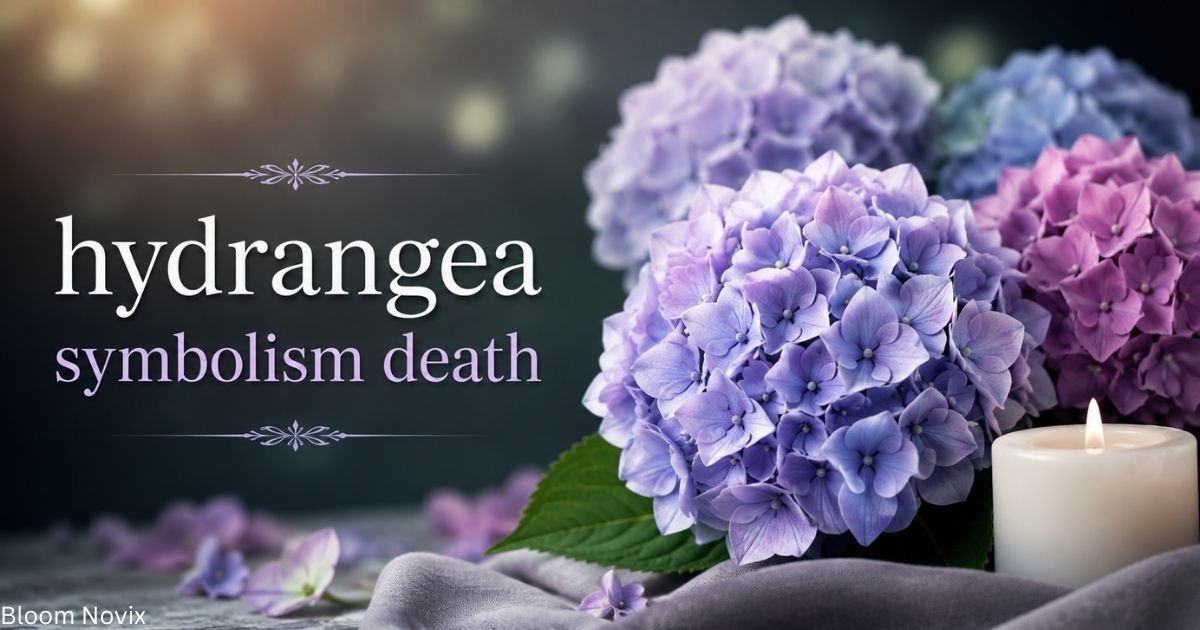
Hydrangeas are not a traditional symbol of death. They represent remembrance, gratitude, and heartfelt sympathy when used after a loss. Their large, gentle blooms comfort grieving families without making death the only message.
- Modern meaning: sympathy, remembrance, emotional support
- Victorian meaning: heartlessness, boastfulness
- Japanese meaning: seasonal change, impermanence
- Best use: funerals, sympathy gifts, memorial gardens
TL;DR
You don’t have time to read everything right now, and that’s okay. Here is what you need to know in ten seconds.
- Hydrangeas symbolize grief, gratitude, and lasting affection, not death itself
- Victorian flower language once linked them to heartlessness
- Japan connects hydrangeas to the rainy season, not mourning
- Color changes which emotion the flower expresses
- A potted hydrangea can grow into a living memorial for years
Hydrangea Origin
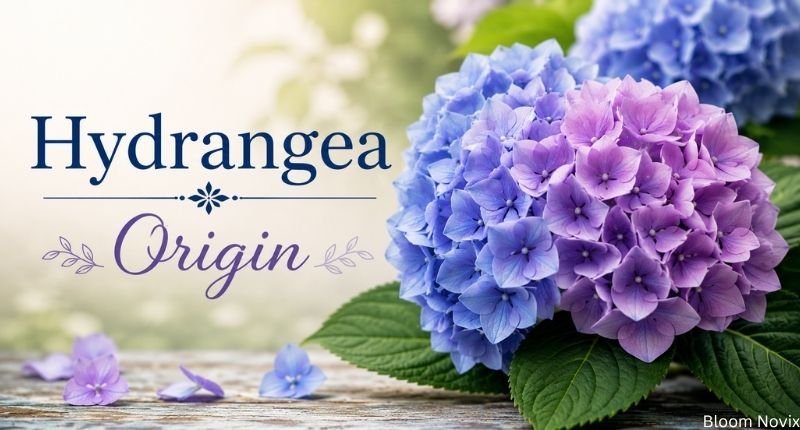
It may seem like hydrangeas were all from one particular source, but that’s not the case. Because the genus Hydrangea is found in both Asia and the Americas, the flower is represented in many cultures and has many meanings.
Hydrangeas have been grown in Japan for centuries, where their large blooms became especially striking during the rainy season. Meanwhile, hydrangea species native to North America grew naturally in forests and along riverbanks, long before people attached symbolic meanings to them. This difference is a good reminder that flowers can take on very different meanings depending on where they grow and how people connect with them. The same idea can be seen in the story behind the American Beauty Rose flower, another flower with a strong cultural connection in the United States.
Asian hydrangea varieties were introduced back to Europe in the 1700s, and Victorian floriography took over the flower. Hydrangea meaning is a bit confusing, which is the reason it seems to change from place to place, because the plant actually has several home countries.
This is important to know the history of because it tells you something important: the meaning of the hydrangea is not the sole domain of one culture. It’s up to you to determine what it means to you.
What Hydrangeas Look Like and Why Their Form Matters
Look closely at a hydrangea bloom and you will notice something surprising. What looks like one giant flower is actually dozens of tiny flowers clustered tightly together. This detail matters more than you might think when you’re grieving.
Bigleaf hydrangeas produce the rounded, pom-pom shape most people picture. Oakleaf hydrangeas grow in cone-shaped clusters with leaves shaped like oak trees. Panicle hydrangeas form elongated, football-shaped blooms that shift color as they age. Smooth hydrangeas stay compact and rounded, often in pure white.
Here’s why this matters for you personally: many small flowers held together mirror how grief actually feels. You don’t feel one emotion after a loss — you feel sadness, gratitude, anger, and love all at once, tangled together like a hydrangea’s petals. This flower doesn’t ask you to pick just one feeling. It holds space for all of them.
- Rounded clusters suggest unity and family
- Cone-shaped blooms suggest gradual change
- Aging colors suggest a memory softening over time, not disappearing
Hydrangea Meaning and Symbolism
Before focusing on death and mourn, it’s important to understand the meaning of hydrangeas in general. This flower is one of the most flexible in the floral design world and it is the flexibility that makes it useful during difficult times.
The hydrangea is a symbol of heartfelt emotion, gratitude, and understanding. It also means grace, plenty, and sincere communication, which is the ability to talk about something that you have a hard time saying out loud.
Therefore, at weddings, apology bouquets, thank-you gifts and funerals, hydrangeas are seen. The same flower can be a symbol of marriage, or a flower of mourning for a widow; the meaning is all in the giver’s eyes.
Knowing what I’ve seen, after reading dozens of meanings for readers like you, I’ve recognized that very few flowers can evoke this much emotion. That range is a blessing if you don’t know how to express your emotions in words.
What Hydrangeas Commonly Mean Around Death in the United States
When Americans send hydrangeas after a death, they are almost never saying “I associate you with death.” They’re saying something gentler.
A hydrangea sent to a grieving family typically communicates:
- I remember them
- I am grateful for what they gave us
- I see your pain, and I’m here
- Their memory still lives on
Here lies the modern American concept of hydrangea symbolism death- ”mourning by remembrance, not by death”. Hydrangea is a flower that is used in sympathy work because it is large yet not too coarse for inclusion in arrangements.
At American funerals you will most likely see hydrangeas in the colors white, light blue and soft pink because the lighter range is said to be more demure, which is better. Potted hydrangeas are also becoming a well-known sympathy gift, as once planted, it will return once a year to the grieving family — a living little solace.
Why Hydrangea Is Not a Traditional “Death Flower”
Most articles fail to mention it: “hydrangea” is not a true “flower of death” in the mythology of any particular culture or nation. That reputation seems to have grown over time, largely through modern articles repeating the same unsupported claims. Flower symbolism is shaped by culture, history, and tradition, which is why it is important to look at the real story behind how flowers gain meaning. The history and purpose of National Flower Day offer another good example of how flowers can take on cultural meaning over time.
The background of flower meanings is derived from religion, folklore, funeral traditions, and popular culture — and they vary from place to place. The flowers associated with sadness in America could represent something completely different in another place.
Compare the known death associations of flowers with that of hydrangeas, by referring to the table on the next page.
| Flower | Traditional Death Association | Modern Funeral Use | Primary Emotion |
| Lily | Strong — linked to the soul’s return to peace | Very common | Peace, purity |
| Chrysanthemum | Strong — official funeral flower in many European and Asian countries | Extremely common | Grief, respect |
| Carnation | Moderate — red carnations tied to remembrance | Common | Love, memory |
| Hydrangea | Weak — mostly modern, not historic | Growing in popularity | Gratitude, remembrance |
As you can see, hydrangeas sit closer to remembrance than to death itself. That’s actually good news if you’re choosing flowers — you’re picking something warm, not something that only signals loss.
Victorian Floriography Gave Hydrangeas a Darker Meaning
If you’ve read that hydrangeas mean “heartlessness,” you’re not wrong — you’re just reading an old, nearly forgotten chapter of the story. Victorian floriography, the nineteenth-century practice of assigning secret meanings to flowers, was not kind to hydrangeas.
Kate Greenaway’s well-known flower dictionary listed the hydrangea alongside “a boaster” and “heartlessness.” Victorians believed the flower’s enormous, showy blooms hinted at vanity rather than sincerity — a plant all display and no real feeling underneath.
This reputation stuck around for decades, but floriography itself faded out by the early twentieth century as fashions moved on. It’s worth remembering that Victorian flower meanings were never universal or fixed. Different dictionaries assigned different meanings to the same bloom, often contradicting each other.
So if someone tells you hydrangeas “mean heartlessness,” you can gently correct them: that’s one outdated opinion from one Victorian book, not a rule you have to follow today.
When to Send Hydrangeas as a Gift
You might be wondering right now whether it’s actually appropriate to send hydrangeas, and how many to choose. This is one of the most common questions grieving people ask, so let’s answer it directly.
Yes, hydrangeas are appropriate for almost every sympathy occasion. Here’s how to get the details right.
- Single stems work well for a quiet, personal gesture, such as a visit to a grieving friend’s home
- Full bouquets suit funeral services, memorial ceremonies, and viewings
- Potted hydrangeas make the best gift when you want the family to keep something living afterward
- Avoid bright, celebratory shades like hot pink or neon blue for a funeral setting
When it comes to religious sensitivity, hydrangeas are generally safe across most Christian, secular, and non-denominational services. In some Jewish and Islamic funeral traditions, flowers are used less often, so it’s worth checking with the family first.
A simple card message works best. Try something like: “Thinking of you and your family during this difficult time” or “With deepest sympathy and love.” You don’t need elaborate words — sincerity carries more weight than length.
Funeral and Sympathy Meaning in Modern America
Building on gift-giving, let’s look specifically at what happens once hydrangeas arrive at the funeral itself. Modern American funeral floristry leans on hydrangeas because they create fullness in an arrangement without overwhelming it.
A funeral arrangement featuring hydrangeas typically communicates compassion, dignity, and quiet remembrance. Florists often pair them with roses, lilies, or greenery to balance softness with structure.
Here’s what tends to happen emotionally, based on how families describe it afterward: a hydrangea sent during the worst week of someone’s life often becomes tied to that person forever. Years later, seeing a hydrangea in a garden or a shop can bring back the memory of who sent it and why.
- Works beautifully as a standalone sympathy bouquet
- Blends easily into larger funeral arrangements
- Suits both burial and cremation services
- Feels appropriate for sudden losses and long-expected ones alike
Hydrangeas in Memorial Gardens and Living Tributes
A cut flower fades within a week. A memorial garden hydrangea can bloom for decades. That difference changes the entire meaning of the gift.
When someone plants a hydrangea after losing a parent, spouse, or close friend, the flower stops being a one-time gesture and becomes an ongoing relationship with grief. Each blooming season becomes a small, gentle reminder that memory doesn’t disappear — it just changes shape.
Families often choose hydrangeas for memorial gardens because the plant:
- Returns reliably year after year in most climates
- Offers a physical routine — watering, pruning, watching it bud — that gives grief a place to live
- Ages gracefully, drying into muted tones instead of collapsing suddenly
- Can be planted near a headstone, in a backyard, or in a community memorial space
If you’re planting one for someone you lost, know that this is one of the most meaningful choices you can make. The garden will keep growing long after the funeral flowers have wilted.
Care and Cultivation of Hydrangea
Since a memorial hydrangea is meant to last, you need to know how to actually keep it alive. This is the part most articles about symbolism skip entirely, but it matters just as much as the meaning itself.
Choosing the right variety matters most. Panicle and smooth hydrangeas tolerate colder climates better than bigleaf varieties, so check your growing zone before planting.
- Sunlight: Morning sun with afternoon shade works best for most varieties
- Soil: Rich, well-draining soil keeps roots healthy
- Watering: Water deeply two to three times a week, more during hot summers
- Pruning: Prune spent blooms in late winter or early spring, depending on the variety
- Color control: Adding aluminum sulfate to the soil turns blooms bluer; adding garden lime pushes them toward pink
If your memorial hydrangea starts changing color on its own, don’t worry — that’s simply the soil’s natural aluminum content shifting, not a sign of anything wrong. Many people find comfort in this, watching the flower transform the same way their grief does over time.
Hydrangea Flower Color Meaning
Before we focus specifically on mourning, it helps to understand what hydrangea colors mean in everyday life. Color changes the entire tone of what the flower communicates, whether you’re grieving or celebrating.
Romantic Love Flowers
Hydrangeas aren’t only for funerals—they can carry a warm romantic meaning, too. A pink hydrangea can reflect new affection, while a deep purple hydrangea feels more like deep, lasting love. Couples may choose hydrangeas for anniversaries as a reminder of love that has grown stronger with time. Flowers can express that same feeling in different ways, and the phlox flower meaning also has a lovely connection to romance and lasting affection.
If you’re torn between using hydrangeas for a romantic gesture or a sympathy gift, remember this: context decides the meaning, not the flower alone. The same bloom that says “I love you” at a wedding can say “I remember you” at a memorial.
What Hydrangea Colors Can Mean in Mourning
Now let’s bring color meaning directly into grief. Choosing the right shade can help you say exactly what words can’t.
| Color | Mourning Meaning | Best Used For |
| Blue | Reflection, sincerity, quiet remembrance | Contemplative memorials |
| White | Peace, respect, simplicity | Formal funeral services |
| Pink | Tenderness, affectionate memory | Personal, warm tributes |
| Purple | Dignity, deep respect | Solemn, formal occasions |
| Green | Renewal, life continuing | Memorial gardens |
| Yellow | Comfort, friendship, gentle hope | Close friend’s memorial |
Blue Hydrangeas
A blue hydrangea meaning centers on reflection, honesty, and quiet remembrance. If you’re struggling to say something you never got to say to the person you lost, a blue hydrangea communicates that unspoken feeling for you.
White Hydrangeas
White hydrangea meaning leans toward peace, respect, and simplicity. This is the safest, most universally appropriate choice for formal funeral services, especially when you don’t know the family’s specific preferences.
Pink Hydrangeas
A pink hydrangea meaning feels warmer and more personal. Choose pink when you want to celebrate who the person actually was — their personality, their relationships, the joy they brought — rather than focusing only on the loss.
Purple Hydrangeas
Purple hydrangea meaning carries dignity and admiration. Darker shades feel more solemn, making purple a strong choice for someone you deeply respected, such as a mentor or elder family member.
Green Hydrangeas
Green hydrangea meaning shifts attention away from loss and toward continuation. It’s a gentle way to say “life goes on” without minimizing the grief someone is feeling.
Yellow Hydrangeas
Yellow hydrangeas are rare, but their meaning is worth knowing. A yellow hydrangea symbolism death connection usually points to friendship, warmth, and gentle comfort rather than formal mourning. Yellow flowers are also often linked with cheerful, positive emotions, as explored in this guide to Yellow Flower Day. This shade works best for a close friend’s memorial rather than a distant or formal service.
Why Changing Hydrangea Colors Suggest Transition
You already know that soil chemistry can shift a hydrangea’s color. What you might not know is how deeply this trait shaped the flower’s symbolism.
Bigleaf and mountain hydrangeas respond to aluminum in the soil, drifting between blue, purple, and pink. This visible transformation naturally connects to ideas of transition, emotional change, and impermanence.
Grief works the same way. It rarely stays in one place. A person’s relationship with loss often shifts from sharp, acute pain toward reflection, gratitude, and eventually acceptance — without ever fully disappearing.
- The flower changing color mirrors grief changing shape
- No fixed timeline exists for either process
- Both processes happen naturally, without forcing them
This is perhaps the most poetic part of hydrangea symbolism: a flower that quite literally cannot stay the same color forever becomes the perfect image for a grief that also refuses to stay the same.
Japanese Hydrangea Meaning Is More About Season and Change
If you’ve heard that hydrangeas symbolize death in Japan, it’s time to clear that up. Japanese hydrangeas, called ajisai, are tied far more strongly to the rainy season than to mourning.
Temples, gardens, and travel destinations across Japan become famous hydrangea-viewing spots during the early-summer rainy period. The flower’s association isn’t with dying — it’s with rain, seasonal change, and mutability.
Modern Japanese flower guides sometimes connect blue hydrangeas with apology or sincere emotion, though it’s worth staying cautious about treating every popular explanation as verified ancient tradition. What stays consistent is this: Japan celebrates hydrangeas as a symbol of the changing year, not as a funeral flower.
So if you’re drawing on Japanese meaning for a memorial, lean into the idea of seasonal renewal rather than death itself. It fits the culture more accurately.
Hydrangeas, Buddhist Settings, and Impermanence
You may have noticed hydrangeas growing near Buddhist temples in Japan and assumed a direct link to death. That assumption goes a step too far.
Temples grow hydrangeas for many practical reasons — seasonal beauty, suitable climate, and centuries of gardening tradition. The plant simply thrives during Japan’s rainy season, which happens to be when many temples are most photographed.
That said, one genuine philosophical connection exists. Buddhism teaches impermanence — the idea that everything arises and eventually passes away. A flower whose colors shift and whose bloom fades each year offers a natural image for that teaching.
You can personally connect hydrangeas to mortality or acceptance without claiming this is an official Buddhist symbol. That distinction keeps your understanding both accurate and respectful.
Emotional Meaning: Grief, Gratitude, and Things Left Unsaid
Grief rarely arrives as one clean emotion, and hydrangeas seem uniquely built to hold that complexity. Their modern meanings — gratitude, understanding, regret, affection, apology — cover almost everything you might feel after losing someone.
Many people carry unfinished conversations after a death. You might wish you had said “thank you” more often, resolved an old disagreement, or simply spent one more afternoon together. A hydrangea sent or planted in that moment can represent acknowledgment, not guilt.
- For a grandparent, hydrangeas can express gratitude for a long life shared
- For a spouse, they can represent enduring, lasting affection
- For a community loss, the many small flowers in one cluster can represent many people holding one memory together
This emotional range explains why hydrangea symbolism death feels so much gentler today than it did in the Victorian era. The flower grew warmer as our culture around grief grew more open.
Hydrangea Tattoos Connected With Death and Remembrance
If flowers aren’t enough and you want something permanent, a hydrangea tattoo is a common choice for memorial ink. It doesn’t automatically mean bereavement, but it works beautifully in that context.
- Remembering someone specific — often paired with a name, date, or handwriting
- Marking personal change — using the color-shifting hydrangea to represent a life transformed by loss
- Expressing quiet gratitude — focusing on what the relationship gave you, not just its ending
- Holding unresolved feelings — blue hydrangeas especially suit private meanings around regret or reconciliation
- Honoring family — the many small blooms in one cluster can represent generations held together
Placement matters too. Smaller memorial tattoos often go on the wrist or forearm, somewhere you’ll see daily, while larger, more detailed designs suit the shoulder or back.
Whatever meaning you choose, remember that a memorial tattoo is deeply personal. Online lists can guide you, but your own intention should always come first.
Read Also: Anemone Flower Meaning: 12 Powerful Secrets Behind Its Symbolism & Colors
Hydrangeas in Art, Decor, Jewelry, and Digital Memorials
Hydrangea symbolism has grown far beyond gardens and funeral bouquets in recent years. You’ll now find it woven into everyday memorial objects.
- Home decor: Dried hydrangeas create a soft, aged look that suits spaces built around nostalgia and family memory
- Jewelry: Preserved petals pressed into pendants or resin charms let you carry a physical piece of a memorial bouquet
- Digital memorials: Hydrangea imagery often appears beside candles, portraits, and tribute posts on social media
- Wedding contrast: The same flower that comforts at a funeral can represent abundance and joy at a wedding, proving that context always shapes meaning
If you’re looking for a way to keep a memorial bouquet beyond its natural life, pressing or drying the blooms is one of the simplest options. Many families keep a single dried hydrangea head in a frame or shadow box for years.
Benefits and Uses of Hydrangea
Beyond symbolism, hydrangeas offer practical value that’s worth knowing, especially if you’re planting one as a living memorial.
- Landscaping benefit: Hydrangeas fill garden space quickly and bloom reliably for years with minimal maintenance
- Pollinator support: Certain varieties attract bees and butterflies, adding life to a memorial garden
- Cut-flower versatility: Hydrangeas hold their shape well in both fresh and dried arrangements
- Emotional benefit: Tending a living plant gives grief a routine and a physical outlet, which many people find genuinely comforting
- Seasonal interest: Because blooms shift color and eventually dry on the shrub, a hydrangea offers visual interest across multiple seasons, not just one short bloom period
These practical benefits are part of why hydrangeas keep gaining popularity as memorial plants. They’re not just symbolic — they’re genuinely rewarding to grow.
Does Hydrangea Toxicity Explain Its Association With Death?
You might wonder if hydrangeas are linked to death because the plant is actually dangerous. The honest answer is no, and it’s important to separate the two ideas.
Hydrangea plants contain cyanogenic glycosides, compounds that can cause illness in animals if ingested in large amounts. Veterinary sources list hydrangeas as mildly toxic to dogs, cats, and horses, though severe poisoning is uncommon — most cases involve stomach upset rather than anything life-threatening.
This chemistry has nothing to do with the flower’s symbolic meaning. Plenty of ornamental plants contain mildly toxic compounds without becoming cultural symbols of death. Hydrangeas earned their mourning associations through how people actually use them at funerals, not through their chemical makeup.
Practical tip: If you have pets at home, keep them away from chewing hydrangea leaves and flowers, especially wilted ones, which can concentrate more compounds. This is simply good pet safety, not a reason to avoid the flower symbolically.
Positive and Negative Meanings Can Exist Together
By now, you’ve probably noticed that hydrangeas carry both dark and light meanings, and that’s not a contradiction — it’s the whole point.
Negative associations include heartlessness, coldness, boastfulness, and emotional distance, inherited mostly from Victorian floriography.
Positive associations include gratitude, remembrance, affection, grace, continuity, and emotional honesty, shaped by modern funeral and gift-giving culture.
Neither meaning cancels the other out. A vintage-inspired design might intentionally lean into the flower’s colder Victorian reputation, while a funeral arrangement uses the same bloom to express warmth and sympathy. Your intention decides which side of the flower’s history speaks loudest.
Common Misunderstandings About Hydrangea Death Symbolism
A few myths keep circulating about hydrangea symbolism death, and it’s worth clearing them up before you finish reading.
- Myth: Hydrangeas universally mean death. They don’t — their meaning is far more tied to remembrance and gratitude
- Myth: Every culture shares the same hydrangea meaning. Victorian, Japanese, and modern American interpretations are genuinely different traditions, not one shared belief
- Myth: Every color has one “official” meaning. Color meanings are cultural conventions, not fixed rules carved in stone
- Myth: A flower used at funerals is only for funerals. Hydrangeas appear at weddings, anniversaries, and celebrations just as often
The most reliable way to understand any hydrangea’s meaning is to ask why it was chosen and where it’s being placed. Context will always tell you more than a list ever can.
Frequently Asked Questions
Do hydrangeas actually symbolize death?
No, hydrangeas don’t universally symbolize death. Hydrangea symbolism death in modern culture leans toward remembrance, gratitude, and sympathy rather than death itself.
Are hydrangeas appropriate funeral flowers?
Yes, hydrangeas are widely used and appropriate for funerals. They work well in bouquets, sympathy arrangements, and living memorial gifts.
What does a blue hydrangea mean after someone dies?
A blue hydrangea represents reflection, sincerity, and quiet remembrance. It suits someone who wants to express feelings that are hard to put into words.
What does a white hydrangea symbolize at a funeral?
White hydrangeas symbolize peace, respect, and simplicity. They’re the safest, most formal choice for a traditional funeral service.
Do hydrangeas mean death in Japan?
No, Japanese hydrangeas are tied to the rainy season and seasonal change, not death. They’re called ajisai and are celebrated for their beauty, not mourning.
Why did Victorians associate hydrangeas with heartlessness?
Victorian flower dictionaries linked the hydrangea’s large, showy blooms to vanity and boastfulness, giving the flower a colder reputation that has since faded.
Is a hydrangea a good plant for a memorial garden?
Yes, hydrangeas make excellent memorial garden plants. They return year after year, giving remembrance a living, seasonal presence.
Is hydrangea a funeral flower?
Yes, hydrangea is commonly used as a funeral flower in modern floristry, especially in white, blue, and soft pink shades.
What flowers symbolize both death and rebirth?
Lilies and chrysanthemums are often linked to both death and rebirth, representing the soul’s passing and eventual peace.
What is the negative meaning of hydrangea flowers?
The negative meaning of hydrangeas comes from Victorian floriography, which associated the flower with heartlessness and boastfulness.
What flowers not to bring to a funeral?
Avoid bright, celebratory flowers like sunflowers or brightly colored roses, which can feel too cheerful for a somber funeral setting.
Conclusion
The lesson I learned from this book as far as death goes, is that this is a book about remembering and not dying. It isn’t this flower that makes you think about death. It conveys a message of appreciation, love and calm contemplation in one flower, without being too harsh.
Choose one stem of blue for some introspection; a white funeral arrangement for formal respect; a living hydrangea for a memorial garden, and you’ve chosen a flower that will contain complex emotions. Grief is for holding sadness and hope together, for being soft.
When you’re next in a flower shop and can’t decide which flower you should buy, you’ll know just what a hydrangea death symbolism represents for you. Also, you’d have a very detailed history of it, and you could explain it to others why you have selected it.
Let this flower do what words cannot do! Let it reveal your as yet unsaid words.
BloomNovix is managed by an experienced team of content writers and SEO specialists with 4+ years of expertise in gardening and plant care. We provide well-researched guides, gardening tips, and insights on floral meanings to help plant lovers grow their indoor and outdoor gardens with confidence.