Flowers have always been one of the most loved subjects in art, and flower drawing designs remain a favourite among beginners and experienced artists. Whether you enjoy sketching with a pencil or adding vibrant colours, flowers offer endless creative possibilities on paper.
If you are searching for flower drawing ideas that are simple yet eye-catching, this guide will walk you through everything you need. From easy flower drawing step by step methods to advanced techniques, you will find inspiration for every skill level.
Why Flower Drawing Designs is Popular Among Artists
Drawing flowers is calming, expressive, and surprisingly easy to start. Many people turn to floral drawing ideas as a way to relax after a long day, since the process requires little more than paper, a pencil, and a bit of patience. Unlike complex subjects, flowers allow room for imperfection while still looking beautiful.
Another reason artists love this subject is variety. From realistic flower drawings to playful flower doodle designs, there is no single “correct” style. This freedom makes flower art approachable for kids, students, and professional illustrators alike.
Categories of flower drawing designs
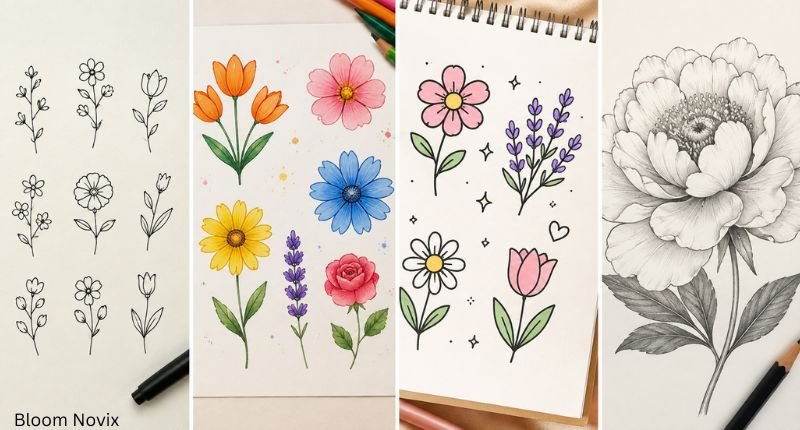
Flower art naturally falls into a few broad styles, and knowing these categories helps you pick the right approach before you even start sketching. Each style suits a different mood, skill level, and purpose, from quick doodles to detailed wall art.
Simple Flower Drawings
Built on basic shapes with minimal detail, these designs are perfect for beginners who want quick, satisfying results without a steep learning curve.
Aesthetic & Colorful Designs
Featuring bright palettes and stylised petals, this category has become especially popular for journals, bullet journaling spreads, and social media content.
Pinterest-Inspired Designs
Trendy and cute by nature, these flower doodle designs are widely shared online and work well for craft projects, planners, and home decor inspiration.
Big Flower Drawing Ideas
Large, statement-style pieces that don’t rely on fine detail. Their size alone makes them ideal for wall art, posters, or eye-catching focal pieces.
Read Also: Simple Funeral Flower Arrangements
Simple Flower Drawing Designs for Beginners
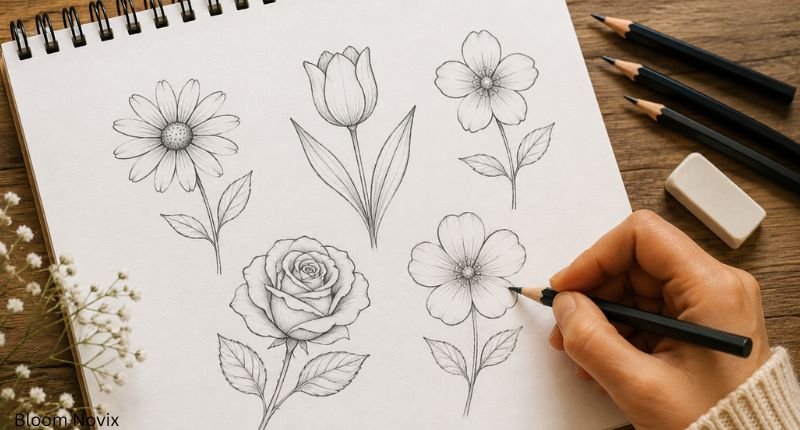
Starting with simple flower drawing techniques builds confidence before moving to detailed work. Beginners often find that focusing on basic shapes like circles and ovals makes the process far less intimidating than it first appears.
A great way to begin is by practising flower sketching ideas using single-stroke petals. This method teaches control over line weight without worrying about shading or colour blending right away.
| Skill Level | Recommended Style | Tools Needed |
| Beginner | Single-line flowers | Pencil, plain paper |
| Intermediate | Layered petals | Fine liner, eraser |
| Advanced | Shaded botanical art | Colour pencils, blending stump |
Here are a few beginner-friendly ideas to try first:
- Round-petal daisies with a simple centre dot
- Tulip outlines using two curved lines
- Basic rose spirals for quick practice
- Five-petal blossoms with light shading
Easy and Beautiful Flower Drawing Ideas
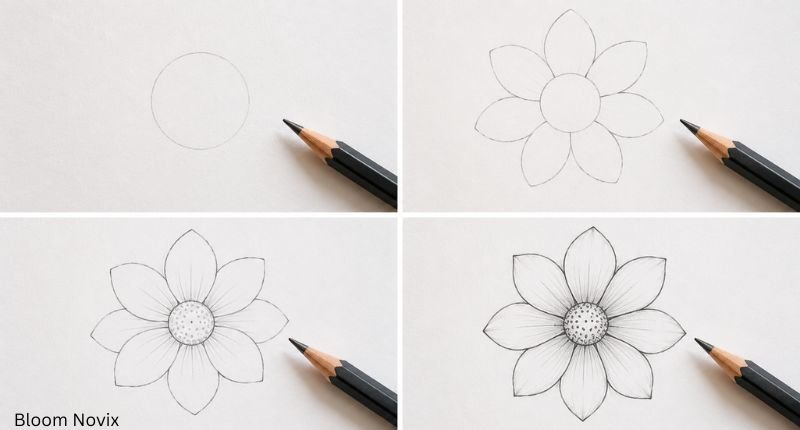
Not every beautiful design needs to be complicated. Many easy floral drawings rely on repetition and symmetry rather than fine detail, which makes them achievable even for someone picking up a pencil for the first time.
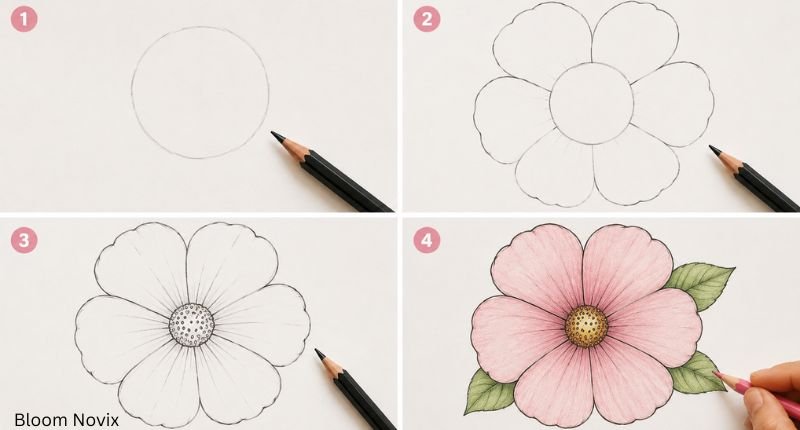
For those who prefer a guided approach, following an easy flower drawing step by step tutorial helps break the process into manageable stages. Start with light guidelines, then build petals outward from the centre, keeping proportions balanced throughout.
- Draw a light circle to mark the flower’s centre
- Add petals evenly around the guide
- Erase extra pencil lines once the shape is set
- Finish with a thin outline for a clean look
Aesthetic and Colorful Designs
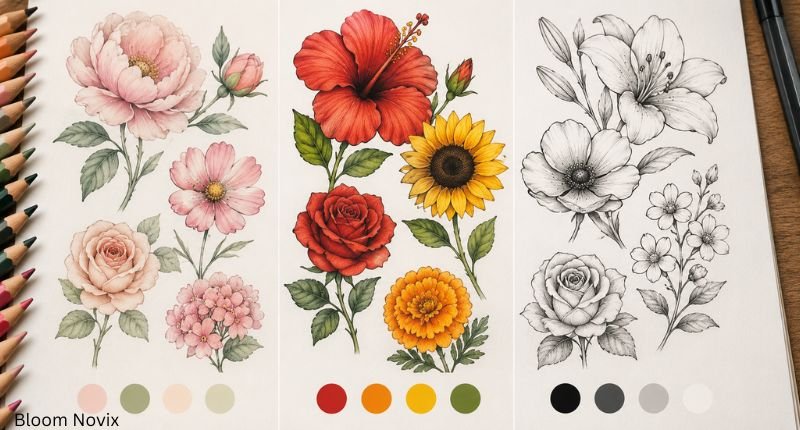
Aesthetic flower drawings often combine soft pastel tones with clean linework, giving the artwork a modern, calming feel. This style has become especially popular on social platforms where visually pleasing content gets shared often.
Colour choice plays a huge role here. Pairing complementary shades, such as blush pink with sage green, creates a naturally pleasing composition without needing advanced blending skills. Many artists also use decorative flower designs with patterned petals to add extra personality to their work.
| Colour Theme | Mood Created | Best For |
| Pastel pink & green | Soft, calming | Journals, greeting cards |
| Bold red & yellow | Energetic, warm | Posters, wall art |
| Black & white | Elegant, minimal | Line art, tattoos |
Flower Drawing Designs with Colours
Adding colour transforms even the simplest sketch into something striking. Flower art designs with colour work best when artists plan their palette before picking up a brush or marker, since random colour choices can make a piece feel unbalanced.
Watercolour, coloured pencils, and markers each create a different texture and mood. Beginners often start with coloured pencils because they allow better control, while watercolour suits those comfortable with letting colours blend naturally on the page.
- Use light layers first, then build up darker tones gradually
- Blend edges softly for a natural petal gradient
- Leave small white highlights to mimic light reflection
- Test colour combinations on scrap paper before the final piece
Read This Article: Anemone Flower Meaning
Pinterest-Inspired Flower Drawing (Easy & Cute)
Searching for pinterest flower drawing easy ideas usually leads to cute, minimal designs that are quick to recreate. These drawings often feature rounded petals, small leaves, and a slightly playful, hand-drawn charm rather than strict realism.
This style works particularly well for cute flower sketches used in planners, bullet journals, or as small doodles alongside handwritten notes. The appeal lies in how forgiving the style is, since imperfect lines actually add to the charm rather than taking away from it.
Big Flower Drawing Ideas (Easy Style)
Large-scale flowers make a bold statement, especially when used for wall art or poster designs. Big flower drawing pieces don’t need extra detail to stand out; instead, the size itself creates impact, making even a single bloom feel like a complete artwork.
When working on a larger scale, keep the petal shapes simple and slightly exaggerated. This approach keeps the drawing clean and easy to fill with colour later, whether you choose bold marker strokes or soft pastel shading for a gentler finish.
- Sketch one large centre shape before adding petals
- Keep petal count low for a cleaner, bolder look
- Use thick outlines so the design reads well from a distance
- Add colour in broad strokes rather than tiny details
Flower Drawings for Design Inspiration
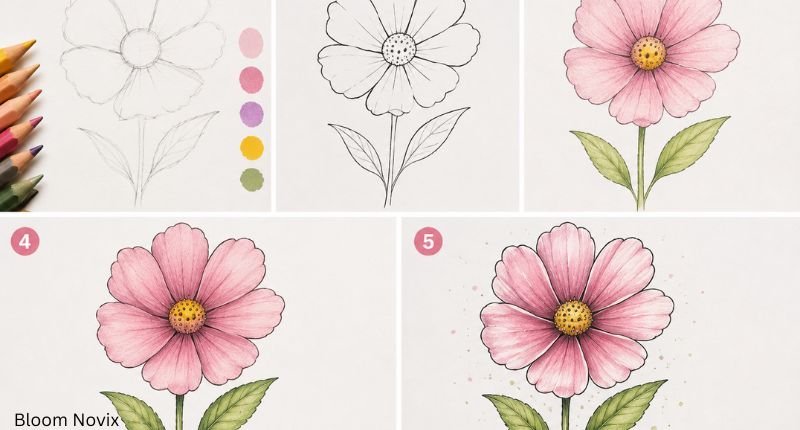
Learning how to draw flowers becomes much easier when broken into clear stages. This five-step method works for almost any flower type, from daisies to roses, and helps beginners avoid feeling overwhelmed by the process.
1. Create a Rough Shape and Color Palette
Start by sketching a loose outline of the flower’s overall shape. At this stage, also decide on your flower coloring designs so you know which shades to use before committing to details.
2. Draw a Quick Outline
Once the rough shape feels balanced, go over it with a slightly firmer outline. This step defines the flower outline drawing that will guide every petal and leaf placed afterward.
3. Add Color
Fill in your chosen palette using light layers first. Building colour gradually gives you more control and avoids patches that look uneven once the drawing is complete.
4. Add the Finishing Touches
Small details like veins, shading, and highlights bring the flower to life. This is where creative floral sketches really start to show personality and depth.
5. Execute Your Masterpiece
Step back, review the full piece, and clean up any stray lines. A final light outline often helps the flower drawing patterns stand out clearly on the page.
25 Beautiful Flower Drawing Ideas
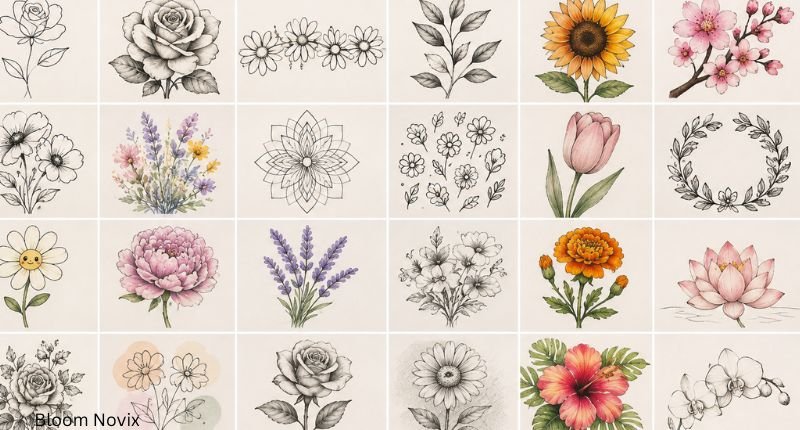
Here is a quick list of flower drawing ideas worth trying, ranging from simple to slightly more detailed styles:
- Single-line continuous flower sketch
- Layered rose with soft shading
- Minimalist daisy chain border
- Botanical drawing of a leafy stem
- Sunflower with detailed centre texture
- Cherry blossom branch in pink tones
- Black and white flower drawings with bold outlines
- Watercolour wildflower bouquet
- Geometric flower pattern design
- Tiny flower doodle designs for journals
- Realistic tulip with gradient shading
- Floral line art wreath
- Cute cartoon-style daisy
- Peony with layered petal texture
- Lavender sprig sketch
- Hand drawn flowers in a scattered bouquet
- Marigold with warm orange tones
- Simple lotus flower outline
- Vintage-style floral sketch ideas
- Modern abstract flower shapes
- Pencil-only rose study
- Pencil flower drawings with cross-hatching
- Colourful tropical hibiscus
- Delicate orchid line drawing
- Full bouquet with mixed flower types
Explore More: Blue Flowers and Their Meanings
Tips to Improve Your Flower Drawing Skills
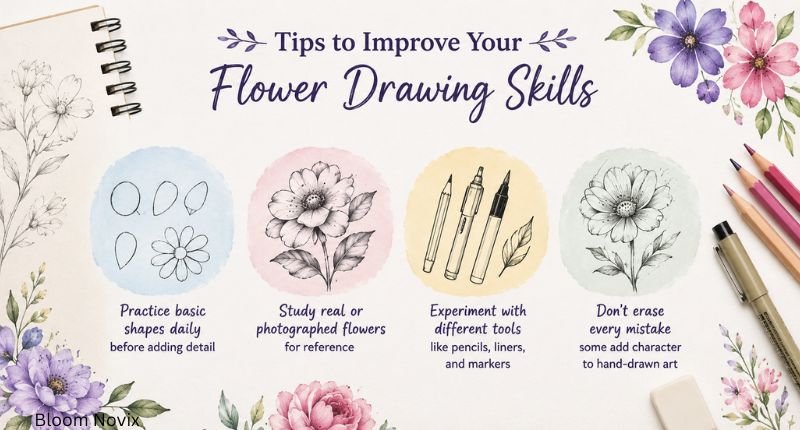
Getting better at flower sketch designs takes consistent practice rather than natural talent alone. Setting aside even ten minutes a day to sketch different petal shapes can noticeably improve your control over lines and proportions within a few weeks.
Studying real flowers or reference photos also helps immensely. Paying attention to how petals overlap and curve will make your floral art ideas feel more natural, even when you choose to simplify the design for a cleaner finished look.
- Practice basic shapes daily before adding detail
- Study real or photographed flowers for reference
- Experiment with different tools like pencils, liners, and markers
- Don’t erase every mistake; some add character to hand-drawn art
Final Words
Flower drawing remains one of the most rewarding art forms to explore, whether you’re sketching a quick doodle or working on a detailed flower drawing designs piece for a bigger project. With the right approach, even beginners can create work they’re genuinely proud of within just a few practice sessions.
From simple outlines to colourful, detailed botanical art, there is a style suited to every skill level and mood. Keep practising, experiment with different tools, and don’t be afraid to develop your own unique take on this timeless subject.
FAQs
1. Which flower is the easiest to draw for beginners?
Daisies and tulips are usually the easiest since they use simple, repeating petal shapes.
2. How can I improve my flower drawing skills quickly?
Practising simple floral designs daily and studying real flowers for reference speeds up improvement noticeably.
3. What tools are best for flower drawing?
A basic pencil and eraser work well for beginners, while coloured pencils or fine liners suit more detailed pieces.
4. Can I draw flowers without any prior art experience?
Yes, most easy flower sketches are designed specifically for people with no drawing background at all.
5. How do I make my flower drawings look more realistic?
Focus on shading, petal overlap, and studying real reference photos rather than relying on memory alone.
6. What is the difference between flower doodles and botanical drawings?
Doodles are casual and stylised, while botanical drawing aims for accurate, detailed representation of real flowers.
7. Are Pinterest flower drawing styles good for beginners?
Yes, these designs are usually simplified and cute, making them ideal for anyone just starting out.
8. How long does it take to get good at flower drawing?
With regular practice, most beginners notice real improvement in their beautiful flower sketches within four to six weeks.
BloomNovix is managed by an experienced team of content writers and SEO specialists with 4+ years of expertise in gardening and plant care. We provide well-researched guides, gardening tips, and insights on floral meanings to help plant lovers grow their indoor and outdoor gardens with confidence.