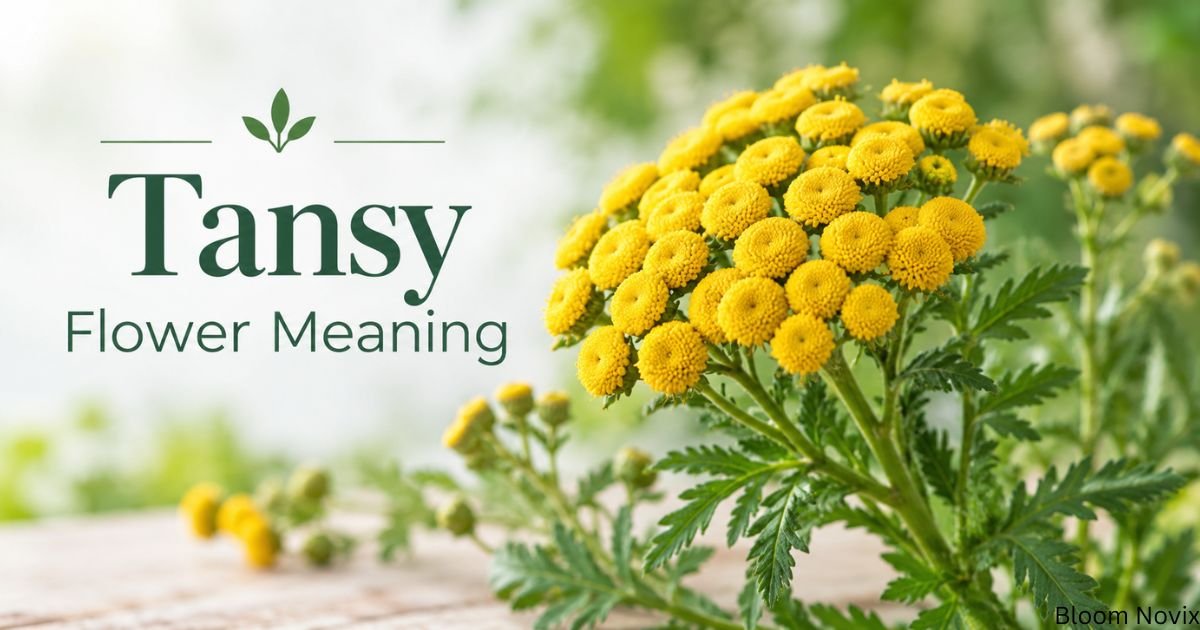
A golden tansy flower may look simple at first, with its small button-like blooms and bright yellow color. But this old-fashioned plant has a much deeper history. Tansy was used in funerary traditions, carried in some bridal customs, and valued for its protective qualities.
The tansy flower meaning is closely linked with immortality, protection, and remembrance. Its cheerful yellow flowers contrast with the plant’s toxic nature, which gave tansy both practical uses and a darker reputation over time. From old burial traditions to folklore and flower symbolism, tansy has carried meanings that go far beyond its appearance.
What Is the Tansy Flower? Identification and Key Features
The tansy plant is a hardy herb with the Latin name Tanacetum vulgare. People call it common tansy. It grows across Europe and Asia. It also spreads wild across North America.
Look for flat, round, yellow tansy blooms. Each bloom looks like a small button. It has no petals. Dozens of buttons cluster together on top of tall, sturdy stems.
The leaves look like ferns. They smell sharp, like camphor. That strong scent is your best clue. Crush one leaf, and the smell tells you the plant is tansy.
- Height: 2 to 5 feet
- Bloom time: Mid-summer to early fall
- Flower color: Bright golden yellow
- Scent: Camphor-like and bitter
Tansy Flower Meaning: Core Symbolism
The core tansy flower symbolism is long life. The plant stays green late into autumn. It survives drought and cold. People saw that strength and linked it to eternal life and resilience.
Tansy also stands for protection. Its bitter smell kept pests away. Villagers believed it kept evil away too. So the flower became a guardian in homes, barns, and graves.
Yet tansy is not a simple, happy flower. It carries a second, darker message. The table below shows both sides at a glance.
| Symbol | Meaning | Why It Fits |
| Immortality | Eternal life | Greek name links to “athanasia” |
| Protection | Safety from harm | Strong scent repels pests |
| Remembrance | Honoring the dead | Used in burial traditions |
| Hostility | Warning or war | Victorian flower language |
| Resilience | Strength to endure | Survives harsh weather |
Tansy Flower Spiritual Meaning
Spiritually, tansy stands for longevity and inner strength. Its golden color feels like sunlight. Many people see it as a sign of energy, clarity, and a hopeful spirit.
The flower also teaches boundaries. Tansy repels pests, so it reminds you to guard your peace. You can treat it as a symbol of saying no. Healthy limits protect your spirit.
Many modern spiritual readers see tansy as a bridge between life and death. It grows in wild places and blooms when summer fades. That timing makes it a quiet reminder to honor endings and welcome renewal.
Yellow Tansy Flower Meaning
The yellow tansy flower is the true, classic tansy. Its color carries the meaning of joy, energy, and vitality. Yellow has long stood for the sun. This flower brings that warm, steady light.
Yellow tansy also signals endurance. The blooms last for weeks. They hold their shape even as the season cools. People read that staying power as loyalty and lasting love.
Flower symbolism can come with a little caution, too. In some older traditions, yellow was associated with jealousy rather than warmth or happiness. That is why the meaning of a yellow flower can change with the flower, culture, and situation. Yellow jonquils, for example, are more often associated with friendship, joy, and encouragement, showing how the same color can carry different messages from one bloom to another.
Blue Tansy Flower Meaning
Here is a fact that surprises most readers. The blue tansy plant, Tanacetum annuum, has yellow flowers. The blue comes from its essential oil. Steam distillation creates a deep blue liquid from a compound called chamazulene.
So the blue tansy flower meaning is really about calm and healing. Blue stands for peace, trust, and clear thought. The oil earned a name for soothing skin and easing tension in modern wellness circles.
A second plant also gets this nickname. Lacy phacelia, with soft blue-purple blooms, sometimes goes by “blue tansy.” Gardeners love it because bees adore it. Its meaning leans toward calm, gentle care, and helpful nature.
Red Tansy Flower Meaning
True red tansy does not exist in the wild. Common tansy only blooms yellow. So when people search for a red tansy, they usually mean a close relative in the same plant family.
The closest match is the painted daisy, Tanacetum coccineum. It has red and pink daisy petals. Farmers once ground its flowers to make a natural insect killer. Red brings passion, courage, and strong protection to its meaning.
Use this table to sort the tansy names you will meet online.
| Name | Plant | Flower Color | Main Meaning |
| Common tansy | Tanacetum vulgare | Yellow | Immortality, protection |
| Blue tansy | Tanacetum annuum | Yellow (oil is blue) | Calm, healing |
| Lacy phacelia | Phacelia tanacetifolia | Blue-purple | Gentle care |
| Painted daisy | Tanacetum coccineum | Red, pink | Courage, passion |
Tansy Flower Meaning in Love and Relationships
Tansy is not a classic romance flower. It never joined the rose in wedding bouquets. Still, its lasting love message runs deep. It speaks of a bond that survives time and hardship.
Old folk customs tied tansy to fidelity. Some couples kept a sprig in the home for a long marriage. The idea was simple. If tansy resists decay, love can too.
Be careful with gifting, though. Victorian readers saw tansy as a sign of conflict. Choose tansy for a strong friendship or a long partnership. Skip it for a first date, and pair it with a softer flower.
Tansy Flower Dark Meaning: Death, Hostility and Warnings
Tansy has a shadow side, and it is real. In medieval Europe, families placed tansy in coffins and burial shrouds. They believed it slowed decay and kept worms away. That made it a cemetery flower in many towns.
The plant also holds a real threat. Its oils contain thujone, a toxic compound. Tansy has caused poisonings and deaths across history. That fact colors its reputation as a flower of caution.
So the dark meaning covers three themes:
- Death and burial: Used to honor and protect the dead
- Danger: A poisonous plant that demands respect
- Warning: A message to keep your distance
Tansy Flower Meaning in the Victorian Language of Flowers
The Victorians spoke through flowers. Each bloom carried a coded message. In this flower language, tansy meant “I declare war against you.” It was one of the boldest messages in the garden.
Why such a harsh meaning? Tansy’s bitterness and its poison likely played a role. The plant repels and fights. Victorian readers took that fighting nature and gave it a voice.
A sender used tansy to end a friendship or challenge a rival. A receiver understood right away. Today, this makes tansy a bold, dramatic choice. Only send it when you truly mean the message.
Explore More: Clematis Flower Symbolism
Tansy Flower History and Folklore
Tansy has a long record. Ancient Greeks grew it in gardens. Medieval monks cultivated it in monasteries. Farmers scattered it across floors to chase away flies and fleas.
The English also used tansy in food. At Easter, cooks baked tansy cakes and puddings. The bitter taste reminded people of the bitter herbs of Lent. Many families saw the dish as a ritual of remembrance.
Settlers carried tansy to North America. They planted it near houses for medicine and pest control. The plant escaped and spread wild. Today, roadsides from Maine to Oregon glow with its golden blooms.
Tansy Flower Meaning in Mythology and Immortality Legends
The name itself points to myth. Many scholars trace “tansy” to the Greek word athanasia, which means immortality. That single word explains why the plant became a symbol of eternal life.
One famous legend features Ganymede, a Trojan prince. According to the tale, Zeus made him immortal and gave him a place among the gods. Storytellers later tied tansy to that gift of endless life.
Whether the tale is exact or not, the message stays strong. People wanted a plant that beat death. Tansy’s hardy nature gave them one. That is why immortality remains its most famous meaning.
Tansy Flower Meaning in Witchcraft and Folk Magic
In folk magic, tansy is a plant of protection. Practitioners hang dried bundles near doors. They believe the sharp scent blocks bad luck and unwanted visitors. The idea grew from real pest control.
Modern witches also use tansy in longevity charms. They tie a sprig to a candle or place it in a small pouch. The goal is health, endurance, and steady strength. It is a symbolic act, not a medical one.
Safety comes first in every ritual. Never burn large amounts indoors. Never drink tansy tea or use oil on skin. Use the dried herb as decoration and keep it far from pets and children.
Tansy Flower Meaning in Dreams
Dreaming of yellow tansy often signals hope. The golden color suggests good energy is close. You may be entering a stronger, brighter season in life.
A wilting tansy in a dream can mean a worn-out situation. It may ask you to let go of an old struggle. A field of blooming tansy suggests plenty of protection around you.
Pay attention to feelings inside the dream. Calm feelings point to peace. Fear or unease may point to a hidden warning. Write your dream down and look for a real-life link.
Tansy Flower Tattoo Meaning
The yellow tansy flower is the true, classic tansy. Its color can suggest joy, energy, and vitality, while its golden tone brings to mind the warmth of the sun. A tansy tattoo tells a layered story. It can stand for immortality, protection, and remembrance. Many people choose it to honor someone they have lost. The golden buttons also make a strong, simple design.
The tattoo can represent resilience, too. Tansy survives poor soil and cold nights, which gives its symbolism another layer. For people who choose flowers with personal meaning, these ideas can make a tattoo feel more than decorative. You can also explore how other meaningful blooms are used in birth flower tattoos and their symbolism.
Design ideas are wide open:
- Single stem: Clean, minimal, and elegant
- Cluster of buttons: Bold and bright
- With fern leaves: Natural and detailed
- Watercolor gold: Soft and artistic
Is Tansy Flower Poisonous? Toxicity and Safety
Yes, tansy is toxic. It contains thujone, which affects the nervous system. Eating the plant can cause vomiting, cramps, and seizures. In high doses, it can prove deadly.
Pets and livestock face danger too. Dogs, cats, horses, and cattle can fall ill after chewing it. Farmers in many regions treat tansy as a noxious weed for this reason. Some areas even require its removal.
Pregnant women must avoid it completely. Historical records show tansy was once used to end pregnancies, and that use caused harm. Touching the plant can also irritate sensitive skin, so wear gloves when you handle it.
Traditional Uses of Tansy: Insect Repellent, Medicine and Easter Tansy Cakes
People used tansy as a natural insect repellent for centuries. They rubbed it on meat to stop flies. They tucked it into linens to keep moths away. Gardeners still plant it near fruit trees and berries.
Old healers used it as medicine too. They tried it for worms, fever, and stomach trouble. Today, experts warn against these uses. Safer, tested treatments exist, and tansy’s risk outweighs its benefit.
Here are the historic uses at a glance:
- Pest control: Flies, ants, moths, and beetles
- Food: Small amounts in Easter tansy cakes
- Burial: Placed with the dead to slow decay
- Dye: Gave cloth a soft yellow-green tint
Tansy vs Similar Flowers: Chamomile, Feverfew and Yarrow
Many wild yellow and white blooms look alike. Beginners often mix them up. The tansy plant stands apart because of its button shape and its strong camphor scent.
Feverfew is a close cousin, but its flowers look like white daisies. Chamomile has a sweet apple smell and white petals. Yarrow forms flat white clusters and softer, feathery leaves. This table helps you spot each one.
| Flower | Petals | Color | Scent | Meaning |
| Tansy | None (buttons) | Yellow | Camphor, bitter | Immortality, warning |
| Feverfew | White rays | White, yellow center | Sharp, bitter | Protection, healing |
| Chamomile | White rays | White, yellow center | Sweet, apple-like | Calm, patience |
| Yarrow | Small rays | White, pink | Herbal, mild | Courage, healing |
How to Grow and Care for Tansy in Your Garden
Tansy is easy to grow. Give it full sun and average soil. It handles drought well. It thrives in zones 3 to 8 and needs very little care once it settles in.
Warning: tansy spreads fast. Its roots creep underground and form thick patches. Plant it in a container or use a root barrier. Cut off the flower heads before they turn to seed.
The plant also helps your garden. Bees, hoverflies, and other pollinators visit its blooms. Many gardeners say it repels ants and some beetles. Check your local rules first, since some regions list tansy as invasive.
Frequently Asked Questions
1. What does the tansy flower symbolize?
The tansy flower meaning centers on immortality, protection, and remembrance. It also carries a warning because of its poison.
2. What is the spiritual meaning of the tansy flower?
It stands for longevity, inner strength, and healthy boundaries. Its golden color also brings hope and clarity.
3. What does the yellow tansy flower mean?
Yellow tansy means joy, endurance, and lasting love. Some older traditions also link yellow to jealousy.
4. What does the blue tansy flower mean?
Blue tansy stands for calm and healing. The blue color comes from the plant’s essential oil, not its yellow flowers.
5. Is there a red tansy flower, and what does it mean?
True red tansy does not exist. The red-flowered painted daisy, a close relative, symbolizes courage and passion.
6. Does the tansy flower have a love meaning?
Yes, it represents lasting love and loyalty. It is not a romantic flower, so pair it with softer blooms.
7. What is the dark meaning of the tansy flower?
It links to death, burial, and danger. Families used it in coffins, and its toxic oil adds a warning.
8. What did tansy mean in the Victorian language of flowers?
It meant “I declare war against you.” Victorians used it to send a bold message of conflict.
9. Is the tansy flower poisonous to humans and pets?
Yes, it is toxic to people, pets, and livestock. Its thujone oil can cause vomiting and seizures.
10. Is a tansy flower tattoo a good idea, and what does it represent?
Yes, if you value its meaning. It represents immortality, protection, and resilience, and many people wear it in memory of loved ones.
Conclusion
The tansy flower meaning goes far beyond its small yellow buttons. It has long been connected with eternal life, protection, remembrance, and strength, while its darker history brings associations with danger, death, and conflict. That unusual mix is what makes tansy such an intriguing flower to explore.
Today, tansy can still carry a personal meaning. Its symbolism may suit a memorial, a reminder of endurance, or even a meaningful tattoo. Just remember that the plant is toxic, so it is best admired with care, especially around pets and children. Behind those cheerful yellow blooms is a flower with a surprisingly complicated story.
BloomNovix is managed by an experienced team of content writers and SEO specialists with 4+ years of expertise in gardening and plant care. We provide well-researched guides, gardening tips, and insights on floral meanings to help plant lovers grow their indoor and outdoor gardens with confidence.