Ophelia enters the room carrying several flowers in her arms. After distributing the flowers, she says one line on the subject of rue, a comment that , after 400 years, is still being debated among her readers. What did she actually mean ?
Probably, one of the most controversial plants is the Rue flower meaning. Its small , bitter leaves are a symbol of regret and grief. At the same time, rue represents grace and protection. Two such opposite meanings in one plant are carried by very few. This handbook provides you with both aspects of it in simple words.
Perhaps you found some connection with rue in poetry, a tattoo, or even a garden area. Possibly, someone told you it protects against evil. Perhaps you encountered it in a school drama. Regardless of how you met rue, you will be given the clearest and easiest-to-understand answers here.
What Is the Rue Flower? Origin, Look & Background
Rue is a very small flowering plant that is an aromatic evergreen shrub. Its scientific name is Ruta graveolens , and its English name is common rue. It can be found wild in the Balkans and coastal regions of the Mediterranean.
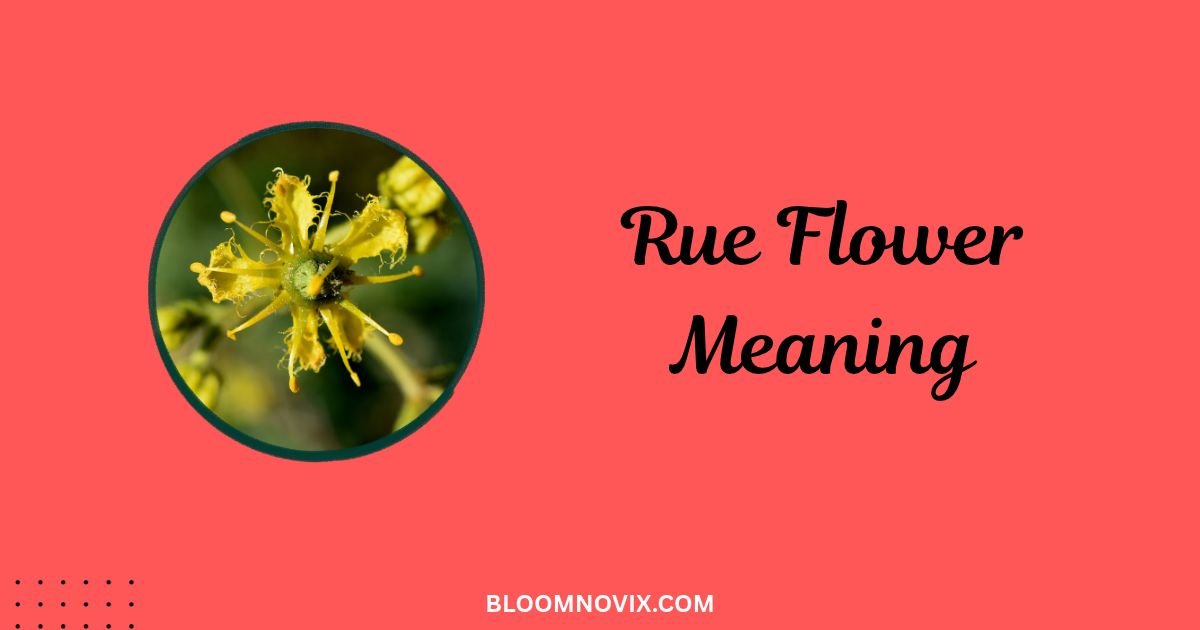
Blue-green leaves cover the plant. They are described as being lacy and soft. In summer, it is adorned with very small yellow flowers called rue flowers. Each small bloom is formed by four miniature petals that are curled. The whole plant has a very distinct and strong smell that may be offensive to some people.
People have cultivated rue in their gardens for millennia. It was a traditional household garden plant. Rue was used for a variety of purposes: for flavoring meals, of course, but also for medicinal purposes or even as a means of protection. A very long history of use is one of the reasons behind the deep symbolic meaning of rue as a medicinal herb.
Rue Flower Meaning: Core Symbolism at a Glance
The main rue flower symbolism comes from the plant’s bitter taste. Bitter things remind us of pain. So rue became a sign of regret, sorrow, and repentance. The word “rue” even means to feel sorry in English.
Yet the story does not end there. People also called rue the herb of grace. In this view, rue stands for forgiveness and a fresh start. Regret can lead to change, and rue shows that path.
The table below sums up the main meanings. Use it as a quick guide.
| Symbolic Meaning | What It Represents |
| Regret | Feeling sorry for past choices |
| Repentance | The wish to make things right |
| Grace | Forgiveness and mercy |
| Protection | Safety from harm and bad luck |
| Clear vision | Sharp thinking and good judgment |
| Disdain | A cold or bitter feeling toward someone |
Rue Flower Meaning in Hamlet: Ophelia’s Famous Line
Shakespeare gave the herb rue its most famous spotlight. In Hamlet, Ophelia has just lost her father. She is so heartbroken that her mind is clouded with grief. She hands flowers and herbs out to the people around her.
Rue is the one she gives to Queen Gertrude while she retains some for herself and calls it the “herb of grace,” asking them to use the herb in different ways. The sentence is short, yet it is loaded with meaning. It is a poetic image combining grief and repentance. Ophelia is a character who can easily descend into madness because of such events.
There is still a debate among scholars as to what Ophelia’s intention was. Some think that she was asking Gertrude to feel bad for her part in the tragedy. Others say that she wants forgiveness to be granted to others. Either way, these interpretations are suitable for the bitterness and sadness expressed in the scene.
Read Also: Foxglove Flower Meaning
Rue Flower Meaning in Love: Regret, Heartbreak & Devotion
In love, rue often means heartbreak. A person who “rues” a lost love feels deep regret. Old poets used the herb to show a broken heart. The bitter taste matched the pain of rejection.
Yet rue had a gentler side too. In parts of Eastern Europe, young women wore rue wreaths. The plant stood for youth, purity, and loyal love. Some brides even wore it on their wedding day.
So the rue flower meaning in love depends on the culture. In the West, it leans toward regret. In the East, it leans toward devotion. Think of it as a flower that remembers love, for better or worse.
Rue Plant Spiritual Meaning: Protection, Clarity & Cleansing
Spiritually, rue is a sacred herb of protection. Many people believe it can ward off evil and block negativity. In old Italy, people hung rue to guard against the evil eye. The belief still lives in some homes today.
Rue also stands for clear sight and a calm mind. Old herbalists said it sharpened the eyes and the thoughts. Modern spiritual writers carry this idea forward. They link rue with focus and good judgment.
Here is how people use rue in spiritual practice:
- Home protection: hang dried sprigs near a door
- Cleansing rituals: sprinkle rue water in a room
- Dream work: place a sprig near the bed to calm bad dreams
- Personal charms: carry a small bundle for safety
Flower Meaning Death: Rue’s Link to Grief & Mourning
Shakespeare gave the herb rue its most famous spotlight. In Hamlet, Ophelia has just lost her father and is so heartbroken that her mind is clouded with grief. She hands flowers and herbs to the people around her. Rue is the one she gives to Queen Gertrude while she retains some for herself and calls it the “herb of grace,” asking them to use the herb in different ways. The sentence is short, yet it is loaded with meaning.
It is a poetic image combining grief and repentance. Ophelia is a character who can easily slip into madness because of such events. There is still a debate among scholars regarding Ophelia’s intention. Some think that she was asking Gertrude to feel bad for her part in the tragedy. Others say that she wants forgiveness to be granted to others. Either way, these interpretations are suitable for the bitterness and sadness expressed in the scene.
Rue Flower Meaning Tattoo: What This Ink Represents
A rue tattoo carries a personal message. Most people choose it to show healing after regret. It says, “I made mistakes, and I grew from them.” That makes it a strong design for a fresh start.
Others choose rue for spiritual protection. They wear it as a charm on the skin. The plant’s old link to warding off evil gives the tattoo a guardian feel. It suits anyone who wants a quiet shield.
Some wearers also honor a lost loved one. The herb’s tie to grief makes it fit for a memorial piece. Fans of Shakespeare pick it as a literary nod. Each reason gives the ink its own story.
Rue Flower Tattoo Designs, Styles & Placement Ideas
Rue works well in many tattoo styles. The leaves have a delicate, lacy shape. The tiny yellow flowers add a bright touch. Artists can draw them with fine lines or bold color.
Here are popular style choices:
- Fine line: thin, elegant sprigs with soft detail
- Botanical: realistic leaves and flowers, like a book plate
- Watercolor: blue-green and yellow washes with no hard outline
- Minimalist: one small sprig for a quiet look
The table below lists common placements.
| Placement | Best For |
| Wrist | Small, personal sprigs |
| Forearm | Long botanical designs |
| Behind the ear | Tiny, hidden symbols |
| Ribs | Larger, private pieces |
| Ankle | Light, simple designs |
Symbolic Meaning of Flowers: Where Rue Fits In
Flowers have been conveying messages for hundreds of years. With the aid of Victorian flower language, every blossom could relay a different secret. A bunch of flowers can express feelings of love, gratitude, or even anger. Rue, on the other hand, took the place of expressing bitterness and sorrow in the language of flowers.
Gladness is the message of the majority of the flowers. Roses represent love, and daisies represent the state of mind of a child. As the flower of genuine remorse, Rue stands alone as unique and deep.
Rue is one of those plants you could use if your flowers need to convey your sincere apology. It will certainly not cheer the guilty up. It will rather admit the feeling of a heavy heart and also show mercy, resulting in this plant looking a lot more forgiving and hopeful.
Rue in Ancient Greece, Rome & Medieval Europe
The Greeks and Romans valued rue as a medicinal herb. They believed it could guard against poison and disease. Roman cooks even used it to flavor food. Its bold taste was popular in old recipes.
Rue held strong Roman history ties to protection. People thought it kept sickness away. Doctors of the time wrote about its many uses. The plant’s fame spread across the empire.
In medieval Europe, monks grew rue in their gardens. They used it in traditional herbal medicine. It also played a role in religious life. This shaped the later name “herb of grace.”
Rue in Folklore & Magic: The “Herb of Grace”
Folk stories and myths have made rue a fascinating medicinal herb. People thought that by just looking at it, they could break curses. They also believed it could prevent their houses from being attacked by wicked witches. So, they kept a rue plant near their doors for protection.
In some stories, it is said that people could spot witches using this herb, and in others, the herb is described as driving away small animals such as weasels and snakes. These narratives are a good indication that people had a high regard for the plant, to the point that fear and reverence were blended in its legend.
The name Herba Gratiae literally means “Herb of Grace,” and it reflects the concepts of forgiveness as well as Sunday church services. Therefore, it is quite natural to see a herb representing a spiritual kind of kindness through such an old name.
Rue Flower vs Other Flowers in Hamlet (Rosemary, Pansy, Fennel)
Ophelia does not give out rue alone. She hands out several plants, and each one speaks. Reading them together shows the full picture of her grief. Rue is just one voice in her sad song.
The table below compares the main ones.
| Plant | Meaning in Hamlet |
| Rosemary | Remembrance |
| Pansy | Thoughts |
| Fennel | Flattery |
| Columbine | Unfaithfulness |
| Rue | Sorrow and repentance |
Rosemary and pansy feel gentle and sweet. Fennel and columbine feel sharp and accusing. Rue sits in between with its double meaning. That balance makes it the most complex flower in the scene.
Rue Flower in Christianity & Religious Symbolism
Rue appears in the Bible. In the Gospel of Luke, Jesus mentions it while scolding the Pharisees. They paid tithes on small herbs like mint and rue. Yet they ignored justice and love.
Because of this, people tied rue to faith and humility. Medieval Christians linked it with repentance. They believed a sorry heart could find mercy. The herb became a small sign of that hope.
Some churches also used rue in ritual. Priests were said to dip it in holy water. This act gave the plant its grace name. So the rue flower in Christianity stands for both guilt and forgiveness.
Is Rue Safe? Medicinal Uses & Skin Warning
People used Rue plant as medicine for many years. Folk healers tried it for cramps, headaches, and eye strain. Modern science urges caution, though. The plant contains strong compounds that can harm the body.
The sap can cause skin burns in sunlight. Touching the plant and then standing in the sun may cause painful blisters. Wear gloves and long sleeves when you handle it. Wash your hands well afterward.
Check the quick safety guide below.
| Topic | What to Know |
| Skin contact | Sap may cause blisters in sunlight |
| Pregnancy | Rue is not safe to use |
| Eating or drinking | Large amounts can be toxic |
| Essential oil | Never use it without expert advice |
| Children and pets | Keep them away from the plant |
Always ask a doctor before any medical use. Use rue as a symbol and a garden plant instead. It is far safer that way.
FAQs
1. What is the rue flower meaning?
Rue symbolizes regret, repentance, and sorrow, with grace and protection on the bright side. Its bitter taste inspired the sad meaning, while its “herb of grace” name gave it hope.
2. What does rue mean in Hamlet?
In Hamlet, rue stands for sorrow and repentance. Ophelia hands it out as the “herb of grace,” so it also hints at forgiveness.
3. What is the rue flower tattoo meaning?
A rue tattoo usually shows healing after regret and spiritual protection. Many people also wear it to honor lost loved ones or to mark a new start.
4. Is rue a symbol of death or mourning?
Not directly, but rue links to grief, sorrow, and mourning themes. Literature, especially Hamlet, strengthened this tie over time.
5. What is the spiritual meaning of the rue plant?
Spiritually, rue means protection, cleansing, and mental clarity. Folk belief says it wards off evil and bad energy, which earned it the name “herb of grace.”
Conclusion
Rue flower meaning survives because it feels human. It represents regret at first but also shows grace. This little plant conveys both pain and hope in one go. That kind of mixture is seldom met and quite impactful to the mind.
Use rue as a plant in your garden, a tattoo, or even as a very soft reminder. Through it, sorrow teaches us that pain may be the way to growth. When you next see its blue-green leaves, think of Ophelia and then consider what rebirth this herb gives.

BloomNovix is managed by an experienced team of content writers and SEO specialists with 4+ years of expertise in gardening and plant care. We provide well-researched guides, gardening tips, and insights on floral meanings to help plant lovers grow their indoor and outdoor gardens with confidence.